

The Scientific American Staff’s Favorite Books of 2025
Each year around this time, we ask the staff of Scientific American to recommend the best books they read this year. Here are the 67 new favorites and old classics that kept us turning the pages in 2025.Happy reading! Jump to your favorite section here:On supporting science journalismIf you're enjoying this article, consider supporting our award-winning journalism by subscribing. By purchasing a subscription you are helping to ensure the future of impactful stories about the discoveries and ideas shaping our world today.NonfictionIn alphabetical orderApocalypse: How Catastrophe Transformed Our World and Can Forge New Futuresby Lizzie WadeHarper(Tags: History)“This was such an upbeat book about apocalypses! I learned a ton and got a much smarter sense of what people really experienced during these extreme scenarios.” —Meghan Bartels, Senior ReporterBad Law: Ten Popular Laws That Are Ruining Americaby Elie MystalThe New Press(Tags: Policy)“A clearly structured and compellingly argued takedown of 10 terrible laws that could easily be fixed by simply revoking them. It will make you mad but in the most clarifying way.” —Meghan Bartels, Senior ReporterThe Black Family Who Built America: The McKissacks, Two Centuries of Daring Pioneersby Cheryl McKissack Daniel, with Nick ChilesAtria/Black Privilege Publishing(Tags: Memoir)“The author’s great-great-grandfather, an enslaved person brought from Africa, started a construction/engineering company in North Carolina and Tennessee that is still in the family and is now run by her. An intimate view of courageous Black lives in the midst of ongoing white prejudice and violence.” —Maria-Christina Keller, Copy DirectorCareless People: A Cautionary Tale of Power, Greed, and Lost Idealismby Sarah Wynn-WilliamsFlatiron Books(Tags: Memoir)“When I finished the prologue of Careless People, I immediately looked up who had the movie rights—the author has a flair for the cinematic in describing her experiences. Besides being a riveting read, this look at the thoughts and thoughtlessness of those running Facebook is crucial to understanding how today’s toxic digital landscape came to be.” —Sarah Lewin Frasier, Senior EditorCHART: Designing Creative Data Visualizations from Charts to Artby Nadieh BremerA K Peters/CRC Press(Tags: Data Visualization)“Nadieh Bremer excels at creating captivating and memorable information-rich data displays. If you’re stuck in a world of bar charts and line charts and looking to stretch your own capabilities beyond standard visualization forms, this book is for you. Examples include several graphics commissioned for Scientific American articles!” —Jen Christiansen, Acting Chief of Design & Senior Graphics EditorThe Football: The Amazing Mathematics of the World’s Most Watched Objectby Étienne GhysPrinceton University Press(Tags: Math, Physics, Sports)“A fascinating mathematical and physical microhistory of soccer balls and the official FIFA World Cup match balls in particular.” —Emma R. Hasson, 2025 AAAS Mass Media FellowThe Harder I Fight the More I Love Youby Neko CaseGrand Central Publishing(Tags: Memoir)“A searing, beautiful memoir by singer-songwriter Neko Case, recalling her lonely, tumultuous upbringing and the way music became a balm and an escape. It is written with the same gut-punching poetic voice that makes her such an incredible lyricist.” —Andrea Thompson, Senior Desk Editor/Life ScienceI Want to Burn This Place Downby Maris KreizmanEcco(Tags: Essays)“A wonderfully slim collection of essays about growing up, getting angry and choosing to change the world for the better. I cringed at how relatable it was at times, but that’s the point!” —Brianne Kane, Associate Editor/Books & Rights ManagerInventing the Renaissance: The Myth of a Golden Ageby Ada PalmerThe University of Chicago Press(Tags: History)“You may know Ada Palmer as a science-fiction novelist, but she’s also a historian at the University of Chicago who focuses on the Renaissance. This is a chunky book with many parts, but it’s very readable and thought-provoking. You’ll think differently about the Renaissance—and about how history works.” —Meghan Bartels, Senior ReporterLeaving the Ocean Was a Mistake: Life Lessons from Sixty Sea Creaturesby Cara Giaimo. Illustrated by Vlad StankovicQuirk Books(Tags: Humor, Animals)“This charming little book highlights 60 creatures that live in the shallows to the abyssal deep. Each is beautifully illustrated, while the text shares an interesting fact about the animal and a wry inspirational-poster-style motto for human life drawn from its experience. Great for kids five to 10 years old, plus anyone else who wants to be delighted by the ocean’s denizens.” —Meghan Bartels, Senior ReporterThe Meteorites: Encounters with Outer Space and Deep Timeby Helen GordonProfile Books(Tags: Space, History)“I’ve never had such an emotional reaction to reading about rocks, but the prose is beautiful, and the passion of the authors pours off every page.” —Brianne Kane, Associate Editor/Books & Rights ManagerMore Everything Forever: AI Overlords, Space Empires, and Silicon Valley’s Crusade to Control the Fate of Humanityby Adam BeckerBasic Books(Tags: AI, Technology)“A fascinating look at the so-called philosophies that Silicon Valley tech entrepreneurs use to justify sacrificing the present to build a future that will never exist. Equal parts fascinating and infuriating, this book sheds light on the way some of the most powerful people in the world think and also shows you how to argue against it.” —Ian Kelly, Product ManagerOne Day, Everyone Will Have Always Been against Thisby Omar El AkkadKnopf(Tags: Memoir, Politics)“A powerfully written, thought-provoking book with deep moral clarity.” —Meghan Bartels, Senior ReporterOwned: How Tech Billionaires on the Right Bought the Loudest Voices on the Leftby Eoin HigginsBold Type Books(Tags: Political Science)“The story of how tech billionaires are buying out their most vocal critics and trying to change the journalistic landscape. This book helps explain not just how narratives are changing in front of our eyes but why.” —Ian Kelly, Product ManagerPhenomenal Moments: Revealing the Hidden Science around Usby Felice FrankelMITeen Press(Tags: Young Adult, Photography)“Photographer Felice Frankel explores the science behind visual characteristics through a series of images paired with artist statements and succinct scientific explanations. Together, this prompts the reader to ponder light and shadow, form, transformation and surfaces.” —Jen Christiansen, Acting Chief of Design & Senior Graphics EditorProto: How One Ancient Language Went Globalby Laura SpinneyBloomsbury Publishing(Tags: History, Linguistics)“Laura Spinney tells engaging tales of archeologists traipsing through fields, linguists working toward professional vindication and many others active in the search for understanding of how these ancient languages traveled, fragmented, warred and traded to eventually became the dominant Indo-European languages today.” —Rich Hunt, Managing Production EditorA Physical Education: How I Escaped Diet Culture and Gained the Power of Liftingby Casey JohnstonGrand Central Publishing(Tags: Memoir)“A gripping combination of memoir and exploration of the history and science of weight lifting. Casey Johnston’s background as a science journalist comes through clearly in the fascinating explanations of how and why lifting can be so beneficial.” —Sarah Lewin Frasier, Senior EditorRaising Hareby Chloe DaltonPantheon(Tags: Memoir)“An atmospheric and cozy memoir about a city slicker workaholic who rescues a newborn abandoned hare and awakens to nature. A great one for animal lovers.” —Andrea Gawrylewski, Chief Newsletter EditorReefs of Time: What Fossils Reveal about Coral Survivalby Lisa GardinerPrinceton University Press(Tags: Science, Environment)“This is a love letter to past, present and future coral reefs. Gardiner is a close friend of mine. Her stories of fossil and modern polyps—as well as the people that study them—prompted me to think more deeply about resilience.” —Jen Christiansen, Acting Chief of Design & Senior Graphics EditorRipples on the Cosmic Ocean: An Environmental History of Our Place in the Solar Systemby Dagomar DegrootHarvard University Press(Tags: Science, Space)“A fascinating tour of the environmental history of the inner solar system and how centuries of changes to our neighboring worlds have shaped the human experience.” —Meghan Bartels, Senior ReporterSearches: Selfhood in the Digital Ageby Vauhini VaraPantheon(Tags: AI, Technology)“I loved this philosophical look at how and why artificial intelligence and broader technological developments have changed our world and our artistic practice within it.” —Brianne Kane, Associate Editor/Books & Rights ManagerThe Sexual Evolution: How 500 Million Years of Sex, Gender, and Mating Shape Modern Relationshipsby Nathan LentsMariner Books(Tags: Sexology, Zoology)“Surprisingly funny and eye-opening book about how the animal kingdom is more sexually diverse than previously understood.” —Brianne Kane, Associate Editor/Books & Rights ManagerSociopath: A Memoirby Patric GagneSimon & Schuster(Tags: Memoir, Mental Health)“I picked up this book after I read our own July/August 2025 article about treating childhood psychopathy and wanted to know more. The author describes with vivid honesty how it felt to grow up as an undiagnosed sociopath and how she came to learn about herself and create her own path to treatment. As someone who is fascinated by different neurotypes, I was hooked from the start and came away with (somewhat ironically) a newfound empathy for those who don’t themselves experience empathy like most people do.” —Amanda Montañez, Senior Graphics EditorSpeak Data: Artists, Scientists, Thinkers, and Dreamers on How We Live Our Lives in Numbersby Giorgia Lupi and Phillip CoxChronicle Books(Tags: Data)“A collection of thoughtful interviews with people who spend their days thinking about and working with data—including scientists, artists, activists and business leaders. I loved that each interviewee defines data in a different way.” —Amanda Montañez, Senior Graphics EditorStrata: Stories From Deep Timeby Laura PoppickW. W. Norton(Tags: Geology)“The deep history of Earth can be overwhelming—the sheer scale of billions of years, with only the opaque names of eras and epochs to navigate by—but Strata is different. In it, geologist-turned-science-journalist Laura Poppick carries the reader on our planet’s adventure by highlighting four pivotal phenomena: air, ice, mud and heat.” —Meghan Bartels, Senior ReporterSweet Nothings: Confessions of a Candy Loverby Sarah PerryMariner Books(Tags: Essays, Food)“The sweetest essays about some of my favorite candy indulgences. It was sometimes funny, touching and even educational. This would be a nice palate cleanser to get someone out of a reading slump. The illustrations and formatting, with sections broken up by candy color, was a cute touch.” —Isabella Bruni, Digital ProducerTigers Between Empires: The Improbable Return of Great Cats to the Forests of Russia and Chinaby Jonathan C. SlaghtFarrar, Straus and Giroux(Tags: History)“A heart-in-your-mouth saga that tells the stories—terrifying, riveting and sad—of the adventurer scientists who saved the disappearing Amur tiger. Slaght gives us an inspiring account of a wilderness where brown bears fight tigers and the too-brief geopolitical thaw that reshaped the lives of both man and tiger.” —Dan Vergano, Senior Editor, Washington, D.C.FictionIn alphabetical orderAmong Friendsby Hal EbbottRiverhead Books(Tags: Literary Fiction)“This is simply about a birthday weekend spent between two families that goes wrong, but I was locked into the drama right away. Lesson learned: some friendships are best left in the past.” —Isabella Bruni, Digital ProducerThe Antidoteby Karen RussellKnopf(Tags: Historical Fiction)“Thrilled my book club made me read this! I loved this new take on a witch in the American West.” —Brianne Kane, Associate Editor/Books & Rights ManagerAtmosphereby Taylor Jenkins ReidBallantine Books(Tags: LGBTQ+, Astronauts)“A gorgeous romance interspersed with a thrilling mission story about fictional astronauts in the space shuttle program in the 1980s.” —Clara Moskowitz, Chief of ReportersThe Botanist’s Assistantby Peggy TownsendBerkley(Tags: Mystery)“A fun murder mystery steeped in the world of scientific research and botany.” —Meghan Bartels, Senior ReporterEat The Ones You Loveby Sarah Maria GriffinTor Books(Tags: Fantasy)“Creepy and weird in all the best ways! More horror stories should examine violence through botany and abandoned malls.” —Brianne Kane, Associate Editor/Books & Rights ManagerEmily Wilde’s Compendium of Lost Talesby Heather FawcettDel Rey Books(Tags: Fantasy)“I find the world and characters so endlessly endearing I’d read about them if they were just sitting around having tea! The combination of monster hunting, academic woes and romantic high points was just what I was looking for.” —Brianne Kane, Associate Editor/Books & Rights ManagerFor Whom the Belle Tollsby Jaysea LynnS&S/Saga Press(Tags: Romance, Erotica)“A woman dies of cancer, explores the afterlife, enjoys customer service and finds two kinds of love. It’s a nice blend of romance, plot and characters that feels like a warm cozy hug of a book.” —Meghan Bartels, Senior ReporterI Got Abducted By Aliens and Now I’m Trapped in a Rom-Comby Kimberly LemmingBerkley(Tags: Erotica, Science Fiction)“As a longtime Lemming fan, I was still shocked to see her foray into science fiction. She satirizes the field’s desperation and tunnel vision for experimentation and documentation well while still showcasing hysterically self-aware protagonists and introducing new, weird and hot aliens.” —Brianne Kane, Associate Editor/Books & Rights ManagerIsaac’s Songby Daniel BlackHanover Square Press(Tags: Historical Fiction)“A heart-wrenching read on grief, love, family and identity. Set in the 1980s, it’s a poetic journey about dealing with generational trauma and writing your own story.” —Fonda Mwangi, Multimedia EditorRejectionby Tony TulathimutteWilliam Morrow Paperbacks(Tags: Short Story Fiction, Satire)“As someone who spends way too much time on the social Internet, this book made me spiral. It’s a scathing look at Internet losers, woke politics and a self-hating generation of people just looking to be accepted.” —Carin Leong, Editorial Contributor“This book was as startling as it was eye-opening. Going to be hard to forget this one.” —Isabella Bruni, Digital ProducerThe Rest Is Silenceby Augusto Monterroso. Translated by Aaron KernerNew York Review of Books(Tags: Academic Satire)“A hilarious and touching bludgeoning of the provincial éminence-grise-type, in translation from the original Spanish. A short, savage antidote to every unblemished saccharine Festschrift of the scholarly world. Will make you want to go back and read Don Quixote, around which the critic at the center of the story has mislaid his entire oeuvre.” —Dan Vergano, Senior Editor, Washington, D.C.The Salvageby Anbara SalamTin House(Tags: Historical Fiction, Mystery)“There are ghosts in the icy waters east of Scotland. In 1962 a marine archaeologist raises them to the surface from a century-old shipwreck. But she is haunted by ghosts of her own. Dead men’s shadows, creaking cupboard doors and poisoned relationships make for a gothic takeover of the science in this tale. I liked the way our archaeologist is gradually convinced of the supernatural terrors, even while a supposedly superstitious islander counters with evidence rooted in the everyday world.” —Josh Fischman, Senior Editor/Special ProjectsSmall Boatby Vincent Delecroix. Translated by Helen StevensonHope Road Publishing(Tags: Philosophical Tragedy, Historical Fiction)“A minimalist and morally complex retelling of the 2021 English Channel disaster that suggests there’s no one to blame but us all.” —Cynthia Atkinson, Marketing & Customer Service AssistantSunrise on the Reapingby Suzanne CollinsScholastic Press(Tags: Dystopian Fiction)“Suzanne Collins really delivered with Sunrise on the Reaping. The backstory of Haymitch, Katniss’s mentor during the Hunger Games, is finally revealed, and the result is gutting—it is rip-out-your-heartstrings devastating.” —Isabella Bruni, Digital ProducerVanishing Worldby Sayaka MurataGrove Hardcover(Tags: Science Fiction, Dystopia)“This dystopian tale imagines a world where sex for procreation has become obsolete, replaced entirely by artificial insemination and clinical reproduction. Here intimacy is viewed as unnecessary, unsanitary and even taboo. It’s an unsettling exploration of how the erosion of romantic love and pleasure and the human bonds they forge can profoundly reshape the meaning of family, friendship and society at large.” —Sunya Bhutta, Chief Audience Engagement EditorWe Love You, Bunnyby Mona AwadS&S/Marysue Rucci Books (Tags: Fantasy, Thriller)“This was the perfect spooky-season read—and dare I say, I preferred this to the prequel. Mona Awad hits the nail on the head with this dark academia freaky fever dream. The origins of this New England MFA student clique are revealed, and we get all the witchcraft and laughter that bring the ‘Bunnies’ to life. —Isabella Bruni, Digital ProducerWhere the Axe Is Buriedby Ray NaylerMCD(Tags: Science Fiction)“It’s less interested in the apocalypse than it is in those who shape its course. No perspectives are off limits in this far-too-familiar future, a prospect that’s as chilling as it is riveting.” —Cynthia Atkinson, Marketing & Customer Service AssistantWild Dark Shoreby Charlotte McConaghyFlatiron Books(Tags: Climate Fiction)“A riveting drama set on a remote island near Antarctica, where a man and his three children are caretakers for an underground vault protecting vital samples of the world’s plant seeds. Personal mysteries and dangerous climate-change-induced weather make this a suspenseful page-turner.” —Clara Moskowitz, Chief of ReportersBountiful BacklistIn order of publication yearJournal of a Novel: The East of Eden Lettersby John SteinbeckPenguin Books, 1990(Tags: Diary, Creative Writing)“A fascinating look into an author’s process, especially his insecurities and what he believed the story of East of Eden was truly about. It inspired me to write more in pencil!” —Brianne Kane, Associate Editor/Books & Rights ManagerKilling Rage: Ending Racismby bell hooksHolt Paperbacks, 1996(Tags: Essays)“A necessary confrontation with the realities of racism that demands to be read. Be ready to question yourself and the country you live in.” —Charlotte Hartwell, Marketing ManagerTo Liveby Yu HuaVintage, 2003(Tags: Historical Fiction)“Set in 20th-century China, it’s an unforgettable reminder of what’s left when relentless misfortune and tragedy strike. There are plenty of moments that are unsettling, but you can’t help but keep reading such a human story.” —Cynthia Atkinson, Marketing & Customer Service AssistantThe Thing around Your Neckby Chimamanda Ngozi AdichieVintage, 2009(Tags: Short Stories)“I find I barely have any time to read these days, but Chimamanda Ngozi Adichie’s 2009 collection of short stories about postcolonial Nigeria is an absolute page-turner. I finished it in just two days, but each narrative has the potency that will keep me coming back to read them over and over again.” —Claire Cameron, Breaking News ChiefThe Night Circusby Erin MorgensternVintage, 2012(Tags: Fantasy)“A beautiful love story told through secrets, magic and circuses. Erin Morgenstern is the kind of spectacular writer who can convince me to follow her anywhere, no matter how fantastical the plot may seem at first glance.” —Brianne Kane, Associate Editor/Books & Rights ManagerTo Make Men Free: A History of the Republican Partyby Heather Cox RichardsonBasic Books, 2014(Tags: History)“A history of the Republican Party that helps explain how we got to our current political situation.” —Meghan Bartels, Senior ReporterPachinkoby Min Jin LeeGrand Central Publishing, 2017(Tags: Historical Fiction)“One of the best books I’ve ever read. Isak’s life story completely broke my heart, and just thinking about it makes me teary-eyed all over again.” —Brianne Kane, Associate Editor/Books & Rights ManagerThe Apollo Murdersby Chris HadfieldMulholland Books, 2021(Tags: Space Thriller)“This riveting thriller by Canadian astronaut Chris Hadfield imagines a cold-war-era Apollo mission gone wrong, with lots of exciting intrigue between astronauts and cosmonauts.” —Clara Moskowitz, Chief of ReportersThis Time Tomorrowby Emma StraubRiverhead Books, 2023(Tags: Science Fiction)“I normally don’t go for time-travel books, but this had just the right sprinkle of magical realism. The book is rooted in the relationship between a father and daughter and hooked me with its tenderness and humor. It reminded me of The Midnight Library, [by Matt Haig], too.” —Isabella Bruni, Digital ProducerAbortion: Our Bodies, Their Lies, and the Truths We Use to Winby Jessica ValentiCrown, 2024(Tags: Health, Politics)“Everything you need to know about the antiscience tactics being used to keep people from the health care they need. It’s a supersmart guide to seeing the whole context of how abortion is treated in the U.S.” —Meghan Bartels, Senior ReporterAlways Bring Your Sunglasses: And Other Stories from a Life of Sensory and Social Invalidationby Becca Lory HectorSelf-published, 2024(Tags: Parenting)“A beautifully honest account of the author’s experience growing up as an undiagnosed autistic person—part memoir, part guide for parents and other caregivers who want to better understand and support the autistic children in their lives.” —Amanda Montañez, Senior Graphics EditorCustodians of Wonder: Ancient Customs, Profound Traditions, and the Last People Keeping Them Aliveby Eliot SteinSt. Martin’s Press, 2024(Tags: Society and Current Affairs)“A lovely adventure profiling 10 nearly lost traditions from around the world. It explores the history of each one and the handful of people fighting to keep them alive.” —Meghan Bartels, Senior ReporterFaux Feminism: Why We Fall for White Feminism and How We Can Stopby Serene KhaderBeacon Press, 2024(Tags: Politics)“A detailed reckoning of how white feminism has failed everyone, this book paints a beautiful picture of the way the world could be instead.” —Meghan Bartels, Senior ReporterFever in the Heartland: The Ku Klux Klan’s Plot to Take Over America, and the Woman Who Stopped Themby Timothy EganPenguin Books, 2024(Tags: History)“This is a beautifully written book about a terrifying period in U.S. history. It’s also a reminder that there are always those whose hearts, corrupted by racism and power, would happily trade in freedom to enact their own tyrannical white supremacist fever dreams. Egan reminds us that the privilege of living in a democracy is the unending work that goes toward maintaining it.” —Kendra Pierre-Louis, Editorial ContributorThe Javelin Programby Derin EdalaSelf-published, 2024(Tags: Science Fiction)“This Web-series-turned-book has everything one could ask for in character-driven hard science fiction. It’s a compelling snapshot of a potential future society, full of gripping mysteries, anthropological intrigue and complex but (as far as I can tell) accurate physics. But be warned: because it was initially released as a chapter-by-chapter web series, the ending of the first book on its own will not be satisfying.” —Emma R. Hasson, 2025 AAAS Mass Media FellowThe Light Eaters: How the Unseen World of Plant Intelligence Offers a New Understanding of Life on Earthby Zoë SchlangerHarper, 2024(Tags: Botany)“Most people think of plants as mindless, unfeeling creatures. Zoë Schlanger’s compelling, lucid tour of the latest research on the ‘plant experience’ proves this is far from the case.” —Andrea Gawrylewski, Chief Newsletter EditorThe Ministry of Timeby Kaliane BradleyAvid Reader Press/Simon & Schuster, 2024(Tags: Science Fiction, Time-Travel Rom-Com)“A really fun premise of historical figures plucked from their own eras and unwillingly expatriated to present-day London, where they’re forced to reckon with modern technology and with the moral legacy of the British Empire that brought them there. I love a character who yearns!” —Carin Leong, Editorial ContributorThe Other Significant Others: Reimagining Life with Friendship at the Centerby Rhaina CohenSt. Martin’s Press, 2024(Tags: Lifestyle)“This book is about a type of relationship that we have no set vocabulary for: friends who have chosen to become life partners. Rhaina Cohen, who has herself experienced one of these platonic partnerships, profiles pairs of friends whose relationships have broken out of the conventional molds. It was so striking how each of these pairs felt like they were inventing something wholly new with their love and commitment to each other—even though, historically, there’s nothing new about it at all.” —Allison Parshall, Associate Editor/Mind & BrainThe Phoenix Keeperby S. A. MacLeanOrbit, 2024(Tags: Fantasy)“This was such a delightful read! It’s billed as cozy, which I don’t think is fair—a couple guns do eventually show up—but it’s a very heartwarming story set in a magical zoo, following the revival of a defunct phoenix-breeding program.” —Meghan Bartels, Senior ReporterThe Safekeepby Yael van der WoudenAvid Reader Press/Simon & Schuster, 2024 (Tags: Historical Fiction)“This novel absolutely slammed into me. Set in the postwar era of the Netherlands, it features a sour central character, a family history slowly oozing out onto the pages and an interloper who isn’t what she seems. I read this in one sitting—it is richly written, breathless and surprising! You’ll be as obsessed with this as the two main characters are with each other.” —Arminda Downey-Mavromatis, Former Associate Engagement Editor The Vaster Wildsby Lauren GroffRiverhead Books, 2024(Tags: Historical Fiction)“A lyrical tale of survival in a harsh undeveloped version of colonial America. Groff seamlessly blends a psychological exploration of oppression and class with a naturalist’s view of the living world. It is both a feminist story and an ode to freedom.” —Andrea Gawrylewski, Chief Newsletter EditorWhat If We Get It Right? Visions of Climate Futuresby Ayana Elizabeth JohnsonOne World, 2024(Tags: Climate, Technology)“The interviews, poems, essays and artwork by a wide range of contributors, including scientist Kate Marvel, artist Erica Deeman, journalist Kendra Pierre-Louis and architecture and design curator Paola Antonelli provide frameworks and nudges to propel us forward. The book provided me with much needed hope and an energy boost.” —Jen Christiansen, Acting Chief of Design & Senior Graphics Editor
Here are the 67 books Scientific American staffers couldn’t put down this year, from fantasy epics to gripping nonfiction
Each year around this time, we ask the staff of Scientific American to recommend the best books they read this year. Here are the 67 new favorites and old classics that kept us turning the pages in 2025.
Happy reading! Jump to your favorite section here:
On supporting science journalism
If you're enjoying this article, consider supporting our award-winning journalism by subscribing. By purchasing a subscription you are helping to ensure the future of impactful stories about the discoveries and ideas shaping our world today.
Nonfiction
In alphabetical order
Apocalypse: How Catastrophe Transformed Our World and Can Forge New Futures
by Lizzie Wade
Harper
(Tags: History)
“This was such an upbeat book about apocalypses! I learned a ton and got a much smarter sense of what people really experienced during these extreme scenarios.” —Meghan Bartels, Senior Reporter
Bad Law: Ten Popular Laws That Are Ruining America
by Elie Mystal
The New Press
(Tags: Policy)
“A clearly structured and compellingly argued takedown of 10 terrible laws that could easily be fixed by simply revoking them. It will make you mad but in the most clarifying way.” —Meghan Bartels, Senior Reporter
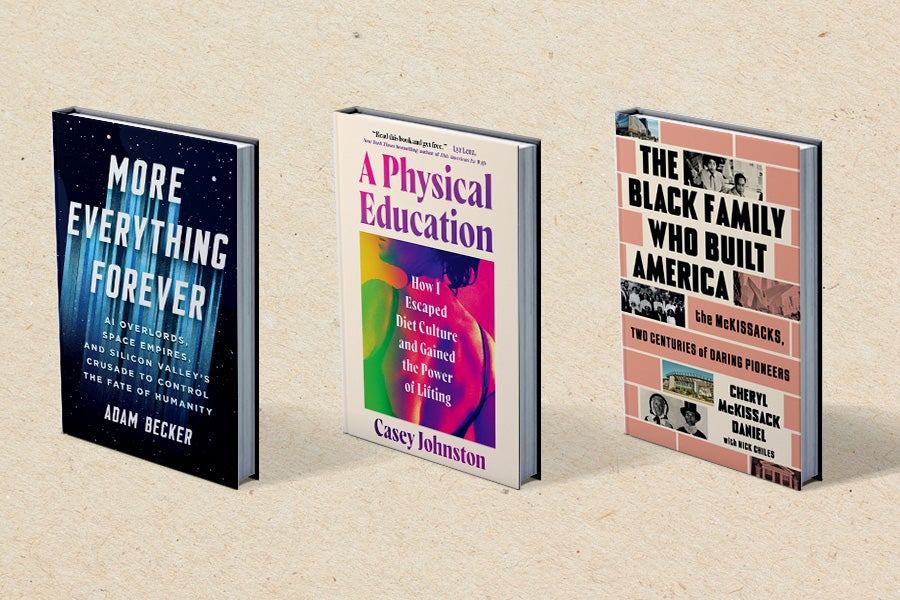
The Black Family Who Built America: The McKissacks, Two Centuries of Daring Pioneers
by Cheryl McKissack Daniel, with Nick Chiles
Atria/Black Privilege Publishing
(Tags: Memoir)
“The author’s great-great-grandfather, an enslaved person brought from Africa, started a construction/engineering company in North Carolina and Tennessee that is still in the family and is now run by her. An intimate view of courageous Black lives in the midst of ongoing white prejudice and violence.” —Maria-Christina Keller, Copy Director
Careless People: A Cautionary Tale of Power, Greed, and Lost Idealism
by Sarah Wynn-Williams
Flatiron Books
(Tags: Memoir)
“When I finished the prologue of Careless People, I immediately looked up who had the movie rights—the author has a flair for the cinematic in describing her experiences. Besides being a riveting read, this look at the thoughts and thoughtlessness of those running Facebook is crucial to understanding how today’s toxic digital landscape came to be.” —Sarah Lewin Frasier, Senior Editor
CHART: Designing Creative Data Visualizations from Charts to Art
by Nadieh Bremer
A K Peters/CRC Press
(Tags: Data Visualization)
“Nadieh Bremer excels at creating captivating and memorable information-rich data displays. If you’re stuck in a world of bar charts and line charts and looking to stretch your own capabilities beyond standard visualization forms, this book is for you. Examples include several graphics commissioned for Scientific American articles!” —Jen Christiansen, Acting Chief of Design & Senior Graphics Editor
The Football: The Amazing Mathematics of the World’s Most Watched Object
by Étienne Ghys
Princeton University Press
(Tags: Math, Physics, Sports)
“A fascinating mathematical and physical microhistory of soccer balls and the official FIFA World Cup match balls in particular.” —Emma R. Hasson, 2025 AAAS Mass Media Fellow
The Harder I Fight the More I Love You
by Neko Case
Grand Central Publishing
(Tags: Memoir)
“A searing, beautiful memoir by singer-songwriter Neko Case, recalling her lonely, tumultuous upbringing and the way music became a balm and an escape. It is written with the same gut-punching poetic voice that makes her such an incredible lyricist.” —Andrea Thompson, Senior Desk Editor/Life Science
I Want to Burn This Place Down
by Maris Kreizman
Ecco
(Tags: Essays)
“A wonderfully slim collection of essays about growing up, getting angry and choosing to change the world for the better. I cringed at how relatable it was at times, but that’s the point!” —Brianne Kane, Associate Editor/Books & Rights Manager
Inventing the Renaissance: The Myth of a Golden Age
by Ada Palmer
The University of Chicago Press
(Tags: History)
“You may know Ada Palmer as a science-fiction novelist, but she’s also a historian at the University of Chicago who focuses on the Renaissance. This is a chunky book with many parts, but it’s very readable and thought-provoking. You’ll think differently about the Renaissance—and about how history works.” —Meghan Bartels, Senior Reporter
Leaving the Ocean Was a Mistake: Life Lessons from Sixty Sea Creatures
by Cara Giaimo. Illustrated by Vlad Stankovic
Quirk Books
(Tags: Humor, Animals)
“This charming little book highlights 60 creatures that live in the shallows to the abyssal deep. Each is beautifully illustrated, while the text shares an interesting fact about the animal and a wry inspirational-poster-style motto for human life drawn from its experience. Great for kids five to 10 years old, plus anyone else who wants to be delighted by the ocean’s denizens.” —Meghan Bartels, Senior Reporter
The Meteorites: Encounters with Outer Space and Deep Time
by Helen Gordon
Profile Books
(Tags: Space, History)
“I’ve never had such an emotional reaction to reading about rocks, but the prose is beautiful, and the passion of the authors pours off every page.” —Brianne Kane, Associate Editor/Books & Rights Manager
More Everything Forever: AI Overlords, Space Empires, and Silicon Valley’s Crusade to Control the Fate of Humanity
by Adam Becker
Basic Books
(Tags: AI, Technology)
“A fascinating look at the so-called philosophies that Silicon Valley tech entrepreneurs use to justify sacrificing the present to build a future that will never exist. Equal parts fascinating and infuriating, this book sheds light on the way some of the most powerful people in the world think and also shows you how to argue against it.” —Ian Kelly, Product Manager
One Day, Everyone Will Have Always Been against This
by Omar El Akkad
Knopf
(Tags: Memoir, Politics)
“A powerfully written, thought-provoking book with deep moral clarity.” —Meghan Bartels, Senior Reporter
Owned: How Tech Billionaires on the Right Bought the Loudest Voices on the Left
by Eoin Higgins
Bold Type Books
(Tags: Political Science)
“The story of how tech billionaires are buying out their most vocal critics and trying to change the journalistic landscape. This book helps explain not just how narratives are changing in front of our eyes but why.” —Ian Kelly, Product Manager
Phenomenal Moments: Revealing the Hidden Science around Us
by Felice Frankel
MITeen Press
(Tags: Young Adult, Photography)
“Photographer Felice Frankel explores the science behind visual characteristics through a series of images paired with artist statements and succinct scientific explanations. Together, this prompts the reader to ponder light and shadow, form, transformation and surfaces.” —Jen Christiansen, Acting Chief of Design & Senior Graphics Editor
Proto: How One Ancient Language Went Global
by Laura Spinney
Bloomsbury Publishing
(Tags: History, Linguistics)
“Laura Spinney tells engaging tales of archeologists traipsing through fields, linguists working toward professional vindication and many others active in the search for understanding of how these ancient languages traveled, fragmented, warred and traded to eventually became the dominant Indo-European languages today.” —Rich Hunt, Managing Production Editor
A Physical Education: How I Escaped Diet Culture and Gained the Power of Lifting
by Casey Johnston
Grand Central Publishing
(Tags: Memoir)
“A gripping combination of memoir and exploration of the history and science of weight lifting. Casey Johnston’s background as a science journalist comes through clearly in the fascinating explanations of how and why lifting can be so beneficial.” —Sarah Lewin Frasier, Senior Editor
Raising Hare
by Chloe Dalton
Pantheon
(Tags: Memoir)
“An atmospheric and cozy memoir about a city slicker workaholic who rescues a newborn abandoned hare and awakens to nature. A great one for animal lovers.” —Andrea Gawrylewski, Chief Newsletter Editor
Reefs of Time: What Fossils Reveal about Coral Survival
by Lisa Gardiner
Princeton University Press
(Tags: Science, Environment)
“This is a love letter to past, present and future coral reefs. Gardiner is a close friend of mine. Her stories of fossil and modern polyps—as well as the people that study them—prompted me to think more deeply about resilience.” —Jen Christiansen, Acting Chief of Design & Senior Graphics Editor
Ripples on the Cosmic Ocean: An Environmental History of Our Place in the Solar System
by Dagomar Degroot
Harvard University Press
(Tags: Science, Space)
“A fascinating tour of the environmental history of the inner solar system and how centuries of changes to our neighboring worlds have shaped the human experience.” —Meghan Bartels, Senior Reporter
Searches: Selfhood in the Digital Age
by Vauhini Vara
Pantheon
(Tags: AI, Technology)
“I loved this philosophical look at how and why artificial intelligence and broader technological developments have changed our world and our artistic practice within it.” —Brianne Kane, Associate Editor/Books & Rights Manager
The Sexual Evolution: How 500 Million Years of Sex, Gender, and Mating Shape Modern Relationships
by Nathan Lents
Mariner Books
(Tags: Sexology, Zoology)
“Surprisingly funny and eye-opening book about how the animal kingdom is more sexually diverse than previously understood.” —Brianne Kane, Associate Editor/Books & Rights Manager
Sociopath: A Memoir
by Patric Gagne
Simon & Schuster
(Tags: Memoir, Mental Health)
“I picked up this book after I read our own July/August 2025 article about treating childhood psychopathy and wanted to know more. The author describes with vivid honesty how it felt to grow up as an undiagnosed sociopath and how she came to learn about herself and create her own path to treatment. As someone who is fascinated by different neurotypes, I was hooked from the start and came away with (somewhat ironically) a newfound empathy for those who don’t themselves experience empathy like most people do.” —Amanda Montañez, Senior Graphics Editor
Speak Data: Artists, Scientists, Thinkers, and Dreamers on How We Live Our Lives in Numbers
by Giorgia Lupi and Phillip Cox
Chronicle Books
(Tags: Data)
“A collection of thoughtful interviews with people who spend their days thinking about and working with data—including scientists, artists, activists and business leaders. I loved that each interviewee defines data in a different way.” —Amanda Montañez, Senior Graphics Editor
Strata: Stories From Deep Time
by Laura Poppick
W. W. Norton
(Tags: Geology)
“The deep history of Earth can be overwhelming—the sheer scale of billions of years, with only the opaque names of eras and epochs to navigate by—but Strata is different. In it, geologist-turned-science-journalist Laura Poppick carries the reader on our planet’s adventure by highlighting four pivotal phenomena: air, ice, mud and heat.” —Meghan Bartels, Senior Reporter
Sweet Nothings: Confessions of a Candy Lover
by Sarah Perry
Mariner Books
(Tags: Essays, Food)
“The sweetest essays about some of my favorite candy indulgences. It was sometimes funny, touching and even educational. This would be a nice palate cleanser to get someone out of a reading slump. The illustrations and formatting, with sections broken up by candy color, was a cute touch.” —Isabella Bruni, Digital Producer
Tigers Between Empires: The Improbable Return of Great Cats to the Forests of Russia and China
by Jonathan C. Slaght
Farrar, Straus and Giroux
(Tags: History)
“A heart-in-your-mouth saga that tells the stories—terrifying, riveting and sad—of the adventurer scientists who saved the disappearing Amur tiger. Slaght gives us an inspiring account of a wilderness where brown bears fight tigers and the too-brief geopolitical thaw that reshaped the lives of both man and tiger.” —Dan Vergano, Senior Editor, Washington, D.C.
Fiction
In alphabetical order
Among Friends
by Hal Ebbott
Riverhead Books
(Tags: Literary Fiction)
“This is simply about a birthday weekend spent between two families that goes wrong, but I was locked into the drama right away. Lesson learned: some friendships are best left in the past.” —Isabella Bruni, Digital Producer
The Antidote
by Karen Russell
Knopf
(Tags: Historical Fiction)
“Thrilled my book club made me read this! I loved this new take on a witch in the American West.” —Brianne Kane, Associate Editor/Books & Rights Manager
Atmosphere
by Taylor Jenkins Reid
Ballantine Books
(Tags: LGBTQ+, Astronauts)
“A gorgeous romance interspersed with a thrilling mission story about fictional astronauts in the space shuttle program in the 1980s.” —Clara Moskowitz, Chief of Reporters
The Botanist’s Assistant
by Peggy Townsend
Berkley
(Tags: Mystery)
“A fun murder mystery steeped in the world of scientific research and botany.” —Meghan Bartels, Senior Reporter
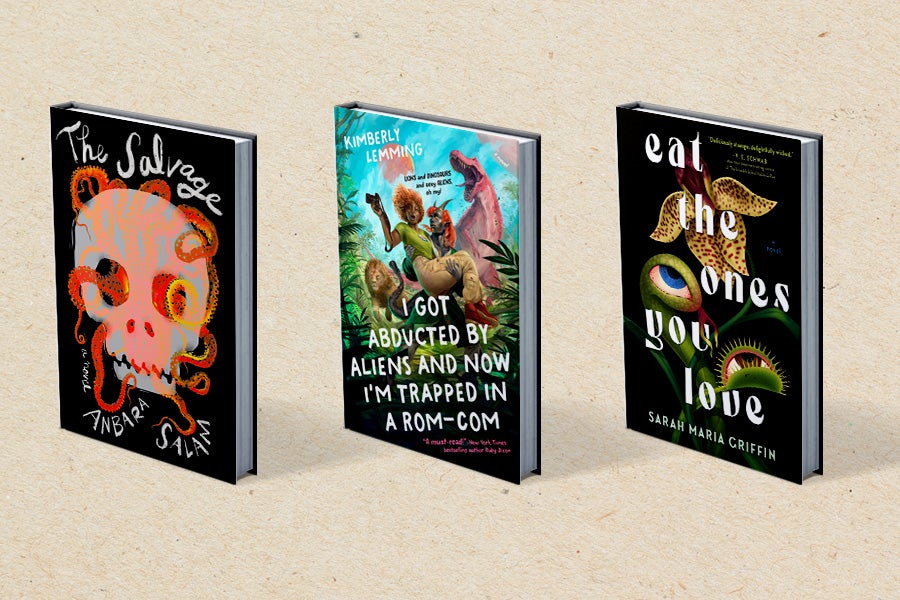
Eat The Ones You Love
by Sarah Maria Griffin
Tor Books
(Tags: Fantasy)
“Creepy and weird in all the best ways! More horror stories should examine violence through botany and abandoned malls.” —Brianne Kane, Associate Editor/Books & Rights Manager
Emily Wilde’s Compendium of Lost Tales
by Heather Fawcett
Del Rey Books
(Tags: Fantasy)
“I find the world and characters so endlessly endearing I’d read about them if they were just sitting around having tea! The combination of monster hunting, academic woes and romantic high points was just what I was looking for.” —Brianne Kane, Associate Editor/Books & Rights Manager
For Whom the Belle Tolls
by Jaysea Lynn
S&S/Saga Press
(Tags: Romance, Erotica)
“A woman dies of cancer, explores the afterlife, enjoys customer service and finds two kinds of love. It’s a nice blend of romance, plot and characters that feels like a warm cozy hug of a book.” —Meghan Bartels, Senior Reporter
I Got Abducted By Aliens and Now I’m Trapped in a Rom-Com
by Kimberly Lemming
Berkley
(Tags: Erotica, Science Fiction)
“As a longtime Lemming fan, I was still shocked to see her foray into science fiction. She satirizes the field’s desperation and tunnel vision for experimentation and documentation well while still showcasing hysterically self-aware protagonists and introducing new, weird and hot aliens.” —Brianne Kane, Associate Editor/Books & Rights Manager
Isaac’s Song
by Daniel Black
Hanover Square Press
(Tags: Historical Fiction)
“A heart-wrenching read on grief, love, family and identity. Set in the 1980s, it’s a poetic journey about dealing with generational trauma and writing your own story.” —Fonda Mwangi, Multimedia Editor
Rejection
by Tony Tulathimutte
William Morrow Paperbacks
(Tags: Short Story Fiction, Satire)
“As someone who spends way too much time on the social Internet, this book made me spiral. It’s a scathing look at Internet losers, woke politics and a self-hating generation of people just looking to be accepted.” —Carin Leong, Editorial Contributor
“This book was as startling as it was eye-opening. Going to be hard to forget this one.” —Isabella Bruni, Digital Producer
The Rest Is Silence
by Augusto Monterroso. Translated by Aaron Kerner
New York Review of Books
(Tags: Academic Satire)
“A hilarious and touching bludgeoning of the provincial éminence-grise-type, in translation from the original Spanish. A short, savage antidote to every unblemished saccharine Festschrift of the scholarly world. Will make you want to go back and read Don Quixote, around which the critic at the center of the story has mislaid his entire oeuvre.” —Dan Vergano, Senior Editor, Washington, D.C.
The Salvage
by Anbara Salam
Tin House
(Tags: Historical Fiction, Mystery)
“There are ghosts in the icy waters east of Scotland. In 1962 a marine archaeologist raises them to the surface from a century-old shipwreck. But she is haunted by ghosts of her own. Dead men’s shadows, creaking cupboard doors and poisoned relationships make for a gothic takeover of the science in this tale. I liked the way our archaeologist is gradually convinced of the supernatural terrors, even while a supposedly superstitious islander counters with evidence rooted in the everyday world.” —Josh Fischman, Senior Editor/Special Projects
Small Boat
by Vincent Delecroix. Translated by Helen Stevenson
Hope Road Publishing
(Tags: Philosophical Tragedy, Historical Fiction)
“A minimalist and morally complex retelling of the 2021 English Channel disaster that suggests there’s no one to blame but us all.” —Cynthia Atkinson, Marketing & Customer Service Assistant
Sunrise on the Reaping
by Suzanne Collins
Scholastic Press
(Tags: Dystopian Fiction)
“Suzanne Collins really delivered with Sunrise on the Reaping. The backstory of Haymitch, Katniss’s mentor during the Hunger Games, is finally revealed, and the result is gutting—it is rip-out-your-heartstrings devastating.” —Isabella Bruni, Digital Producer
Vanishing World
by Sayaka Murata
Grove Hardcover
(Tags: Science Fiction, Dystopia)
“This dystopian tale imagines a world where sex for procreation has become obsolete, replaced entirely by artificial insemination and clinical reproduction. Here intimacy is viewed as unnecessary, unsanitary and even taboo. It’s an unsettling exploration of how the erosion of romantic love and pleasure and the human bonds they forge can profoundly reshape the meaning of family, friendship and society at large.” —Sunya Bhutta, Chief Audience Engagement Editor
We Love You, Bunny
by Mona Awad
S&S/Marysue Rucci Books
(Tags: Fantasy, Thriller)
“This was the perfect spooky-season read—and dare I say, I preferred this to the prequel. Mona Awad hits the nail on the head with this dark academia freaky fever dream. The origins of this New England MFA student clique are revealed, and we get all the witchcraft and laughter that bring the ‘Bunnies’ to life. —Isabella Bruni, Digital Producer
Where the Axe Is Buried
by Ray Nayler
MCD
(Tags: Science Fiction)
“It’s less interested in the apocalypse than it is in those who shape its course. No perspectives are off limits in this far-too-familiar future, a prospect that’s as chilling as it is riveting.” —Cynthia Atkinson, Marketing & Customer Service Assistant
Wild Dark Shore
by Charlotte McConaghy
Flatiron Books
(Tags: Climate Fiction)
“A riveting drama set on a remote island near Antarctica, where a man and his three children are caretakers for an underground vault protecting vital samples of the world’s plant seeds. Personal mysteries and dangerous climate-change-induced weather make this a suspenseful page-turner.” —Clara Moskowitz, Chief of Reporters
Bountiful Backlist
In order of publication year
Journal of a Novel: The East of Eden Letters
by John Steinbeck
Penguin Books, 1990
(Tags: Diary, Creative Writing)
“A fascinating look into an author’s process, especially his insecurities and what he believed the story of East of Eden was truly about. It inspired me to write more in pencil!” —Brianne Kane, Associate Editor/Books & Rights Manager
Killing Rage: Ending Racism
by bell hooks
Holt Paperbacks, 1996
(Tags: Essays)
“A necessary confrontation with the realities of racism that demands to be read. Be ready to question yourself and the country you live in.” —Charlotte Hartwell, Marketing Manager
To Live
by Yu Hua
Vintage, 2003
(Tags: Historical Fiction)
“Set in 20th-century China, it’s an unforgettable reminder of what’s left when relentless misfortune and tragedy strike. There are plenty of moments that are unsettling, but you can’t help but keep reading such a human story.” —Cynthia Atkinson, Marketing & Customer Service Assistant
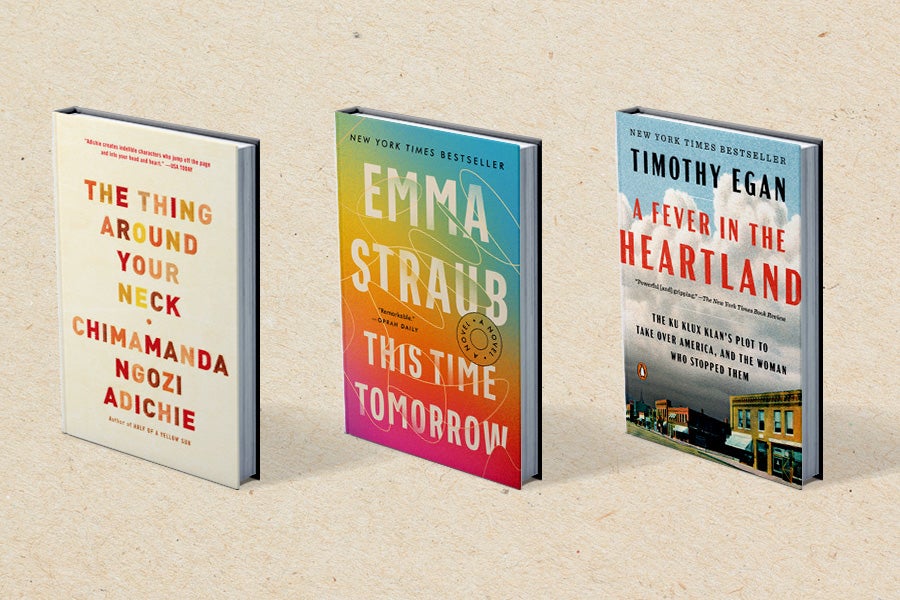
The Thing around Your Neck
by Chimamanda Ngozi Adichie
Vintage, 2009
(Tags: Short Stories)
“I find I barely have any time to read these days, but Chimamanda Ngozi Adichie’s 2009 collection of short stories about postcolonial Nigeria is an absolute page-turner. I finished it in just two days, but each narrative has the potency that will keep me coming back to read them over and over again.” —Claire Cameron, Breaking News Chief
The Night Circus
by Erin Morgenstern
Vintage, 2012
(Tags: Fantasy)
“A beautiful love story told through secrets, magic and circuses. Erin Morgenstern is the kind of spectacular writer who can convince me to follow her anywhere, no matter how fantastical the plot may seem at first glance.” —Brianne Kane, Associate Editor/Books & Rights Manager
To Make Men Free: A History of the Republican Party
by Heather Cox Richardson
Basic Books, 2014
(Tags: History)
“A history of the Republican Party that helps explain how we got to our current political situation.” —Meghan Bartels, Senior Reporter
Pachinko
by Min Jin Lee
Grand Central Publishing, 2017
(Tags: Historical Fiction)
“One of the best books I’ve ever read. Isak’s life story completely broke my heart, and just thinking about it makes me teary-eyed all over again.” —Brianne Kane, Associate Editor/Books & Rights Manager
The Apollo Murders
by Chris Hadfield
Mulholland Books, 2021
(Tags: Space Thriller)
“This riveting thriller by Canadian astronaut Chris Hadfield imagines a cold-war-era Apollo mission gone wrong, with lots of exciting intrigue between astronauts and cosmonauts.” —Clara Moskowitz, Chief of Reporters
This Time Tomorrow
by Emma Straub
Riverhead Books, 2023
(Tags: Science Fiction)
“I normally don’t go for time-travel books, but this had just the right sprinkle of magical realism. The book is rooted in the relationship between a father and daughter and hooked me with its tenderness and humor. It reminded me of The Midnight Library, [by Matt Haig], too.” —Isabella Bruni, Digital Producer
Abortion: Our Bodies, Their Lies, and the Truths We Use to Win
by Jessica Valenti
Crown, 2024
(Tags: Health, Politics)
“Everything you need to know about the antiscience tactics being used to keep people from the health care they need. It’s a supersmart guide to seeing the whole context of how abortion is treated in the U.S.” —Meghan Bartels, Senior Reporter
Always Bring Your Sunglasses: And Other Stories from a Life of Sensory and Social Invalidation
by Becca Lory Hector
Self-published, 2024
(Tags: Parenting)
“A beautifully honest account of the author’s experience growing up as an undiagnosed autistic person—part memoir, part guide for parents and other caregivers who want to better understand and support the autistic children in their lives.” —Amanda Montañez, Senior Graphics Editor
Custodians of Wonder: Ancient Customs, Profound Traditions, and the Last People Keeping Them Alive
by Eliot Stein
St. Martin’s Press, 2024
(Tags: Society and Current Affairs)
“A lovely adventure profiling 10 nearly lost traditions from around the world. It explores the history of each one and the handful of people fighting to keep them alive.” —Meghan Bartels, Senior Reporter
Faux Feminism: Why We Fall for White Feminism and How We Can Stop
by Serene Khader
Beacon Press, 2024
(Tags: Politics)
“A detailed reckoning of how white feminism has failed everyone, this book paints a beautiful picture of the way the world could be instead.” —Meghan Bartels, Senior Reporter
Fever in the Heartland: The Ku Klux Klan’s Plot to Take Over America, and the Woman Who Stopped Them
by Timothy Egan
Penguin Books, 2024
(Tags: History)
“This is a beautifully written book about a terrifying period in U.S. history. It’s also a reminder that there are always those whose hearts, corrupted by racism and power, would happily trade in freedom to enact their own tyrannical white supremacist fever dreams. Egan reminds us that the privilege of living in a democracy is the unending work that goes toward maintaining it.” —Kendra Pierre-Louis, Editorial Contributor
The Javelin Program
by Derin Edala
Self-published, 2024
(Tags: Science Fiction)
“This Web-series-turned-book has everything one could ask for in character-driven hard science fiction. It’s a compelling snapshot of a potential future society, full of gripping mysteries, anthropological intrigue and complex but (as far as I can tell) accurate physics. But be warned: because it was initially released as a chapter-by-chapter web series, the ending of the first book on its own will not be satisfying.” —Emma R. Hasson, 2025 AAAS Mass Media Fellow
The Light Eaters: How the Unseen World of Plant Intelligence Offers a New Understanding of Life on Earth
by Zoë Schlanger
Harper, 2024
(Tags: Botany)
“Most people think of plants as mindless, unfeeling creatures. Zoë Schlanger’s compelling, lucid tour of the latest research on the ‘plant experience’ proves this is far from the case.” —Andrea Gawrylewski, Chief Newsletter Editor
The Ministry of Time
by Kaliane Bradley
Avid Reader Press/Simon & Schuster, 2024
(Tags: Science Fiction, Time-Travel Rom-Com)
“A really fun premise of historical figures plucked from their own eras and unwillingly expatriated to present-day London, where they’re forced to reckon with modern technology and with the moral legacy of the British Empire that brought them there. I love a character who yearns!” —Carin Leong, Editorial Contributor
The Other Significant Others: Reimagining Life with Friendship at the Center
by Rhaina Cohen
St. Martin’s Press, 2024
(Tags: Lifestyle)
“This book is about a type of relationship that we have no set vocabulary for: friends who have chosen to become life partners. Rhaina Cohen, who has herself experienced one of these platonic partnerships, profiles pairs of friends whose relationships have broken out of the conventional molds. It was so striking how each of these pairs felt like they were inventing something wholly new with their love and commitment to each other—even though, historically, there’s nothing new about it at all.” —Allison Parshall, Associate Editor/Mind & Brain
The Phoenix Keeper
by S. A. MacLean
Orbit, 2024
(Tags: Fantasy)
“This was such a delightful read! It’s billed as cozy, which I don’t think is fair—a couple guns do eventually show up—but it’s a very heartwarming story set in a magical zoo, following the revival of a defunct phoenix-breeding program.” —Meghan Bartels, Senior Reporter
The Safekeep
by Yael van der Wouden
Avid Reader Press/Simon & Schuster, 2024
(Tags: Historical Fiction)
“This novel absolutely slammed into me. Set in the postwar era of the Netherlands, it features a sour central character, a family history slowly oozing out onto the pages and an interloper who isn’t what she seems. I read this in one sitting—it is richly written, breathless and surprising! You’ll be as obsessed with this as the two main characters are with each other.” —Arminda Downey-Mavromatis, Former Associate Engagement Editor
The Vaster Wilds
by Lauren Groff
Riverhead Books, 2024
(Tags: Historical Fiction)
“A lyrical tale of survival in a harsh undeveloped version of colonial America. Groff seamlessly blends a psychological exploration of oppression and class with a naturalist’s view of the living world. It is both a feminist story and an ode to freedom.” —Andrea Gawrylewski, Chief Newsletter Editor
What If We Get It Right? Visions of Climate Futures
by Ayana Elizabeth Johnson
One World, 2024
(Tags: Climate, Technology)
“The interviews, poems, essays and artwork by a wide range of contributors, including scientist Kate Marvel, artist Erica Deeman, journalist Kendra Pierre-Louis and architecture and design curator Paola Antonelli provide frameworks and nudges to propel us forward. The book provided me with much needed hope and an energy boost.” —Jen Christiansen, Acting Chief of Design & Senior Graphics Editor