

From timber wars to cannabis crash: Scotia's battle to survive as California's last company town
SCOTIA — The last time Mary Bullwinkel and her beloved little town were in the national media spotlight was not a happy period. Bullwinkel was the spokesperson for the logging giant Pacific Lumber in the late 1990s, when reporters flooded into this often forgotten corner of Humboldt County to cover the timber wars and visit a young woman who had staged a dramatic environmental protest in an old growth redwood tree.Julia “Butterfly” Hill — whose ethereal, barefoot portraits high in the redwood canopy became a symbol of the Redwood Summer — spent two years living in a thousand-year-old tree, named Luna, to keep it from being felled. Down on the ground, it was Bullwinkel’s duty to speak not for the trees but for the timber workers, many of them living in the Pacific Lumber town of Scotia, whose livelihoods were at stake. It was a role that brought her death threats and negative publicity. Julia “Butterfly” Hill stands in a centuries-old redwood tree nicknamed “Luna” in April 1998. Hill would spend a little more than two years in the tree, protesting logging in the old-growth forest. (Andrew Lichtenstein / Sygma via Getty Images) The timber wars have receded into the mists of history. Old-growth forests were protected. Pacific Lumber went bankrupt. Thousands of timber jobs were lost. But Bullwinkel, now 68, is still in Scotia. And this time, she has a much less fraught mission — although one that is no less difficult: She and another longtime PALCO employee are fighting to save Scotia itself, by selling it off, house by house. After the 2008 bankruptcy of Pacific Lumber, a New York hedge fund took possession of the town, an asset it did not relish in its portfolio. Bullwinkel and her boss, Steve Deike, came on board to attract would-be homebuyers and remake what many say is the last company town in America into a vibrant new community. “It’s very gratifying for me to be here today,” Bullwinkel said recently, as she strolled the town’s streets, which look as though they could have been teleported in from the 1920s. “To keep Scotia alive, basically.” Mary Bullwinkel, residential real estate sales coordinator for Town of Scotia Company, LLC, stands in front of the company’s offices. The LLC owns many of the houses and some of the commercial buildings in Scotia. Some new residents say they are thrilled.“It’s beautiful. I call it my little Mayberry. It’s like going back in town,” said Morgan Dodson, 40, who bought the fourth house sold in town in 2018 and lives there with her husband and two children, ages 9 and 6.But the transformation has proved more complicated — and taken longer — than anyone ever imagined it would. Nearly two decades after PALCO filed for bankrupcty in 2008, just 170 of the 270 houses have been sold, with 7 more on the market. “No one has ever subdivided a company town before,” Bullwinkel said, noting that many other company towns that dotted the country in the 19th century “just disappeared, as far as I know.” The first big hurdle was figuring out how to legally prepare the homes for sale: as a company town, Scotia was not made up of hundreds of individual parcels, with individual gas meters and water mains. It was one big property. More recently, the flagging real estate market has made people skittish.Many in town say the struggle to transform Scotia mirrors a larger struggle in Humboldt County, which has been rocked, first by the faltering of its logging industry and more recently by the collapse of its cannabis economy. “Scotia is a microcosm of so many things,” said Gage Duran, a Colorado-based architect who bought the century-old hospital and is working to redevelop it into apartments. “It’s a microcosm for what’s happening in Humboldt County. It’s a microcosm for the challenges that California is facing.” The Humboldt Sawmill Company Power Plant still operates in of Scotia. The Pacific Lumber Company was founded in 1863 as the Civil War raged. The company, which eventually became the largest employer in Humboldt County, planted itself along the Eel River south of Eureka and set about harvesting the ancient redwood and Douglas fir forests that extended for miles through the ocean mists. By the late 1800s, the company had begun to build homes for its workers near its sawmill. Originally called “Forestville,” company officials changed the town’s name to Scotia in the 1880s. For more than 100 years, life in Scotia was governed by the company that built it. Workers lived in the town’s redwood cottages and paid rent to their employer. They kept their yards in nice shape, or faced the wrath of their employer. Water and power came from their employer. But the company took care of its workers and created a community that was the envy of many. The neat redwood cottages were well maintained. The hospital in town provided personal care. Neighbors walked to the market or the community center or down to the baseball diamond. When the town’s children grew up, company officials provided them with college scholarships. “I desperately wanted to live in Scotia,” recalled Jeannie Fulton, who is now the head of the Humboldt County Farm Bureau. When she and her husband were younger, she said, her husband worked for Pacific Lumber but the couple did not live in the company town.Fulton recalled that the company had “the best Christmas party ever” each year, and officials handed out a beautiful gift to every single child. “Not cheap little gifts. These were Santa Claus worthy,” Fulton said.But things began to change in the 1980s, when Pacific Lumber was acquired in a hostile takeover by Texas-based Maxxam Inc. The acquisition led to the departure of the longtime owners, who had been committed to sustainably harvesting timber. It also left the company loaded with debt. To pay off the debts, the new company began cutting trees at a furious pace, which infuriated environmental activists. A view of the town of Scotia and timber operations, sometime in the late 1800s or early 1900s. (The Pacific Lumber Company collection) 1 2 1. Redwood logs are processed by the Pacific Lumber Company in 1995 in Scotia, CA. This was the largest redwood lumber mill in the world, resulting in clashes with the environmental community for years. (Gilles Mingasson / Getty Images) 2. Redwood logs are trucked to the Pacific Lumber Company in 1995 in Scotia, CA. (Gilles Mingasson / Getty Images) Among them was Hill, who was 23 years old on a fall day in 1997 when she and other activists hiked onto Pacific Lumber land. “I didn’t know much about the forest activist movement or what we were about to do,” Hill later wrote in her book. “I just knew that we were going to sit in this tree and that it had something to do with protecting the forest.” Once she was cradled in Luna’s limbs, Hill did not come down for more than two years. She became a cause celebre. Movie stars such as Woody Harrelson and musicians including Willie Nelson and Joan Baez came to visit her. With Hill still in the tree, Pacific Lumber agreed to sell 7,400 acres, including the ancient Headwaters Grove, to the government to be preserved. A truck driver carries a load of lumber down Main Street in Scotia. The historic company town is working to attract new residents and businesses, but progress has been slow. Then just before Christmas in 1999, Hill and her compatriots reached a final deal with Pacific Lumber. Luna would be protected. The tree still stands today.Pacific Lumber limped along for seven more years before filing for bankruptcy, which was finalized in 2008. Marathon Asset Management, a New York hedge fund, found itself in possession of the town. Deike, who was born in the Scotia hospital and lived in town for years, and Bullwinkel, came on board as employees of a company called The Town of Scotia to begin selling it off. Deike said he thought it might be a three-year job. That was nearly 20 years ago.He started in the mailroom at Pacific Lumber as a young man and rose to become one of its most prominent local executives. Now he sounds like an urban planner when he describes the process of transforming a company town.His speech is peppered with references to “infrastructure improvements” and “subdivision maps” and also to the peculiar challenges created by Pacific Lumber’s building.“They did whatever they wanted,” he said. “Build this house over the sewer line. There was a manhole cover in a garage. Plus, it wasn’t mapped.” Steven Deike, president of Town of Scotia Company LLC, and Mary Bullwinkel, the company’s residential real estate sales coordinator, examine a room being converted into apartments at the Scotia Hospital. The first houses went up for sale in 2017 and more have followed every year since.Dodson and her family came in 2018. Like some of the new owners, Dodson had some history with Scotia. Although she lived in Sacramento growing up, some of her family worked for Pacific Lumber and lived in Scotia and she had happy memories of visiting the town.“The first house I saw was perfect,” she said. “Hardwood floors, and made out of redwood so you don’t have to worry about termites.”She has loved every minute since. “We walk to school. We walk to pay our water bill. We walk to pick up our mail. There’s lots of kids in the neighborhood.”The transformation, however, has proceeded slowly. And lately, economic forces have begun to buffet the effort as well, including the slowing real estate market.Dodson, who also works as a real estate agent, said she thinks some people may be put off by the town’s cheek-by-jowl houses. Also, she added, “we don’t have garages and the water bill is astronomical.”But she added, “once people get inside them, they see the craftsmanship.”Duran, the Colorado architect trying to fix up the old hospital, is among those who have run into unexpected hurdles on the road to redevelopment. A project that was supposed to take a year is now in its third, delayed by everything from a shortage of electrical equipment to a dearth of workers.“I would guess that a portion of the skilled workforce has left Humboldt County,” Duran said, adding that the collapse of the weed market means that “some people have relocated because they were doing construction but also cannabis.”He added that he and his family and friends have been “doing a hard thing to try to fix up this building and give it new life, and my hope is that other people will make their own investments into the community.”A year ago, an unlikely visitor returned: Hill herself. She came back to speak at a fundraiser for Sanctuary Forest, a nonprofit land conservation group that is now the steward of Luna. The event was held at the 100-year-old Scotia Lodge — which once housed visiting timber executives but now offers boutique hotel rooms and craft cocktails. Many of the new residents had never heard of Hill or known of her connection to the area. Tamara Nichols, 67, who discovered Scotia in late 2023 after moving from Paso Robles, said she knew little of the town’s history. But she loves being so close to the old-growth redwoods and the Eel River, which she swims in. She also loves how intentional so many in town are about building community. What’s more, she added: “All those trees, there’s just a feel to them.”
The redwood wars are long over. Pacific Lumber is no more, but the company town it built endures in Humboldt County. Can it find a new life as a hidden real estate gem?
SCOTIA — The last time Mary Bullwinkel and her beloved little town were in the national media spotlight was not a happy period. Bullwinkel was the spokesperson for the logging giant Pacific Lumber in the late 1990s, when reporters flooded into this often forgotten corner of Humboldt County to cover the timber wars and visit a young woman who had staged a dramatic environmental protest in an old growth redwood tree.
Julia “Butterfly” Hill — whose ethereal, barefoot portraits high in the redwood canopy became a symbol of the Redwood Summer — spent two years living in a thousand-year-old tree, named Luna, to keep it from being felled. Down on the ground, it was Bullwinkel’s duty to speak not for the trees but for the timber workers, many of them living in the Pacific Lumber town of Scotia, whose livelihoods were at stake. It was a role that brought her death threats and negative publicity.
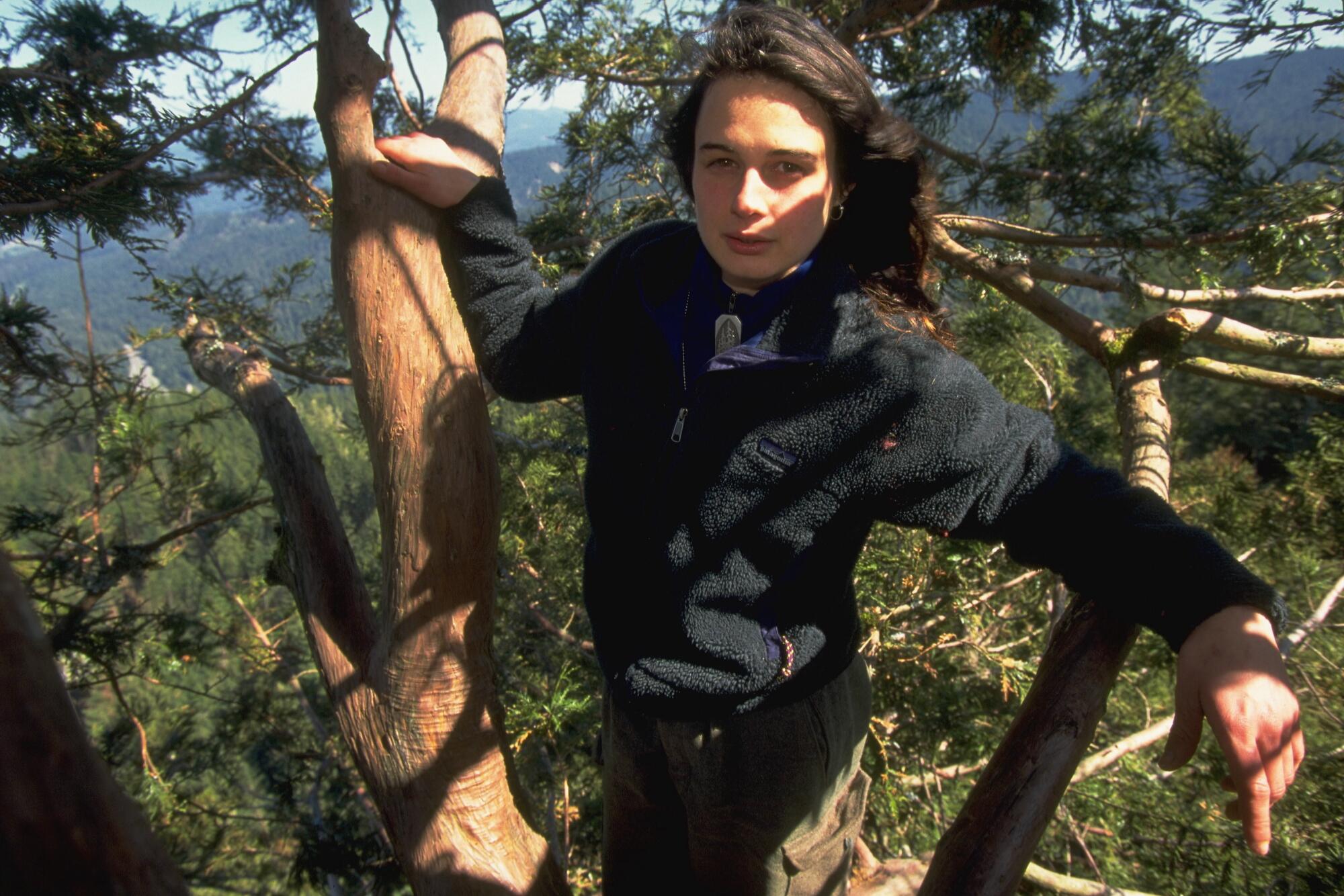
Julia “Butterfly” Hill stands in a centuries-old redwood tree nicknamed “Luna” in April 1998. Hill would spend a little more than two years in the tree, protesting logging in the old-growth forest.
(Andrew Lichtenstein / Sygma via Getty Images)
The timber wars have receded into the mists of history. Old-growth forests were protected. Pacific Lumber went bankrupt. Thousands of timber jobs were lost. But Bullwinkel, now 68, is still in Scotia. And this time, she has a much less fraught mission — although one that is no less difficult: She and another longtime PALCO employee are fighting to save Scotia itself, by selling it off, house by house.
After the 2008 bankruptcy of Pacific Lumber, a New York hedge fund took possession of the town, an asset it did not relish in its portfolio. Bullwinkel and her boss, Steve Deike, came on board to attract would-be homebuyers and remake what many say is the last company town in America into a vibrant new community.
“It’s very gratifying for me to be here today,” Bullwinkel said recently, as she strolled the town’s streets, which look as though they could have been teleported in from the 1920s. “To keep Scotia alive, basically.”
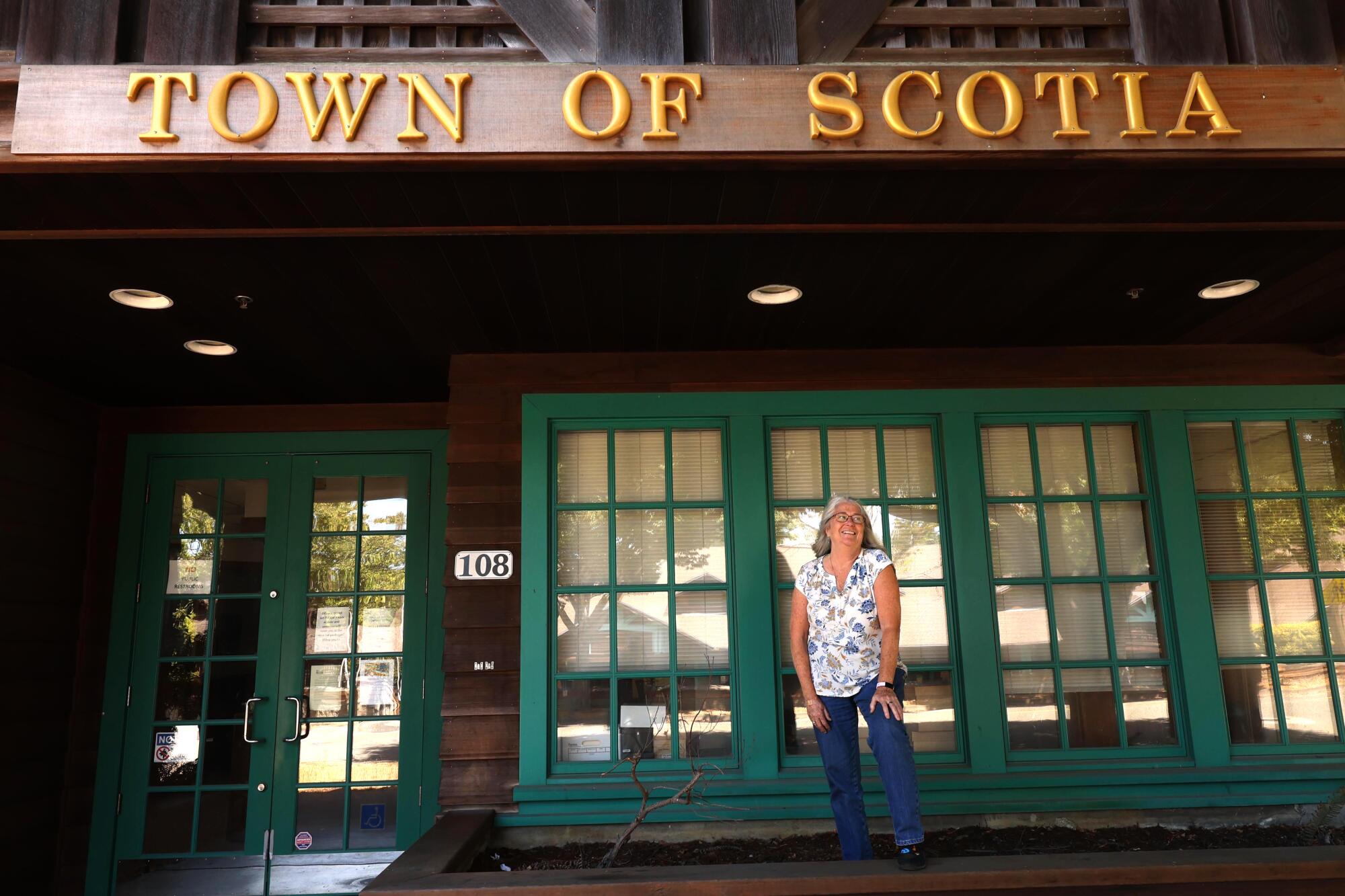
Mary Bullwinkel, residential real estate sales coordinator for Town of Scotia Company, LLC, stands in front of the company’s offices. The LLC owns many of the houses and some of the commercial buildings in Scotia.
Some new residents say they are thrilled.
“It’s beautiful. I call it my little Mayberry. It’s like going back in town,” said Morgan Dodson, 40, who bought the fourth house sold in town in 2018 and lives there with her husband and two children, ages 9 and 6.
But the transformation has proved more complicated — and taken longer — than anyone ever imagined it would. Nearly two decades after PALCO filed for bankrupcty in 2008, just 170 of the 270 houses have been sold, with 7 more on the market.
“No one has ever subdivided a company town before,” Bullwinkel said, noting that many other company towns that dotted the country in the 19th century “just disappeared, as far as I know.”
The first big hurdle was figuring out how to legally prepare the homes for sale: as a company town, Scotia was not made up of hundreds of individual parcels, with individual gas meters and water mains. It was one big property. More recently, the flagging real estate market has made people skittish.
Many in town say the struggle to transform Scotia mirrors a larger struggle in Humboldt County, which has been rocked, first by the faltering of its logging industry and more recently by the collapse of its cannabis economy.
“Scotia is a microcosm of so many things,” said Gage Duran, a Colorado-based architect who bought the century-old hospital and is working to redevelop it into apartments. “It’s a microcosm for what’s happening in Humboldt County. It’s a microcosm for the challenges that California is facing.”
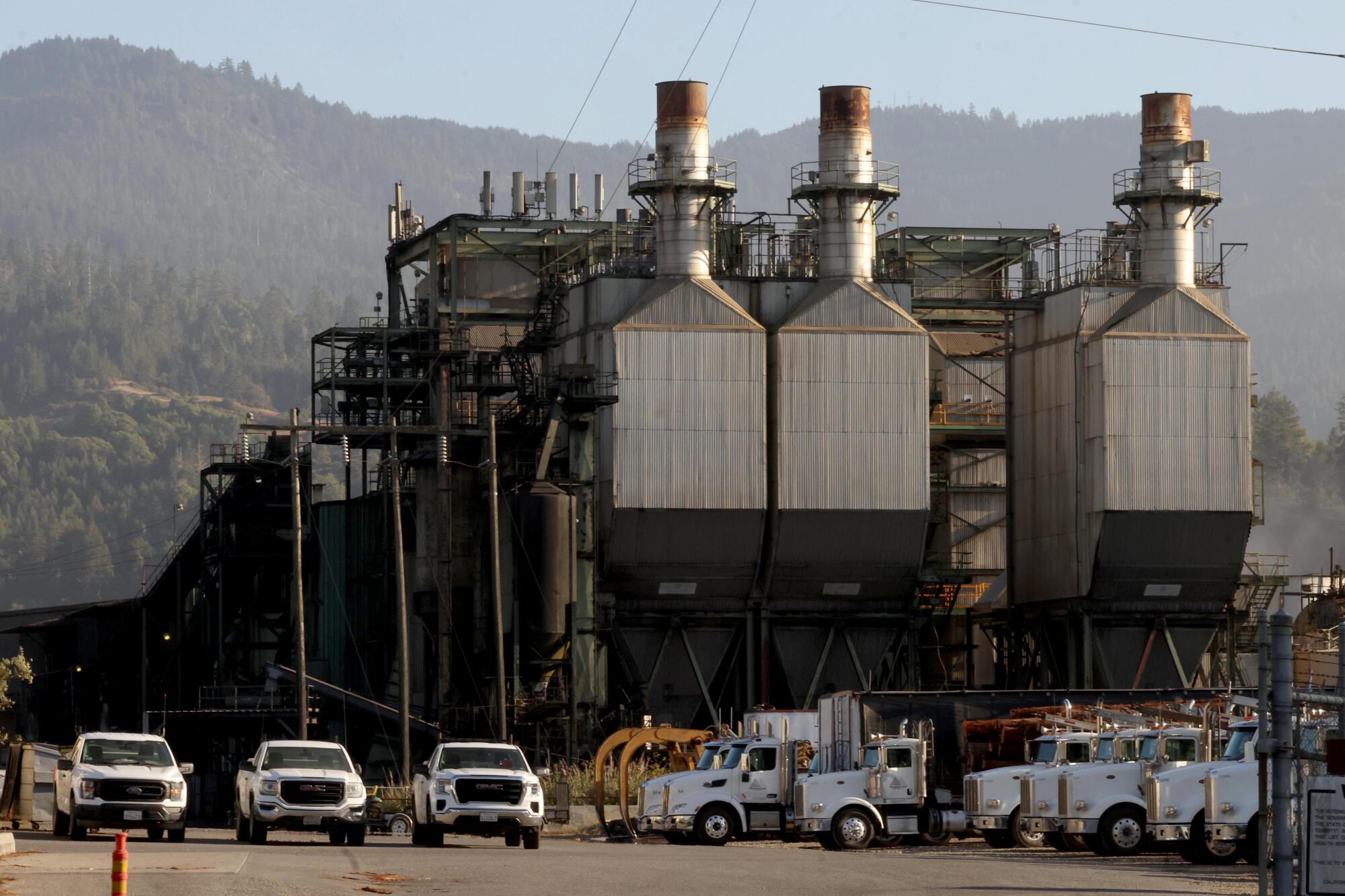
The Humboldt Sawmill Company Power Plant still operates in of Scotia.
The Pacific Lumber Company was founded in 1863 as the Civil War raged. The company, which eventually became the largest employer in Humboldt County, planted itself along the Eel River south of Eureka and set about harvesting the ancient redwood and Douglas fir forests that extended for miles through the ocean mists. By the late 1800s, the company had begun to build homes for its workers near its sawmill. Originally called “Forestville,” company officials changed the town’s name to Scotia in the 1880s.
For more than 100 years, life in Scotia was governed by the company that built it. Workers lived in the town’s redwood cottages and paid rent to their employer. They kept their yards in nice shape, or faced the wrath of their employer. Water and power came from their employer.
But the company took care of its workers and created a community that was the envy of many. The neat redwood cottages were well maintained. The hospital in town provided personal care. Neighbors walked to the market or the community center or down to the baseball diamond. When the town’s children grew up, company officials provided them with college scholarships.
“I desperately wanted to live in Scotia,” recalled Jeannie Fulton, who is now the head of the Humboldt County Farm Bureau. When she and her husband were younger, she said, her husband worked for Pacific Lumber but the couple did not live in the company town.
Fulton recalled that the company had “the best Christmas party ever” each year, and officials handed out a beautiful gift to every single child. “Not cheap little gifts. These were Santa Claus worthy,” Fulton said.
But things began to change in the 1980s, when Pacific Lumber was acquired in a hostile takeover by Texas-based Maxxam Inc. The acquisition led to the departure of the longtime owners, who had been committed to sustainably harvesting timber. It also left the company loaded with debt.
To pay off the debts, the new company began cutting trees at a furious pace, which infuriated environmental activists.
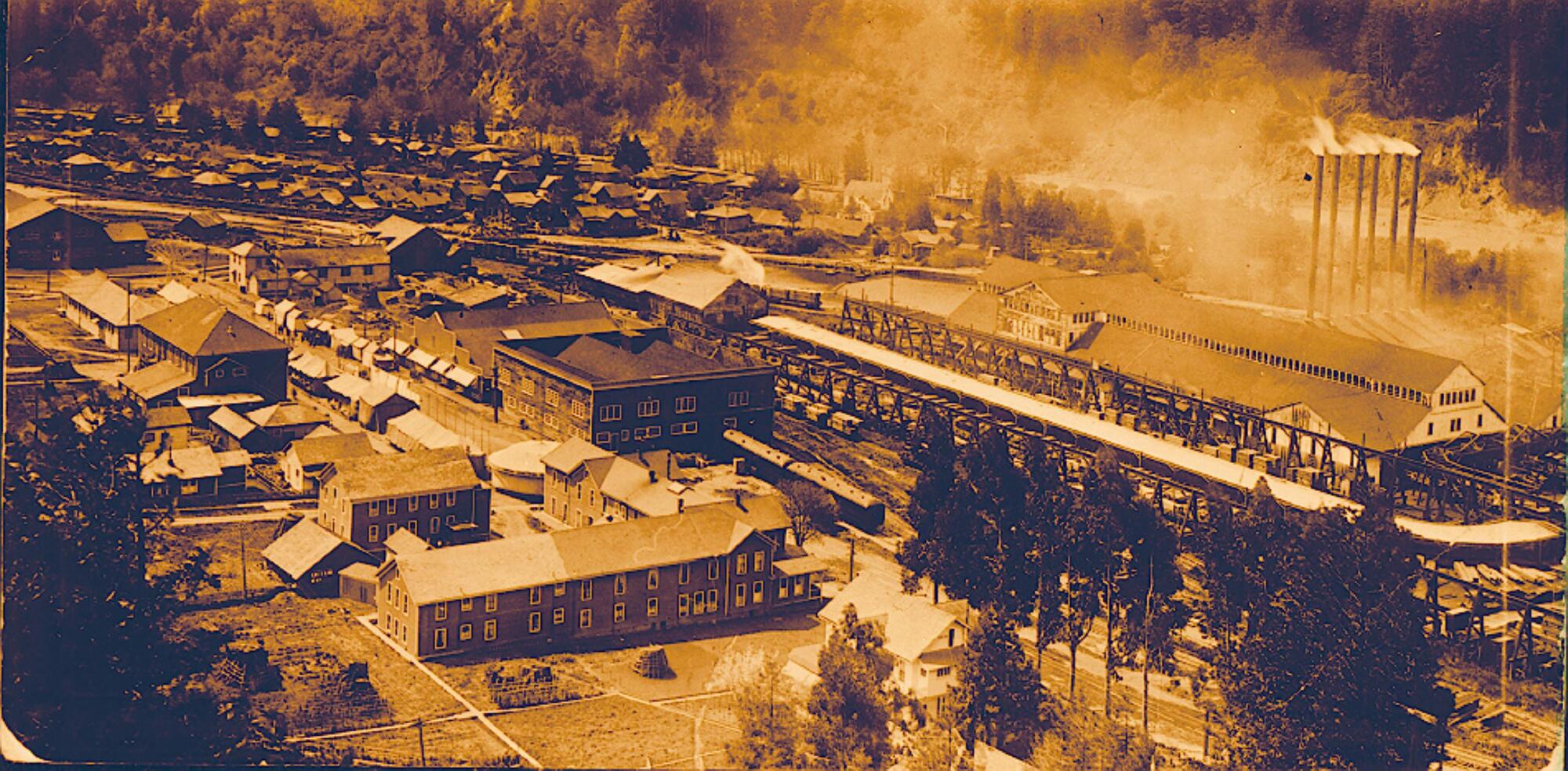
A view of the town of Scotia and timber operations, sometime in the late 1800s or early 1900s.
(The Pacific Lumber Company collection)
1
2
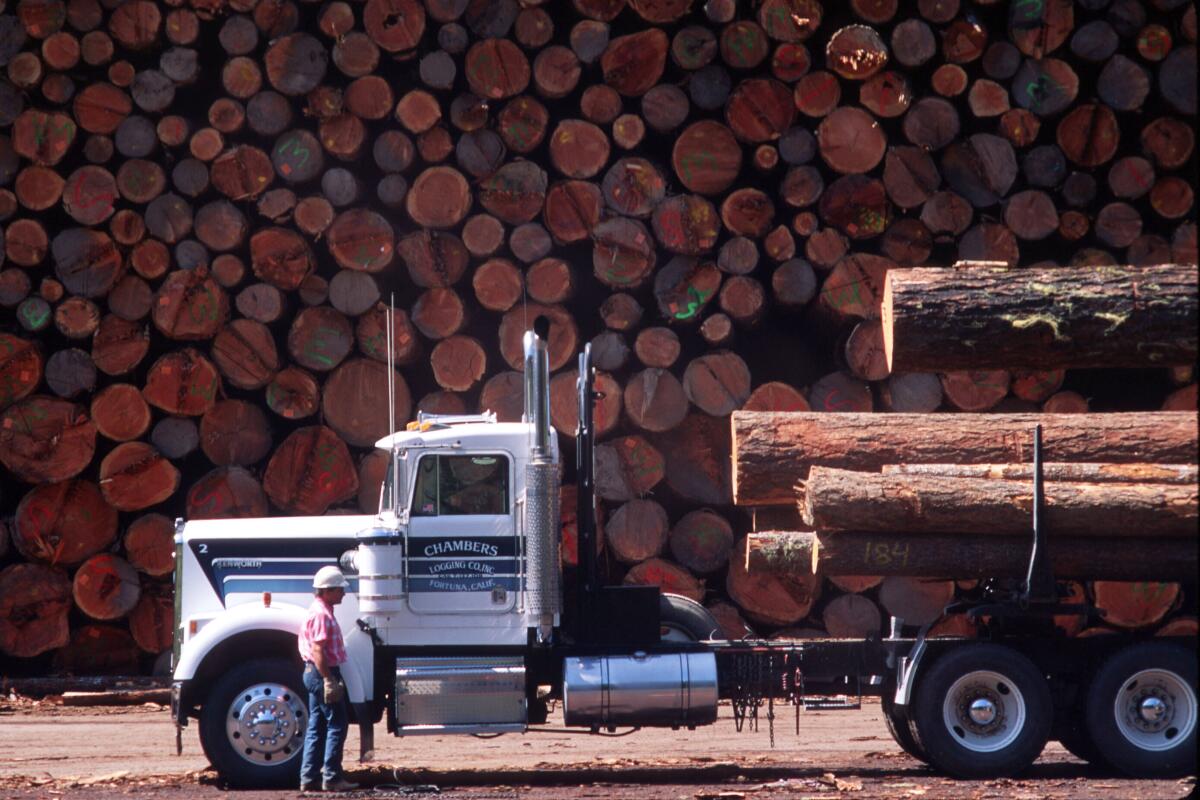
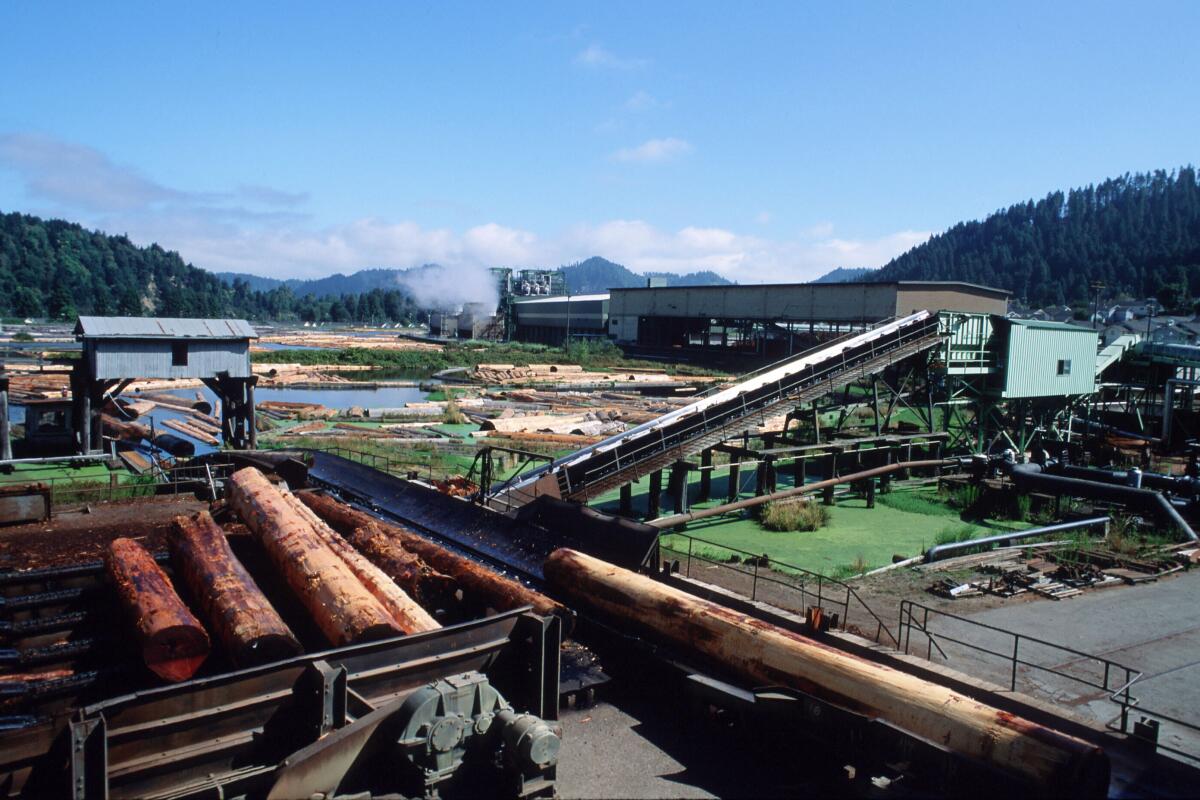
1. Redwood logs are processed by the Pacific Lumber Company in 1995 in Scotia, CA. This was the largest redwood lumber mill in the world, resulting in clashes with the environmental community for years. (Gilles Mingasson / Getty Images) 2. Redwood logs are trucked to the Pacific Lumber Company in 1995 in Scotia, CA. (Gilles Mingasson / Getty Images)
Among them was Hill, who was 23 years old on a fall day in 1997 when she and other activists hiked onto Pacific Lumber land. “I didn’t know much about the forest activist movement or what we were about to do,” Hill later wrote in her book. “I just knew that we were going to sit in this tree and that it had something to do with protecting the forest.”
Once she was cradled in Luna’s limbs, Hill did not come down for more than two years. She became a cause celebre. Movie stars such as Woody Harrelson and musicians including Willie Nelson and Joan Baez came to visit her. With Hill still in the tree, Pacific Lumber agreed to sell 7,400 acres, including the ancient Headwaters Grove, to the government to be preserved.
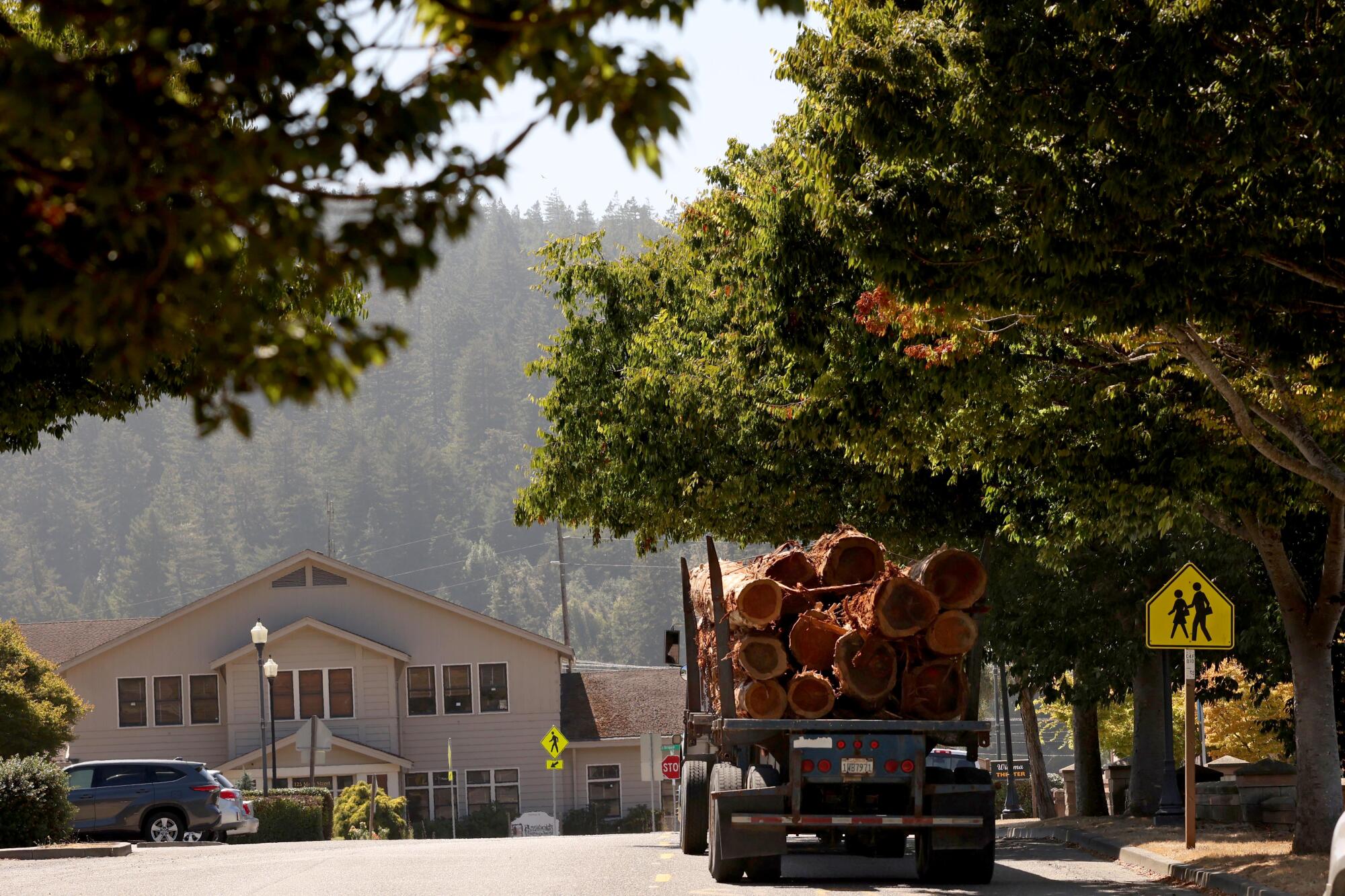
A truck driver carries a load of lumber down Main Street in Scotia. The historic company town is working to attract new residents and businesses, but progress has been slow.
Then just before Christmas in 1999, Hill and her compatriots reached a final deal with Pacific Lumber. Luna would be protected. The tree still stands today.
Pacific Lumber limped along for seven more years before filing for bankruptcy, which was finalized in 2008.
Marathon Asset Management, a New York hedge fund, found itself in possession of the town.
Deike, who was born in the Scotia hospital and lived in town for years, and Bullwinkel, came on board as employees of a company called The Town of Scotia to begin selling it off.
Deike said he thought it might be a three-year job. That was nearly 20 years ago.
He started in the mailroom at Pacific Lumber as a young man and rose to become one of its most prominent local executives. Now he sounds like an urban planner when he describes the process of transforming a company town.
His speech is peppered with references to “infrastructure improvements” and “subdivision maps” and also to the peculiar challenges created by Pacific Lumber’s building.
“They did whatever they wanted,” he said. “Build this house over the sewer line. There was a manhole cover in a garage. Plus, it wasn’t mapped.”
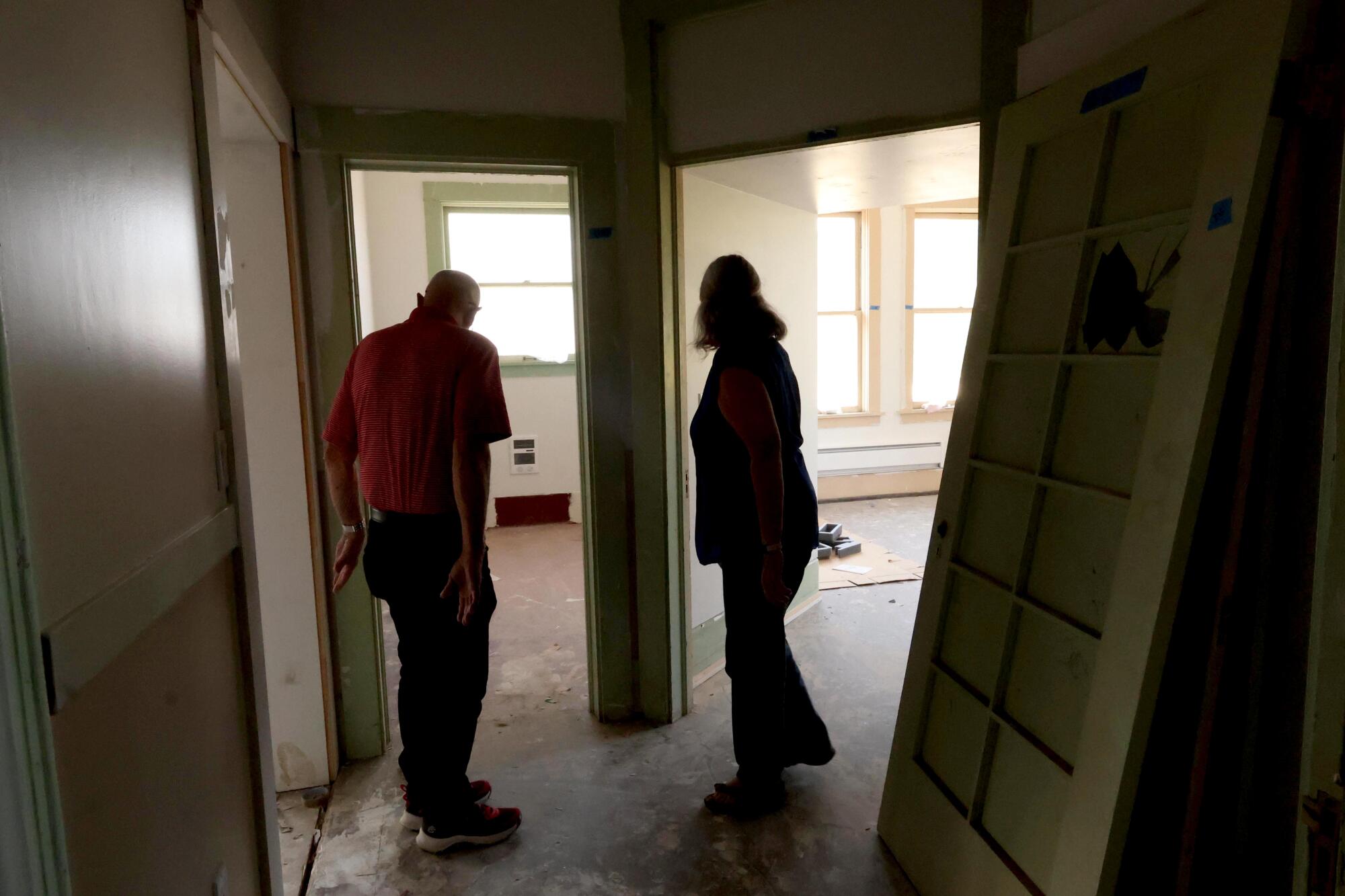
Steven Deike, president of Town of Scotia Company LLC, and Mary Bullwinkel, the company’s residential real estate sales coordinator, examine a room being converted into apartments at the Scotia Hospital.
The first houses went up for sale in 2017 and more have followed every year since.
Dodson and her family came in 2018. Like some of the new owners, Dodson had some history with Scotia. Although she lived in Sacramento growing up, some of her family worked for Pacific Lumber and lived in Scotia and she had happy memories of visiting the town.
“The first house I saw was perfect,” she said. “Hardwood floors, and made out of redwood so you don’t have to worry about termites.”
She has loved every minute since. “We walk to school. We walk to pay our water bill. We walk to pick up our mail. There’s lots of kids in the neighborhood.”
The transformation, however, has proceeded slowly.
And lately, economic forces have begun to buffet the effort as well, including the slowing real estate market.
Dodson, who also works as a real estate agent, said she thinks some people may be put off by the town’s cheek-by-jowl houses. Also, she added, “we don’t have garages and the water bill is astronomical.”
But she added, “once people get inside them, they see the craftsmanship.”
Duran, the Colorado architect trying to fix up the old hospital, is among those who have run into unexpected hurdles on the road to redevelopment.
A project that was supposed to take a year is now in its third, delayed by everything from a shortage of electrical equipment to a dearth of workers.
“I would guess that a portion of the skilled workforce has left Humboldt County,” Duran said, adding that the collapse of the weed market means that “some people have relocated because they were doing construction but also cannabis.”
He added that he and his family and friends have been “doing a hard thing to try to fix up this building and give it new life, and my hope is that other people will make their own investments into the community.”
A year ago, an unlikely visitor returned: Hill herself. She came back to speak at a fundraiser for Sanctuary Forest, a nonprofit land conservation group that is now the steward of Luna. The event was held at the 100-year-old Scotia Lodge — which once housed visiting timber executives but now offers boutique hotel rooms and craft cocktails.
Many of the new residents had never heard of Hill or known of her connection to the area. Tamara Nichols, 67, who discovered Scotia in late 2023 after moving from Paso Robles, said she knew little of the town’s history.
But she loves being so close to the old-growth redwoods and the Eel River, which she swims in. She also loves how intentional so many in town are about building community.
What’s more, she added: “All those trees, there’s just a feel to them.”