Cookies help us run our site more efficiently.

By clicking “Accept”, you agree to the storing of cookies on your device to enhance site navigation, analyze site usage, and assist in our marketing efforts. View our Privacy Policy for more information or to customize your cookie preferences.

Brigitte Bardot: French screen legend and controversial activist dead at 91

News Feed
Sunday, December 28, 2025

By THOMAS ADAMSON and ELAINE GANLEY, The Associated PressPARIS (AP) — Brigitte Bardot, the French 1960s sex symbol who became one of the greatest screen sirens of the 20th century and later a militant animal rights activist and far-right supporter, has died. She was 91.Bardot died Sunday at her home in southern France, according to Bruno Jacquelin, of the Brigitte Bardot Foundation for the protection of animals. Speaking to The Associated Press, he gave no cause of death and said that no arrangements had been made for funeral or memorial services. She had been hospitalized last month.Bardot became an international celebrity as a sexualized teen bride in the 1956 movie, “And God Created Woman.” Directed by then husband, Roger Vadim, it triggered a scandal with scenes of the long-legged beauty dancing on tables naked.At the height of a cinema career that spanned more than two dozen films and three marriages, Bardot came to symbolize a nation bursting out of bourgeois respectability. Her tousled, blond hair, voluptuous figure and pouty irreverence made her one of France’s best-known stars, even as she struggled with depression.Such was her widespread appeal that in 1969 her features were chosen to be the model for “Marianne,” the national emblem of France and the official Gallic seal. Bardot’s face appeared on statues, postage stamps and coins.‘’We are mourning a legend,’’ French President Emmanuel Macron said in an X post.Bardot’s second career as an animal rights activist was equally sensational. She traveled to the Arctic to blow the whistle on the slaughter of baby seals. She also condemned the use of animals in laboratory experiments, and she opposed Muslim slaughter rituals.“Man is an insatiable predator,” Bardot told The Associated Press on her 73rd birthday in 2007. “I don’t care about my past glory. That means nothing in the face of an animal that suffers, since it has no power, no words to defend itself.”Her activism earned her compatriots’ respect and, in 1985, she was awarded the Legion of Honor, the nation’s highest recognition.Turn to the far rightLater, however, she fell from public grace as her animal protection diatribes took on a decidedly extremist tone. She frequently decried the influx of immigrants into France, especially Muslims.She was convicted and fined five times in French courts of inciting racial hatred, in incidents inspired by her opposition to the Muslim practice of slaughtering sheep during annual religious holidays.Bardot’s 1992 marriage to fourth husband Bernard d’Ormale, a onetime adviser to far-right National Front leader Jean-Marie Le Pen, contributed to her political shift. She described Le Pen, an outspoken nationalist with multiple racism convictions of his own, as a “lovely, intelligent man.”FILE - French actress Brigitte Bardot poses with a huge sombrero she brought back from Mexico, as she arrives at Orly Airport in Paris, France, on May 27, 1965. (AP Photo/File)APIn 2012, she supported the presidential bid of Marine Le Pen, who now leads her father’s renamed National Rally party. Le Pen paid homage Sunday to an “exceptional woman” who was “incredibly French.”In 2018, at the height of the #MeToo movement, Bardot said in an interview that most actors protesting sexual harassment in the film industry were “hypocritical,” because many played “the teases” with producers to land parts.She said she had never had been a victim of sexual harassment and found it “charming to be told that I was beautiful or that I had a nice little ass.”Privileged but ‘difficult’ upbringingBrigitte Anne-Marie Bardot was born Sept. 28, 1934, to a wealthy industrialist. A shy child, she studied classical ballet and was discovered by a family friend who put her on the cover of Elle magazine at age 14.Bardot once described her childhood as “difficult” and said that her father was a strict disciplinarian who would sometimes punish her with a horse whip.Vadim, a French movie produce who she married in 1952, saw her potential and wrote “And God Created Woman” to showcase her provocative sensuality, an explosive cocktail of childlike innocence and raw sexuality.The film, which portrayed Bardot as a teen who marries to escape an orphanage and then beds her brother-in-law, had a decisive influence on New Wave directors Jean-Luc Godard and François Truffaut, and came to embody the hedonism and sexual freedom of the 1960s.The film was a box-office hit, and it made Bardot a superstar. Her girlish pout, tiny waist and generous bust were often more appreciated than her talent.“It’s an embarrassment to have acted so badly,” Bardot said of her early films. “I suffered a lot in the beginning. I was really treated like someone less than nothing.”Bardot’s unabashed, off-screen love affair with co-star Jean-Louis Trintignant eradicated the boundaries between her public and private life and turned her into a hot prize for paparazzi.Bardot never adjusted to the limelight. She blamed the constant media attention for the suicide attempt that followed 10 months after the birth of her only child, Nicolas. Photographers had broken into her house two weeks before she gave birth to snap a picture of her pregnant.Nicolas’ father was Jacques Charrier, a French actor who she married in 1959 but who never felt comfortable in his role as Monsieur Bardot. Bardot soon gave up her son to his father, and later said she had been chronically depressed and unready for the duties of being a mother.“I was looking for roots then,” she said in an interview. “I had none to offer.”FILE - French Actress Brigitte Bardot with a dog in the Gennevilliers, Paris, while supporting the French animal protection society operation, Feb. 10, 1982. (AP Photo/Duclos, File)APIn her 1996 autobiography “Initiales B.B.,” she likened her pregnancy to “a tumor growing inside me,” and described Charrier as “temperamental and abusive.”Bardot married her third husband, West German millionaire playboy Gunther Sachs, in 1966, and they divorced three years later.Among her films were “A Parisian” (1957); “In Case of Misfortune,” in which she starred in 1958 with screen legend Jean Gabin; “The Truth” (1960); “Private Life” (1962); “A Ravishing Idiot” (1964); “Shalako” (1968); “Women” (1969); “The Bear And The Doll” (1970); “Rum Boulevard” (1971); and “Don Juan” (1973).With the exception of 1963’s critically acclaimed “Contempt,” directed by Godard, Bardot’s films were rarely complicated by plots. Often they were vehicles to display Bardot in scanty dresses or frolicking nude in the sun.“It was never a great passion of mine,” she said of filmmaking. “And it can be deadly sometimes. Marilyn (Monroe) perished because of it.”Bardot retired to her Riviera villa in St. Tropez at the age of 39 in 1973 after “The Woman Grabber.” As fans brought flowers to her home Sunday, the local St. Tropez administration called for “respect for the privacy of her family and the serenity of the places where she lived.”Middle-aged reinventionShe emerged a decade later with a new persona: An animal rights lobbyist, her face was wrinkled and her voice was deep following years of heavy smoking. She abandoned her jet-set life and sold off movie memorabilia and jewelry to create a foundation devoted exclusively to the prevention of animal cruelty.Depression sometimes dogged her, and she said that she attempted suicide again on her 49th birthday.Her activism knew no borders. She urged South Korea to ban the sale of dog meat and once wrote to U.S. President Bill Clinton asking why the U.S. Navy recaptured two dolphins it had released into the wild.She attacked centuries-old French and Italian sporting traditions including the Palio, a free-for-all horse race, and campaigned on behalf of wolves, rabbits, kittens and turtle doves.“It’s true that sometimes I get carried away, but when I see how slowly things move forward ... my distress takes over,” Bardot told the AP when asked about her racial hatred convictions and opposition to Muslim ritual slaughter,In 1997, several towns removed Bardot-inspired statues of Marianne after the actress voiced anti-immigrant sentiment. Also that year, she received death threats after calling for a ban on the sale of horse meat.Environmental campaigner Paul Watson, who was beaten on a seal hunt protest in Canada alongside Bardot in 1977 and campaigned with her for five decades, acknowledged that “many disagreed with Brigitte’s politics or some of her views.”FILE - French actress Brigitte Bardot poses in character from the motion picture "Voulez-Vous Danser Avec Moi" (Do you Want to Dance With Me), on Sept. 10, 1959. (AP Photo/File)AP“Her allegiance was not to the world of humans,” he said. “The animals of this world lost a wonderful friend today.”Bardot once said that she identified with the animals that she was trying to save.“I can understand hunted animals, because of the way I was treated,” Bardot said. “What happened to me was inhuman. I was constantly surrounded by the world press.”Elaine Ganley provided reporting for this story before her retirement. Angela Charlton contributed to this report.

The actress who rose to fame in 1956 with "And God Created Woman" later abandoned her film career to become a passionate and often polarizing animal rights advocate.

By THOMAS ADAMSON and ELAINE GANLEY, The Associated Press

PARIS (AP) — Brigitte Bardot, the French 1960s sex symbol who became one of the greatest screen sirens of the 20th century and later a militant animal rights activist and far-right supporter, has died. She was 91.

Bardot died Sunday at her home in southern France, according to Bruno Jacquelin, of the Brigitte Bardot Foundation for the protection of animals. Speaking to The Associated Press, he gave no cause of death and said that no arrangements had been made for funeral or memorial services. She had been hospitalized last month.

Bardot became an international celebrity as a sexualized teen bride in the 1956 movie, “And God Created Woman.” Directed by then husband, Roger Vadim, it triggered a scandal with scenes of the long-legged beauty dancing on tables naked.

At the height of a cinema career that spanned more than two dozen films and three marriages, Bardot came to symbolize a nation bursting out of bourgeois respectability. Her tousled, blond hair, voluptuous figure and pouty irreverence made her one of France’s best-known stars, even as she struggled with depression.

Such was her widespread appeal that in 1969 her features were chosen to be the model for “Marianne,” the national emblem of France and the official Gallic seal. Bardot’s face appeared on statues, postage stamps and coins.

‘’We are mourning a legend,’’ French President Emmanuel Macron said in an X post.

Bardot’s second career as an animal rights activist was equally sensational. She traveled to the Arctic to blow the whistle on the slaughter of baby seals. She also condemned the use of animals in laboratory experiments, and she opposed Muslim slaughter rituals.

“Man is an insatiable predator,” Bardot told The Associated Press on her 73rd birthday in 2007. “I don’t care about my past glory. That means nothing in the face of an animal that suffers, since it has no power, no words to defend itself.”

Her activism earned her compatriots’ respect and, in 1985, she was awarded the Legion of Honor, the nation’s highest recognition.

Turn to the far right

Later, however, she fell from public grace as her animal protection diatribes took on a decidedly extremist tone. She frequently decried the influx of immigrants into France, especially Muslims.

She was convicted and fined five times in French courts of inciting racial hatred, in incidents inspired by her opposition to the Muslim practice of slaughtering sheep during annual religious holidays.

Bardot’s 1992 marriage to fourth husband Bernard d’Ormale, a onetime adviser to far-right National Front leader Jean-Marie Le Pen, contributed to her political shift. She described Le Pen, an outspoken nationalist with multiple racism convictions of his own, as a “lovely, intelligent man.”

France Obit Brigitte Bardot
FILE - French actress Brigitte Bardot poses with a huge sombrero she brought back from Mexico, as she arrives at Orly Airport in Paris, France, on May 27, 1965. (AP Photo/File)AP

In 2012, she supported the presidential bid of Marine Le Pen, who now leads her father’s renamed National Rally party. Le Pen paid homage Sunday to an “exceptional woman” who was “incredibly French.”

In 2018, at the height of the #MeToo movement, Bardot said in an interview that most actors protesting sexual harassment in the film industry were “hypocritical,” because many played “the teases” with producers to land parts.

She said she had never had been a victim of sexual harassment and found it “charming to be told that I was beautiful or that I had a nice little ass.”

Privileged but ‘difficult’ upbringing

Brigitte Anne-Marie Bardot was born Sept. 28, 1934, to a wealthy industrialist. A shy child, she studied classical ballet and was discovered by a family friend who put her on the cover of Elle magazine at age 14.

Bardot once described her childhood as “difficult” and said that her father was a strict disciplinarian who would sometimes punish her with a horse whip.

Vadim, a French movie produce who she married in 1952, saw her potential and wrote “And God Created Woman” to showcase her provocative sensuality, an explosive cocktail of childlike innocence and raw sexuality.

The film, which portrayed Bardot as a teen who marries to escape an orphanage and then beds her brother-in-law, had a decisive influence on New Wave directors Jean-Luc Godard and François Truffaut, and came to embody the hedonism and sexual freedom of the 1960s.

The film was a box-office hit, and it made Bardot a superstar. Her girlish pout, tiny waist and generous bust were often more appreciated than her talent.

“It’s an embarrassment to have acted so badly,” Bardot said of her early films. “I suffered a lot in the beginning. I was really treated like someone less than nothing.”

Bardot’s unabashed, off-screen love affair with co-star Jean-Louis Trintignant eradicated the boundaries between her public and private life and turned her into a hot prize for paparazzi.

Bardot never adjusted to the limelight. She blamed the constant media attention for the suicide attempt that followed 10 months after the birth of her only child, Nicolas. Photographers had broken into her house two weeks before she gave birth to snap a picture of her pregnant.

Nicolas’ father was Jacques Charrier, a French actor who she married in 1959 but who never felt comfortable in his role as Monsieur Bardot. Bardot soon gave up her son to his father, and later said she had been chronically depressed and unready for the duties of being a mother.

“I was looking for roots then,” she said in an interview. “I had none to offer.”
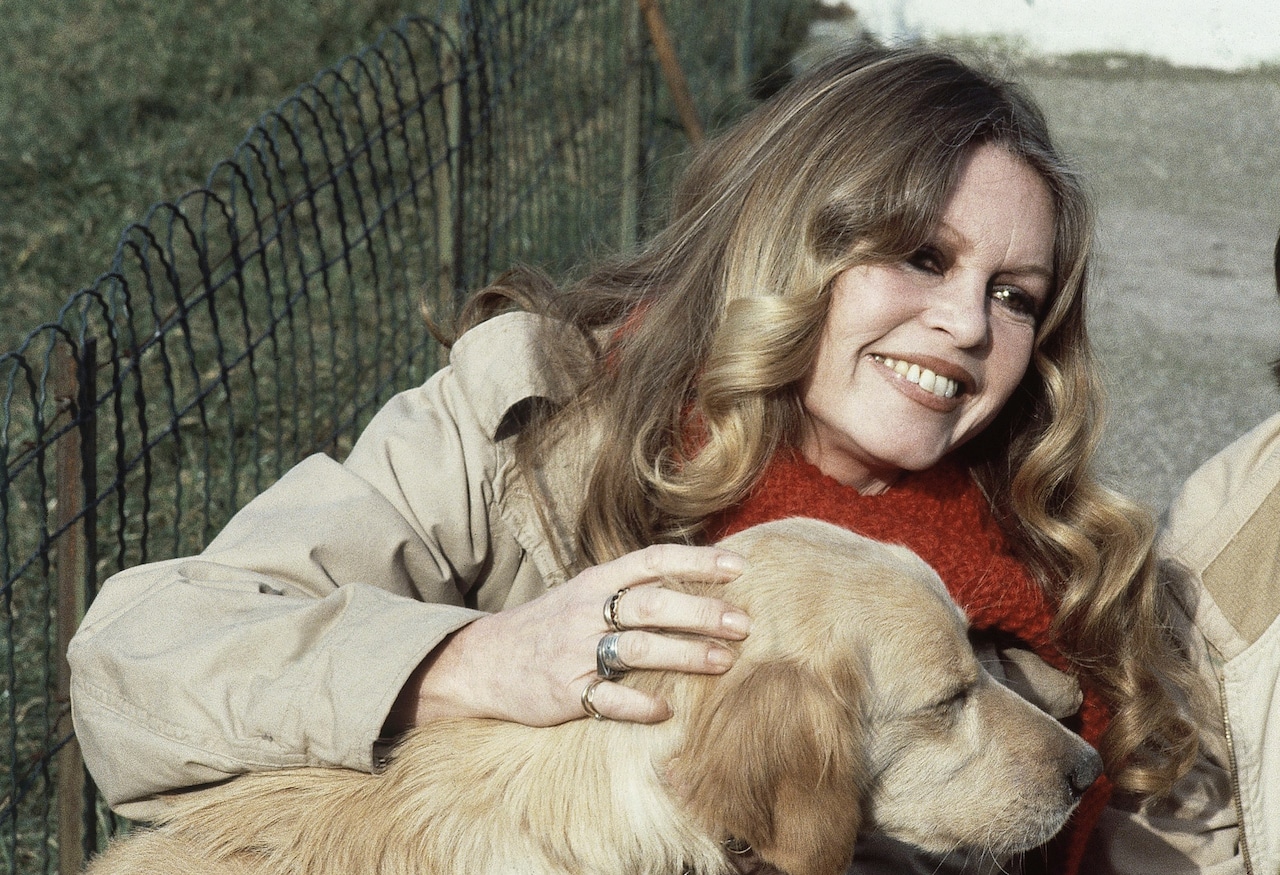
France Obit Brigitte Bardot
FILE - French Actress Brigitte Bardot with a dog in the Gennevilliers, Paris, while supporting the French animal protection society operation, Feb. 10, 1982. (AP Photo/Duclos, File)AP

In her 1996 autobiography “Initiales B.B.,” she likened her pregnancy to “a tumor growing inside me,” and described Charrier as “temperamental and abusive.”

Bardot married her third husband, West German millionaire playboy Gunther Sachs, in 1966, and they divorced three years later.

Among her films were “A Parisian” (1957); “In Case of Misfortune,” in which she starred in 1958 with screen legend Jean Gabin; “The Truth” (1960); “Private Life” (1962); “A Ravishing Idiot” (1964); “Shalako” (1968); “Women” (1969); “The Bear And The Doll” (1970); “Rum Boulevard” (1971); and “Don Juan” (1973).

With the exception of 1963’s critically acclaimed “Contempt,” directed by Godard, Bardot’s films were rarely complicated by plots. Often they were vehicles to display Bardot in scanty dresses or frolicking nude in the sun.

“It was never a great passion of mine,” she said of filmmaking. “And it can be deadly sometimes. Marilyn (Monroe) perished because of it.”

Bardot retired to her Riviera villa in St. Tropez at the age of 39 in 1973 after “The Woman Grabber.” As fans brought flowers to her home Sunday, the local St. Tropez administration called for “respect for the privacy of her family and the serenity of the places where she lived.”

Middle-aged reinvention

She emerged a decade later with a new persona: An animal rights lobbyist, her face was wrinkled and her voice was deep following years of heavy smoking. She abandoned her jet-set life and sold off movie memorabilia and jewelry to create a foundation devoted exclusively to the prevention of animal cruelty.

Depression sometimes dogged her, and she said that she attempted suicide again on her 49th birthday.

Her activism knew no borders. She urged South Korea to ban the sale of dog meat and once wrote to U.S. President Bill Clinton asking why the U.S. Navy recaptured two dolphins it had released into the wild.

She attacked centuries-old French and Italian sporting traditions including the Palio, a free-for-all horse race, and campaigned on behalf of wolves, rabbits, kittens and turtle doves.

“It’s true that sometimes I get carried away, but when I see how slowly things move forward ... my distress takes over,” Bardot told the AP when asked about her racial hatred convictions and opposition to Muslim ritual slaughter,

In 1997, several towns removed Bardot-inspired statues of Marianne after the actress voiced anti-immigrant sentiment. Also that year, she received death threats after calling for a ban on the sale of horse meat.

Environmental campaigner Paul Watson, who was beaten on a seal hunt protest in Canada alongside Bardot in 1977 and campaigned with her for five decades, acknowledged that “many disagreed with Brigitte’s politics or some of her views.”

France Obit Brigitte Bardot
FILE - French actress Brigitte Bardot poses in character from the motion picture "Voulez-Vous Danser Avec Moi" (Do you Want to Dance With Me), on Sept. 10, 1959. (AP Photo/File)AP

“Her allegiance was not to the world of humans,” he said. “The animals of this world lost a wonderful friend today.”

Bardot once said that she identified with the animals that she was trying to save.

“I can understand hunted animals, because of the way I was treated,” Bardot said. “What happened to me was inhuman. I was constantly surrounded by the world press.”

Elaine Ganley provided reporting for this story before her retirement. Angela Charlton contributed to this report.

Read the full story here.
Photos courtesy of

12 Environmental Commentaries That Defined Our Year in 2025

These expert opinions address opportunities to make a difference — and point out a few of our failures. The post 12 Environmental Commentaries That Defined Our Year in 2025 appeared first on The Revelator.

Some of my favorite emails contain variations on an exciting phrase: “I’ve enclosed an op-ed for your consideration.” These messages — and their accompanying commentaries — come to us from environmental experts all over the world who have something important to say about saving life on this big blue marble we call home. Some of them offer roadmaps for improving our efforts to address problems like conservation, environmental injustice, or climate change. Others point out lesser-known threats we should do more to address. Many authors share personal insights and experiences that most readers would otherwise rarely encounter. Here are 12 of our favorite environmental commentaries of the past year, addressing Indigenous rights, coral reefs, activism, some iconic or lesser-known endangered species, and more: ‘Active Management’ Harms Forests — And It’s About to Get a Whole Lot Worse Birding’s Tragic Blind Spot Ghost Reefs of 2083: The Paleontology of Color (A Speculative ‘Fiction’) The Last Breath of the Himalayas: Can We Stop the Collapse? Nature Is ‘Not for Sale’ Palm Oil Continues to Plague Borneo’s Orangutans, Elephants, and Other Icons Rare Earth Metals Must Not Come at the Cost of Indigenous Rights Saving America’s National Parks and Forests Means Shaking Off the Rust of Inaction Saving the Ryukyu Rabbit Tick: The Posterchild of Parasite Conservation Trump’s Approach to Public Lands? Expanding the Extractive Economy and Declaring a War on Nature What Catastrophes Get Our Attention and Why It Matters Who Heals the Earth’s Healers? Ways to Avert Burnout for Environmental Advocates Truthfully, this list could have been twice as long — and it still wouldn’t have included every inspirational or intriguing expert opinion we published in 2025. I encourage you to scroll through our entire Ideas category, where you’ll find a few dozen more essays worth reading. (While you’re at it, keep going back into 2024 or earlier — most of our commentaries have a long shelf life and remain of interest for quite a while after they’re published.) Meanwhile, don’t forget that a different kind of commentary appears a couple of times a month in our newsletter: exclusive cartoons by Tom Toro. Here’s one of my favorites from the past year: Do you have a story to tell in the year ahead? We’re always open to op-eds and commentaries from activists, scientists, conservationists, legislators, government employees, and others — especially anyone with insight about the regressive and repressive second Trump administration. You can find out how to submit here, or drop me a line at any time. The post 12 Environmental Commentaries That Defined Our Year in 2025 appeared first on The Revelator.

Sarah Burton obituary

My partner, Sarah Burton, who has died of cancer of the appendix aged 73, was a formidable legal and environmental activist. She held senior roles at Greenpeace UK, Greenpeace International and Amnesty International.She joined the law firm of Seifert Sedley in the late 1970s, after impressing them with her negotiating skills for the Seymour Place Co-operative, in London. During the 1980 Blair Peach inquest, Sarah secured a high court order stopping proceedings and requiring the coroner to sit with a jury. Continue reading...

My partner, Sarah Burton, who has died of cancer of the appendix aged 73, was a formidable legal and environmental activist. She held senior roles at Greenpeace UK, Greenpeace International and Amnesty International.She joined the law firm of Seifert Sedley in the late 1970s, after impressing them with her negotiating skills for the Seymour Place Co-operative, in London. During the 1980 Blair Peach inquest, Sarah secured a high court order stopping proceedings and requiring the coroner to sit with a jury.In the mid-80s, with her law partner Mike Seifert, she coordinated representation for thousands of striking miners and fought off countless injunctions. During the strike, she gave birth to her daughter, Hannah, receiving a large bouquet from Arthur Scargill.Born in New York to Henrietta (nee Berman), an accountant, and Irving Novak, a garment worker who owned his own business, Sarah went to Long Beach high school, Long Island. She moved to Britain in the early 70s, worked as a legal secretary, and took evening classes to become a solicitor; she qualified in 1980. She married Rick Burton in 1973 and they divorced amicably three years later, remaining friends.In 1990, Sarah joined Greenpeace UK as their first in-house lawyer. When British Nuclear Fuels obtained an injunction preventing Greenpeace UK from stopping BNFL dumping nuclear waste into the Irish Sea, Sarah advised that foreign activists – not bound by UK courts – could lawfully block BNFL’s wastepipe. She was right. She left in 2002 and became an independent consultant for a number of NGOs and charities; in 2006 she joined Amnesty International as campaign programme director.From 2009 to 2018 she managed senior programme staff at Greenpeace International, in Amsterdam. In 2009 she travelled to Sumatra, where illegal logging threatened a local community. When told to bring whatever she would take on a camping trip, she replied: “A hotel reservation?” Surrounded by armed soldiers, she asked the community whether they wanted to move or stay. They chose to stay, and she insisted Greenpeace stay with them. In time, the soldiers withdrew.Sarah retired in 2018 and we moved to Bridport, Dorset, in 2020, where she embraced painting and steel drumming. A founder of Lawyers for Nuclear Disarmament, she also served on the boards of Natural England, English Nature and the Public Law Project.Though known for her courage, Sarah was proudest of mentoring young women activists who went on to lead within Greenpeace and other NGOs. After 20 years together we celebrated our civil partnership in April.She is survived by me, her daughter, Hannah, and her brother, Milton.

Portland faces pressure to reduce storage capacity at fuel hub amid quake risks

Community activists want the 20% drawdown to start immediately while the city proposes to complete it by 2036.

The city’s proposal to reduce storage capacity at the fuels hub in Northwest Portland has drawn sharp criticism from community advocates and others who argue the proposed timeline is dangerously slow given seismic risks and climate threats. The clash came to a head at a Planning Commission hearing Tuesday night as city staff outlined a plan for a 20% reduction to be completed by 2036. Environmental activists, tribal representatives and neighborhood groups pressed for the drawdown to start immediately and called for raising the targets as fuel use falls statewide. The dueling proposals are part of an effort to chart a future path for the Critical Energy Infrastructure Hub, a 6-mile stretch on the Willamette River along U.S. 30 between the Fremont Bridge and the southern tip of Sauvie Island. Eleven companies own fuel terminals there that store crude oil, diesel, renewable diesel and other fuels in more than 400 aging tanks. Over 90% of Oregon’s fuel supply comes through the hub. Numerous studies, including a seismic risk assessment by Multnomah County, have shown the fuels could spill and explode if the soil under the tanks liquifies during a massive earthquake generated by the Cascadia Subduction Zone. The hub also faces numerous climate threats, including wildfires, flooding and landslides. Earlier this year, the city outlined four alternatives for the hub’s future, including a 17% drawdown of existing unused tank storage capacity. The three other alternatives did not call for reducing fuel storage – two called for the expansion or limited expansion of renewable and aviation fuels at the hub and a third prohibited all fuel expansion but without a drawdown. Ultimately, after considering community input, city staff settled on the most stringent option and their proposed draft for the hub’s future recommends a 20% drawdown on existing unused fuel storage capacity by 2036 as well as amendments to prohibit fuel expansion at existing terminals and to support risk reduction at the hub. Under the city proposal, companies at the hub would have to submit a baseline inventory of in-service tank capacity by October 2026. Whether companies abide by the drawdown requirement would be measured in 10 years – there are no interim requirements, something many advocates criticized.Aster Bloem, a spokesperson with the Portland Bureau of Planning and Sustainability, said the 2036 timeline aligns with how long companies at the hub have to complete seismic tank upgrades as required under a new Oregon law and monitored by the Oregon Department of Environmental Quality. The 10-year timeline also gives the companies time to figure out which tanks will come out of service and to reconfigure the remaining storage tank capacity, she said. Interim drawdown requirements could potentially interfere with the seismic upgrades, Bloem said.But activists with several community groups said Portland should speed up the drawdown timeline and make fuel storage reduction targets even more stringent. Multiple speakers urged the city to impose the drawdown requirement immediately, or as soon as the City Council adopts the policy code. “The city cannot wait 10 years to act, yet BPS (the Bureau of Planning and Sustainability) proposals do nothing to meaningfully reduce the risk over the next decade. We cannot afford that delay,” Heather King, the co-executive director of the nonprofit Willamette Riverkeeper, told the commission. The city reached its calculation of a 20% drawdown by 2036 based on a percentage of empty space in tanks now. Federal data shows that currently, on average, tanks are filled only to 70% of their capacity, leaving 30% empty. About a third of that empty space is reserved to prevent spills, said city planner Tom Armstrong. The drawdown target would mean companies at the hub could no longer use the empty excess space to store more fuel. City officials said Oregon’s need for fuel will decrease slightly by 2036, making it somewhat easier to restrict the use of tank space by that time without affecting fuel supply reliability in the state. If that’s the case, said opponents, then why not make the companies reduce their capacity now. A 20% drawdown is already possible and should be implemented right away, community groups said. Advocates proposed measuring drawdown needs based on actual tank daily fill levels reported to the Oregon fire marshal’s office, rather than estimated tank capacity based on federal Energy Information Administration data. The state data showed that only 40% of the tanks’ overall capacity is being used on average instead of 70% according to the federal data. “Drawdown must be based on data, not projections based on best ‘guesses,’” said Nancy Hiser, a Linnton resident and community advocate who for years has warned about the dangers of an earthquake-caused spill at the hub. Advocates also said adjustments to the drawdown restrictions should be done every three to five years to align with the decrease in Oregon’s demand for liquid fuels and as the state transitions to electrification of cars and trucks. Bloem, the bureau spokesperson, said city staff matched the federal data with a storage tank capacity inventory that they compiled from Multnomah County and DEQ data. The resulting modeling estimated how much of their available storage companies use each year.The state data, on the other hand, is less useful, Bloem said, because it includes only average daily volumes and peak daily volumes, not total volumes. Also, due to confidentiality rules, the city cannot report data for individual terminals, she said. Bloem said the city will continue to monitor the hub and may adjust the drawdown requirements, beyond the 10 years. “As the fuel needs in Oregon change, there could be future opportunities to change the city’s requirements,” she said. The public can continue to submit written testimony until Friday.The Planning Commission will discuss the proposals during two work sessions in January and February. The commission will vote Feb. 10 on its recommendation to the City Council. Another opportunity to provide testimony will be open from Jan. 13 to Jan. 23.

A Few More Environmental Books From 2025 We Couldn’t Let You Miss

Before ending the year, we wanted to highlight this eclectic assortment of reading gems we couldn’t fit into our earlier book reviews. The post A Few More Environmental Books From 2025 We Couldn’t Let You Miss appeared first on The Revelator.

This year most of our “Revelator Reads” columns presented new books covering themes like environmental activism, climate anxiety, wildlife, and public lands. But not every book fits into a neat box or arrives in time to make the cut. Here’s a year-end wrap-up of terrific books — many of which showcase success stories and solutions — that we didn’t want to close out 2025 without mentioning. We’ve adapted the books’ official descriptions below, and the link in each title goes to the publisher’s page. You should also be able to find any of these titles through your local bookseller or library. The Owl Handbook: Investigating the Lives, Habits, and Importance of These Enigmatic Birds by John Shewey Charismatic, intriguing, and misunderstood: The Owl Handbook is a beautifully photographed, thoughtfully researched, and accessible guide to these enigmatic, captivating creatures. Traditions of the owl as a harbinger of doom, spirit guide, and mysterious symbol for many cultures, mythologies, and superstitions have projected our fear of the unknown onto these nocturnal birds. But these wondrous birds are so much more than shadows in the night. Lifelong birding enthusiast John Shewey leads us through an exploration of owls’ cultural impact as seen in folklore, providing in-depth profiles of 19 owls of North America and a survey of 200 more across the globe, giving advice on how to respectfully observe and protect these magnificent birds, brought to life by hundreds of full-color photographs. Tigers Between Empires: The Improbable Return of Great Cats to the Forests of Russia and China by Jonathan C. Slaght The forests of northeast Asia are home to a marvelous range of animals — fish owls and brown bears, musk deer and moose, wolves and raccoon dogs, leopards and tigers. But by the final years of the Cold War, only a few hundred tigers stepped quietly through the snow of the Amur River basin. Soon the Soviet Union fell, bringing catastrophe; without the careful oversight of a central authority, poaching and logging took a fast, astonishing toll on an already vulnerable species. Just as these changes arrived, scientists came together to found the Siberian Tiger Project. Led by Dale Miquelle, a moose researcher, and Zhenya Smirnov, a mouse biologist, the team captured and released more than 114 tigers over three decades. They witnessed mating rituals and fights, hunting and feeding, the ceding and taking of territory, the creation of families. Within these pages, characters — both feline and human — come fully alive as we travel with them through the quiet and changing forests of Amur. Sink or Swim: How the World Needs to Adapt to a Changing Climate by Susannah Fisher How can we adapt to climate change? Let’s examine the key problems and hard choices that lie ahead for the global community in this practical approach to coping in a time of chaos. Adaptation has been incremental, with governments and institutions merely tinkering around the edges of current systems. This will not be enough, and this book explores the hard choices that lie ahead concerning how people earn a living, the way governments manage relationships between countries, and how communities accommodate the displacement of people. For example, should people be encouraged to move away from the coasts? Can global food supplies be managed when parts of the world are hit by simultaneous droughts? How can conflict be handled when there isn’t enough water for a population? Based on the latest research, interviews with experts, and practical examples from across the world, Sink or Swim discusses frankly the choices that lie ahead and how we can have a livable planet. Roam: Wild Animals and the Race to Repair Our Fractured World by Hilary Rosner All over the globe, animals are stranded — by roads, fences, drainage systems, industrial farms, and cities. They simply cannot move around to access their daily needs. Yet as climate change reshapes the planet in its own ways, many creatures will, increasingly, have to move in order to survive. This book illustrates a massive and underreported problem: how a completely human-centered view of the world has impacted the ability of other species to move around. But it’s also about solutions and hope: How we can forge new links between landscapes that have become isolated pieces. How we can stitch ecosystems back together, so that the processes still work, and the systems can evolve as they need to. How we can build a world in which humans recognize their interconnectedness with the rest of the planet and view other species with empathy and compassion. The Whispers of Rock: The Stories That Stone Tells About Our World and Our Lives by Anjana Khatwa Can you hear the stones speak? The question seems absurd. After all, rocks are lifeless, inert, and silent. Earth scientist Anjana Khatwa asks us to think again and listen to their stories. Alternating between modern science and ancient wisdom, Khatwa takes us on an exhilarating journey through time, from origins of the green pounamu that courses down New Zealand rivers to the wonder of the bluestone megaliths of Stonehenge, from the tuff-hewn churches of Lalibela, Ethiopia, to Manhattan’s bedrock of schist. In unearthing those histories, Khatwa shows how rocks have always spoken to us, delicately intertwining Indigenous stories of Earth’s creation with our scientific understanding of its development, deftly showing how our lives are intimately connected to time’s ancient storytellers. Through planetary change, ancient wisdom, and contemporary creativity, this book offers the hope of reconnection with Earth. You won’t simply hear rocks speak, you will feel the magic of deep time seep into your bones. We Are Eating the Earth: The Race to Fix Our Food System and Save Our Climate By Michael Grunwald In this rollicking, shocking narrative, Grunwald shows how the world, after decades of ignoring the climate problem at the center of our plates, has pivoted to making it worse, embracing solutions that sound sustainable but could make it even harder to grow more food with less land. But he also tells the stories of the dynamic scientists and entrepreneurs pursuing real solutions, from a jungle-tough miracle crop called pongamia to genetically edited cattle embryos, from Impossible Whoppers to a non-polluting pesticide that uses the technology behind the COVID vaccines to constipate beetles to death. It’s an often-infuriating saga of lobbyists, politicians, and even the scientific establishment making terrible choices for humanity, but it’s also a hopeful account of the people figuring out what needs to be done—and trying to do it. The Light Between Apple Trees: Rediscovering the Wild Through a Beloved American Fruit by Priyanka Kumar As a child in the foothills of the Himalayas, Priyanka Kumar was entranced by forest-like orchards of diverse and luscious fruits, especially apples. These biodiverse orchards seemed worlds away from the cardboard apples that lined supermarket shelves in the United States. Yet on a small patch of woods near her home in Santa Fe, Kumar discovered a wild apple tree — and the seeds of an odyssey were planted. Could the taste of a feral apple offer a doorway to the wild? In The Light Between Apple Trees, Kumar takes us on a dazzling and transformative journey to rediscover apples, unearthing a rich and complex history while illuminating how we can reimagine our relationship with nature. The Girl Who Draws on Whales Written and illustrated by Ariela Kristantina A graphic novel for middle-level children. Set in a fantasy world, several centuries after “The Great Flood,” Sister Wangi and younger brother Banyu live in a sea-village. Wangi has a special bond with the Great Whales that visit their sea-village, and they allow Wangi to draw on their backs. Sometimes they return with new drawings on them, maybe there are other sea-villages around and they are sending her people messages. None of the elders listen to her. One day, a new whale arrives in the village alone, wounded, and dying. This whale has a new drawing on its back that doesn’t look like the previous drawings. Inspired by this mystery, Wangi vows to investigate. Although forbidden by her parents and the village elders, Wangi along with her brother embark on a wondrous journey to investigate where the drawings are coming from only to find much more than they were expecting. A Window Into the Ocean Twilight Zone: Twenty-Four Days of Science at Sea by Michelle Cusolito For children and adults to share and care together and learn about our magnificent ocean biodiversity. Join scientists from Woods Hole Oceanographic Institution and their international partner organizations on a research voyage to study the ocean twilight zone. Science writer Michelle Cusolito takes us along for the journey of a lifetime. From boarding the ship and unpacking equipment to facing massive storms in the middle of the Atlantic, this book details the fascinating techniques used to study the deep ocean as well as the daily details of life aboard a Spanish research vessel. Meet remarkable people, discover amazing animals, and learn more at sea than you ever imagined. *** Finally, here’s a set of companion books from Charlesbridge Publishing that parents and children can read and discuss together — a great opportunity to support our future guardians of biodiversity. Turtles Heading Home! by Liza Ketchum, Jacqueline Martin, and Phyllis Root The waters around Cape Cod used to cool off gradually, signaling to sea turtles that it was time to swim south. However, with climate change, the ocean stays warm too long and cools off too quickly, making the turtles too cold to migrate. Turtles Heading Home! follows the efforts of conservationists as they rescue the turtles, nurse them back to health, and release them into warmer waters. The operation involves hundreds of people, from the volunteers patrolling the beaches to the veterinarians looking after the turtles to the pilots who fly the turtles south. All of them share the goal of helping save the Kemp’s ridley sea turtle, the most endangered sea turtle in the world. Turtle, Turtle, Watch Out! by April Pulley Sayre, illustrated by Annie Patterson Sea turtles face many dangers as they grow, eat, travel, and breed. In this basic science dramatization of one female turtle’s challenges, acclaimed nature writer April Pulley Sayre highlights the role that humans have in helping this endangered species. Previously published, this story has been re-illustrated by the artist Annie Patterson. A great read-aloud or read-along choice for environmental awareness, this child-friendly book provides information on sea turtle conservation efforts for seven species of sea turtles and how they and grown-ups alike can help save these beautiful creatures. *** Enjoy these inspiring and informative reads as we prepare ourselves for the new year. You can find hundreds of additional environmental book recommendations in the “Revelator Reads” archives. And let us know what you’re reading: Drop us a line at comments@therevelator.org. The post A Few More Environmental Books From 2025 We Couldn’t Let You Miss appeared first on The Revelator.

AIPAC Spent Millions to Keep Her Out of Congress. Now, She Sees an Opening. 

Growing dissatisfaction with the Israel lobby may pave a lane for Nida Allam, who launched her congressional campaign in North Carolina Thursday with the backing of Justice Democrats. The post AIPAC Spent Millions to Keep Her Out of Congress. Now, She Sees an Opening.  appeared first on The Intercept.

A progressive North Carolina official who lost her 2022 congressional race after the pro-Israel lobby spent almost $2.5 million against her sees a fresh opening this midterm cycle, as a public disturbed by the genocide in Gaza has turned pro-Israel spending into an increasing liability. Durham County Commissioner Nida Allam is preparing for a rematch against Rep. Valerie Foushee, D-N.C., for the 4th Congressional District seat she lost by nine points in 2022. This time, the Israel lobby’s potential influence has shifted: Feeling the pressure from activists and constituents, Foushee has said she won’t accept money from the American Israel Public Affairs Committee. Allam, who launched her campaign Thursday with the backing of the progressive group Justice Democrats, told The Intercept that wouldn’t be a shift for her. “I’ve never accepted corporate PAC or dark money, special interest group money, or pro Israel lobby group money,” said Allam, whose 2020 election to the county commission made her the first Muslim woman elected to public office in North Carolina. The country’s top pro-Israel lobbying groups and the crypto industry spent heavily to help Foushee beat Allam in 2022, when they competed in the race for the seat vacated by former Rep. David Price, D-N.C. AIPAC’s super PAC, United Democracy Project, and DMFI PAC, another pro-Israel group with ties to AIPAC, spent just under $2.5 million backing Foushee that year. The PAC funded by convicted crypto fraudster Sam Bankman-Fried also spent more than $1 million backing Foushee. Related Facing Voter Pressure, Swing-State Democrat Swears Off AIPAC Cash After nearly two years of pressure from activists in North Carolina enraged by Israel’s genocide in Gaza, Foushee announced in August that she would not accept AIPAC money in 2026, joining a growing list of candidates swearing off AIPAC money in the face of a new wave of progressive challengers. This time, if pro-Israel and crypto groups spend in the race, it’s on Foushee to respond, Allam said. “If they decide to spend in this, then it comes down to Valerie Foushee to answer, is she going to stand by the promise and commitment she made to not accept accept AIPAC and pro-Israel lobby money?” Allam said. “This district deserves someone who is going to be a champion for working families, and you can’t be that when you’re taking the money from the same corporate PAC donors that are funding Republicans who are killing Medicare for all, who are killing an increased minimum wage.” Foushee’s campaign did not immediately respond to a request for comment. Allam, who helped lead Bernie Sanders’s 2016 presidential campaign in North Carolina, is the seventh candidate Justice Democrats are backing so far this cycle. The group — which previously recruited progressive stars including Reps. Alexandria Ocasio-Cortez, D-N.Y., and Ilhan Omar, D-Minn. — is endorsing candidates challenging incumbents next year in Michigan, California, New York, Tennessee, Missouri, and Colorado. Justice Democrats is taking a more aggressive approach to primaries this cycle after only endorsing its incumbents last year and losing two major seats to pro-Israel spending. The group plans to launch at least nine more candidates by January, The Intercept reported. Related She Lost Her Job for Speaking Out About Gaza. Can It Power Her to Congress? Allam unveiled her campaign with other endorsements from independent Vermont Sen. Bernie Sanders, Sunrise Movement, the Working Families Party, and Leaders We Deserve, a PAC launched by progressive organizers David Hogg and Kevin Lata in 2023 to back congressional candidates under the age of 35. She said she sees the local impacts of the Trump administration on working families every day in her work as a Durham County commissioner. “What I’m hearing from our residents every single day is that they don’t feel that they have a champion or someone who is standing up and fighting for them at the federal level, and someone who is advocating for working families,” she said. “This is the safest blue district in North Carolina and this is an opportunity for us as a Democratic Party to have someone elected who is going to be championing the issues for working families — like Medicare for All, a Green New Deal — and has a track record of getting things done at the local level.” Allam is rejecting corporate PAC money and running on taking on billionaires and fighting Immigration and Customs Enforcement, which has been carrying out raids and arresting residents in the district. She’s also supporting a Green New Deal, Medicare for All, and ending military aid to Israel. She began considering a run for office after a man murdered her friends in the 2015 Chapel Hill shootings. Small dollar donors powered Allam’s 2022 campaign, when she raised $1.2 million with an average donation of $30. She’s aiming to replicate that strategy this cycle, she said. “Trump is testing the waters in every way possible,” Allam said. “The only way that we’re going to be able to effectively fight back against Trump is by passing the Voting Rights Act, is by taking big corporate money out of our elections, by ending Citizens United. Because they’re the same ones who are fighting against our democracy.” In its release announcing Allam’s campaign on Thursday, Justice Democrats criticized Foushee for taking money from corporate interests, including defense contractors who have profited from the genocides in Gaza and Sudan. “In the face of rising healthcare costs, creeping authoritarianism, and ICE raids, and the highest number of federal funding cuts of any district in the country, leadership that only shows up to make excuses won’t cut it anymore,” the group wrote. Foushee served in the North Carolina state legislature for more than two decades before being elected to Congress in 2022. She first campaigned for Congress on expanding the Affordable Care Act and moving toward Medicare for All, passing public campaign financing and the Voting Rights Act, and a $15 minimum wage. Since entering Congress in 2023, Foushee has sponsored bills to conduct research on gun violence prevention, to expand diversity in research for artificial intelligence, establish a rebate for environmental roof installations, and support historically Black colleges and universities. Foushee’s evolving stance on some Israel issues reflects a broader shift among Democrats under pressure from organizers and constituents. Amid rising public outrage over the influence of AIPAC in congressional elections in recent years, Foushee faced growing criticism and protests in the district over her refusal to call for a ceasefire in Gaza and her support from the lobbying group. After organizers tried to meet with her and held a demonstration blocking traffic on a freeway in the district, she signed onto a 2023 letter calling for a ceasefire but did not publicize her support for the letter or comment on it publicly, The News & Observer reported. Related Trying to Block Arms to Israel, Bernie Sanders Denounces AIPAC’s Massive Election Spending At a town hall in August, an attendee asked Foushee if she regretted taking AIPAC money. In response, she said she would no longer accept money from the group. Three days later, she co-sponsored Illinois Rep. Delia Ramirez’s Block the Bombs to Israel Act to limit the transfer of defensive weapons to Israel. “We cannot allow AIPAC and these corporate billionaires to scare us into silence,” Allam said. “It’s actually our mandate to take them on directly, especially now as they’re losing their sway in the Democratic Party.” The post AIPAC Spent Millions to Keep Her Out of Congress. Now, She Sees an Opening.  appeared first on The Intercept.

Suggested Viewing

Join us to forge
a sustainable future

Our team is always growing.
Become a partner, volunteer, sponsor, or intern today.
Let us know how you would like to get involved!

CONTACT US

sign up for our mailing list to stay informed on the latest films and environmental headlines.

Subscribers receive a free day pass for streaming Cinema Verde.
Thank you! Your submission has been received!
Oops! Something went wrong while submitting the form.