

These rural Californians want to secede. Newsom’s maps would pair them with Bay Area liberals
In summary California Democrats’ redistricting plan would split the state’s traditional Republican stronghold into a sprawling coastal district with Bay Area liberals. North State conservatives say it would silence rural voices. Over several rivers and through even more woods, flags advocating secession from California flutter above hills dotted with cattle, which outnumber people at least sixfold. This ranching region with a libertarian streak might have more in common with Texas than the San Francisco Bay Area. But it’s not Texas. Five hours northeast of Sacramento on an easy day, Modoc County and its roughly 8,500 residents are still — begrudgingly — in California. And California is dominated by Democrats, who are embroiled in a tit-for-tat redistricting war with the Lone Star State that will likely force conservative Modoc County residents to share a representative in Congress with parts of the Bay Area. Democratic Gov. Gavin Newsom is proposing to split up the solidly Republican 1st Congressional District covering 10 rural, inland counties in the North State as part of his plan to create five more Democratic seats to offset a GOP-led effort to gain five red seats in Texas. That would mean Republican Doug LaMalfa, the Richvale rice farmer who represents the district, would likely lose his seat. Modoc County and two neighboring red counties would be shifted into a redrawn district that stretches 200 miles west to the Pacific Coast and then south, through redwoods and weed farms, to include some of the state’s wealthiest communities, current Democratic Rep. Jared Huffman’s home in San Rafael and the northern end of the Golden Gate Bridge, all in uber-liberal Marin County. “It’s like a smack in the face,” said local rancher Amie Martinez. “How could you put Marin County with Modoc County? It’s just a different perspective.” Amie Martinez at the Brass Rail Bar & Grill in Alturas on Sept. 3, 2025. Photo by Miguel Gutierrez Jr., CalMatters The proposal would even likely force Modoc residents to share a district with the governor, who moved back to Marin County last year and splits his time between there and Sacramento. Modoc County voted 78% in favor of recalling him, and voters asked about redistricting there view it as a publicity stunt for Newsom’s presidential ambitions. The ballot measure known as Proposition 50, on voters’ ballots Nov. 4, has sparked outrage in the North State. Yet for a region known for its rebellious spirit, residents are also resigned: they know they’re collateral damage in a partisan numbers game. The map would dilute conservative voting power in one of the state’s traditional Republican strongholds. It would cut short the career growth of politicians from the state’s minority party and make room for the growing cadre of Democrats rising up from state and county seats, jockeying for bigger platforms. But locals say they’re most concerned it’s a death-knell for rural representation. They worry their agricultural interests and their views on water, wildlife and forest management would be overshadowed in a district that includes Bay Area communities that have long championed environmental protection. “They’ve taken every rural district and made it an urban district,” said Nadine Bailey, a former staffer for a Republican state senator who now advocates for agricultural water users and the rural North State. “It just feels like an assault on rural California.” Though Modoc County supervisors have declared their opposition to Prop. 50, there’s little else locals can do. Registered Republicans are outnumbered by Democrats statewide nearly two-to-one. Rural residents represent an even smaller share of the state’s electorate. “It’ll be very hard to fight back,” said Tim Babcock, owner of a general store in Lassen County, a similar and neighboring community that’s proposed to be drawn into a different liberal-leaning congressional district. “Unless we split the state. And that’s never going to happen.” An isolated county Far-flung but tight-knit, the high desert of Modoc County has been an agricultural community for generations. In the west, cattle graze through a series of meadows and valleys into the hills of the Warner Mountains. Hundreds of them are sold weekly at an auction yard Martinez’s family runs on the outskirts of Alturas. The 3,000-person county seat consists of a cluster of government buildings, a high school and empty storefronts. In the east, migratory birds soar over vegetable farms on the drained Tule Lake bed that the U.S. granted to World War II veteran homesteaders by picking names out of a pickle jar. Not far away sit the remains of an internment camp where the government imprisoned nearly 19,000 Japanese Americans. The sheer remoteness and harsh natural beauty are a point of pride and a source of difficulty. Residents live with the regular threat of wildfires. A fifth of the county’s residents live below the poverty line. There’s no WalMart and no maternity ward, and there are few jobs outside of agriculture. Like other forested counties, local schools are facing a fiscal cliff after Congress failed to renew a source of federal funding reserved for areas with declining timber revenues. Cattle graze on farmland in Modoc County on Sept. 4, 2025. Photo by Miguel Gutierrez Jr., CalMatters First: Businesses in downtown Alturas, on Sept. 4, 2025. Alturas, in Modoc County, is one of the communities that would be affected by the current redistricting efforts led by state Democrats. Last: Historical structures at the Tule Lake Relocation Center in Newell on Sept. 4, 2025. The Tule Lake Relocation Center was a concentration camp established during World War II by the U.S. government for the incarceration of Japanese Americans. Photos by Miguel Gutierrez Jr., CalMatters It’s so sparsely populated that local Republican Assemblymember Heather Hadwick, who lives in Modoc County, represents 10 neighboring counties besides her own. She puts in hundreds of miles on the road holding town halls between Sacramento and home, and struggles to imagine a congressmember reaching her county, with winding roads and the Klamath Mountains between Modoc and the coast. “It’s just not good governance,” she said. Modoc County went for Trump by over 70% last fall. Its sheriff, Tex Dowdy, proudly refuses to fly the California flag over his station out of grievance with the state’s liberal governance. In 2013, Modoc made headlines for declaring its intent to secede from California and form the “State of Jefferson” with neighboring counties in the North State and southwest Oregon. County Supervisor Geri Byrne said she knew it was a longshot — but thought, “when’s the last time The New York Times called someone in Modoc County?” Byrne, who is also chair of the Rural County Representatives of California and of the upcoming National Sheepdog Finals, said the secession resolution was about sending a message. “It wasn’t conservative-liberal,” she said. “It was the urban-rural divide, and that’s what this whole Prop. 50 is about.” Even a Democratic resident running a produce pickup center in Alturas observed that her neighbors are “not that Trumpy.” Instead, there’s a pervasive general distrust of politics on any side of the aisle. In particular, residents who live by swaths of national forests bemoan how successive federal administrations of both parties have flip-flopped on how to manage public lands, which they say have worsened the risk of wildfire and prioritized conservation over their livelihoods. Flourishing wolves are a problem At the moment, all anyone can talk about is the wolves. The apex predator returned to California more than a decade ago, a celebrated conservation success story after they were hunted to near-extinction in the western U.S. Now they’re flourishing in the North State — and feeding on cattle, throwing ranching communities on edge. Federally, they’re still listed as an endangered species under the landmark conservation law signed by President Richard Nixon. Under California rules, ranchers can only use nonlethal methods to deter the wolves, like electrifying fencing or hiring ranch hands to guard their herds at night. First: Signs related to wolves hang on a trailer in Lassen County, near Nubieber, on Sept. 3, 2025. The gray wolf population has grown in Northern California, causing tension between local residents and animal protection advocates. Last: Teri Brown, owner of Modoc Farm Supply, at her store in Alturas, on Sept. 4, 2025. Alturas, in Modoc County, is one of the communities that would be affected by the current redistricting efforts led by Democrats. Photos by Miguel Gutierrez Jr., CalMatters “That whole issue is softened by the organizations that mean well for the animals, but this is our absolute existence here,” said Teri Brown, owner of a local feed store, who said she’s had cows go missing that she suspects were killed by wolves. It’s one of the rural issues Brown, a registered Republican, said voters closer to the Bay Area wouldn’t understand. She said she doesn’t support gerrymandering anywhere — in Texas or California. In town to visit his bookkeeper, rancher Ray Anklin scrolled through his phone to show videos of wolves trotting through his property and grisly photos of calf kills. He said last year, wildlife killed 19 of his cattle — a loss of over $3,000 per head. He’s set up a booth at a nearby fair, hoping to get public support for delisting wolves as an endangered species, and wants any representative in Congress to take the issue seriously. As California’s battlegrounds increasingly take shape in exurban and suburban districts, rural North State conservatives at times feel almost as out of touch with their fellow Republicans as they do with Democrats. Few Republicans in the state and nation understand “public lands districts,” said Modoc County Supervisor Shane Starr, a Republican who used to work in LaMalfa’s office. “Doug’s the closest thing we’ve got.” Modoc County Supervisor Shane Starr at the Hotel Niles in Alturas on Sept. 4, 2025. Photo by Miguel Gutierrez Jr., CalMatters “This whole thing with DEI and ‘woke culture’ and stuff,” he said, referring to the diversity and inclusion efforts under attack from the right, “it’s like, yeah, we had a kid who goes to the high school who dyed his hair a certain color. Cool, we don’t care. All of these things going on at the national stage are not based in our reality whatsoever.” At a cattlemen’s dinner in Alturas one recent evening, Martinez said she once ran into LaMalfa at a local barbecue fundraiser for firefighters and approached him about a proposal to designate parts of northwestern Nevada as protected federal wilderness. Her 700-person town of Cedarville in east Modoc County is 10 minutes from the state line. Martinez worried about rules that prohibit driving motorized vehicles in wilderness, which she said would discourage the hunters who pass through during deer season and book lodging in town. Even though the proposal was in Nevada, LaMalfa sent staff, including Starr, to meetings to raise objections on behalf of the small town, she said. “I know we won’t get that kind of representation from Marin County,” she said. Reached by phone, Huffman defended his qualifications to represent the region. Adding Siskiyou, Shasta and Modoc counties would mean many more hours of travel to meet constituents, but Huffman pointed out his district is already huge, covering 350 miles of the North Coast. And it includes many conservative-leaning, forested areas in Trinity and Del Norte counties. A former attorney for the environmental group Natural Resources Defense Council, he’s the top Democrat on the House Natural Resources Committee, where LaMalfa also sits. Emma Harris holds a belt buckle she was awarded as a prize for winning a branding competition, at the Brass Rail Bar & Grill on Sept. 3, 2025. Photo by Miguel Gutierrez Jr., CalMatters First: A mural depicts a cowboy riding Red Rock the famous bucking bull in Alturas, on Sept. 4, 2025. Last: Ranchers chat during a cattlemen’s meeting at the Brass Rail Bar & Grill in Alturas on Sept. 3, 2025. Photos by Miguel Gutierrez Jr., CalMatters Huffman said he would run for re-election in the district if voters approve its redrawing, and “would work my tail off to give them great representation.” As for the wolves, he doesn’t support delisting their endangered status and said he only supports nonlethal methods of managing the population. “There are plenty of win-win solutions,” he said of conflict between ranchers and environmentalists. “I’m not an absolutist. I’m a problem solver.” For Democrats, ‘I don’t think there’s any option’ On the other side of the aisle, North State Democrats are gearing up to support Prop. 50, even as parts of it make them uneasy. Nancy Richardson, an office manager at the free weekly paper in Modoc County (coverage of high school sports remains steady, along with a police blotter announcing a woman’s booking for eavesdropping), said she doesn’t like that it will cost the state as much as $280 million to run the statewide election on redistricting. But she thinks it has to be done. “I don’t like that Texas is causing this problem,” she said. In Siskiyou County’s liberal enclave of Mt. Shasta, Greg Dinger said he supports the redistricting plan because he wants to fight back against the Trump administration’s targeting of immigrants, erosion of democratic norms and a federal budget that is estimated to cut $28 billion from health care in California over the next 10 years. The effects are expected to be particularly acute in struggling rural hospitals, which disproportionately rely on Medicare and Medicaid funding. LaMalfa voted for the budget bill. Dinger, who owns a web development company, said normally he would only support bipartisan redistricting. But he was swayed by the fact that Trump had called for Republicans to draw more GOP seats in Texas. “Under the circumstances, I don’t think there’s any option,” he said. “There’s the phrase that came from Michelle Obama, ‘When they go low, we go high.’ Well, that doesn’t work anymore.” In an interview, LaMalfa said the impacts to rural hospitals were exaggerated. He blamed impending Medicaid cuts instead on California’s health care system being billions of dollars over budget this year, in part because of rising pharmaceutical costs and higher-than-expected enrollment of undocumented immigrants who recently became eligible. (California doesn’t use federal dollars to pay for undocumented immigrants’ coverage.) “Basically what it boils down to is they want illegal immigrants to be getting these benefits,” he said in response to criticism of the spending bill. “Are the other 49 states supposed to pay for that?” LaMalfa has criticized Prop. 50 and said no state should engage in partisan redistricting in the middle of the decade. But he stopped short of endorsing his Republican colleague Rep. Kevin Kiley’s bill in Congress to ban it nationwide, saying states should still retain their rights to run their own elections systems. The proposed new maps would make Kiley’s Republican-leaning district blue. They would turn LaMalfa’s 1st District into a dramatically more liberal one that stretches into Santa Rosa. But LaMalfa said he’s leaning toward running for re-election even if the maps pass, though he’s focused for now on campaigning against the proposition. “I intend to give it my all no matter what the district is,” he said. He would likely face Audrey Denney, a Chico State professor and two-time prior Democratic challenger who has already said she’d run again if the maps pass. Outgoing state Senate President Pro Tem Mike McGuire, a Healdsburg Democrat who was instrumental in coming up with the proposed new maps, is also reportedly interested in the seat; McGuire’s office did not respond to a request for comment. In her renovated Queen Anne cottage in downtown Chico, Denney buzzed with excitement describing how the proposition has galvanized rural Democrats. She emphasized her own family’s roots as ranchers in the Central Coast region, and said she has bipartisan relationships across the North State. Audrey Denney at her home in Chico on Sept. 3, 2025. Denney is considering running as a Democratic candidate for U.S. Congress in Calfornia’s 1st District if voters approve the new congressional maps. Photo by Miguel Gutierrez Jr., CalMatters “I have credibility in those spaces, growing up in rural America and spending my career advocating for rural America and real, actual, practical solutions for people,” she said. Denney’s former campaign staffer Rylee Pedotti, a Democrat in Modoc County, shares her optimism — to an extent. A communications professional whose family also owns a ranch, she said she’s not worried Huffman couldn’t represent Modoc. “More often than not we actually do experience some of the same issues,” Pedotti said: water and irrigation concerns, the loss of home insurance, the rising costs of health care. Yet she’s deeply conflicted about the proposal: on the one hand cheering Democrats for being “finally ready to play hardball as the Republicans have done so well for decades in consolidating power;” on the other fearful of the escalating partisan rancor and the disenfranchisement of her neighbors. She’s considering sitting out the election. “We’ll still be heard,” she said, if the new maps pass. “But I understand the concerns of folks who are on the other side of the aisle. It feels like their voice is being taken away.”
California Democrats’ redistricting plan would split the state’s traditional Republican stronghold into a sprawling coastal district with Bay Area liberals. North State conservatives say it would silence rural voices.
In summary
California Democrats’ redistricting plan would split the state’s traditional Republican stronghold into a sprawling coastal district with Bay Area liberals. North State conservatives say it would silence rural voices.
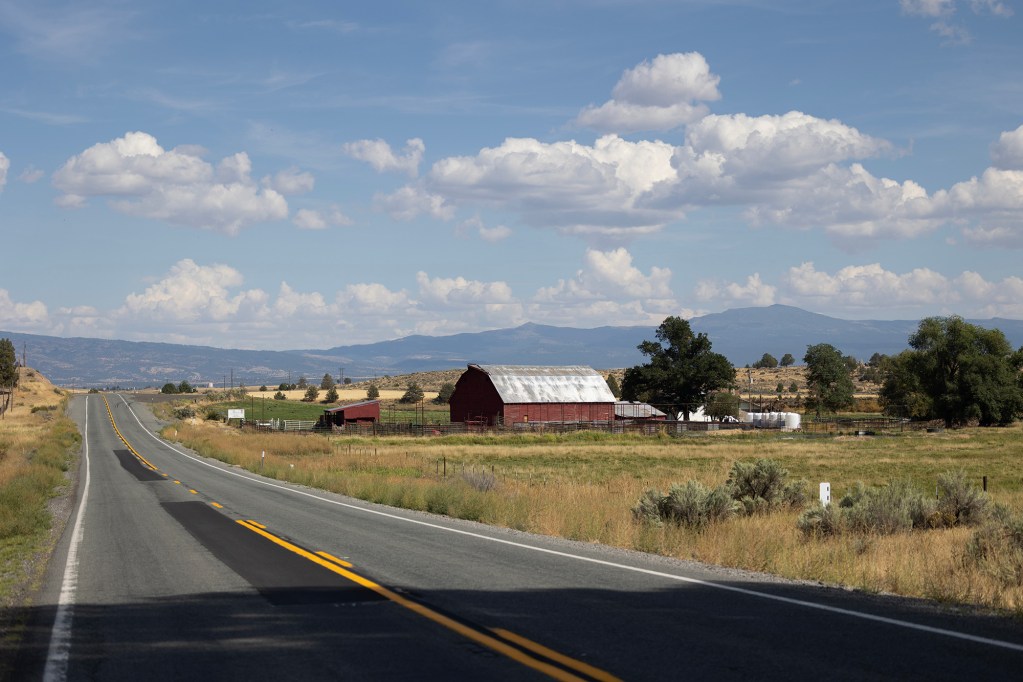
Over several rivers and through even more woods, flags advocating secession from California flutter above hills dotted with cattle, which outnumber people at least sixfold.
This ranching region with a libertarian streak might have more in common with Texas than the San Francisco Bay Area.
But it’s not Texas. Five hours northeast of Sacramento on an easy day, Modoc County and its roughly 8,500 residents are still — begrudgingly — in California.
And California is dominated by Democrats, who are embroiled in a tit-for-tat redistricting war with the Lone Star State that will likely force conservative Modoc County residents to share a representative in Congress with parts of the Bay Area.
Democratic Gov. Gavin Newsom is proposing to split up the solidly Republican 1st Congressional District covering 10 rural, inland counties in the North State as part of his plan to create five more Democratic seats to offset a GOP-led effort to gain five red seats in Texas.
That would mean Republican Doug LaMalfa, the Richvale rice farmer who represents the district, would likely lose his seat.
Modoc County and two neighboring red counties would be shifted into a redrawn district that stretches 200 miles west to the Pacific Coast and then south, through redwoods and weed farms, to include some of the state’s wealthiest communities, current Democratic Rep. Jared Huffman’s home in San Rafael and the northern end of the Golden Gate Bridge, all in uber-liberal Marin County.
“It’s like a smack in the face,” said local rancher Amie Martinez. “How could you put Marin County with Modoc County? It’s just a different perspective.”

The proposal would even likely force Modoc residents to share a district with the governor, who moved back to Marin County last year and splits his time between there and Sacramento. Modoc County voted 78% in favor of recalling him, and voters asked about redistricting there view it as a publicity stunt for Newsom’s presidential ambitions.
The ballot measure known as Proposition 50, on voters’ ballots Nov. 4, has sparked outrage in the North State. Yet for a region known for its rebellious spirit, residents are also resigned: they know they’re collateral damage in a partisan numbers game.
The map would dilute conservative voting power in one of the state’s traditional Republican strongholds. It would cut short the career growth of politicians from the state’s minority party and make room for the growing cadre of Democrats rising up from state and county seats, jockeying for bigger platforms.
But locals say they’re most concerned it’s a death-knell for rural representation. They worry their agricultural interests and their views on water, wildlife and forest management would be overshadowed in a district that includes Bay Area communities that have long championed environmental protection.
“They’ve taken every rural district and made it an urban district,” said Nadine Bailey, a former staffer for a Republican state senator who now advocates for agricultural water users and the rural North State. “It just feels like an assault on rural California.”
Though Modoc County supervisors have declared their opposition to Prop. 50, there’s little else locals can do. Registered Republicans are outnumbered by Democrats statewide nearly two-to-one. Rural residents represent an even smaller share of the state’s electorate.
“It’ll be very hard to fight back,” said Tim Babcock, owner of a general store in Lassen County, a similar and neighboring community that’s proposed to be drawn into a different liberal-leaning congressional district. “Unless we split the state. And that’s never going to happen.”
An isolated county
Far-flung but tight-knit, the high desert of Modoc County has been an agricultural community for generations.
In the west, cattle graze through a series of meadows and valleys into the hills of the Warner Mountains. Hundreds of them are sold weekly at an auction yard Martinez’s family runs on the outskirts of Alturas. The 3,000-person county seat consists of a cluster of government buildings, a high school and empty storefronts. In the east, migratory birds soar over vegetable farms on the drained Tule Lake bed that the U.S. granted to World War II veteran homesteaders by picking names out of a pickle jar. Not far away sit the remains of an internment camp where the government imprisoned nearly 19,000 Japanese Americans.
The sheer remoteness and harsh natural beauty are a point of pride and a source of difficulty. Residents live with the regular threat of wildfires. A fifth of the county’s residents live below the poverty line. There’s no WalMart and no maternity ward, and there are few jobs outside of agriculture. Like other forested counties, local schools are facing a fiscal cliff after Congress failed to renew a source of federal funding reserved for areas with declining timber revenues.


It’s so sparsely populated that local Republican Assemblymember Heather Hadwick, who lives in Modoc County, represents 10 neighboring counties besides her own. She puts in hundreds of miles on the road holding town halls between Sacramento and home, and struggles to imagine a congressmember reaching her county, with winding roads and the Klamath Mountains between Modoc and the coast.
“It’s just not good governance,” she said.
Modoc County went for Trump by over 70% last fall. Its sheriff, Tex Dowdy, proudly refuses to fly the California flag over his station out of grievance with the state’s liberal governance. In 2013, Modoc made headlines for declaring its intent to secede from California and form the “State of Jefferson” with neighboring counties in the North State and southwest Oregon.
County Supervisor Geri Byrne said she knew it was a longshot — but thought, “when’s the last time The New York Times called someone in Modoc County?”
Byrne, who is also chair of the Rural County Representatives of California and of the upcoming National Sheepdog Finals, said the secession resolution was about sending a message.
“It wasn’t conservative-liberal,” she said. “It was the urban-rural divide, and that’s what this whole Prop. 50 is about.”
Even a Democratic resident running a produce pickup center in Alturas observed that her neighbors are “not that Trumpy.” Instead, there’s a pervasive general distrust of politics on any side of the aisle.
In particular, residents who live by swaths of national forests bemoan how successive federal administrations of both parties have flip-flopped on how to manage public lands, which they say have worsened the risk of wildfire and prioritized conservation over their livelihoods.
Flourishing wolves are a problem
At the moment, all anyone can talk about is the wolves.
The apex predator returned to California more than a decade ago, a celebrated conservation success story after they were hunted to near-extinction in the western U.S. Now they’re flourishing in the North State — and feeding on cattle, throwing ranching communities on edge. Federally, they’re still listed as an endangered species under the landmark conservation law signed by President Richard Nixon.
Under California rules, ranchers can only use nonlethal methods to deter the wolves, like electrifying fencing or hiring ranch hands to guard their herds at night.


“That whole issue is softened by the organizations that mean well for the animals, but this is our absolute existence here,” said Teri Brown, owner of a local feed store, who said she’s had cows go missing that she suspects were killed by wolves.
It’s one of the rural issues Brown, a registered Republican, said voters closer to the Bay Area wouldn’t understand. She said she doesn’t support gerrymandering anywhere — in Texas or California.
In town to visit his bookkeeper, rancher Ray Anklin scrolled through his phone to show videos of wolves trotting through his property and grisly photos of calf kills. He said last year, wildlife killed 19 of his cattle — a loss of over $3,000 per head. He’s set up a booth at a nearby fair, hoping to get public support for delisting wolves as an endangered species, and wants any representative in Congress to take the issue seriously.
As California’s battlegrounds increasingly take shape in exurban and suburban districts, rural North State conservatives at times feel almost as out of touch with their fellow Republicans as they do with Democrats.
Few Republicans in the state and nation understand “public lands districts,” said Modoc County Supervisor Shane Starr, a Republican who used to work in LaMalfa’s office. “Doug’s the closest thing we’ve got.”

“This whole thing with DEI and ‘woke culture’ and stuff,” he said, referring to the diversity and inclusion efforts under attack from the right, “it’s like, yeah, we had a kid who goes to the high school who dyed his hair a certain color. Cool, we don’t care. All of these things going on at the national stage are not based in our reality whatsoever.”
At a cattlemen’s dinner in Alturas one recent evening, Martinez said she once ran into LaMalfa at a local barbecue fundraiser for firefighters and approached him about a proposal to designate parts of northwestern Nevada as protected federal wilderness. Her 700-person town of Cedarville in east Modoc County is 10 minutes from the state line.
Martinez worried about rules that prohibit driving motorized vehicles in wilderness, which she said would discourage the hunters who pass through during deer season and book lodging in town. Even though the proposal was in Nevada, LaMalfa sent staff, including Starr, to meetings to raise objections on behalf of the small town, she said.
“I know we won’t get that kind of representation from Marin County,” she said.
Reached by phone, Huffman defended his qualifications to represent the region.
Adding Siskiyou, Shasta and Modoc counties would mean many more hours of travel to meet constituents, but Huffman pointed out his district is already huge, covering 350 miles of the North Coast. And it includes many conservative-leaning, forested areas in Trinity and Del Norte counties. A former attorney for the environmental group Natural Resources Defense Council, he’s the top Democrat on the House Natural Resources Committee, where LaMalfa also sits.



Huffman said he would run for re-election in the district if voters approve its redrawing, and “would work my tail off to give them great representation.”
As for the wolves, he doesn’t support delisting their endangered status and said he only supports nonlethal methods of managing the population.
“There are plenty of win-win solutions,” he said of conflict between ranchers and environmentalists. “I’m not an absolutist. I’m a problem solver.”
For Democrats, ‘I don’t think there’s any option’
On the other side of the aisle, North State Democrats are gearing up to support Prop. 50, even as parts of it make them uneasy.
Nancy Richardson, an office manager at the free weekly paper in Modoc County (coverage of high school sports remains steady, along with a police blotter announcing a woman’s booking for eavesdropping), said she doesn’t like that it will cost the state as much as $280 million to run the statewide election on redistricting.
But she thinks it has to be done.
“I don’t like that Texas is causing this problem,” she said.
In Siskiyou County’s liberal enclave of Mt. Shasta, Greg Dinger said he supports the redistricting plan because he wants to fight back against the Trump administration’s targeting of immigrants, erosion of democratic norms and a federal budget that is estimated to cut $28 billion from health care in California over the next 10 years.
The effects are expected to be particularly acute in struggling rural hospitals, which disproportionately rely on Medicare and Medicaid funding. LaMalfa voted for the budget bill.
Dinger, who owns a web development company, said normally he would only support bipartisan redistricting. But he was swayed by the fact that Trump had called for Republicans to draw more GOP seats in Texas.
“Under the circumstances, I don’t think there’s any option,” he said. “There’s the phrase that came from Michelle Obama, ‘When they go low, we go high.’ Well, that doesn’t work anymore.”
In an interview, LaMalfa said the impacts to rural hospitals were exaggerated. He blamed impending Medicaid cuts instead on California’s health care system being billions of dollars over budget this year, in part because of rising pharmaceutical costs and higher-than-expected enrollment of undocumented immigrants who recently became eligible. (California doesn’t use federal dollars to pay for undocumented immigrants’ coverage.)
“Basically what it boils down to is they want illegal immigrants to be getting these benefits,” he said in response to criticism of the spending bill. “Are the other 49 states supposed to pay for that?”
LaMalfa has criticized Prop. 50 and said no state should engage in partisan redistricting in the middle of the decade. But he stopped short of endorsing his Republican colleague Rep. Kevin Kiley’s bill in Congress to ban it nationwide, saying states should still retain their rights to run their own elections systems.
The proposed new maps would make Kiley’s Republican-leaning district blue. They would turn LaMalfa’s 1st District into a dramatically more liberal one that stretches into Santa Rosa.
But LaMalfa said he’s leaning toward running for re-election even if the maps pass, though he’s focused for now on campaigning against the proposition.
“I intend to give it my all no matter what the district is,” he said.
He would likely face Audrey Denney, a Chico State professor and two-time prior Democratic challenger who has already said she’d run again if the maps pass. Outgoing state Senate President Pro Tem Mike McGuire, a Healdsburg Democrat who was instrumental in coming up with the proposed new maps, is also reportedly interested in the seat; McGuire’s office did not respond to a request for comment.
In her renovated Queen Anne cottage in downtown Chico, Denney buzzed with excitement describing how the proposition has galvanized rural Democrats.
She emphasized her own family’s roots as ranchers in the Central Coast region, and said she has bipartisan relationships across the North State.

“I have credibility in those spaces, growing up in rural America and spending my career advocating for rural America and real, actual, practical solutions for people,” she said.
Denney’s former campaign staffer Rylee Pedotti, a Democrat in Modoc County, shares her optimism — to an extent. A communications professional whose family also owns a ranch, she said she’s not worried Huffman couldn’t represent Modoc.
“More often than not we actually do experience some of the same issues,” Pedotti said: water and irrigation concerns, the loss of home insurance, the rising costs of health care.
Yet she’s deeply conflicted about the proposal: on the one hand cheering Democrats for being “finally ready to play hardball as the Republicans have done so well for decades in consolidating power;” on the other fearful of the escalating partisan rancor and the disenfranchisement of her neighbors. She’s considering sitting out the election.
“We’ll still be heard,” she said, if the new maps pass. “But I understand the concerns of folks who are on the other side of the aisle. It feels like their voice is being taken away.”