

Shade Equity: To Understand the Problem — and the Solutions — Look to Tucson
Residents of Tucson all know the relief of stepping into the shade on a hot desert afternoon. In Tucson, where summer temperatures often soar above 110 degrees, shade can feel like a lifeline. Yet in too many parts of our city, especially on the Southside, shade is scarce. Concrete and gravel dominate yards, streets, and gathering places, while tree canopy coverage remains limited. For residents who rely on walking and public transit, the absence of shade turns a simple errand into a serious health risk. In 2023 alone there were 990 heat-related deaths in the state of Arizona. Compared to a decade ago, this is a 650% increase in the number of preventable fatalities attributable to extreme heat exposure. This risk is compounded by the heat records being broken in the spring and fall, exacerbating the risk of heat exposure. We’re a group of graduate students in the field of public health at the University of Arizona who have learned how infrastructure directly affects health outcomes. Living, working, and studying in Tucson has made us aware of how urban planning can either protect or endanger communities. Affluent neighborhoods often enjoy tree-lined streets and shaded bus stops, while historically marginalized communities endure relentless sun exposure. This is not just an inconvenience; it’s an environmental justice problem that compounds existing health disparities. Tucson’s Million Trees initiative has made significant strides thanks to the local leadership and a $5 million federal grant. However, recent actions by the Trump administration have halted this progress and more initiatives in the city. Cuts to diversity and equity programs have led to the cancellation of a $75 million urban forestry grant nationwide, potentially limiting future support for cities like Tucson. On top of that, efforts to boost domestic timber production and recent layoffs in the U.S. Forest Service risk undermining tree maintenance and climate resilience. As Tucson faces increasingly severe summer heat, communities must look beyond temporary relief measures to sustainable solutions. Water stations and cooling centers have become first-line defenses, yet they operate under limited hours, require maintenance, and often go underutilized due to distance or lack of public awareness. In contrast, expanding shade through canopy trees and permanent shade structures provides passive, continuously available cooling with minimal energy demand. Funding for these projects is already supported by the city’s Green Infrastructure Fee on monthly water bills, making the investment fiscally feasible. Trees not only reduce ambient temperatures but also filter air pollutants, mitigate stormwater runoff, and enhance community well-being. Although the initial cost may seem significant, the long-term public health gains, reduced energy use, and environmental resilience far outweigh the expense. For Tucson’s future, shade must be recognized as critical infrastructure. Increased community involvement is crucial for the success of shade equity initiatives. We must empower residents to shape their environment to move beyond top-down approaches. This can be achieved through several avenues. First we must educate residents about shade equity through accessible public awareness campaigns that highlight the tangible benefits of shade and the very real risks of heat exposure. Residents must also be directly involved in the shade infrastructure projects’ planning and design. This can be accomplished through inclusive workshops, user-friendly surveys, and the establishment of representative community advisory boards. We should create robust volunteer programs that incentivize residents to participate in tree planting, shade structure maintenance, and sustained community outreach. Genuine partnerships between government agencies, nonprofit organizations, local businesses, schools, and local artists are key to leveraging diverse resources and expertise. Perhaps most importantly, we must equip and encourage residents to become active advocates for shade equity policies and increased funding at the local and state levels by organizing community meetings and town halls and supporting the development and implementation of comprehensive shade master plans that prioritize the equitable distribution of shade resources as a matter of fundamental justice. Cities across Arizona — like Phoenix, Yuma, and Nogales — face similar patterns of shade inequity, and this issue extends nationwide. From Los Angeles to Atlanta, low-income neighborhoods, communities of color, and unhoused folks consistently have fewer trees and less shade infrastructure. Internationally, cities in the Global South are also grappling with rising temperatures but lack adequate cooling solutions. This puts the unhoused populations at risk of heat-related illness and increased risk of mortality, especially in cities like Tucson. As urban areas everywhere adapt to the climate crisis, equitable shade must be part of the conversation around sustainable, healthy city design. And as climate change intensifies and heat waves grow more deadly, access to shade must be recognized as a basic public health need. Even as the Trump administration threatens to cut funding from climate initiatives, Tucson’s commitment remains firm. Shade must be treated as essential infrastructure, not a luxury. With every tree planted creating shaded space, we take a hopeful step toward a more livable Tucson — and other overheated cities across the planet. Previously in The Revelator: As Heat Deaths Rise, Planting Trees Is Part of the Solution The post Shade Equity: To Understand the Problem — and the Solutions — Look to Tucson appeared first on The Revelator.
Heat deaths here have soared 650% in the past decade. Addressing inequality will save lives. The post Shade Equity: To Understand the Problem — and the Solutions — Look to Tucson appeared first on The Revelator.
Residents of Tucson all know the relief of stepping into the shade on a hot desert afternoon.
In Tucson, where summer temperatures often soar above 110 degrees, shade can feel like a lifeline. Yet in too many parts of our city, especially on the Southside, shade is scarce. Concrete and gravel dominate yards, streets, and gathering places, while tree canopy coverage remains limited.
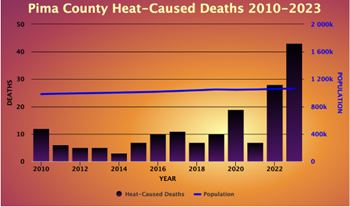
For residents who rely on walking and public transit, the absence of shade turns a simple errand into a serious health risk. In 2023 alone there were 990 heat-related deaths in the state of Arizona. Compared to a decade ago, this is a 650% increase in the number of preventable fatalities attributable to extreme heat exposure. This risk is compounded by the heat records being broken in the spring and fall, exacerbating the risk of heat exposure.
We’re a group of graduate students in the field of public health at the University of Arizona who have learned how infrastructure directly affects health outcomes. Living, working, and studying in Tucson has made us aware of how urban planning can either protect or endanger communities. Affluent neighborhoods often enjoy tree-lined streets and shaded bus stops, while historically marginalized communities endure relentless sun exposure.
This is not just an inconvenience; it’s an environmental justice problem that compounds existing health disparities.
Tucson’s Million Trees initiative has made significant strides thanks to the local leadership and a $5 million federal grant. However, recent actions by the Trump administration have halted this progress and more initiatives in the city. Cuts to diversity and equity programs have led to the cancellation of a $75 million urban forestry grant nationwide, potentially limiting future support for cities like Tucson. On top of that, efforts to boost domestic timber production and recent layoffs in the U.S. Forest Service risk undermining tree maintenance and climate resilience.
As Tucson faces increasingly severe summer heat, communities must look beyond temporary relief measures to sustainable solutions. Water stations and cooling centers have become first-line defenses, yet they operate under limited hours, require maintenance, and often go underutilized due to distance or lack of public awareness.
In contrast, expanding shade through canopy trees and permanent shade structures provides passive, continuously available cooling with minimal energy demand. Funding for these projects is already supported by the city’s Green Infrastructure Fee on monthly water bills, making the investment fiscally feasible.
Trees not only reduce ambient temperatures but also filter air pollutants, mitigate stormwater runoff, and enhance community well-being. Although the initial cost may seem significant, the long-term public health gains, reduced energy use, and environmental resilience far outweigh the expense. For Tucson’s future, shade must be recognized as critical infrastructure.
Increased community involvement is crucial for the success of shade equity initiatives. We must empower residents to shape their environment to move beyond top-down approaches.
This can be achieved through several avenues.
First we must educate residents about shade equity through accessible public awareness campaigns that highlight the tangible benefits of shade and the very real risks of heat exposure.
Residents must also be directly involved in the shade infrastructure projects’ planning and design. This can be accomplished through inclusive workshops, user-friendly surveys, and the establishment of representative community advisory boards.
We should create robust volunteer programs that incentivize residents to participate in tree planting, shade structure maintenance, and sustained community outreach. Genuine partnerships between government agencies, nonprofit organizations, local businesses, schools, and local artists are key to leveraging diverse resources and expertise.
Perhaps most importantly, we must equip and encourage residents to become active advocates for shade equity policies and increased funding at the local and state levels by organizing community meetings and town halls and supporting the development and implementation of comprehensive shade master plans that prioritize the equitable distribution of shade resources as a matter of fundamental justice.
Cities across Arizona — like Phoenix, Yuma, and Nogales — face similar patterns of shade inequity, and this issue extends nationwide. From Los Angeles to Atlanta, low-income neighborhoods, communities of color, and unhoused folks consistently have fewer trees and less shade infrastructure. Internationally, cities in the Global South are also grappling with rising temperatures but lack adequate cooling solutions. This puts the unhoused populations at risk of heat-related illness and increased risk of mortality, especially in cities like Tucson.
As urban areas everywhere adapt to the climate crisis, equitable shade must be part of the conversation around sustainable, healthy city design. And as climate change intensifies and heat waves grow more deadly, access to shade must be recognized as a basic public health need.
Even as the Trump administration threatens to cut funding from climate initiatives, Tucson’s commitment remains firm. Shade must be treated as essential infrastructure, not a luxury. With every tree planted creating shaded space, we take a hopeful step toward a more livable Tucson — and other overheated cities across the planet.
Previously in The Revelator:
The post Shade Equity: To Understand the Problem — and the Solutions — Look to Tucson appeared first on The Revelator.