Cookies help us run our site more efficiently.

By clicking “Accept”, you agree to the storing of cookies on your device to enhance site navigation, analyze site usage, and assist in our marketing efforts. View our Privacy Policy for more information or to customize your cookie preferences.

Experimental Research on the World’s Longest-Living Vertebrate Reveals New Anti-Aging Secrets

News Feed
Monday, August 5, 2024

Recent studies on the Greenland shark, the longest-living vertebrate, reveal that its stable muscle metabolic activity across different ages may be key to its extraordinary longevity. Led by Mr. Ewan Camplisson from the University of Manchester, the research not only challenges previous beliefs that attribute the shark’s lifespan to its cold environment and minimal movement but also opens potential avenues for conservation strategies and human cardiovascular research.New research suggests that stable muscle metabolism is crucial to the Greenland shark’s longevity, offering insights into conservation and human health.Recent experimental research indicates that muscle metabolic activity might play a crucial role in the exceptional longevity of the world’s oldest living vertebrate species, the Greenland shark. These insights could be valuable for conserving this vulnerable species amidst climate change and may also have implications for human cardiovascular health.Greenland sharks (Somniosus microcephalus) are the longest-living vertebrates with an expected lifespan of at least 270 years and a possible lifespan beyond 500 years. “We want to understand what adaptations they have that allow them to live so long,” says Mr Ewan Camplisson, a PhD student at the University of Manchester, UK.Previously it was thought that this long lifespan was due to the shark’s cold environment and minimal movement, but the factors behind this species’ extreme longevity appear to be far more complex – prompting Mr Camplisson and his team to investigate alternative theories. Metabolic Studies in Greenland Sharks“Most species show variation in their metabolism when they age,” says Mr Camplisson. “We want to determine if Greenland sharks also show this traditional sign of aging or if their metabolism remains unaltered over time.”To measure the metabolism of the sharks, Mr Camplisson and his team conducted enzyme assays on preserved muscle tissue samples from Greenland sharks. They measured the metabolic activity of these enzymes with a spectrophotometer across a range of different shark ages and environmental temperatures.Surprisingly, Mr Camplisson and his team found no significant variation in muscle metabolic activity across different ages, suggesting that their metabolism does not appear to decrease over time and may play a key role in their longevity. “This is quite different to most animals which tend to show some variation in their metabolic enzyme activity as they age,” he says. “The results support our hypothesis that the Greenland shark does not show the same traditional signs of aging as other animals.”Tissue collection from a Greenland shark. Credit: Ewan CamplissonThe results of this study also show that the Greenland shark’s metabolic enzymes were significantly more active at higher temperatures. “This would suggest that the shark’s red muscle metabolism is not specially adapted for the polar environment, otherwise we would have expected to see less of a temperature-related difference in activity,” says Mr Camplisson.In a world with a rapidly changing climate, long-lived species that are less able to adapt may be the most at risk of extinction. “A female Greenland shark may not become sexually mature until it is 150 years old and with such a long generation time, the species will have far less of a chance to adapt to anthropogenic changes in their environment,” says Mr Camplisson.Mr Camplisson plans to test more enzymes and tissue types to gain an even deeper understanding of the shark’s metabolic activity. “My ultimate goal is to protect the species and the best way to do this is to better understand them,” he says.Mr Camplisson is also interested in the possible applications of this research for our understanding of human heart disease. “By studying the Greenland shark and its heart, we may be able to better understand our own cardiovascular health,” he says. “These are issues that become progressively more common and severe with increasing age.”Meeting: SEB Annual Conference 2024

New research suggests that stable muscle metabolism is crucial to the Greenland shark’s longevity, offering insights into conservation and human health. Recent experimental research indicates...
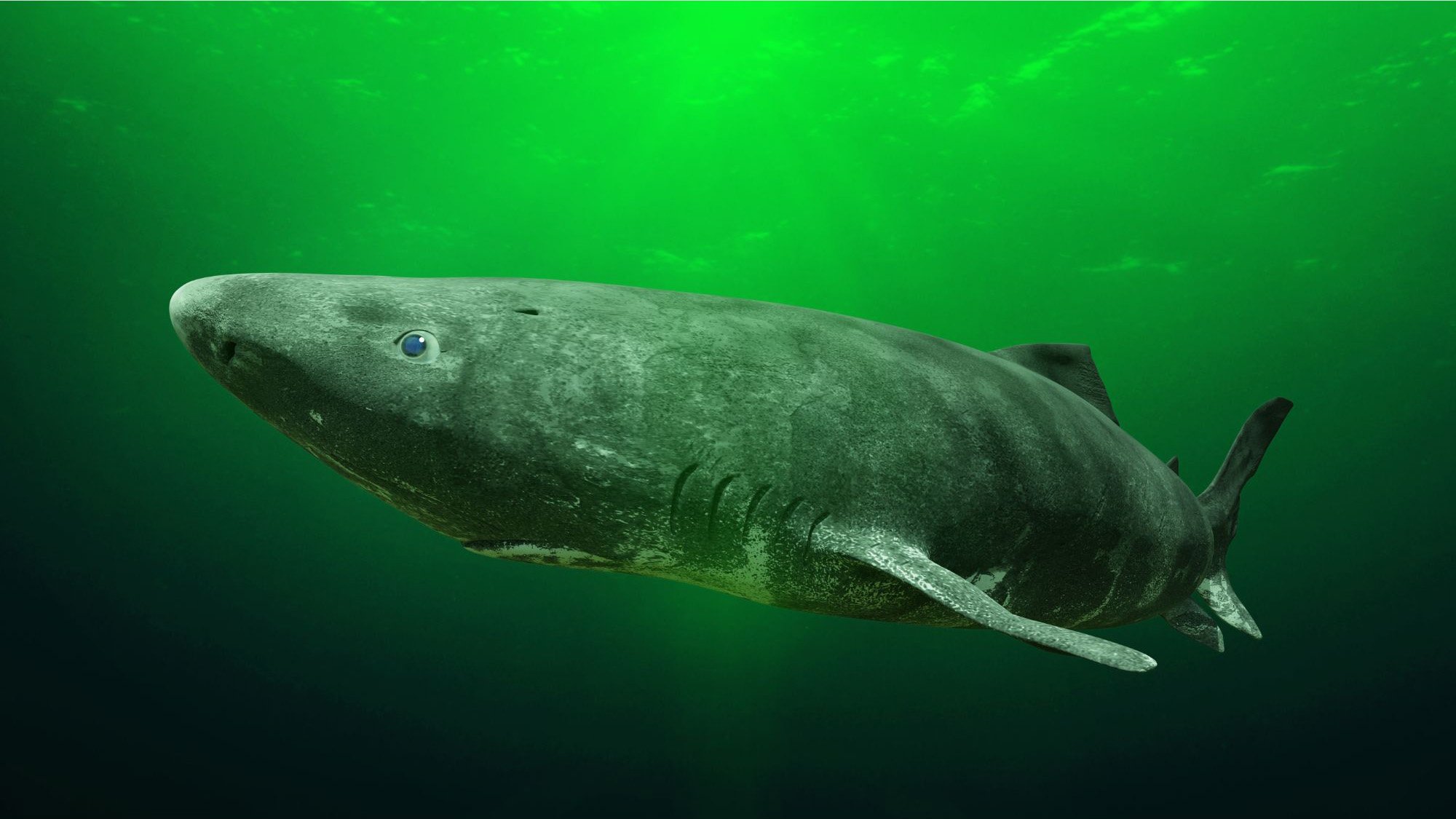
Greenland Shark

Recent studies on the Greenland shark, the longest-living vertebrate, reveal that its stable muscle metabolic activity across different ages may be key to its extraordinary longevity. Led by Mr. Ewan Camplisson from the University of Manchester, the research not only challenges previous beliefs that attribute the shark’s lifespan to its cold environment and minimal movement but also opens potential avenues for conservation strategies and human cardiovascular research.

New research suggests that stable muscle metabolism is crucial to the Greenland shark’s longevity, offering insights into conservation and human health.

Recent experimental research indicates that muscle metabolic activity might play a crucial role in the exceptional longevity of the world’s oldest living vertebrate species, the Greenland shark. These insights could be valuable for conserving this vulnerable species amidst climate change and may also have implications for human cardiovascular health.

Greenland sharks (Somniosus microcephalus) are the longest-living vertebrates with an expected lifespan of at least 270 years and a possible lifespan beyond 500 years. “We want to understand what adaptations they have that allow them to live so long,” says Mr Ewan Camplisson, a PhD student at the University of Manchester, UK.

Previously it was thought that this long lifespan was due to the shark’s cold environment and minimal movement, but the factors behind this species’ extreme longevity appear to be far more complex – prompting Mr Camplisson and his team to investigate alternative theories.

Metabolic Studies in Greenland Sharks

“Most species show variation in their metabolism when they age,” says Mr Camplisson. “We want to determine if Greenland sharks also show this traditional sign of aging or if their metabolism remains unaltered over time.”

To measure the metabolism of the sharks, Mr Camplisson and his team conducted enzyme assays on preserved muscle tissue samples from Greenland sharks. They measured the metabolic activity of these enzymes with a spectrophotometer across a range of different shark ages and environmental temperatures.

Surprisingly, Mr Camplisson and his team found no significant variation in muscle metabolic activity across different ages, suggesting that their metabolism does not appear to decrease over time and may play a key role in their longevity. “This is quite different to most animals which tend to show some variation in their metabolic enzyme activity as they age,” he says. “The results support our hypothesis that the Greenland shark does not show the same traditional signs of aging as other animals.”
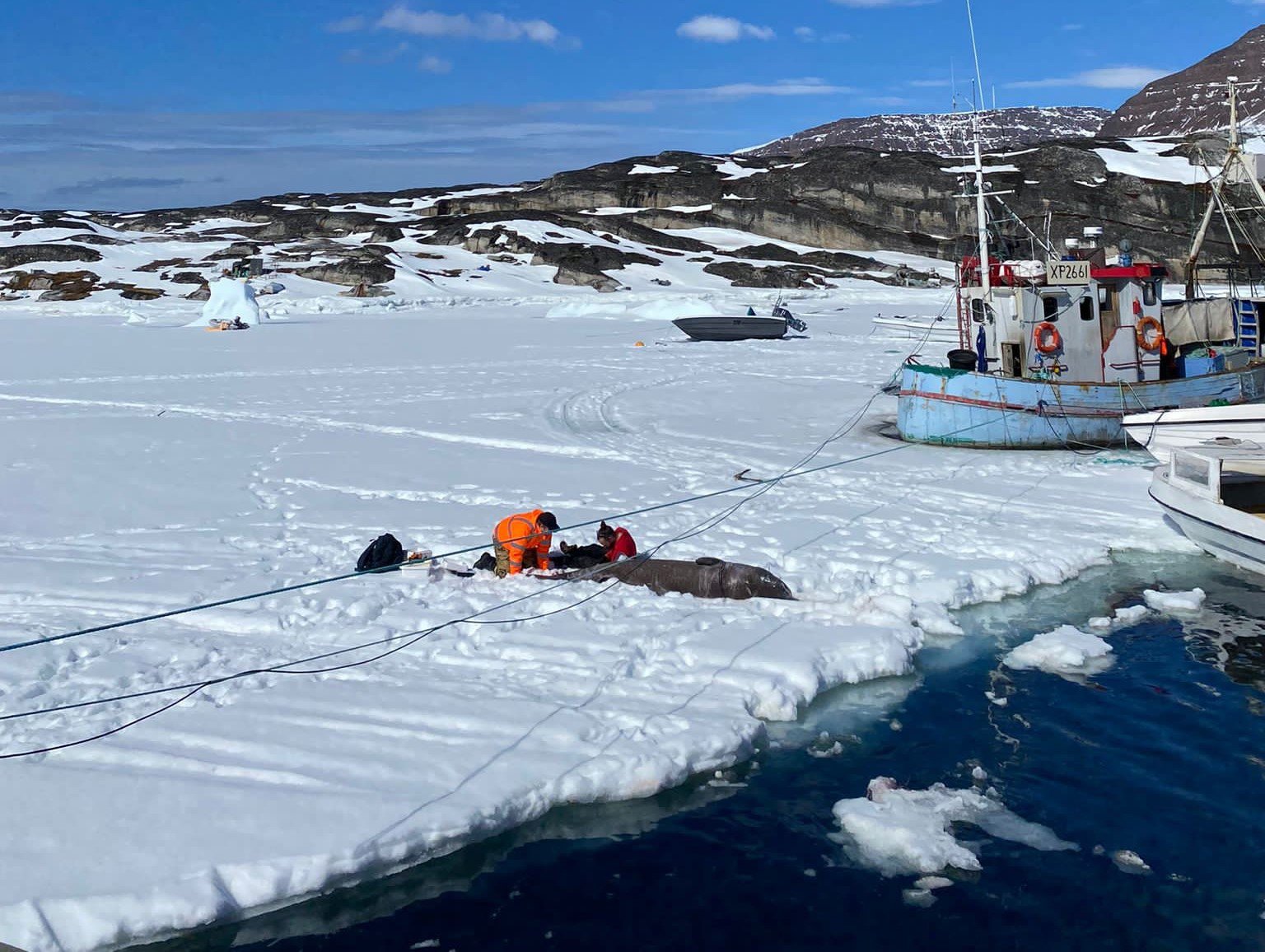
Tissue Collection From a Greenland Shark

Tissue collection from a Greenland shark. Credit: Ewan Camplisson

The results of this study also show that the Greenland shark’s metabolic enzymes were significantly more active at higher temperatures. “This would suggest that the shark’s red muscle metabolism is not specially adapted for the polar environment, otherwise we would have expected to see less of a temperature-related difference in activity,” says Mr Camplisson.

In a world with a rapidly changing climate, long-lived species that are less able to adapt may be the most at risk of extinction. “A female Greenland shark may not become sexually mature until it is 150 years old and with such a long generation time, the species will have far less of a chance to adapt to anthropogenic changes in their environment,” says Mr Camplisson.

Mr Camplisson plans to test more enzymes and tissue types to gain an even deeper understanding of the shark’s metabolic activity. “My ultimate goal is to protect the species and the best way to do this is to better understand them,” he says.

Mr Camplisson is also interested in the possible applications of this research for our understanding of human heart disease. “By studying the Greenland shark and its heart, we may be able to better understand our own cardiovascular health,” he says. “These are issues that become progressively more common and severe with increasing age.”

Meeting: SEB Annual Conference 2024

Read the full story here.
Photos courtesy of

Piping Plovers Inspire Volunteer Conservationists Despite New Threats From the Trump Administration

Proposed changes to the Endangered Species Act and park staffing cuts are putting the endangered coastal bird in danger. The post Piping Plovers Inspire Volunteer Conservationists Despite New Threats From the Trump Administration appeared first on The Revelator.

For a piping plover, access to safe habitat means the difference between merely staying alive and preparing for the next generation. Chris Allieri knows this dynamic all too well. He saw the federally endangered shorebirds — and the drama around protecting their breeding habitat — up close for the first time in 2020 during the coronavirus pandemic. “I saw people up on the dunes, kites, drones, off-leash dogs,” he says. No one was paying any attention to the birds’ need for a protected space. “There were no signs, there was no fencing.” He says he “couldn’t believe” the petite-sized birds were essentially left to fend for themselves. Allieri’s epiphany led to the creation of the NYC Plover Project, the first volunteer nonprofit in New York City dedicated to the birds. A communications professional by trade, he now spends most of his free time as the unpaid executive director of the nonprofit, where he has four paid employees on staff. The heart of the program, Allieri says, lies in the hundreds of volunteers who care for the piping plovers every day of their nesting season, from March to September, after which the birds and their young head down the coast. Similar stories unspool across the country. Piping plovers (Charadrius melodus) have found their home across the beaches of the United States, trailing down the Atlantic coast, around the Great Lakes, into the northern Great Plains. Between nesting and migrating, piping plovers can be seen and heard across dozens of U.S. states, dashing across the sand in quick spurts of energy and sounding off with their signature bell-like peeps. While the species remains federally endangered (they’re designated as “threatened” in the Atlantic Coast and Great Plains), the piping plovers’ population have been rebounding in some areas due to the stewardship of wildlife agencies, as well as various volunteer groups. But even with those major conservation wins, piping plovers today face a new challenge: the Trump administration. Cuts and ‘Harm’ Allieri points to firings at federal agencies that manage national parks and public lands as a threat to plover management. Conservation experts in Michigan warned that piping plovers “will die” due to the administration’s cuts, as reported by MLive. In Maine staff levels for U.S. Fish and Wildlife Service partners were down in 2025, which required Maine Audubon and other nonfederal partners to do more work, according to Laura Minich Zitske, director of Maine Audubon’s coastal birds project. The organization’s funding for 2025 was set in 2023, but Minich Zitske says they are “anxiously waiting” to see how funding plays out for next season. On top of budgetary and personnel issues, the Trump administration has also proposed a rollback of the Endangered Species Act, the foundational law that has provided a critical safety net to protecting threatened species and their habitats.   View this post on Instagram   A post shared by NYC PLOVER PROJECT (@nycploverproject) The Trump administration wants to change the way the law is interpreted, specifically the definition of the word “harm.” Historically the law has upheld harm to include any attacks on a species’ habitat. Now the administration is looking to narrow that definition to only recognize killing the protected species. “Harming habitat is also harming endangered species,” says Jewel Tomasula, national policy director of the Endangered Species Coalition, an environmental nonprofit that helps connect conservation groups like the NYC Plover Project to the national network of conservation groups to share strategies. “Species need a safe place to live. They need places to find food, to reproduce, and that is so integral to species survival,” she says. “Habitat loss is also the driving factor for extinction for [the] majority of species, especially our terrestrial species.” Problems for Plovers This potential definition change is really concerning to the NYC Plover Project, says Allieri. “A plover without habitat cannot exist. A plover doesn’t just go to another beach. It doesn’t just go to a wetland or go to a marsh. It doesn’t nest in a tree… This is a very specific species that has a very specific breeding range and it’s already been winded down to within an inch of its life to where it can survive.” Allieri says the group already sees the birds having difficulties due to sea-level rise and narrowing beaches, which has caused competition within the species and with other beach-nesting birds. “We’re seeing purgation of nests by other birds,” he adds. “We’re having a lot of nest loss early in the season, and this will only continue.” Wherever conservationists work to protect wild species, uncertainty now runs high. “It’s sort of hard to wrap our heads around all these challenges to the ESA could influence how we manage endangered species demands,” says Minich Zitske. She worries about the potential that the plovers’ habitats could be damaged while the birds are away on migration, which would not count as a violation of the ESA if the “harm” rule changes. Maine Audubon has been working to monitor piping plovers since 1981 and manages most of the nesting sites across the state with some help from their partners at the Rachel Carson Wildlife Refuge. General concerns are echoed by the group’s volunteer base. “I do think that there is a perception that violations of the ESA will not be prosecuted or taken seriously,” says Minich Zitske. “This is a longstanding concern, but it has increased. Volunteers feel discouraged when they are working hard to help our most vulnerable species alive when those in power are reluctant to engage or enforce laws.” The Importance of Volunteers Out of all Maine Audubon’s efforts, more people volunteer to work with piping plovers than any other program. Some work as general monitors, while others focus on educating beachgoers or identifying new nesting sites. “A lot of our volunteers are especially committed currently because they do want to demonstrate the public support for the Endangered Species Act,” says Minich Zitske. The NYC Plover Project has also seen that wave of support for the birds grow over time. “​​That first season we were really just like, ‘we have to get some boots on the ground.’ We have to get some volunteers out there [to] just help educate and to be arms and legs for the park service,” Allieri says. They started with about a dozen volunteers but escalated quickly. In their second season, they were named volunteer group of the year by the National Park Service, beating out groups from huge West Coast national parks. Their fifth season — which just wrapped up — had an estimated 300 to 400 volunteers patrolling the stretch of beaches along the Rockaways and looking after about 100 piping plovers whose breeding sites are protected by temporary fencing or structures put up by the NYC Parks Department. “We’ve done nearly 18,000 hours of volunteer time,” Allieri says. Their volunteers are positioned at each end of the enclosure, sometimes from 6 in the morning till 9 o’clock at night. Plovers Meet the Public In addition to directly protecting the birds, the volunteers help spread the word about the species and efforts to protect them. “We’ve connected with literally tens of thousands of people who have come to the beaches in the Rockaways,” Allieri says. If you live around an area with piping plovers, you may have heard some hate against the small birds, sometimes through the form of “piping plovers taste like chicken” bumper stickers. Talking to people who don’t understand the necessity of plover enclosures is part of the job for volunteers across the nation. It occasionally causes debates about people not getting enough beach access due to the fenced-off sections. That’s less of an issue in Maine, due to the state’s strong cultural wildlife values, according to Minich Zitske. In New York City, an area known for its attitude and abundance of tourists, these conversations can get heated, but Allieri says that’s starting to change. “Sometimes people show up to the beach ready to fight — like they’re ready to fight about a bird — but that’s fewer and far between,” he says. “I think with each season we are seeing more and more support and more and more advocacy on the part of everyday New Yorkers who really are rooting for the plover.” NYC Plover Project volunteers are all trained in de-escalation tactics to address these sorts of situations, which includes giving folks the benefit of the doubt. Allieri thinks the majority of people — even those who are trying to bust volunteers’ chops — are reachable by introducing them to the bird. “We’re gonna be able to point out a piping plover and maybe even a chick or a fledgling to you,” he says. Spreading Their Wings As the NYC Plover Project grows, it’s expanding its programs to include more enhanced coastal ecosystem management and advocacy. “Even though our core program of our volunteer engagement will always be with us, we are moving into public schools and we have a full education program,” Allieri says. “Then we also have community engagement with our local elected officials — not just on the federal level, but also city and state level as well.” Allieri has less patience for elected officials who act like limited beach access or ditching controversial firework shows are merely “equity” issues. “There’s some real public safety concerns out there,” Allieri says. “Dare I say, temporary beach closures are not on the list of injustices.” As threats to endangered species ramp up, the NYC Plover Project is looking to do more year-round programming. “We are realizing quickly that we are no longer just a seasonal operation,” Allieri says. “We haven’t been for years now.” They start to wrap up their volunteer recruitment at the end of the year, and by Jan. 1 they’re fully in the planning stages for next year. In the offseason, they keep the public engaged with a volunteer Slack channel, webinars, mailing lists, and their popular social media pages. Part of their latest program expansion includes making the public aware of the similar battles various endangered species face. “The piping plover has more in common with like grizzlies and gray wolves than most people know,” Allieri says. “Don’t tell [plovers] that they’re tiny. I think that they think that they’re grizzlies.” They’re currently working on a campaign that ties these similarities together. While federal leadership’s actions may paint a different picture, the shorebirds have found support across party lines. “In terms of the voters in the Rockaways, it is everybody from one of the most prevalent Trump-supporting districts to the opposite end of the spectrum,” Allieri says. “We are not hearing one word on the ground about the need to remove endangered species protections. There are a lot of Republican community members who come up to us on the beach and ask, ‘How are the plovers doing?’” Flying Forward While volunteers’ level of commitment is up to the individual, Allieri and Minich Zitske both voice worries about potential burnout, especially with the current attacks on endangered species. “I have concerns that if this continues, at what point will people just start to give up? I don’t know. I hope not, but it’s hard to know the future, especially the way things are going,” Minich Zitske says. Still, even with what sometimes feels like an unsustainable dedication level, Allieri is certain that people will keep showing up for piping plovers, even if the harm definition change is enacted. “What would the plover want us to do? The plover would want us to fight like hell. That’s what we have to do right now.” Republish this article for free! Read our reprint policy. Previously in The Revelator: Studies: Extreme Weather Fueled by Climate Change Is Adding to Bird Declines The post Piping Plovers Inspire Volunteer Conservationists Despite New Threats From the Trump Administration appeared first on The Revelator.

California Coastal Commission approves land deal to extend last nuclear plant through 2030

A landmark deal with Pacific Gas & Electric will extend the life of the state's remaining nuclear power plant in exchange for thousands of acres of new conservation in San Luis Obispo County.

California environmental regulators on Thursday struck a landmark deal with Pacific Gas & Electric to extend the life of the state’s last remaining nuclear power plant in exchange for thousands of acres of new land conservation in San Luis Obispo County.PG&E’s agreement with the California Coastal Commission is a key hurdle for the Diablo Canyon nuclear plant to remain online until at least 2030. The plant was slated to close this year, largely due to concerns over seismic safety, but state officials pushed to delay it — saying the plant remains essential for the reliable operation of California’s electrical grid. Diablo Canyon provides nearly 9% of the electricity generated in the state, making it the state’s single largest source. The Coastal Commission voted 9-3 to approve the plan, settling the fate of some 12,000 acres that surround the power plant as a means of compensation for environmental harm caused by its continued operation. Nuclear power does not emit greenhouse gases. But Diablo Canyon uses an estimated 2.5 billion gallons of ocean water each day to absorb heat in a process known as “once-through cooling,” which kills an estimated two billion or more marine organisms each year. Some stakeholders in the region celebrated the conservation deal, while others were disappointed by the decision to trade land for marine impacts — including a Native tribe that had hoped the land would be returned to them. Diablo Canyon sits along one of the most rugged and ecologically rich stretches of the California coast.Under the agreement, PG&E will immediately transfer a 4,500-acre parcel on the north side of the property known as the “North Ranch” into a conservation easement and pursue transfer of its ownership to a public agency such as the California Department of Parks and Recreation, a nonprofit land conservation organization or tribe. A purchase by State Parks would result in a more than 50% expansion of the existing Montaña de Oro State Park. PG&E will also offer a 2,200-acre parcel on the southern part of the property known as “Wild Cherry Canyon” for purchase by a government agency, nonprofit land conservation organization or tribe. In addition, the utility will provide $10 million to plan and manage roughly 25 miles of new public access trails across the entire property. “It’s going to be something that changes lives on the Central Coast in perpetuity,” Commissioner Christopher Lopez said at the meeting. “This matters to generations that have yet to exist on this planet ... this is going to be a place that so many people mark in their minds as a place that transforms their lives as they visit and recreate and love it in a way most of us can’t even imagine today.”Critically, the plan could see Diablo Canyon remain operational much longer than the five years dictated by Thursday’s agreement. While the state Legislature only authorized the plant to operate through 2030, PG&E’s federal license renewal would cover 20 years of operations, potentially keeping it online until 2045. Should that happen, the utility would need to make additional land concessions, including expanding an existing conservation area on the southern part of the property known as the “South Ranch” to 2,500 acres. The plan also includes rights of first refusal for a government agency or a land conservation group to purchase the entirety of the South Ranch, 5,000 acres, along with Wild Cherry Canyon — after 2030. Pelicans along the concrete breakwater at Pacific Gas and Electric’s Diablo Canyon Power Plant (Brian van der Brug/Los Angeles Times) Many stakeholders were frustrated by the carve-out for the South Ranch, but still saw the agreement as an overall victory for Californians. “It is a once in a lifetime opportunity,” Sen. John Laird (D-Santa Cruz) said in a phone call ahead of Thursday’s vote. “I have not been out there where it has not been breathtakingly beautiful, where it is not this incredible, unique location, where you’re not seeing, for much of it, a human structure anywhere. It is just one of those last unique opportunities to protect very special land near the California coast.”Others, however, described the deal as disappointing and inadequate.That includes many of the region’s Native Americans who said they felt sidelined by the agreement. The deal does not preclude tribal groups from purchasing the land in the future, but it doesn’t guarantee that or give them priority.The yak titʸu titʸu yak tiłhini Northern Chumash Tribe of San Luis Obispo County and Region, which met with the Coastal Commission several times in the lead-up to Thursday’s vote, had hoped to see the land returned to them. Scott Lanthrop is a member of the tribe’s board and has worked on the issue for several years. “The sad part is our group is not being recognized as the ultimate conservationist,” he told The Times. “Any normal person, if you ask the question, would you rather have a tribal group that is totally connected to earth and wind and water, or would you like to have some state agency or gigantic NGO manage this land, I think the answer would be, ‘Hey, you probably should give it back to the tribe.’” Tribe chair Mona Tucker said she fears that free public access to the land could end up harming it instead of helping it, as the Coastal Commission intends. “In my mind, I’m not understanding how taking the land ... is mitigation for marine life,” Tucker said. “It doesn’t change anything as far as impacts to the water. It changes a lot as far as impacts to the land.” (Christopher Reynolds / Los Angeles Times) The deal has been complicated by jurisdictional questions, including who can determine what happens to the land. While PG&E owns the North Ranch parcel that could be transferred to State Parks, the South Ranch and Wild Cherry Canyon are owned by its subsidiary, Eureka Energy Company. What’s more, the California Public Utilities Commission, which regulates utilities such as PG&E, has a Tribal Land Transfer Policy that calls for investor-owned power companies to transfer land they no longer want to Native American tribes. In the case of Diablo Canyon, the Coastal Commission became the decision maker because it has the job of compensating for environmental harm from the facility’s continued operation. Since the commission determined Diablo’s use of ocean water can’t be avoided, it looked at land conservation as the next best method.This “out-of-kind” trade-off is a rare, but not unheard of way of making up for the loss of marine life. It’s an approach that is “feasible and more likely to succeed” than several other methods considered, according to the commission’s staff report. “This plan supports the continued operation of a major source of reliable electricity for California, and is in alignment with our state’s clean energy goals and focus on coastal protection,” Paula Gerfen, Diablo Canyon’s senior vice president and chief nuclear officer, said in a statement. But Assemblymember Dawn Addis (D-Morro Bay) said the deal was “not the best we can do” — particularly because the fate of the South Ranch now depends on the plant staying in operation beyond 2030.“I believe the time really is now for the immediate full conservation of the 12,000 [acres], and to bring accountability and trust back for the voters of San Luis Obispo County,” Addis said during the meeting. There are also concerns about the safety of continuing to operate a nuclear plant in California, with its radioactive waste stored in concrete casks on the site. Diablo Canyon is subject to ground shaking and earthquake hazards, including from the nearby Hosgri Fault and the Shorline Fault, about 2.5 miles and 1 mile from the facility, respectively. PG&E says the plant has been built to withstand hazards. It completed a seismic hazard assessment in 2024, and determined Diablo Canyon is safe to continue operation through 2030. The Coastal Commission, however, found if the plant operates longer, it would warrant further seismic study.A key development for continuing Diablo Canyon’s operation came in 2022 with Senate Bill 846, which delayed closure by up to five additional years. At the time, California was plagued by rolling blackouts driven extreme heat waves, and state officials were growing wary about taking such a major source of power offline.But California has made great gains in the last several years — including massive investments in solar energy and battery storage — and some questioned whether the facility is still needed at all. Others said conserving thousands of acres of land still won’t make up for the harms to the ocean.“It is unmitigatable,” said David Weisman, executive director of the nonprofit Alliance for Nuclear Responsibility. He noted that the Coastal Commission’s staff report says it would take about 99 years to balance the loss of marine life with the benefits provided by 4,500 acres of land conservation. Twenty more years of operation would take about 305 years to strike that same balance.But some pointed out that neither the commission nor fisheries data find Diablo’s operations cause declines in marine life. Ocean harm may be overestimated, said Seaver Wang, an oceanographer and the climate and energy director at the Breakthrough Institute, a Berkeley-based research center.In California’s push to transition to clean energy, every option comes with downsides, Wang said. In the case of nuclear power — which produces no greenhouse gas emissions — it’s all part of the trade off, he said. “There’s no such thing as impacts-free energy,” he said.The Coastal Commission’s vote is one of the last remaining obstacles to keeping the plant online. PG&E will also need a final nod from the Regional Water Quality Control Board, which decides on a pollution discharge permit in February.The federal Nuclear Regulatory Commission will also have to sign off on Diablo’s extension.

Costa Rica Made BBC’s 2026 Best Destinations List

Costa Rica has earned a spot on the BBC’s list of the 20 best places to travel in 2026. The recognition comes as the country pushes forward with conservation projects and opens up remote areas to visitors who value nature and sustainability. The BBC’s selection focuses on destinations that balance tourism with environmental protection and […] The post Costa Rica Made BBC’s 2026 Best Destinations List appeared first on The Tico Times | Costa Rica News | Travel | Real Estate.

Costa Rica has earned a spot on the BBC’s list of the 20 best places to travel in 2026. The recognition comes as the country pushes forward with conservation projects and opens up remote areas to visitors who value nature and sustainability. The BBC’s selection focuses on destinations that balance tourism with environmental protection and community support. For Costa Rica, this means showcasing its mix of beaches, volcanic landscapes, rainforests, and historical sites. Travelers can expect experiences that connect them directly with the land, from spotting wildlife in protected parks to joining local initiatives that preserve habitats. One key area the BBC highlights is the Osa Peninsula, where rainforests meet the sea. This region alone holds 2.5% of the world’s known land species. Visitors wake to the calls of howler monkeys, paddle through mangrove channels lit by bioluminescence at night, and surf strong waves along the coast. The peninsula also serves as a base for activities like guided hikes into Corcovado National Park, where people practice breath work, meditation, or yoga before setting out. Access to these spots improves in 2026 with new direct flights from San José to Puerto Jiménez. This change cuts travel time and lets more people reach the southern Pacific coast without long drives or boat rides. It aligns with broader efforts to expand protected zones on land and in the ocean. Local groups and national partners work to strengthen corridors for jaguars in the forests and safeguard migratory sharks in offshore waters. Community-led projects play a central role in this push. Surf schools run by residents teach skills while promoting ocean health. Eco-lodges and retreats adopt practices like solar power and wastewater recycling. One example involves a program that partners with conservation organizations to protect sea turtles, allowing guests to participate in nesting patrols and releases. These steps show how tourism can fund protection rather than harm it. Costa Rica’s history of environmental leadership supports this appeal. The country reversed deforestation decades ago, now covering nearly 60% of its land in forests. A quarter of the territory falls under legal protection. The national plan targets carbon neutrality by 2050, guiding decisions from energy use to land management. Beyond the Osa Peninsula, other regions offer similar draws. Misty peaks around volcanoes provide trails for hikers, while colonial towns reveal pre-Columbian roots through artifacts and stories. Beaches on both coasts attract surfers and those seeking quiet escapes. The BBC notes that Costa Rica combines wilderness with wellness, where a day might include spotting macaws over coves or relaxing in thermal springs. This listing arrives at a time when global travel shifts toward responsible choices. People seek places where their visits contribute to positive outcomes, like funding ranger patrols or supporting artisan crafts. In Costa Rica, that means tourism dollars flow to communities that steward the land. For us here in Costa Rica, the BBC’s nod reinforces pride in our nation’s model. It also signals potential growth in visitor numbers, prompting calls to maintain balance. Officials emphasize that sustainable practices must guide any expansion, ensuring that natural sites remain intact for future generations. As 2026 is about to start, Costa Rica prepares to welcome those drawn by the BBC’s article. The post Costa Rica Made BBC’s 2026 Best Destinations List appeared first on The Tico Times | Costa Rica News | Travel | Real Estate.

MP calls for ban on ‘biobeads’ at sewage works after devastating Camber Sands spillage

Exclusive: Use of toxic plastic beads in treatment works is unnecessary and outdated say conservationists after hundreds of millions wash up on beachThe use of tiny, toxic plastic beads at sewage works should be banned nationwide, an MP and wildlife experts have said after a devastating spill at an internationally important nature reserve.Hundreds of millions of “biobeads” washed up on Camber Sands beach in East Sussex last month, after a failure at a Southern Water sewage treatment works caused a catastrophic spill. This caused distress and alarm for local residents and conservationists, as not only are the beads unsightly, but they pose a deadly threat to wildlife. Continue reading...

The use of tiny, toxic plastic beads at sewage works should be banned nationwide, an MP and wildlife experts have said after a devastating spill at an internationally important nature reserve.Hundreds of millions of “biobeads” washed up on Camber Sands beach in East Sussex last month, after a failure at a Southern Water sewage treatment works caused a catastrophic spill. This caused distress and alarm for local residents and conservationists, as not only are the beads unsightly, but they pose a deadly threat to wildlife.Scientists at Kings’ College London tested the beads and found they contained heavy metals including lead and arsenic.The local Labour MP, Helena Dollimore, is on Thursday launching a campaign with the Wildlife Trusts to get the use of these beads banned for good. There is no record held by the government or the regulator of how many water plants use these beads, the condition of the containers holding them, or the risk posed to the beaches near where they are kept.Campaigners will gather at Rye harbour nature reserve, an internationally important habitat for rare wading birds, to call for the beads to be banned.Research by the Guardian found at least 15 treatment works using these beads, all situated around the south and south-west coast of England. These plants are older, mostly built in the 1990s and early 2000s. They use billions of floating plastic beads to create layers of biofilm, bacteria that purify water, which are separated from the environment by a mesh screen. Recent technological advances mean that water can now be purified using electric currents, and using fixed surfaces made of ceramic or concrete. There are similar but more costly products made of glass, which is less harmful to the environment.Dollimore, who is the Labour and Co-operative MP for Hastings, Rye, said: “A month ago I wasn’t aware that these plastic beads were used in local wastewater plants until 320m washed up on our beaches and nature reserve, causing an environmental catastrophe. The use of beads is an outdated technology and better modern methods exist. So why are water companies still using them in coastal plants – the very place they could do most damage? We’re calling for them to bin the beads.”A spade-full of biobeads collected on Camber Sands. Photograph: Anna McGrath/The GuardianThese beads contain a high number of polycyclic aromatic hydrocarbons, which have been linked to cancer. They often contain toxins including lead, antimony and bromine. Once in the sea, they attract algae, making them smell like food to sea creatures, which then ingest them and can be poisoned.The local Wildlife Trust has been struggling to deal with the spillage. Conservationists have been working tirelessly to remove the beads, which has been difficult as they are embedded in fragile habitats including the saltmarsh and in the shingle. The trust said it would be ordering autopsies of dead birds found, to see if the beads were a cause of death. The nature reserve is loved by birds such as Wigeon ducks because of the plentiful seeds found in the muddy flats; but these are identical in size to the bio-beads, so it is likely they will be ingested.Henri Brocklebank, director of conservation at the Sussex Wildlife Trust, said: “Rye harbour nature reserve is internationally important for its birds, with species travelling thousands of miles to feed and breed here. Bio-beads are small and buoyant, not dissimilar to many of the food items these birds are searching for. The impact of bioplastics accumulating in the digestive systems is well documented, but the effects of any contaminants that could be released in the acidic gut systems of these birds are far less understood. The removal of the bio-beads from the environment is paramount, but I fear that our grandchildren will still be finding them in years to come.“There is only one way to guarantee that we never have a spill of bio-beads again. That is to stop our wastewater treatment works from using them. They are an old and redundant technology and we must see their use ended swiftly.”Water minister Emma Hardy has written to water companies to find out the extent of their use of beads. The Environment Agency continues to investigate Southern Water after the spillage on Camber Sands.Southern Water apologised for the spill and said it was unable to comment on third-party testing.Defra has been contacted for comment.

Suggested Viewing

Join us to forge
a sustainable future

Our team is always growing.
Become a partner, volunteer, sponsor, or intern today.
Let us know how you would like to get involved!

CONTACT US

sign up for our mailing list to stay informed on the latest films and environmental headlines.

Subscribers receive a free day pass for streaming Cinema Verde.
Thank you! Your submission has been received!
Oops! Something went wrong while submitting the form.