Cookies help us run our site more efficiently.

By clicking “Accept”, you agree to the storing of cookies on your device to enhance site navigation, analyze site usage, and assist in our marketing efforts. View our Privacy Policy for more information or to customize your cookie preferences.

Chemicals, forever: how do you fix a problem like PFAS?

News Feed
Sunday, April 28, 2024

EdBelkin/ShutterstockA landmark legal settlement has once again focused our attention on the dangers of “forever chemicals”. This class of chemicals, technically known as per-and polyfluoroalkyl substances, or PFAS, are widely used to make nonstick or waterproof products. The problem is, the chemicals move easily around the environment, pollute groundwater and rivers, are often carcinogenic – and they don’t degrade. This month, one of the largest makers of these chemicals, 3M, had its offer of A$16 billion to clean up PFAS-contaminated waterways approved by a US court. It’s just the latest in a series of PFAS lawsuits across the United States. While increased attention is welcome, there’s no guarantee of success. Removing and destroying PFAS from wastewater streams across a single US state, Minnesota, would cost a minimum of $21 billion over 20 years. Globally, a recent report by the chemical safety nonprofit ChemSec found the costs of PFAS remediation alone amount to around $26 trillion per year – not including rising healthcare costs from exposure to PFAS, or damage to the environment. The 3M settlement is just the tip of the iceberg. The problem now is how to actually clean up these chemicals – and prevent further pollution. Remediation is expensive – and uncertain In Australia, contamination is worst in firefighter training grounds and on defence force bases, due to the long-term use of firefighting foams full of PFAS. The discovery of this contamination triggered a wave of lawsuits. The Department of Defence has since paid out more than $366 million in class action lawsuits. Defence has also assumed responsibility for managing, remediating and monitoring PFAS contamination on and around its bases. In 2021, the department began to actively set about remediation. Read more: Removing PFAS from public water systems will cost billions and take time – here are ways you can filter out harmful 'forever chemicals' at home That sounds promising – find the pollution and fix the problem. But the reality is much more complicated. A 2022 parliamentary inquiry described PFAS remediation as an emerging and experimental industry. This is correct. There’s a great deal of basic scientific research we have to do. This is not a simple problem. These chemicals seep into the soil and groundwater – and stay there. It’s hard to get them out. As a result, most remediation work at defence bases to date has been part of research and development, rather than a wide-scale permanent cleanup. To help, the defence department has brought in three major industry partners, including Emerging Compounds Treatment Technologies. We don’t know how they are doing the cleanup or if their methods work, as this information is not publicly accessible. The three companies have sought intellectual property protection to support their technological advantage in the growing PFAS remediation market. One of the companies, Venetia, told the parliamentary inquiry: [there] are still significant gaps in knowledge in keys areas such as human health toxicology, PFAS behaviour in the environment and remediation of PFAS in soil and water PFAS is a much bigger problem Significant PFAS contamination has now been reported in: – Melbourne’s West Gate Tunnel construction site. Soil contamination at the most polluted site is hundreds of times worse than a threshold set by the state’s environmental protection agency – Western Australian mines – WA waste management facilities – Southeast Queensland water reclamation plants – Perth’s public and private airports – Operating and closed landfills. The full extent of PFAS contamination in Australia is still emerging. Recent research has found Australia is one of several toxic hotspots for PFAS, relative to the rest of the world. Getting forever chemicals out of groundwater is going to be hard – but necessary. Mumemories/Shutterstock Worse, current monitoring practices are likely to be underestimating how much PFAS is lingering in the environment, given we usually only track a handful of these chemicals – out of more than 16,000. Experts have called for: improved understanding of the range of PFAS embodied in consumer and industrial products […] to assess the environmental burden and develop mitigation measures The more we look, the more alarming the picture appears. Emerging research has found PFAS in consumer products such as cosmetics, packaging, waterproofing, inks, pesticides, medical articles, polishes and paints, metal plating, pipes and cables, mechanical components, electronics, solar cells, textiles and carpets. The size and complexity of PFAS contamination suggests we are in for a very long and expensive process to begin cleaning it up – especially given we are still making and using these chemicals. Read more: Controversial ‘forever chemicals’ could be phased out in Australia under new restrictions. Here’s what you need to know How should we respond? To start addressing the problem, here are three important steps. 1. Introduce a “polluter pays” principle. The introduction of this concept is what forced 3M to pay up in the US. Australia has yet to follow suit, which is why the public has been footing the bill. If we introduce this legal principle, manufacturers will have to take responsibility. This would make it much less attractive for companies to make polluting products – and shift the burden from taxpayers to the companies responsible. Australia’s government is considering pursuing similar legal action against 3M. 2. Set PFAS contamination standards in line with other OECD countries, or better. Earlier this month, the US implemented the first legally enforceable national drinking water standards for five PFAS compounds and two PFAS mixtures. Australia’s current acceptable drinking water guidelines allow up to 140 times more PFAS in our water than these strict new US standards. In the US, these new standards are drawing new investment in remediation. 3. Take it seriously. For years, many of us thought all you had to do to avoid PFAS was not to buy nonstick pans. But these chemicals are now everywhere. They’re highly persistent and don’t leave our bodies easily. Every single person on the planet is now likely to have detectable levels of PFAS in their blood. Reducing this dangerous chemical load is going to take a lot of work to clean up existing hotspots, stop further production, and prevent recirculation of PFAS in recycled products or in our food. The 3M settlement is a good start. But it’s only a start. Tackling this problem is going to be hard, but necessary. Read more: PFAS: how research is uncovering damaging effects of 'forever chemicals' Rachael Wakefield-Rann receives research funding from various government and non-government organisations. She does not work for, consult, own shares in or receive funding from any company or organisation that would financially benefit from this article, and has disclosed no relevant affiliations beyond her academic appointment.Sarah Wilson does not work for, consult, own shares in or receive funding from any company or organisation that would benefit from this article, and has disclosed no relevant affiliations beyond their academic appointment.

In Australia, the taxpayer has footed the bill for the forever chemical clean-up so far. But this will have to change.

EdBelkin/Shutterstock

A landmark legal settlement has once again focused our attention on the dangers of “forever chemicals”.

This class of chemicals, technically known as per-and polyfluoroalkyl substances, or PFAS, are widely used to make nonstick or waterproof products. The problem is, the chemicals move easily around the environment, pollute groundwater and rivers, are often carcinogenic – and they don’t degrade.

This month, one of the largest makers of these chemicals, 3M, had its offer of A$16 billion to clean up PFAS-contaminated waterways approved by a US court. It’s just the latest in a series of PFAS lawsuits across the United States.

While increased attention is welcome, there’s no guarantee of success. Removing and destroying PFAS from wastewater streams across a single US state, Minnesota, would cost a minimum of $21 billion over 20 years. Globally, a recent report by the chemical safety nonprofit ChemSec found the costs of PFAS remediation alone amount to around $26 trillion per year – not including rising healthcare costs from exposure to PFAS, or damage to the environment. The 3M settlement is just the tip of the iceberg.

The problem now is how to actually clean up these chemicals – and prevent further pollution.

Remediation is expensive – and uncertain

In Australia, contamination is worst in firefighter training grounds and on defence force bases, due to the long-term use of firefighting foams full of PFAS. The discovery of this contamination triggered a wave of lawsuits. The Department of Defence has since paid out more than $366 million in class action lawsuits.

Defence has also assumed responsibility for managing, remediating and monitoring PFAS contamination on and around its bases. In 2021, the department began to actively set about remediation.


Read more: Removing PFAS from public water systems will cost billions and take time – here are ways you can filter out harmful 'forever chemicals' at home


That sounds promising – find the pollution and fix the problem. But the reality is much more complicated.

A 2022 parliamentary inquiry described PFAS remediation as an emerging and experimental industry.

This is correct. There’s a great deal of basic scientific research we have to do. This is not a simple problem. These chemicals seep into the soil and groundwater – and stay there. It’s hard to get them out.

As a result, most remediation work at defence bases to date has been part of research and development, rather than a wide-scale permanent cleanup.

To help, the defence department has brought in three major industry partners, including Emerging Compounds Treatment Technologies. We don’t know how they are doing the cleanup or if their methods work, as this information is not publicly accessible. The three companies have sought intellectual property protection to support their technological advantage in the growing PFAS remediation market.

One of the companies, Venetia, told the parliamentary inquiry:

[there] are still significant gaps in knowledge in keys areas such as human health toxicology, PFAS behaviour in the environment and remediation of PFAS in soil and water

PFAS is a much bigger problem

Significant PFAS contamination has now been reported in:

– Melbourne’s West Gate Tunnel construction site. Soil contamination at the most polluted site is hundreds of times worse than a threshold set by the state’s environmental protection agency

– Western Australian mines

– WA waste management facilities

– Southeast Queensland water reclamation plants

– Perth’s public and private airports

– Operating and closed landfills.

The full extent of PFAS contamination in Australia is still emerging. Recent research has found Australia is one of several toxic hotspots for PFAS, relative to the rest of the world.
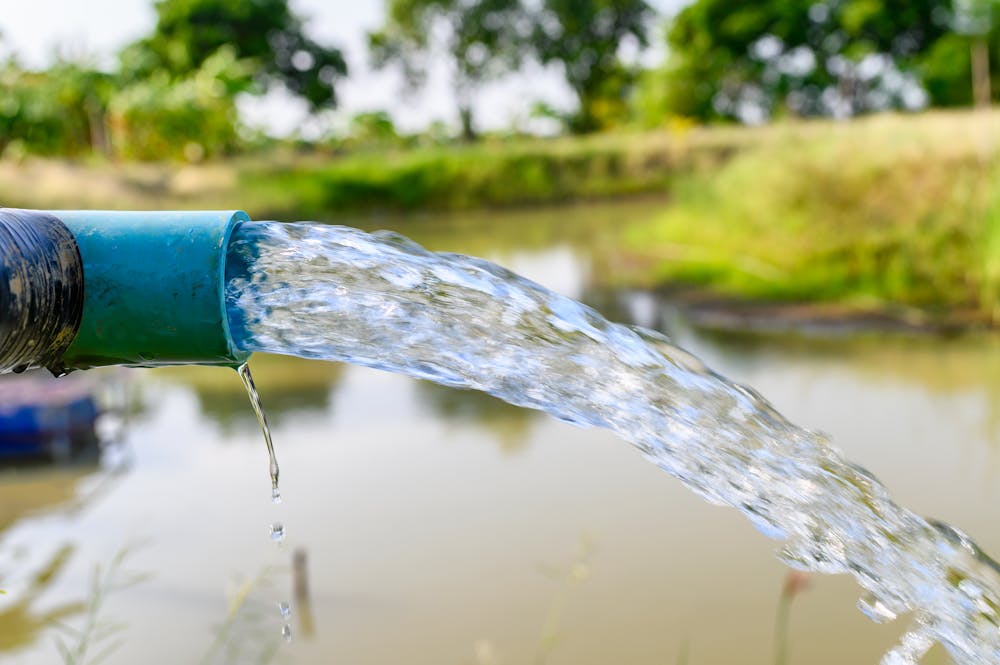
groundwater pipe
Getting forever chemicals out of groundwater is going to be hard – but necessary. Mumemories/Shutterstock

Worse, current monitoring practices are likely to be underestimating how much PFAS is lingering in the environment, given we usually only track a handful of these chemicals – out of more than 16,000.

Experts have called for:

improved understanding of the range of PFAS embodied in consumer and industrial products […] to assess the environmental burden and develop mitigation measures

The more we look, the more alarming the picture appears. Emerging research has found PFAS in consumer products such as cosmetics, packaging, waterproofing, inks, pesticides, medical articles, polishes and paints, metal plating, pipes and cables, mechanical components, electronics, solar cells, textiles and carpets.

The size and complexity of PFAS contamination suggests we are in for a very long and expensive process to begin cleaning it up – especially given we are still making and using these chemicals.


Read more: Controversial ‘forever chemicals’ could be phased out in Australia under new restrictions. Here’s what you need to know


How should we respond?

To start addressing the problem, here are three important steps.

1. Introduce a “polluter pays” principle.

The introduction of this concept is what forced 3M to pay up in the US. Australia has yet to follow suit, which is why the public has been footing the bill. If we introduce this legal principle, manufacturers will have to take responsibility. This would make it much less attractive for companies to make polluting products – and shift the burden from taxpayers to the companies responsible. Australia’s government is considering pursuing similar legal action against 3M.

2. Set PFAS contamination standards in line with other OECD countries, or better.

Earlier this month, the US implemented the first legally enforceable national drinking water standards for five PFAS compounds and two PFAS mixtures. Australia’s current acceptable drinking water guidelines allow up to 140 times more PFAS in our water than these strict new US standards. In the US, these new standards are drawing new investment in remediation.

3. Take it seriously.

For years, many of us thought all you had to do to avoid PFAS was not to buy nonstick pans. But these chemicals are now everywhere. They’re highly persistent and don’t leave our bodies easily. Every single person on the planet is now likely to have detectable levels of PFAS in their blood. Reducing this dangerous chemical load is going to take a lot of work to clean up existing hotspots, stop further production, and prevent recirculation of PFAS in recycled products or in our food.

The 3M settlement is a good start. But it’s only a start. Tackling this problem is going to be hard, but necessary.


Read more: PFAS: how research is uncovering damaging effects of 'forever chemicals'


The Conversation

Rachael Wakefield-Rann receives research funding from various government and non-government organisations. She does not work for, consult, own shares in or receive funding from any company or organisation that would financially benefit from this article, and has disclosed no relevant affiliations beyond her academic appointment.

Sarah Wilson does not work for, consult, own shares in or receive funding from any company or organisation that would benefit from this article, and has disclosed no relevant affiliations beyond their academic appointment.

Read the full story here.
Photos courtesy of

Forever Chemicals' Might Triple Teens' Risk Of Fatty Liver Disease

By Dennis Thompson HealthDay ReporterTHURSDAY, Jan. 8, 2026 (HealthDay News) — PFAS “forever chemicals” might nearly triple a young person’s risk...

By Dennis Thompson HealthDay ReporterTHURSDAY, Jan. 8, 2026 (HealthDay News) — PFAS “forever chemicals” might nearly triple a young person’s risk of developing fatty liver disease, a new study says.Each doubling in blood levels of the PFAS chemical perfluorooctanoic acid is linked to 2.7 times the odds of fatty liver disease among teenagers, according to findings published in the January issue of the journal Environmental Research.Fatty liver disease — also known as metabolic dysfunction-associated steatotic liver disease (MASLD) — occurs when fat builds up in the organ, leading to inflammation, scarring and increased risk of cancer.About 10% of all children, and up to 40% of children with obesity, have fatty liver disease, researchers said in background notes.“MASLD can progress silently for years before causing serious health problems,” said senior researcher Dr. Lida Chatzi, a professor of population and public health sciences and pediatrics at the Keck School of Medicine of USC in Los Angeles.“When liver fat starts accumulating in adolescence, it may set the stage for a lifetime of metabolic and liver health challenges,” Chatzi added in a news release. “If we reduce PFAS exposure early, we may help prevent liver disease later. That’s a powerful public health opportunity.”Per- and polyfluoroalkyl substances (PFAS) are called “forever chemicals” because they combine carbon and fluorine molecules, one of the strongest chemical bonds possible. This makes PFAS removal and breakdown very difficult.PFAS compounds have been used in consumer products since the 1940s, including fire extinguishing foam, nonstick cookware, food wrappers, stain-resistant furniture and waterproof clothing.More than 99% of Americans have measurable PFAS in their blood, and at least one PFAS chemical is present in roughly half of U.S. drinking water supplies, researchers said.“Adolescents are particularly more vulnerable to the health effects of PFAS as it is a critical period of development and growth,” lead researcher Shiwen “Sherlock” Li, an assistant professor of public health sciences at the University of Hawaii, said in a news release.“In addition to liver disease, PFAS exposure has been associated with a range of adverse health outcomes, including several types of cancer,” Li said.For the new study, researchers examined data on 284 Southern California adolescents and young adults gathered as part of two prior USC studies.All of the participants already had a high risk of metabolic disease because their parents had type 2 diabetes or were overweight, researchers said.Their PFAS levels were measured through blood tests, and liver fat was assessed using MRI scans.Higher blood levels of two common PFAS — perfluorooctanoic acid (PFOA) and perfluoroheptanoic acid (PFHpA) — were linked to an increased risk of fatty liver disease.Results showed a young person’s risk was even higher if they smoked or carried a genetic variant known to influence liver fat.“These findings suggest that PFAS exposures, genetics and lifestyle factors work together to influence who has greater risk of developing MASLD as a function of your life stage,” researcher Max Aung, assistant professor of population and public health sciences at the Keck School of Medicine, said in a news release.“Understanding gene and environment interactions can help advance precision environmental health for MASLD,” he added.The study also showed that fatty liver disease became more common as teens grew older, adding to evidence that younger people might be more vulnerable to PFAS exposure, Chatzi said.“PFAS exposures not only disrupt liver biology but also translate into real liver disease risk in youth,” Chatzi said. “Adolescence seems to be a critical window of susceptibility, suggesting PFAS exposure may matter most when the liver is still developing.”The Environmental Working Group has more on PFAS.SOURCES: Keck School of Medicine of USC, news release, Jan. 6, 2026; Environmental Research, Jan. 1, 2026Copyright © 2026 HealthDay. All rights reserved.

China Announces Another New Trade Measure Against Japan as Tensions Rise

China has escalated its trade tensions with Japan by launching an investigation into imported dichlorosilane, a chemical gas used in making semiconductors

BEIJING (AP) — China escalated its trade tensions with Japan on Wednesday by launching an investigation into imported dichlorosilane, a chemical gas used in making semiconductors, a day after it imposed curbs on the export of so-called dual-use goods that could be used by Japan’s military.The Chinese Commerce Ministry said in a statement that it had launched the investigation following an application from the domestic industry showing the price of dichlorosilane imported from Japan had decreased 31% between 2022 and 2024.“The dumping of imported products from Japan has damaged the production and operation of our domestic industry,” the ministry said.The measure comes a day after Beijing banned exports to Japan of dual-use goods that can have military applications.Beijing has been showing mounting displeasure with Tokyo after new Japanese Prime Minister Sanae Takaichi suggested late last year that her nation's military could intervene if China were to take action against Taiwan — an island democracy that Beijing considers its own territory.Tensions were stoked again on Tuesday when Japanese lawmaker Hei Seki, who last year was sanctioned by China for “spreading fallacies” about Taiwan and other disputed territories, visited Taiwan and called it an independent country. Also known as Yo Kitano, he has been banned from entering China. He told reporters that his arrival in Taiwan demonstrated the two are “different countries.”“I came to Taiwan … to prove this point, and to tell the world that Taiwan is an independent country,” Hei Seki said, according to Taiwan’s Central News Agency.“The nasty words of a petty villain like him are not worth commenting on,” Chinese Foreign Ministry spokesperson Mao Ning retorted when asked about his comment. Fears of a rare earths curb Masaaki Kanai, head of Asia Oceanian Affairs at Japan's Foreign Ministry, urged China to scrap the trade curbs, saying a measure exclusively targeting Japan that deviates from international practice is unacceptable. Japan, however, has yet to announce any retaliatory measures.As the two countries feuded, speculation rose that China might target rare earths exports to Japan, in a move similar to the rounds of critical minerals export restrictions it has imposed as part of its trade war with the United States.China controls most of the global production of heavy rare earths, used for making powerful, heat-resistance magnets used in industries such as defense and electric vehicles.While the Commerce Ministry did not mention any new rare earths curbs, the official newspaper China Daily, seen as a government mouthpiece, quoted anonymous sources saying Beijing was considering tightening exports of certain rare earths to Japan. That report could not be independently confirmed. Improved South Korean ties contrast with Japan row As Beijing spars with Tokyo, it has made a point of courting a different East Asian power — South Korea.On Wednesday, South Korean President Lee Jae Myung wrapped up a four-day trip to China – his first since taking office in June. Lee and Chinese President Xi Jinping oversaw the signing of cooperation agreements in areas such as technology, trade, transportation and environmental protection.As if to illustrate a contrast with the China-Japan trade frictions, Lee joined two business events at which major South Korean and Chinese companies pledged to collaborate.The two sides signed 24 export contracts worth a combined $44 million, according to South Korea’s Ministry of Trade, Industry and Resources. During Lee’s visit, Chinese media also reported that South Korea overtook Japan as the leading destination for outbound flights from China’s mainland over the New Year’s holiday.China has been discouraging travel to Japan, saying Japanese leaders’ comments on Taiwan have created “significant risks to the personal safety and lives of Chinese citizens in Japan.”Copyright 2026 The Associated Press. All rights reserved. This material may not be published, broadcast, rewritten or redistributed.Photos You Should See – December 2025

Pesticide industry ‘immunity shield’ stripped from US appropriations bill

Democrats and the Make America Healthy Again movement pushed back on the rider in a funding bill led by BayerIn a setback for the pesticide industry, Democrats have succeeded in removing a rider from a congressional appropriations bill that would have helped protect pesticide makers from being sued and could have hindered state efforts to warn about pesticide risks.Chellie Pingree, a Democratic representative from Maine and ranking member of the House appropriations interior, environment, and related agencies subcommittee, said Monday that the controversial measure pushed by the agrochemical giant Bayer and industry allies has been stripped from the 2026 funding bill. Continue reading...

In a setback for the pesticide industry, Democrats have succeeded in removing a rider from a congressional appropriations bill that would have helped protect pesticide makers from being sued and could have hindered state efforts to warn about pesticide risks.Chellie Pingree, a Democratic representative from Maine and ranking member of the House appropriations interior, environment, and related agencies subcommittee, said Monday that the controversial measure pushed by the agrochemical giant Bayer and industry allies has been stripped from the 2026 funding bill.The move is final, as Senate Republican leaders have agreed not to revisit the issue, Pingree said.“I just drew a line in the sand and said this cannot stay in the bill,” Pingree told the Guardian. “There has been intensive lobbying by Bayer. This has been quite a hard fight.”The now-deleted language was part of a larger legislative effort that critics say is aimed at limiting litigation against pesticide industry leader Bayer, which sells the widely used Roundup herbicides.An industry alliance set up by Bayer has been pushing for both state and federal laws that would make it harder for consumers to sue over pesticide risks to human health and has successfully lobbied for the passing of such laws in Georgia and North Dakota so far.The specific proposed language added to the appropriations bill blocked federal funds from being used to “issue or adopt any guidance or any policy, take any regulatory action, or approve any labeling or change to such labeling” inconsistent with the conclusion of an Environmental Protection Agency (EPA) human health assessment.Critics said the language would have impeded states and local governments from warning about risks of pesticides even in the face of new scientific findings about health harms if such warnings were not consistent with outdated EPA assessments. The EPA itself would not be able to update warnings without finalizing a new assessment, the critics said.And because of the limits on warnings, critics of the rider said, consumers would have found it difficult, if not impossible, to sue pesticide makers for failing to warn them of health risks if the EPA assessments do not support such warnings.“This provision would have handed pesticide manufacturers exactly what they’ve been lobbying for: federal preemption that stops state and local governments from restricting the use of harmful, cancer-causing chemicals, adding health warnings, or holding companies accountable in court when people are harmed,” Pingree said in a statement. “It would have meant that only the federal government gets a say – even though we know federal reviews can take years, and are often subject to intense industry pressure.”Pingree tried but failed to overturn the language in a July appropriations committee hearing.Bayer, the key backer of the legislative efforts, has been struggling for years to put an end to thousands of lawsuits filed by people who allege they developed cancer from their use of Roundup and other glyphosate-based weed killers sold by Bayer. The company inherited the litigation when it bought Monsanto in 2018 and has paid out billions of dollars in settlements and jury verdicts but still faces several thousand ongoing lawsuits. Bayer maintains its glyphosate-based herbicides do not cause cancer and are safe when used as directed.When asked for comment on Monday, Bayer said that no company should have “blanket immunity” and it disputed that the appropriations bill language would have prevented anyone from suing pesticide manufacturers. The company said it supports state and federal legislation “because the future of American farming depends on reliable science-based regulation of important crop protection products – determined safe for use by the EPA”.The company additionally states on its website that without “legislative certainty”, lawsuits over its glyphosate-based Roundup and other weed killers can impact its research and product development and other “important investments”.Pingree said her efforts were aided by members of the Make America Healthy Again (Maha) movement who have spent the last few months meeting with congressional members and their staffers on this issue. She said her team reached out to Maha leadership in the last few days to pressure Republican lawmakers.“This is the first time that we’ve had a fairly significant advocacy group working on the Republican side,” she said.Last week, Zen Honeycutt, a Maha leader and founder of the group Moms Across America, posted a “call to action”, urging members to demand elected officials “Stop the Pesticide Immunity Shield”.“A lot of people helped make this happen,” Honeycutt said. “Many health advocates have been fervently expressing their requests to keep chemical companies accountable for safety … We are delighted that our elected officials listened to so many Americans who spoke up and are restoring trust in the American political system.”Pingree said the issue is not dead. Bayer has “made this a high priority”, and she expects to see continued efforts to get industry friendly language inserted into legislation, including into the new Farm Bill.“I don’t think this is over,” she said.This story is co-published with the New Lede, a journalism project of the Environmental Working Group

Forever Chemicals' Common in Cosmetics, but FDA Says Safety Data Are Scant

By Deanna Neff HealthDay ReporterSATURDAY, Jan. 3, 2026 (HealthDay News) — Federal regulators have released a mandated report regarding the...

By Deanna Neff HealthDay ReporterSATURDAY, Jan. 3, 2026 (HealthDay News) — Federal regulators have released a mandated report regarding the presence of "forever chemicals" in makeup and skincare products. Forever chemicals — known as perfluoroalkyl and polyfluoroalkyl substances or PFAS — are manmade chemicals that don't break down and have built up in people’s bodies and the environment. They are sometimes added to beauty products intentionally, and sometimes they are contaminants. While the findings confirm that PFAS are widely used in the beauty industry, the U.S. Food and Drug Administration (FDA) admitted it lacks enough scientific evidence to determine if they are truly safe for consumers.The new report reveals that 51 forever chemicals — are used in 1,744 cosmetic formulations. These synthetic chemicals are favored by manufacturers because they make products waterproof, increase their durability and improve texture.FDA scientists focused their review on the 25 most frequently used PFAS, which account for roughly 96% of these chemicals found in beauty products. The results were largely unclear. While five were deemed to have low safety concerns, one was flagged for potential health risks, and safety of the rest could not be confirmed.FDA Commissioner Dr. Marty Makary expressed concern over the difficulty in accessing private research. “Our scientists found that toxicological data for most PFAS are incomplete or unavailable, leaving significant uncertainty about consumer safety,” Makary said in a news release, adding that “this lack of reliable data demands further research.”Despite growing concerns about their potential toxicity, no federal laws specifically ban their use in cosmetics.The FDA report focuses on chemicals that are added to products on purpose, rather than those that might show up as accidental contaminants. Moving forward, FDA plans to work closely with the U.S. Centers for Disease Control and Prevention (CDC) and the Environmental Protection Agency (EPA) to update and strengthen recommendations on PFAS across the retail and food supply chain, Makary said. The agency has vowed to devote more resources to monitoring these chemicals and will take enforcement action if specific products are proven to be dangerous.The U.S. Food and Drug Administration provides updates and consumer guidance on the use of PFAS in cosmetics.SOURCE: U.S. Food and Drug Administration, news release, Dec. 29, 2025Copyright © 2026 HealthDay. All rights reserved.

Suggested Viewing

Join us to forge
a sustainable future

Our team is always growing.
Become a partner, volunteer, sponsor, or intern today.
Let us know how you would like to get involved!

CONTACT US

sign up for our mailing list to stay informed on the latest films and environmental headlines.

Subscribers receive a free day pass for streaming Cinema Verde.
Thank you! Your submission has been received!
Oops! Something went wrong while submitting the form.