

Thousands join biggest-ever UK environmental lawsuit over river pollution
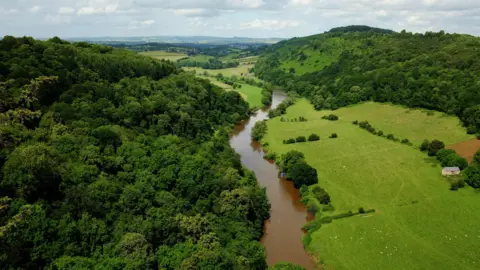
Thousands join biggest-ever UK environmental lawsuit over river pollutionSteffan MessengerEnvironment correspondent, BBC WalesBBCThe Wye Valley is a designated Area of Outstanding Natural BeautyThe biggest legal claim ever brought in the UK over environmental pollution in the country has been filed at the High Court.Almost 4,000 people have signed up to the lawsuit against major poultry producers and a water company over allegations of "extensive and widespread pollution" in three rivers - the Wye, Lugg and Usk.They argue the state of the rivers in recent years has severely affected local businesses, property values and people's enjoyment of the area, and are seeking "substantial damages".The firms being sued - Avara Foods Limited, Freemans of Newent Limited and Welsh Water - all deny the claims.Celine O'Donovan, from the law firm Leigh Day, said the case was the largest brought in the UK over environmental pollution in the country on three counts – the number of claimants, the geographical scale of the damage and the total damages claimed.Those who have joined the group legal claim all either live or work alongside the rivers or use them regularly for leisure activities like swimming and canoeing.They want the court to order a clean-up of the rivers as well as compensation.A combination of chicken manure and sewage spills are blamed for harming water quality and suffocating fish and other wildlife.The Wye in particular has become symbolic of widespread concerns over the worsening state of the UK's waterways in recent years.As many as 23 million chickens, a quarter of the UK's poultry production, are raised in the river's catchment area.Justine EvansJustine Evans used to love swimming and canoeing on the River Wye but is now worried polluted water might make her illIt flows for 155 miles from its source in the Cambrian Mountains of mid Wales along the border with England to the Severn Estuary.The River Lugg is a major tributary of the Wye, flowing predominately through Herefordshire.The River Usk runs through the Bannau Brycheiniog National Park, also known as the Brecon Beacons, as well as the Blaenavon Industrial Landscape World Heritage Site before reaching the Bristol Channel at Newport.All three rivers are protected for their importance to rare wildlife, including otters, freshwater pearl mussels and the Atlantic salmon.Wildlife filmmaker Justine Evans is acting as the lead claimant and said she had noticed a "stark decline" in the Wye's condition in recent years.The once clear river had turned murky and slimy, completely changing how she felt about living alongside it, she said."It's horrible to think what has happened to the wildlife it is home to," she added.Friends of the lower WyeCampaigners have been raising concerns over the state of the river Wye for several yearsFormer Olympic swimmer Roland Lee moved to live near the Wye in order to have access to open water for swimming."But now I'd actually go as far as to warn people against going in," he said.Another claimant, Gino Parisi from Raglan, Monmouthshire, was worried about the state of the River Usk."Having grown up around the River Usk in the 1980s, I know just how beautiful the river and surrounding area can be," he said.Now the water had become "mucky and cloudy" and "you can see build-ups of foam in a number of spots"."Not only would I feel uncomfortable going in, but I'd also have concerns for my health."Why is the River Wye polluted?The claimants allege pollution has been caused by run-off from farmland containing high concentrations of phosphorus, nitrogen and bacteria from the spreading of poultry manure and sewage bio solids used as fertiliser.They also blame discharge of sewage directly into rivers.The companies being sued are accused of negligence, causing private and public nuisance and even trespass where the riverbed has been affected on a claimant's property.One part of the claim is brought on behalf of people affected by what is known as the Lugg Moratorium - restrictions on building brought in by Herefordshire County Council to protect the River Lugg from further pollution.Oliver Holland from Leigh Day said the claim was "the culmination of an extraordinary effort by local community members and campaign groups to research, monitor and advocate for their rivers"."This is the largest legal action concerning environmental pollution ever brought in the UK. In a context where government and regulators have failed to prevent the degradation of our rivers the court has become the last avenue for justice," he added.Gino ParisiGino Parisi has "many happy memories" of swimming and paddling in the River UskAvara Foods Limited is one of the largest poultry processors in the UK. Its subsidiary, Freemans of Newent, based in Hereford is also named as a defendant in the case. A spokesperson for Avara Foods told the BBC it shared concerns over the condition of the River Wye."But we believe that this legal claim is based on a misunderstanding, as no manure is stored or spread on poultry-only farms that supply Avara Foods."Where poultry manure is used as fertiliser, it is for other produce in other agricultural sectors," the company said, adding individual farmers were responsible for how nutrients were used in their arable operations. The company said it employed about 1,500 people in the Wye catchment area and all its poultry was produced "to standards that are amongst the highest in the world"."The focus instead needs to be on solutions that will improve the health of the river, addressing all forms of pollution and the effects of climate change, and for action to be taken accordingly," it said.Welsh Water said the company had made "significant investments over recent years", achieving "real improvements in water quality".These included spending £70m over the last five years to improve sites along the River Wye, work that was delivered "ahead of the target set by our regulators", and £33m for the River Usk."Unfortunately, the water pollution caused by other sectors during this period has increased significantly, reducing the overall impact of the water quality improvements we have achieved," a spokesperson said.The company intended to "defend this case robustly", they added."The fact that we are a not-for-profit company means that any payments to these claimants would necessarily reduce the amount that we can re-invest in delivering further improvements for the benefit of all of our customers and the environment."Environmental campaigners lost a high-profile legal challenge against the UK government over pollution in the river Wye in 2024.Ministers in Westminster and Cardiff Bay have since set up a joint £1m fund to investigate the sources of pollution in the river.
Livestock and water companies are accused of “extensive” pollution in the Wye, Lugg and Usk rivers.
Thousands join biggest-ever UK environmental lawsuit over river pollution
Steffan MessengerEnvironment correspondent, BBC Wales
 BBC
BBCThe biggest legal claim ever brought in the UK over environmental pollution in the country has been filed at the High Court.
Almost 4,000 people have signed up to the lawsuit against major poultry producers and a water company over allegations of "extensive and widespread pollution" in three rivers - the Wye, Lugg and Usk.
They argue the state of the rivers in recent years has severely affected local businesses, property values and people's enjoyment of the area, and are seeking "substantial damages".
The firms being sued - Avara Foods Limited, Freemans of Newent Limited and Welsh Water - all deny the claims.
Celine O'Donovan, from the law firm Leigh Day, said the case was the largest brought in the UK over environmental pollution in the country on three counts – the number of claimants, the geographical scale of the damage and the total damages claimed.
Those who have joined the group legal claim all either live or work alongside the rivers or use them regularly for leisure activities like swimming and canoeing.
They want the court to order a clean-up of the rivers as well as compensation.
A combination of chicken manure and sewage spills are blamed for harming water quality and suffocating fish and other wildlife.
The Wye in particular has become symbolic of widespread concerns over the worsening state of the UK's waterways in recent years.
As many as 23 million chickens, a quarter of the UK's poultry production, are raised in the river's catchment area.
 Justine Evans
It flows for 155 miles from its source in the Cambrian Mountains of mid Wales along the border with England to the Severn Estuary.
The River Lugg is a major tributary of the Wye, flowing predominately through Herefordshire.
The River Usk runs through the Bannau Brycheiniog National Park, also known as the Brecon Beacons, as well as the Blaenavon Industrial Landscape World Heritage Site before reaching the Bristol Channel at Newport.
All three rivers are protected for their importance to rare wildlife, including otters, freshwater pearl mussels and the Atlantic salmon.
Wildlife filmmaker Justine Evans is acting as the lead claimant and said she had noticed a "stark decline" in the Wye's condition in recent years.
The once clear river had turned murky and slimy, completely changing how she felt about living alongside it, she said.
"It's horrible to think what has happened to the wildlife it is home to," she added.
 Friends of the lower Wye
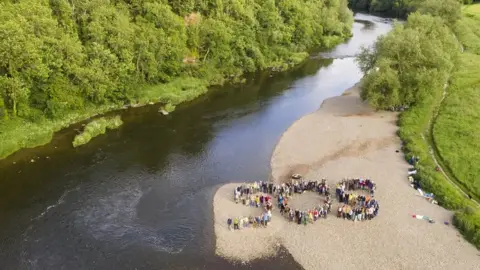
Former Olympic swimmer Roland Lee moved to live near the Wye in order to have access to open water for swimming.
"But now I'd actually go as far as to warn people against going in," he said.
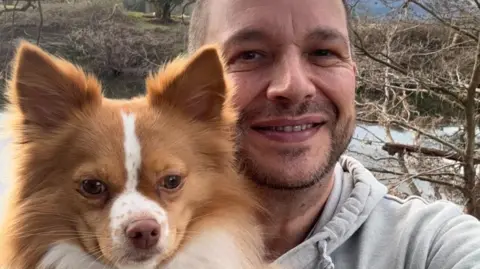
Another claimant, Gino Parisi from Raglan, Monmouthshire, was worried about the state of the River Usk.
"Having grown up around the River Usk in the 1980s, I know just how beautiful the river and surrounding area can be," he said.
Now the water had become "mucky and cloudy" and "you can see build-ups of foam in a number of spots".
"Not only would I feel uncomfortable going in, but I'd also have concerns for my health."
Why is the River Wye polluted?
The claimants allege pollution has been caused by run-off from farmland containing high concentrations of phosphorus, nitrogen and bacteria from the spreading of poultry manure and sewage bio solids used as fertiliser.
They also blame discharge of sewage directly into rivers.
The companies being sued are accused of negligence, causing private and public nuisance and even trespass where the riverbed has been affected on a claimant's property.
One part of the claim is brought on behalf of people affected by what is known as the Lugg Moratorium - restrictions on building brought in by Herefordshire County Council to protect the River Lugg from further pollution.
Oliver Holland from Leigh Day said the claim was "the culmination of an extraordinary effort by local community members and campaign groups to research, monitor and advocate for their rivers".
"This is the largest legal action concerning environmental pollution ever brought in the UK. In a context where government and regulators have failed to prevent the degradation of our rivers the court has become the last avenue for justice," he added.

 Gino Parisi
Avara Foods Limited is one of the largest poultry processors in the UK.
Its subsidiary, Freemans of Newent, based in Hereford is also named as a defendant in the case.
A spokesperson for Avara Foods told the BBC it shared concerns over the condition of the River Wye.
"But we believe that this legal claim is based on a misunderstanding, as no manure is stored or spread on poultry-only farms that supply Avara Foods.
"Where poultry manure is used as fertiliser, it is for other produce in other agricultural sectors," the company said, adding individual farmers were responsible for how nutrients were used in their arable operations.
The company said it employed about 1,500 people in the Wye catchment area and all its poultry was produced "to standards that are amongst the highest in the world".
"The focus instead needs to be on solutions that will improve the health of the river, addressing all forms of pollution and the effects of climate change, and for action to be taken accordingly," it said.
Welsh Water said the company had made "significant investments over recent years", achieving "real improvements in water quality".
These included spending £70m over the last five years to improve sites along the River Wye, work that was delivered "ahead of the target set by our regulators", and £33m for the River Usk.
"Unfortunately, the water pollution caused by other sectors during this period has increased significantly, reducing the overall impact of the water quality improvements we have achieved," a spokesperson said.
The company intended to "defend this case robustly", they added.
"The fact that we are a not-for-profit company means that any payments to these claimants would necessarily reduce the amount that we can re-invest in delivering further improvements for the benefit of all of our customers and the environment."
Environmental campaigners lost a high-profile legal challenge against the UK government over pollution in the river Wye in 2024.
Ministers in Westminster and Cardiff Bay have since set up a joint £1m fund to investigate the sources of pollution in the river.