Cookies help us run our site more efficiently.

By clicking “Accept”, you agree to the storing of cookies on your device to enhance site navigation, analyze site usage, and assist in our marketing efforts. View our Privacy Policy for more information or to customize your cookie preferences.

These Special Plants Accumulate Critical Metals Without Destructive Mining

News Feed
Sunday, November 16, 2025

This story was originally published by bioGraphic and is reproduced here as part of the Climate Desk collaboration. Alpine pennycress is a charming little plant. Its low-growing rosette of green leaves is topped by leggy stalks bearing clusters of pinkish-white flowers. As they develop, these flowers transform into beautiful flattened seedpods that, in the words of botanist Liz Rylott from the United Kingdom’s University of York, “resemble a British old penny.” But alpine pennycress (Noccaea caerulescens) is notable for far more than its penny disguise. The plant is one of a select group—representing just 0.2 percent of the world’s known vascular plant species—that have evolved the ability to pull impressive amounts of valuable metals out of the soil. Known to scientists as hyperaccumulators, these plants undergird a developing industry that is looking to help secure the vital metals we want without wrecking the planet in the process.  Hyperaccumulators come in all shapes and sizes. Petite alpine pennycress accumulates zinc and cadmium, while shrubby, moth-pollinated Phyllanthus rufuschaneyi—a plant so obscure and narrowly distributed that it doesn’t have a common name—targets nickel. Pycnandra acuminata, a tree native to New Caledonia, has sap so nickel-rich that it “bleeds” a vibrant blue-green and is known as sève bleue, or blue sap, in French. Meanwhile, common buckler-mustard (Biscutella laevigata) collects thallium, and the cobalt wisemany (Haumaniastrum robertii), a plant in the mint family native to the Democratic Republic of the Congo, pulls up copper and cobalt. In all, researchers have identified plants that hyperaccumulate arsenic, cadmium, cerium, copper, cobalt, lanthanum, manganese, neodymium, nickel, selenium, thallium, and zinc. Many of these are among the so-called critical minerals that are needed to build batteries and other components for electric vehicles, wind turbines, solar panels, and other facets of the green energy transition. They also include the metals that scientists warn could run short and derail global decarbonization efforts. By pulling these elements out of metal-rich soils, hyperaccumulating plants can become as much as 5 percent metal by weight—a feat that would kill most species. And in the emerging field of phytomining, scientists and industrialists are learning to extract these valuable metals in a way that is much gentler on the landscape than conventional mining. Right now, the race for critical minerals is sparking environmental destruction and human rights abuses. Cobalt mining, mostly in the Democratic Republic of Congo, has been compared to modern slavery. And concerns over access to critical minerals are stoking geopolitical tensions, including contributing to Russia’s invasion of Ukraine. As demand for these elements increases, high-grade and easily accessible deposits are getting tapped out, sending prospectors scouting for evermore extreme places to mine—like the very bottom of the ocean. There is plenty of lower-grade ore available to be mined, as well as unprocessed mining waste and metal-polluted soils, but the traditional techniques to extract metals from these sources involve toxic chemicals and environmental destruction across wide areas. Yet harnessing the metals from lower-concentration sources, says Rylott, is exactly where phytomining shines. “Plants are really good at large, dilute problems,” says Rylott, who recently published a scientific paper reviewing how phytomining—originally an offshoot of bioremediation research—has advanced over the past several decades. Getting the metal out of hyperaccumulating plants is simple in principle: burn the plants and separate the metal from the ash. Surprisingly, the quality of the resulting metal is often more concentrated and purer than that extracted by conventional mining. And the metal doesn’t need as much refining—it may even be in a form that manufacturers can use directly, minimizing the energy and effort required for processing. The leftover organic material can even be repurposed into fertilizer. But putting that seemingly simple process into practice at industrial scale has proved difficult. Developing the infrastructure to extract metal from large amounts of plant biomass is “the greatest challenge for phytomining,” according to Antony van der Ent, a plant biologist at the University of Wageningen in the Netherlands, and coauthor, along with Rylott, of the phytomining review. And there are other challenges. Many hyperaccumulators are small, slow-growing plants, says Om Parkash Dhankher, a plant biotechnologist at the University of Massachusetts Amherst. “Many of them are restricted to particular geoclimatic conditions” and are finicky to cultivate, he says. Or, worse, they grow too well, which is what happened when yellowtuft (Odontarrhena chalcidica, formerly known as Alyssum murale), a nickel hyperaccumulator native to the Mediterranean, escaped from an Oregon-based pilot project and turned into an invasive weed. Even phytomining’s boosters say the technology is likely to remain relatively niche. Aside from the technological hurdles, there simply isn’t enough metal within the reach of plant roots to supply all the world’s needs. “Phytomining cannot replace conventional mining,” Dhankher says. Despite these limitations, several phytomining startups have already begun commercial operations. Botanickel, for instance, is combining two different nickel phytomining projects—one with O. chalcidica in Greece, and another using P. rufuschaneyi in Malaysia—with the aim of producing partially plant-derived stainless steel. (Antony van der Ent serves as an advisor to the company.) GenoMines, a French firm, is using a genetically engineered plant in the daisy family and soil probiotics to farm nickel in South Africa.  There are a few different ways to obtain nickel, but some of the most common are environmentally destructive techniques like pit mining and strip mining.Mary Grace Varela/Alamy Stock Photo To date, most phytomining work has focused on nickel, a high-value metal needed in large amounts to make batteries, stainless steel, and other materials.  Of the 721 known hyperaccumulating plant species, more than 500 take up nickel. For them, as with all complex evolved traits, it’s a matter of survival. Around the world, geological differences in the makeup of the earth mean that some soils—like those made of serpentine or ultramafic rocks—are naturally rich in nickel. For most plants, a heavy dose of nickel is deadly. But hyperaccumulators evolved the ability to absorb the metal into their tissues, turning otherwise toxic soil into an opportunity to thrive. Some scientists think hyperaccumulators’ high concentrations of bodily nickel even help protect them from pathogens and hungry insects. In 2024, the US Department of Energy’s Advanced Research Projects Agency-Energy (ARPA-E) announced seven grants totaling US $9.9 million over the next several years to develop nickel phytomining technology that could unlock a domestic supply of the metal from the more than 40,000 square kilometers (15,000 square miles) of serpentine soils that pepper the landscape in California and Oregon, and along the Pennsylvania-Maryland border. One ARPA-E grant went to a team that includes Rupali Datta, a plant biologist at Michigan Technological University. She and her collaborators are investigating the role of soil chemistry and microbes in maximizing the phytomining potential of several known hyperaccumulators as well as vetiver grass (Chrysopogon zizanioides), a fast-growing species she’s previously used to clean up lead pollution. Meanwhile, Metalplant, a Delaware-based company, is collaborating with the Connecticut-based biotech firm Verinomics on a grant to genetically engineer O. chalcidica. Metalplant is already successfully using the species to mine nickel in Albania where it is native, but the company is hoping to tweak it to boost its nickel uptake and prevent it from becoming invasive when planted in North America.  Dhankher’s own phytomining efforts got a $1.3 million boost from the ARPA-E program. He aims to develop a genetically engineered version of Camelina sativa, a fast-growing member of the mustard family that is already widely grown in the United States for biofuel, so that it can become a better nickel accumulator. “The target is to create these plants that can accumulate 1 to 3 percent nickel,” Dhanker says. An advantage of C. sativa is that in some areas phytominers could grow three crops a year. If the plants accumulate at least 1 percent of their body mass as nickel, Dhanker says they could produce up to 145,000 pounds of useful metal per square mile of soil each year. A typical electric vehicle battery contains 66 to 110 pounds of nickel. Nickel aside, phytomining also shows promise for collecting other minerals, especially cobalt, thallium, and selenium, Rylott and van der Ent wrote in their recent review. And the technique could even be used to target rare earth elements, a group of important metals that are common in the Earth’s crust but are mostly found at very low concentrations. For now, rare earth mining—an industry controlled almost entirely by China, with cascading effects on global trade relationships and supply chains—is expensive, energy intensive, and environmentally destructive. But if phytomining opens a new way to secure rare earth elements, says Lydia Bridges, a geochemist and senior sustainability consultant with Minviro, a company that helps mining operations measure and mitigate their environmental impact, “that would be pretty incredible.”  Though none have yet been commercially developed, scientists have identified a few natural hyperaccumulators of rare earth elements. Using plants to mine for rare earth elements would be “a huge step towards critical mineral security and, hopefully, sustainability,” Bridges says. But she adds a note of caution: “We do need to be a bit careful of environmental burden shifting.” While a welcome innovation, phytomining—of rare earth elements or anything else—is not an environmental panacea. Growing hyperaccumulators at scale brings the same environmental woes as any other industrial crop, van der Ent points out: pesticide and fertilizer runoff, overdrawn water, and the loss of local biodiversity to a single-species operation. And while some outcrops of metal-rich soils host little life, others underpin fragile ecosystems, with, for example, metal-tolerant insects having evolved to live on hyperaccumulator plants. But what phytomining could do is produce some metal while also remediating degraded land, sequestering carbon, and serving as the fuel for energy production or the raw material for biochar fertilizer, syngas, and other chemical creations. It could be one of many small but commercially viable enterprises that make for a more sustainable world. And along the way, it’s expanding our understanding of the endless and surprising feats that plants—even the pocket-sized alpine pennycress—are capable of.
This story was originally published by bioGraphic and is reproduced here as part of the Climate Desk collaboration. Alpine pennycress is a charming little plant. Its low-growing rosette of green leaves is topped by leggy stalks bearing clusters of pinkish-white flowers. As they develop, these flowers transform into beautiful flattened seedpods that, in the words of botanist Liz […]

This story was originally published by bioGraphic and is reproduced here as part of the Climate Desk collaboration.

Alpine pennycress is a charming little plant. Its low-growing rosette of green leaves is topped by leggy stalks bearing clusters of pinkish-white flowers. As they develop, these flowers transform into beautiful flattened seedpods that, in the words of botanist Liz Rylott from the United Kingdom’s University of York, “resemble a British old penny.”

But alpine pennycress (Noccaea caerulescens) is notable for far more than its penny disguise. The plant is one of a select group—representing just 0.2 percent of the world’s known vascular plant species—that have evolved the ability to pull impressive amounts of valuable metals out of the soil. Known to scientists as hyperaccumulators, these plants undergird a developing industry that is looking to help secure the vital metals we want without wrecking the planet in the process. 

Hyperaccumulators come in all shapes and sizes. Petite alpine pennycress accumulates zinc and cadmium, while shrubby, moth-pollinated Phyllanthus rufuschaneyi—a plant so obscure and narrowly distributed that it doesn’t have a common name—targets nickel. Pycnandra acuminata, a tree native to New Caledonia, has sap so nickel-rich that it “bleeds” a vibrant blue-green and is known as sève bleue, or blue sap, in French. Meanwhile, common buckler-mustard (Biscutella laevigata) collects thallium, and the cobalt wisemany (Haumaniastrum robertii), a plant in the mint family native to the Democratic Republic of the Congo, pulls up copper and cobalt.

In all, researchers have identified plants that hyperaccumulate arsenic, cadmium, cerium, copper, cobalt, lanthanum, manganese, neodymium, nickel, selenium, thallium, and zinc. Many of these are among the so-called critical minerals that are needed to build batteries and other components for electric vehicles, wind turbines, solar panels, and other facets of the green energy transition. They also include the metals that scientists warn could run short and derail global decarbonization efforts.

By pulling these elements out of metal-rich soils, hyperaccumulating plants can become as much as 5 percent metal by weight—a feat that would kill most species. And in the emerging field of phytomining, scientists and industrialists are learning to extract these valuable metals in a way that is much gentler on the landscape than conventional mining.

Right now, the race for critical minerals is sparking environmental destruction and human rights abuses. Cobalt mining, mostly in the Democratic Republic of Congo, has been compared to modern slavery. And concerns over access to critical minerals are stoking geopolitical tensions, including contributing to Russia’s invasion of Ukraine. As demand for these elements increases, high-grade and easily accessible deposits are getting tapped out, sending prospectors scouting for evermore extreme places to mine—like the very bottom of the ocean.

There is plenty of lower-grade ore available to be mined, as well as unprocessed mining waste and metal-polluted soils, but the traditional techniques to extract metals from these sources involve toxic chemicals and environmental destruction across wide areas. Yet harnessing the metals from lower-concentration sources, says Rylott, is exactly where phytomining shines. “Plants are really good at large, dilute problems,” says Rylott, who recently published a scientific paper reviewing how phytomining—originally an offshoot of bioremediation research—has advanced over the past several decades.

Getting the metal out of hyperaccumulating plants is simple in principle: burn the plants and separate the metal from the ash. Surprisingly, the quality of the resulting metal is often more concentrated and purer than that extracted by conventional mining. And the metal doesn’t need as much refining—it may even be in a form that manufacturers can use directly, minimizing the energy and effort required for processing. The leftover organic material can even be repurposed into fertilizer.

But putting that seemingly simple process into practice at industrial scale has proved difficult. Developing the infrastructure to extract metal from large amounts of plant biomass is “the greatest challenge for phytomining,” according to Antony van der Ent, a plant biologist at the University of Wageningen in the Netherlands, and coauthor, along with Rylott, of the phytomining review.

And there are other challenges. Many hyperaccumulators are small, slow-growing plants, says Om Parkash Dhankher, a plant biotechnologist at the University of Massachusetts Amherst. “Many of them are restricted to particular geoclimatic conditions” and are finicky to cultivate, he says. Or, worse, they grow too well, which is what happened when yellowtuft (Odontarrhena chalcidica, formerly known as Alyssum murale), a nickel hyperaccumulator native to the Mediterranean, escaped from an Oregon-based pilot project and turned into an invasive weed.

Even phytomining’s boosters say the technology is likely to remain relatively niche. Aside from the technological hurdles, there simply isn’t enough metal within the reach of plant roots to supply all the world’s needs. “Phytomining cannot replace conventional mining,” Dhankher says.

Despite these limitations, several phytomining startups have already begun commercial operations. Botanickel, for instance, is combining two different nickel phytomining projects—one with O. chalcidica in Greece, and another using P. rufuschaneyi in Malaysia—with the aim of producing partially plant-derived stainless steel. (Antony van der Ent serves as an advisor to the company.) GenoMines, a French firm, is using a genetically engineered plant in the daisy family and soil probiotics to farm nickel in South Africa. 

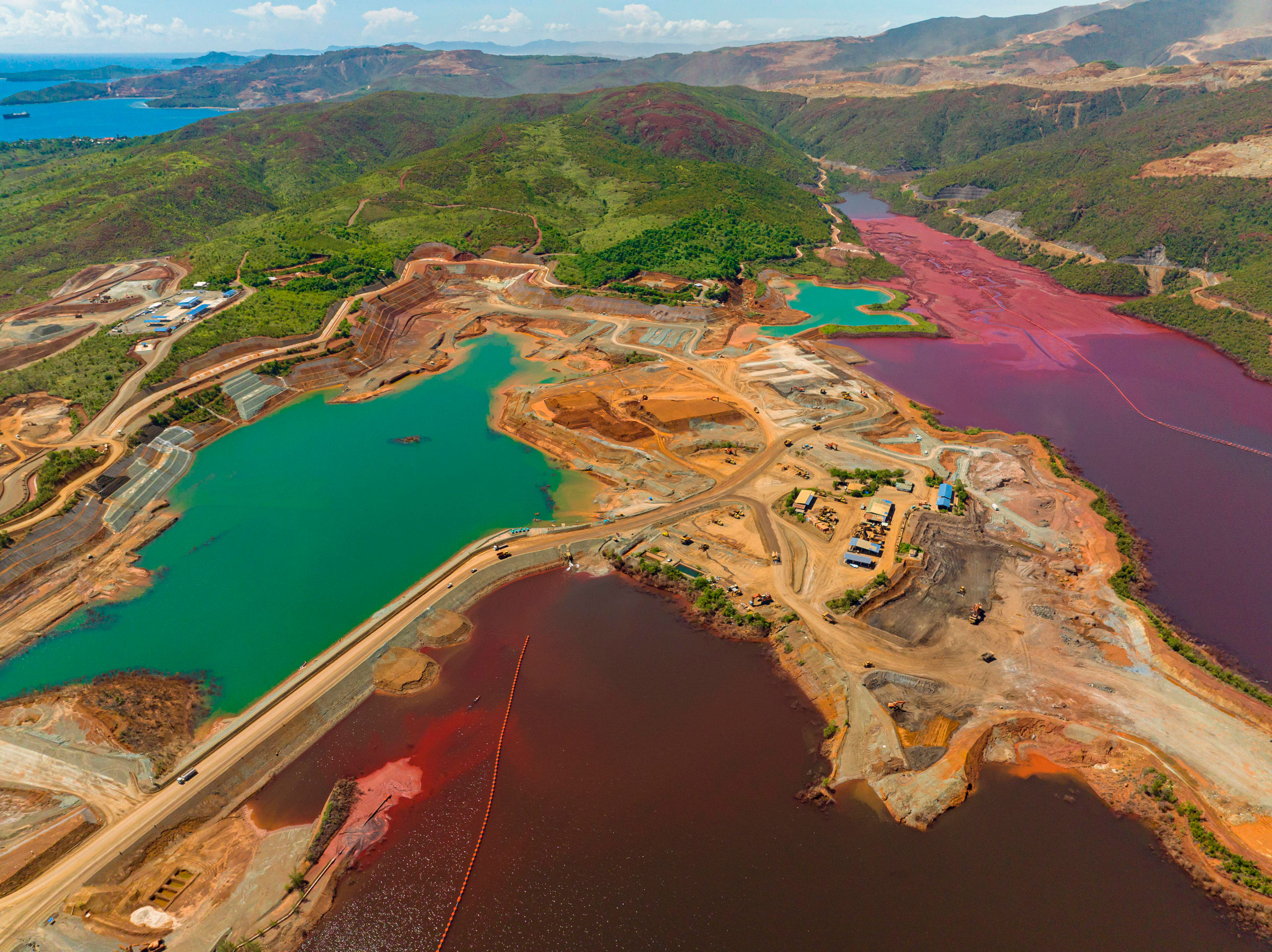
An aerial view of pit mining ponds.
There are a few different ways to obtain nickel, but some of the most common are environmentally destructive techniques like pit mining and strip mining.Mary Grace Varela/Alamy Stock Photo

To date, most phytomining work has focused on nickel, a high-value metal needed in large amounts to make batteries, stainless steel, and other materials. 

Of the 721 known hyperaccumulating plant species, more than 500 take up nickel. For them, as with all complex evolved traits, it’s a matter of survival. Around the world, geological differences in the makeup of the earth mean that some soils—like those made of serpentine or ultramafic rocks—are naturally rich in nickel. For most plants, a heavy dose of nickel is deadly. But hyperaccumulators evolved the ability to absorb the metal into their tissues, turning otherwise toxic soil into an opportunity to thrive. Some scientists think hyperaccumulators’ high concentrations of bodily nickel even help protect them from pathogens and hungry insects.

In 2024, the US Department of Energy’s Advanced Research Projects Agency-Energy (ARPA-E) announced seven grants totaling US $9.9 million over the next several years to develop nickel phytomining technology that could unlock a domestic supply of the metal from the more than 40,000 square kilometers (15,000 square miles) of serpentine soils that pepper the landscape in California and Oregon, and along the Pennsylvania-Maryland border.

One ARPA-E grant went to a team that includes Rupali Datta, a plant biologist at Michigan Technological University. She and her collaborators are investigating the role of soil chemistry and microbes in maximizing the phytomining potential of several known hyperaccumulators as well as vetiver grass (Chrysopogon zizanioides), a fast-growing species she’s previously used to clean up lead pollution. Meanwhile, Metalplant, a Delaware-based company, is collaborating with the Connecticut-based biotech firm Verinomics on a grant to genetically engineer O. chalcidica. Metalplant is already successfully using the species to mine nickel in Albania where it is native, but the company is hoping to tweak it to boost its nickel uptake and prevent it from becoming invasive when planted in North America. 

Dhankher’s own phytomining efforts got a $1.3 million boost from the ARPA-E program. He aims to develop a genetically engineered version of Camelina sativa, a fast-growing member of the mustard family that is already widely grown in the United States for biofuel, so that it can become a better nickel accumulator. “The target is to create these plants that can accumulate 1 to 3 percent nickel,” Dhanker says. An advantage of C. sativa is that in some areas phytominers could grow three crops a year. If the plants accumulate at least 1 percent of their body mass as nickel, Dhanker says they could produce up to 145,000 pounds of useful metal per square mile of soil each year. A typical electric vehicle battery contains 66 to 110 pounds of nickel.

Nickel aside, phytomining also shows promise for collecting other minerals, especially cobalt, thallium, and selenium, Rylott and van der Ent wrote in their recent review. And the technique could even be used to target rare earth elements, a group of important metals that are common in the Earth’s crust but are mostly found at very low concentrations. For now, rare earth mining—an industry controlled almost entirely by China, with cascading effects on global trade relationships and supply chains—is expensive, energy intensive, and environmentally destructive. But if phytomining opens a new way to secure rare earth elements, says Lydia Bridges, a geochemist and senior sustainability consultant with Minviro, a company that helps mining operations measure and mitigate their environmental impact, “that would be pretty incredible.” 

Though none have yet been commercially developed, scientists have identified a few natural hyperaccumulators of rare earth elements. Using plants to mine for rare earth elements would be “a huge step towards critical mineral security and, hopefully, sustainability,” Bridges says. But she adds a note of caution: “We do need to be a bit careful of environmental burden shifting.” While a welcome innovation, phytomining—of rare earth elements or anything else—is not an environmental panacea.

Growing hyperaccumulators at scale brings the same environmental woes as any other industrial crop, van der Ent points out: pesticide and fertilizer runoff, overdrawn water, and the loss of local biodiversity to a single-species operation. And while some outcrops of metal-rich soils host little life, others underpin fragile ecosystems, with, for example, metal-tolerant insects having evolved to live on hyperaccumulator plants.

But what phytomining could do is produce some metal while also remediating degraded land, sequestering carbon, and serving as the fuel for energy production or the raw material for biochar fertilizer, syngas, and other chemical creations. It could be one of many small but commercially viable enterprises that make for a more sustainable world. And along the way, it’s expanding our understanding of the endless and surprising feats that plants—even the pocket-sized alpine pennycress—are capable of.

Read the full story here.
Photos courtesy of

Greenwashing, illegality and false claims: 13 climate litigation wins in 2025

Legal action has brought important decisions, from the scrapping of fossil fuel plants to revised climate plansThis year marks the 10th anniversary of the Paris agreement. It is also a decade since another key moment in climate justice, when a state was ordered for the first time to cut its carbon emissions faster to protect its citizens from climate change. The Urgenda case, which was upheld by the Netherlands’ supreme court in 2019, was one of the first rumblings of a wave of climate litigation around the world that campaigners say has resulted in a new legal architecture for climate protection.Over the past 12 months, there have been many more important rulings and tangible changes on climate driven by legal action. Continue reading...

This year marks the 10th anniversary of the Paris agreement. It is also a decade since another key moment in climate justice, when a state was ordered for the first time to cut its carbon emissions faster to protect its citizens from climate change. The Urgenda case, which was upheld by the Netherlands’ supreme court in 2019, was one of the first rumblings of a wave of climate litigation around the world that campaigners say has resulted in a new legal architecture for climate protection.Over the past 12 months, there have been many more important rulings and tangible changes on climate driven by legal action.Rosebank and Jackdaw approval ruled illegalThe year started with a bang when UK government approval of the Rosebank and Jackdaw oil and gas fields in the North Sea was ruled illegal by the Scottish court of session, because it did not account for greenhouse gas emissions caused by burning the extracted fossil fuels.The judgment relied heavily on a 2024 supreme court ruling in a climate case brought by campaigner Sarah Finch. That ruling also led the high court to throw out planning permission for a new coalmine in Whitehaven, Cumbria, after which the company withdrew its plans.The government published new guidance in June on how these assessments should be undertaken, although the ruling does not automatically prevent regulators from approving fossil fuel projects once they have fully analysed their impacts.Equinor published a revised environmental assessment of Rosebank in October and a decision on approval is imminent. The government has hinted that it may give consent again, and Greenpeace has vowed further legal action if that happens.Plans to build Brazil’s largest coal plant scrappedCivil society organisations have been campaigning for years against a coalmine and power plant in the southern state of Rio Grande do Sul planned by the coal company Copelmi. If it had gone ahead, it would have been the largest coal plant in Brazil.The groups argued that the Nova Seival plant and Guaíba mine breached Brazil’s climate obligations, and that the licensing process had not been undertaken properly. In 2022, a court suspended the licences and set out requirements for how the process should be revised. But in February this year, Copelmi formally withdrew its plans, saying the project had become unfeasible.German court opens door for climate damages claimsOn the face of it, it sounds like a failure that a German court rejected a climate case brought by a Peruvian farmer and mountain guide against German energy company RWE.Saúl Luciano Lliuya had sought 0.47% of the overall cost of building flood defences to protect his home from a melting glacier, a proportion equivalent to RWE’s contribution to global emissions.But the decade-old case had always been a stretch, and in reality it set a potentially important precedent on polluters’ liability for their carbon emissions.So it was not a surprise when later in the year a group of Pakistani farmers whose livelihoods were devastated by floods three years ago fired the starting shot in a new legal claim against two of Germany’s most polluting companies.EnergyAustralia settles greenwashing lawsuit with parentsIn May, EnergyAustralia settled a greenwashing lawsuit brought by a group of Australian parents.Climate action group Parents for Climate claimed EnergyAustralia breached Australian Consumer Law when promoting electricity and gas products because the carbon offsets used to secure certification were not backed by meaningful reductions in emissions.As part of the settlement, the utility company acknowledged that carbon offsets do not prevent or undo damage caused by greenhouse gas emissions and apologised to 400,000 customers who were part of the scheme.It was the first case in the country to be brought against a company for marketing itself as carbon neutral.International courts issue landmark climate opinionsTwo international courts issued landmark advisory opinions on climate change in July.First was the inter-American court of human rights, which found that there is a human right to a healthy climate and states have a duty to protect it. This was closely followed by the international court of justice, which said countries must prevent harm to the climate system and that failing to do so could result in their having to pay compensation and make other forms of restitution.The two documents are already being referenced in climate lawsuits around the world. And attempts were made to use them as leverage during climate talks in Brazil last month, although this proved more difficult than anticipated.New South Wales coalmine expansion annulledApproval for the largest coalmine expansion in New South Wales was annulled in July because the state’s independent planning commission did not take into account the project’s full greenhouse gas emissions.Denman Aberdeen Muswellbrook Scone Healthy Environment Group, working with the Environmental Defenders Office, filed the case in 2023, arguing MACH Energy’s Mount Pleasant Optimisation coal mining project near Muswellbrook would worsen climate change and threaten a unique species of legless lizard.The court of appeal said the commission failed to account for “scope 3” emissions when the coal is exported and burned overseas.Apple scales back carbon neutrality claimsIn August, a Frankfurt court ruled that Apple was not allowed to call its Apple Watch “carbon neutral”.It agreed with German NGO Deutsche Umwelthilfe that the company could not demonstrate long-term carbon neutrality because the claim was based on funding eucalyptus groves in Paraguay, leases for which expire soon.Apple is trying to get a similar greenwashing case against it in the US dismissed.A few months later, tech news websites noticed that Apple had stopped marketing its newly launched watches as carbon neutral in other countries too.Hawaii to cut transport emissions after lawsuitLast year, Hawaii agreed to settle a lawsuit by 13 young people, represented by Our Children’s Trust, who said it was breaching their rights with infrastructure that contributes to climate change.The settlement acknowledged the constitutional rights of Hawaii youth to a life-sustaining climate, and the state promised to develop a roadmap to achieve zero emissions for its ground, sea and inner island air transportation systems by 2045.In October, it delivered. The energy security and waste reduction plan includes new electric vehicle chargers, investments in public and active transport, and efforts to sequester carbon through native reforestation. It will be updated annually.Campaigners called the plan a “critical milestone”.Campaigners put end to coal power plant in KenyaEnvironmental campaigners won a key climate case challenging approval of a coal power plant in Lamu, on Kenya’s southern coast, in October.Litigation against Amu Power (a joint venture between Centum and Gulf Energy) and the Kenyan National Environment Management Authority began a decade ago and construction was ordered to stop in 2019.The environment and land court finally upheld a revocation of the plant’s licence because of flaws in the environmental assessment, particularly a lack of proper public participation. Climate change impacts had also not been properly assessed.TotalEnergies ordered to stop greenwashing in FranceLater in the month, TotalEnergies was found to have made false claims about its climate goals in a French court for false claims about its climate goals.Les Amis de la Terre France, Greenpeace France and Notre Affaire à Tous, with the support of ClientEarth, claimed TotalEnergies’s “reinvention” marketing campaign broke European consumer law by suggesting it could reach net zero carbon emissions by 2050 while continuing to produce fossil fuels.The Paris judicial court ruled that some claims on the company’s French website were likely to mislead consumers because there was not enough information about what they meant.Meat companies settle greenwashing claimsIn early November, New York agreed a $1.1m settlement with Brazilian meat company JBS’s US arm to end a lawsuit claiming the company misled customers about its efforts to reduce its greenhouse gas emissions.The money will be used to support climate-smart agriculture programmes that help New York farmers adopt best practices to reduce emissions, increase resiliency and enhance productivity. JBS USA also agreed to reform its environmental marketing practices and report annually to the New York office of the attorney general for three years.Soon after, Tyson Foods also agreed to stop saying it will reach net zero greenhouse gas emissions by 2050 and marketing beef as climate friendly to settle a greenwashing lawsuit brought by agriculture industry watchdog Environmental Working Group.UK government publishes tougher climate planThe UK government published a revised carbon budget and growth delivery plan in October after its previous plan was ruled unlawful by the high court.The new document reaffirms the UK’s commitment to decarbonise its electricity supply by 2030 and reduce greenhouse gas emissions drastically by 2037, with specific measures for energy, transport, agriculture, homes and industry.It follows a successful lawsuit by the Good Law Project, Friends of the Earth and ClientEarth. After the striking down of the original net zero strategy in court in 2022, the trio argued that the “threadbare” revised version was still not good enough.However, campaigners are planning another round of legal action challenging national climate strategy, this time at the European court of human rights.Three Norwegian oilfields ruled illegalLicences for three oilfields in the North Sea were declared illegal in November by a Norwegian court because they were approved without the full impacts of climate change being considered.The Borgarting court of appeal upheld a claim by Greenpeace Nordic and Natur og Ungdom challenging permission for the Equinor-operated Breidablikk and Aker BP’s Yggdrasil and Tyrving fields.The decision closely followed the European court of human rights’s dismissal of a lawsuit by the same claimants against Norway, which nonetheless set important standards for how states should undertake environmental impact assessments of fossil fuel projects.However, the Borgarting court stopped short of ordering the fields to stop producing oil, giving the Norwegian government six months to sort out the licences.

How the climate crisis showed up in Americans’ lives this year: ‘The shift has been swift and stark’

Guardian US readers share how global heating and biodiversity loss affected their lives in ways that don’t always make the headlines The past year was another one of record-setting heat and catastrophic storms. But across the US, the climate crisis showed up in smaller, deeply personal ways too.Campfires that once defined summer trips were never lit due to wildfire risks. There were no bites where fish were once abundant, forests turned to meadows after a big burn and childhood memories of winter wonderlands turned to slush. Continue reading...

The past year was another one of record-setting heat and catastrophic storms. But across the US, the climate crisis showed up in smaller, deeply personal ways too.Campfires that once defined summer trips were never lit due to wildfire risks. There were no bites where fish were once abundant, forests turned to meadows after a big burn and childhood memories of winter wonderlands turned to slush.We asked Guardian readers to share some of the ways these changes have affected their lives this year, and how they’ve tried to adapt.The Pacific north-west dad: ‘My children have no memories of the winter I grew up with’Growing up near the Puget sound, Heath Breneman remembers his dad shoveling drifts off the roof of his garage and the powder delicately collected in his pant cuffs after a day spent sledding. He recalled how the snowplows would push enormous piles off the parking lot of his elementary school to create the perfect berms for kids to play on. He can still conjure the satisfying crunch of how it sounded under his boots and the thrill of the chill each year that made warmth feel earned.The sun shines over the Space Needle during a record-breaking heatwave in Seattle in 2021. Photograph: Ted S Warren/APNow he’s a father of four, and his kids haven’t felt the same magic. Temperatures have been steadily rising across the region, with averages expected to climb up to 6F annually by midcentury. Scientists have warned that precipitation will increasingly fall as rain rather than snow.“My children have no memories of the winter I grew up with,” Breneman says. “The shift to a true two-season climate the past 20 years has been swift and stark.”He has taken his kids, who now range from their teens to their 20s, places where they can sled, but the enjoyment and life in the moments he associated with winter “is hard to impart”, he says.“There’s a part of the world you can tell them about,” Breneman says. “But it is like the old guy next to the campfire telling us about the lights that used to be in the skies.”The Appalachian trial hiker: ‘There wasn’t any water at all’Maria Martin looked down at the cracked earth with dismay. This was the second dried stream she’d come across on a five-mile stretch of the Appalachian trail, the popular hiking route that stretches across thousands of miles and 14 states that hug the US east coast, where she spent the summer.An overlook near Great Smoky Mountains national park along the Appalachian trail. Photograph: kyletperry/Getty Images/iStockphotoMartin grew up traipsing through the backcountry in the mid-Atlantic, where she says water is typically abundant even in the warmer months. “It is famously very humid and wet,” she says. The concerning conditions stood in sharp contrast to a lifetime of memories of camping in the summers there with her family, filled with sporadic downpours and swimming holes.But on a hot morning last August, “there wasn’t any water at all. It wasn’t even mud – it was just dirt”, she says, recounting how she had to search the woods for a place to fill her empty canisters. “I heard the same thing from hikers heading north or south,” she adds. “There was one section of the trail that had a nearly 30-mile gap between viable natural water sources.”Depleted water sources and spiking temperatures aren’t the only climate extremes that have hindered those attempting the renowned through-hike. Parts of the region are still in recovery from the devastation caused by Hurricane Helene, a category 4 storm that struck the south-eastern US in September 2024. Last spring, strong storms pummeled the landscapes and flooded low-laying areas, Martin says, leaving behind the perfect habitat to help mosquitoes thrive. Hordes of the bloodsucking buzzers descended on campers for the rest of the summer, she says, sending them scurrying into tents even before the sun set.But by that August morning, pools of water were exceedingly sparse. In the span of a few months working for the Appalachian Trail Conservancy, Martin experienced the extremes flipping from wet to dry.Lashed by the heat and unsure that there would be other options to hydrate, she decided to double back to an area where she’d spotted an outflow from a nearby beaver pond. It wasn’t an ideal source: The water was tinged with orange and smelled like rotting plants. She filtered it twice.These sharp seasonal shifts are adding urgency to questions about overuse and recreation management in increasingly natural areas. They are also creating new safety issues even for those with much outdoor recreation experience. Water scarcity is a challenge that can turn dangerous quickly for hikers and campers in any environment.“I can handle it being hot,” Martin says. “But when you can’t get water, that’s something else completely.”The gardener whose growing season is shrinking: ‘The plants dry up and die’For the second year in a row, Ky Gress wasn’t able to grow a single squash. A lush home garden fills Gress’s front yard in Sacramento, California, the result of more than a decade of dedication. “Nothing tastes better than perfectly fresh food,” Gress says, adding that she doesn’t use pesticides on her plants and that’s made all the difference.But the seasons in her community are shifting. With them, the windows to grow things that once sprung to life in the warm, dry northern California enclave are narrowing.“We can’t plant in the fall like we used to,” Gress says. “The plants dry up and die.” Sometimes it’s the heat that singes her plants past the point of production. Others, an ill-timed hard freeze limits their potential. Lately, she’s noticed that pollinators are visiting less often, even with the scores of plants meant to entice them that line the perimeter of her garden.To produce the bounty she once enjoyed takes a lot more work and delicate adjustments in timing. She attunes her attention more closely to changing conditions, constantly monitoring soil moisture and sharp spikes or drops in temperature. There’s always a learning curve. Two years ago, her plums were lost to a freeze. Her root vegetables had to be pushed back after summer weather lingered longer. The planting season is growing shorter. “I have had to abandon some plants,” she says.Avocados are now easier to grow in Sacramento due to the changing climate. Photograph: Panoramic Images/Getty ImagesThe area where Gress lives was already hot and dry; now bouts of extreme heat and longer periods without moisture have put pressure on plants. The relief once offered overnight, when warmth tends to soften, is disappearing – lows aren’t as cool as they once were.To expand her garden in changing conditions, Gress has ventured into new varietals, including seeds that are common in northern Africa – cow peas and broad beans, which are drought-tolerant legumes that love warm climates and have thrived in her yard.“We couldn’t grow avocados in Sacramento – now people have 20ft trees,” she says.As the conditions shift, it’s become more challenging to produce what she once did. But she’s leaned into the change, adapting to make the most of what otherwise might be a worrying sign. Even when it’s harder, it is always worth it.“This is what we need, for kids to know the wonder of the garden,” she says.The wildlife enthusiast mourning the loss of biodiversity: ‘Every year there are less butterflies’Tim Goncharoff has always loved wildlife. “From deer to birds to the smallest creepy-crawlies,” he says.Starting when he was a very little boy, Goncharoff would venture into the world to marvel at the butterflies and the birds, all the growing things and the bugs on the ground. “I thought they were all wondrous miracles and I couldn’t get enough of it,” he says.Over his 70 years, he’s witnessed the brilliant abundance of life in the world around him grow quieter.“I think a lot of this is about the arc of a long life,” he says, “but I have noticed year by year, that there aren’t so many butterflies. There aren’t so many birds. The variety of species has diminished.”Roughly 1 million species are threatened with extinction, according to a 2019 assessment from the Intergovernmental Science-Policy Platform on Biodiversity and Ecosystem Services, including roughly 40% of amphibians and a third of reef-forming corals, marine mammals and sharks.A monarch butterfly in Vista, California. The species has seen a massive decline from the millions of monarchs that once clustered in the state. Photograph: Gregory Bull/APInsects – considered the bedrock to biodiversity and the foundation of most ecosystems on earth – are in rapid decline. About 80% of insect species have yet to be identified and some are disappearing before they can be named.The Smith’s blue butterfly, which once flourished along the California coast where Goncharoff spent much of his life, has been listed as endangered.Goncharoff dedicated his years fighting to protect things that were endangered, working as an environmental planner for the city of Santa Cruz, and he says there was always a sense that they were losing ground despite the effort. He hasn’t quit, even though he’s now mostly retired.He loves to spend afternoons near his home on the Suisun marsh, where the fresh rushing waters of the Sacramento-San Joaquin delta that flood into the salty San Francisco Bay provide habitat for scores of creatures that live on shores and sea.“I love to go down and watch the migrating herons and egrets and cranes and ducks and geese – it’s just marvelous,” he says. But even along the largest marsh remaining on the west coast, there have been severe declines. “There are times you’d expect to see them and they just aren’t there.”The animals and plants that he marveled at throughout the years are fading, he says. Goncharoff hasn’t seen a bluebird in years. There are far fewer butterflies.“I do feel a sense of loss and a feeling of mourning,” Goncharoff says. “But I am determined not to get caught up in that.”For Goncharoff, the change he’s seen among the landscapes he loves is a call to action.“There is a lot of damage baked into the system now, but we still have a chance to limit that,” he says. “There’s a lot of good work to be done to keep things from getting worse.”

It’s easy to feel powerless about climate chaos. Here’s what gives me hope

I’ve spent six years writing about environmental justice. The uncomfortable truth is that we’re not all in it together – but people power is reshaping the fightIt’s been another year of climate chaos and inadequate political action. And it’s hard not to feel despondent and powerless.I joined the Guardian full time in 2019, as the paper’s first environmental justice correspondent, and have reported from across the US and the region over the past six years. It’s been painful to see so many families – and entire communities – devastated by fires, floods, extreme heat, sea level rise and food shortages. But what’s given me hope during these six years of reporting as both an environmental and climate justice reporter are the people fighting to save our planet from catastrophe – in their communities, on the streets and in courtrooms across the world. Continue reading...

It’s been another year of climate chaos and inadequate political action. And it’s hard not to feel despondent and powerless.I joined the Guardian full time in 2019, as the paper’s first environmental justice correspondent, and have reported from across the US and the region over the past six years. It’s been painful to see so many families – and entire communities – devastated by fires, floods, extreme heat, sea level rise and food shortages. But what’s given me hope during these six years of reporting as both an environmental and climate justice reporter are the people fighting to save our planet from catastrophe – in their communities, on the streets and in courtrooms across the world.I have always tried to use a justice and equity lens in my journalism on the causes, impacts and solutions relating to the climate crisis. For me, that has meant telling the stories of people who are often ignored or sidelined despite their lived experience and expertise – especially Indigenous people, protesters, activists and local communities fighting back. I have also tried to examine how the climate crisis intersects with – and often exacerbates – other forms of inequity, such as economic inequality, racism, misogyny, land struggles and unequal access to housing and healthcare. The uncomfortable truth is that we are not all in this together. We didn’t all contribute to the climate crisis equally, we’re not all feeling its impacts equally and we don’t all have equal access to resources that might help us cope with or even solve it.In my final piece for the Guardian, I salute the grassroots organizers, scientists, health workers, Indigenous peoples, students and youth activists, peasant farmers, human rights experts and journalists taking on governments and corporations. The climate justice movement scored major victories in 2025, and it has shown us that ordinary people power can – and is – dismantling the status quo.People power is reshaping the climate fight“While the majority of states and businesses try to continue doing business as usual, we’re starting to see cracks in that inertia as the power of the people has helped to give light to what is not working – and identify the actual actions that we need,” said Astrid Puentes Riaño, the UN special rapporteur on the human right to a clean, healthy and sustainable environment.Despite the UN climate negotiations in Belém failing to agree, yet again, to phase out fossil fuels, Cop30 did establish the first-ever just transition mechanism (JTM), a plan to ensure that the move to a green-energy economy is fair and inclusive and protects the rights of all people, including workers, frontline communities, women and Indigenous people.Activists perform the death of fossil fuels at Cop30 in Belém, Brazil, on 15 November. Photograph: Pablo Porciúncula/AFP/Getty ImagesWhile far from perfect, the JTM was agreed only after years of civil society organising, including impossible-to-ignore protests during Cop30. The mechanism represents an important step in putting people at the centre of climate policy after decades of technocratic fixes, according to Puentes.There were also encouraging signs that a growing number of states – from the global south and north – have had enough of the inertia and obstructionism blocking meaningful action, and are prepared to stand with affected communities and go their own way.Colombia and the Netherlands, backed by 22 nations, will independently develop a roadmap to fossil fuel phaseout, beginning with a conference in April 2026 in the coal port city of Santa Marta, Colombia. The plan is for states, cities, affected communities and health, science, human rights and other experts to share experiences and best practices, and implement policy ideas outside the snail-paced, consensus-based Cop process.This parallel fossil-fuel roadmap initiative could establish regional solutions and a trading bloc with the power to sanction nations – and financial institutions – that continue to support fossil fuels.Elisa Morgera, the UN special rapporteur on climate change and human rights, said the new alliance could be the gamechanger. “We now have a sizeable group of states from all regions who want to engage in good faith and make progress on phasing out fossil fuels and cannot wait any longer for the Cop process,” she said.“It is so important for people around the world to see that there is political will and political power to advance this, and to see what it looks like, as there is a big gap in imagination. We’ve been so bombarded by climate disinformation from fossil fuel companies that it is hard to imagine what our life would be like without them, but there are examples of cities, towns and communities doing it.”An Indigenous group blocks an entrance to Cop30, on 14 November in Belém. Photograph: André Penner/APBoth Colombia and the Netherlands were pushed hard by ordinary people to do the right thing.In 2023, Colombia, a major fossil fuel producer with fierce, well-organized climate and social justice movements, signed on to the fossil fuel non-proliferation treaty that now includes 18 countries, 140 cities and subnational governments, the World Health Organization, more than 4,000 civil society organisations and more than 3,000 scientists and academics.It was this civil society-led initiative that first created a blueprint to halt new fossil fuel projects and manage an equitable phaseout of coal, oil and gas.“Many political leaders are captured by fossil fuel interests or lack the courage to challenge them, while developing countries are held back by the rich world’s failure to deliver finance and technology anywhere near a fair share,” said Harjeet Singh, a veteran climate activist and strategic adviser to the non-proliferation treaty. “That’s why movements are indispensable watchdogs – naming the polluters, exposing greenwashing and demanding the funds, timelines and protections workers and communities need to transition with rights and dignity.”And change can be contagious. After mounting protests and litigation by Indigenous communities and environmental groups over Brazil’s expansion of oil and gas projects in the Amazon, Cop30 president Luiz Inácio Lula da Silva announced the first step toward a national fossil fuel phaseout roadmap. Still, head-spinning contradictory policies are all too common among states lauded as climate leaders – and Brazil also recently passed the so-called “devastation bill”, which critics warn will accelerate deforestation in the Amazon.Courts are becoming a frontline for climate justiceFailure to transition away from fossil fuels is a violation of international law, according to an international court of justice (ICJ) ruling in July 2025, alongside multiple other international courts and tribunals.The ICJ advisory opinion, which was initiated by Pacific Island law students, confirmed what communities had argued in courts around the world for a decade. Governments have a whole host of legal duties arising as a result of the climate crisis, including phasing out fossil fuels and regulating polluting corporations.The landmark ruling by the highest court in the world can be traced back to a 2015 lawsuit when the Netherlands became the first state ordered to take stronger climate action, in a case brought by 900 Dutch citizens and the Urgenda Foundation, an environmental group.Solomon Islands youth climate activist Cynthia Houniuhi speaks during public hearings of the UN’s international court of justice (ICJ) on defining countries’ legal obligations to fight climate change, in the Hague, Netherlands, in 2024. Photograph: Piroschka Van De Wouw/Reuters“In just 10 years, climate litigation has evolved from a handful of complaints before domestic courts to a global accountability system recognised by the highest international courts and tribunals,” said Dennis Van Berkel, legal counsel at the Urgenda Foundation, in a recent report by the Climate Litigation Network. “That transformation was built case by case, country by country. Some judgments failed, but each contributed – refining arguments, strengthening alliances, raising public awareness and laying the groundwork for those that followed.”A recent judgment in South Africa halted a major internationally funded offshore gas and oil project opposed by coastal communities and environmental groups. The government has paused all other new oil and gas proposals, pending an appeal.“Access to justice and litigation is the most peaceful way to advance and help states and businesses to correct mistakes, make the right decision and advance climate action. It’s not that litigation solves everything, but it’s a very important piece in order to advance the systemic changes that we need,” Puentes of the UN said.Indigenous knowledge points the way forwardFor thousands of years, Indigenous peoples have lived in respectful harmony with the planet – using, not exploiting, natural resources from our forests, seas, rivers and land. In addition to this vast ancient knowledge, we have 21st-century tools and technologies, and innovative grassroots and regional solutions that together should be the heart of global efforts to tackle the climate crisis.Next year, like every year, it will fall on ordinary people to harness their immense power through the courts, protests, multilateral spaces and the ballot box to ensure climate-impacted communities and human rights become the centre of negotiations and climate action.“If we wait for Cop31 to save us, we have already surrendered,” said Raj Patel, a research professor at the University of Texas and author of Stuffed and Starved: The Hidden Battle for the World Food System.“The test is not whether diplomats can craft better language in Antalya [in Turkey] next year, but whether farmers’ movements, Indigenous movements and climate movements can generate enough political pressure to make governments fear inaction more than they fear confronting corporate power.”

New laws in 2026 target climate change, drunken driving

A slate of new laws will go into effect in states across the country beginning Jan. 1. From Hawaii imposing a tax on tourists to address conservation, to California raising its minimum wage by $0.40 an hour, 2026 will bring a host of policy changes. Here is what to know about four state laws that...

A slate of new laws will go into effect in states across the country beginning Jan. 1. From Hawaii imposing a tax on tourists to address conservation, to California raising its minimum wage by $0.40 an hour, 2026 will bring a host of policy changes. Here is what to know about four state laws that take effect in the new year. Hawaii launches “Green Fee”  Hawaii is raising its Transient Accommodations Tax (TAT) from 10.25 to 11 percent starting on Jan. 1. The TAT is imposed on those operating tourist accommodations, as well as travel brokers, agents and tour packagers.  The 0.75-percent increase, which Hawaii Gov. Josh Green (D) dubbed the “Green Fee,” is expected to generate roughly $100 million in additional annual revenue for environmental stewardship, climate resilience and sustainable tourism projects.  Hawaii’s Department of Business, Economic Development and Tourism reported that over 9.6 million individuals visited the islands in 2023, an increase of 4.6 percent from 2022. Meanwhile, recovery in Lahaina, on the island of Maui, is ongoing in the wake of the deadly 2023 wildfires there. “As an island chain, [Hawaii] cannot wait for the next disaster to hit before taking action. We must build resiliency now, and the Green Fee will provide the necessary financing to ensure resources are available for our future,” Green said in June, upon signing the increase into law. Utah tightens restrictions on drunk drivers In Utah, courts will be able to prohibit individuals convicted of driving under the influence (DUI) from purchasing alcohol starting on Thursday.  That is thanks to H.B. 437, which Utah Gov. Spencer Cox (R) signed into law in March. The law allows judges to designate an individual convicted of extreme DUI as an “interdicted person.”  Under the law, those guilty of extreme DUI are defined as individuals with a blood or breath alcohol content of 0.16 or higher, more than triple the state’s legal limit. From 2022 to 2023, DUI charges and alcohol-related crashes and fatalities in Utah decreased from 908 to 847 and from 69 to 47, respectively, according to the state’s Commission on Criminal and Juvenile Justice. Texas establishes AI standards In the Lone Star State, lawmakers set a uniform standard regarding artificial intelligence (AI) with the Responsible AI Governance Act.  H.B. 149, which Texas Gov. Greg Abbott (R) signed in June, prohibits the use of AI to produce sexually explicit content or child pornography, obtain biometric data without an individual’s consent and manipulate human behavior — specifically inciting or encouraging self-harm. Texas joins over a dozen states with laws regulating AI. Debate over whether to leave AI governance to states or to impose a federal standard has split the GOP, as the Trump administration and House Republican Leadership have backed a federal preemption of state AI laws.  California boosts minimum wage California employers will be required to pay their workers at least $16.90 per hour starting Jan. 1, establishing a 40-cent increase for the minimum wage.  The rise was calculated by the California Department of Finance, which is mandated by law to adjust the state’s minimum wage based on inflation.  The increase applies to hourly workers, as well as salaried employees who do not receive overtime pay. Starting in 2026, minimum-wage salaried employees in the Golden State will make $70,304, an increase from $68,640 previously.  As of April 2024, the fast-food employees in California had to be paid at least $20 an hour, while health care workers also have a higher minimum wage that adjusts for inflation. Copyright 2025 Nexstar Media Inc. All rights reserved. This material may not be published, broadcast, rewritten, or redistributed.

Young Atlantic salmon seen in three English rivers for first time in a decade

Species that is critically endangered in Britain is spotted in Mersey, Bollin and Goyt rivers in north-westYoung Atlantic salmon have been seen in three rivers in north-west England for the first time since 2015, marking a “significant environmental turnaround”.The salmon species was declared critically endangered in Britain in 2023 but fish have been spotted in the Mersey, Bollin and Goyt rivers, meaning they have successfully travelled from the Arctic Circle to spawn. Continue reading...

Young Atlantic salmon have been seen in three rivers in north-west England for the first time since 2015, marking a “significant environmental turnaround”.The salmon species was declared critically endangered in Britain in 2023 but fish have been spotted in the Mersey, Bollin and Goyt rivers, meaning they have successfully travelled from the Arctic Circle to spawn.A spokesperson for the Environment Agency said the body would be undertaking a new salmon distribution study early next year, telling the BBC they were “very excited to find the fish successfully spawning, considering the species’ critically endangered status”.The salmon spawn in freshwater gravel beds, returning to their rivers of origin after spending two or three years feeding in the Arctic.Their survival in Britain has been threatened by various factors including climate change, pollution and invasive non-native species, with a 30-50% decline in British populations since 2006.Mark Sewell, a wastewater catchment manager at United Utilities, told the BBC: “Significant stretches of river were biologically dead in the 1980s but today they support thriving ecosystems and are home to a number of pollution-intolerant fish species. Those species are recovering thanks to a significant environmental turnaround.”Atlantic salmon are also threatened by blockages in rivers such as dams. While they are able to swim up the Mersey to spawn in the gravel beds of the Bollin, which flows through Cheshire, and the Goyt, which runs through Derbyshire and Stockport, obstacles in other rivers block their paths.They cannot migrate up the River Tame due to its weirs or the River Irwell because of the Mode Wheel locks at Salford Quays.Mike Duddy, of the Salford Friendly Anglers Society, told the BBC; “If we wanted to do something for our future generations, now is the time to build a fish pass because there are huge numbers of people that would love to see salmon returning to the Roch and Irk, as well as the rivers in Bolton.”The species declined in Britain during the Industrial Revolution but built back before being declared critically endangered again two years ago.The Environment Agency spokesperson said: “We will be undertaking a new salmon distribution study in early 2026, using eDNA sampling, to build an even better picture of the spawning range and assess the extent of recovery.”

Suggested Viewing

Join us to forge
a sustainable future

Our team is always growing.
Become a partner, volunteer, sponsor, or intern today.
Let us know how you would like to get involved!

CONTACT US

sign up for our mailing list to stay informed on the latest films and environmental headlines.

Subscribers receive a free day pass for streaming Cinema Verde.
Thank you! Your submission has been received!
Oops! Something went wrong while submitting the form.