

Pumas Are Snacking on Penguins in Argentina—and the Abundant Birds Are Changing the Prowling Cats' Behavior
Pumas Are Snacking on Penguins in Argentina—and the Abundant Birds Are Changing the Prowling Cats’ Behavior Mountain lions are adapting to their defenseless, predictable prey, which return to Patagonia seasonally to nest and breed, new research suggests Sarah Kuta - Daily Correspondent December 18, 2025 10:45 a.m. Magellanic penguins are easy prey for the large cats. Tompkins Conservation / Rewilding Argentina Roughly a century ago, European sheep herders began settling Argentina’s Patagonia region and killed off as many potential predators as possible to protect their flocks. Pumas, also known as mountain lions and cougars, mostly disappeared from the landscape, which allowed other creatures—including Magellanic penguins—to thrive. In recent decades, however, pumas have started to rebound. And the cats’ return has led to some unexpected ripple effects: Mountain lions, which are typically solitary animals, are now congregating near seasonal Magellanic penguin colonies to feast upon the little black and white birds, scientists report in a paper published December 17 in the journal Proceedings of the Royal Society B. The researchers set up 32 trail cameras to gather photos and videos of the interactions. Tompkins Conservation / Rewilding Argentina Once pumas were extirpated from the region in the early 20th century, the Magellanic penguins started to move in from nearby islands. Without four-legged predators roaming around, they apparently felt safe and comfortable enough to start breeding on the mainland. Today, their coastal colonies can include tens of thousands of nests. In 2004, Argentina established Monte León National Park to protect a large swath of coastal Patagonia. The creation of the park helped pumas regain their foothold in the region and led to a novel predator-prey relationship between the large cats and the mid-sized penguins. Did you know? Pumas aren't "big cats" Despite their large size, mountain lions aren’t considered “big cats” by scientists. That name technically refers to members of the genus Panthera, which includes lions, tigers, jaguars, leopards and snow leopards. Pumas are the only living members of the Puma genus. Scientists knew mountain lions were snacking on Magellanic penguins—anecdotal reports started popping up around 2007, study co-author Emiliano Donadio, science director at the Fundación Rewilding Argentina, tells BBC Wildlife Magazine’s Graeme Green. But Donadio and his colleagues wanted to learn more about how this new food source was affecting the predators’ behavior and movements. Penguins spend part of the year on the coast, during their breeding season, and the rest of the year at sea foraging, so the natural conditions were ideal for research. Did pumas behave differently when the penguins were present versus when the birds were absent? Researchers put GPS collars on 14 pumas within the park, then tracked their movements from September 2019 to December 2023. They also set up 32 wildlife cameras to watch the cats’ behavior and estimate their numbers when penguins were present versus when they were absent. Researchers put GPS tracking collars on 14 pumas in the park. Tompkins Conservation / Rewilding Argentina The data showed clear evidence that the pumas had adapted to their new prey. When the penguins showed up and started nesting, the pumas shrank their territories, the study revealed. And when the birds returned to the water at the end of the breeding season, the cats expanded their territories once again. Regardless of the penguins’ presence, about 13 pumas roamed per 39 square miles, the team found. That’s the largest density of pumas ever documented at one site, which is roughly double the density of the past record-holding location. This means the solitary cats were interacting with each other more often—and doing so relatively peacefully. The results suggest mountain lions are more tolerant of each other when there’s a smorgasbord of defenseless, predictable, easy-to-snatch prey around—similar to how bears typically congregate without incident along northern rivers during the annual salmon run. Mountain lions are spending more time near each other when the penguins are nesting. Tompkins Conservation / Rewilding Argentina “We tend to think of pumas as extremely aggressive and intolerant,” Donadio tells National Geographic’s Meghie Rodrigues. “But when food is abundant and concentrated, there’s no need to defend it.” The findings weren’t necessarily surprising to the researchers, as mountain lions are an “incredibly resilient species,” says study co-author Mitchell Serota, an ecologist at Duke Farms, a center of the Doris Duke Foundation, to ABC News’ Julia Jacobo. They inhabit a wide range, from Canada to nearly the southern tip of South America, and they thrive in a variety of ecosystems, including forests, grasslands, shrublands and deserts. They’re also known to have diverse diets and seem willing to take advantage of whatever prey is available—whether that’s tiny mice or enormous elk. Jake Goheen, a wildlife ecologist at Iowa State University who was not involved with the research, agrees, telling the New York Times’ Alexa Robles-Gil the findings represent “an extraordinary example of how flexible large carnivores can be.” Scientists don't know how many penguins the pumas are killing. Tompkins Conservation / Rewilding Argentina For now, the study authors say their research has only scratched the surface. They don’t know the long-term effects on the penguins’ numbers, although recent surveys suggest the birds’ population is growing. And mountain lions in the region usually hunt guanacos, a four-legged relative of the llama, so how might their seasonal penguin feasts affect their predation of these creatures? Moreover, the findings demonstrate the complexity of animal reintroduction and environmental restoration efforts. Contrary to popular belief, reintroducing large carnivores doesn’t mean an ecosystem will revert to its historic state. “When we start to rewild the land, the species that are coming back might find a system that is a bit different from the one that they used to inhabit 100 years ago—and they adapt to it,” Donadio tells National Geographic. Get the latest stories in your inbox every weekday.
Mountain lions are adapting to their defenseless, predictable prey, which return to Patagonia seasonally to nest and breed, new research suggests
Pumas Are Snacking on Penguins in Argentina—and the Abundant Birds Are Changing the Prowling Cats’ Behavior
Mountain lions are adapting to their defenseless, predictable prey, which return to Patagonia seasonally to nest and breed, new research suggests
Sarah Kuta - Daily Correspondent
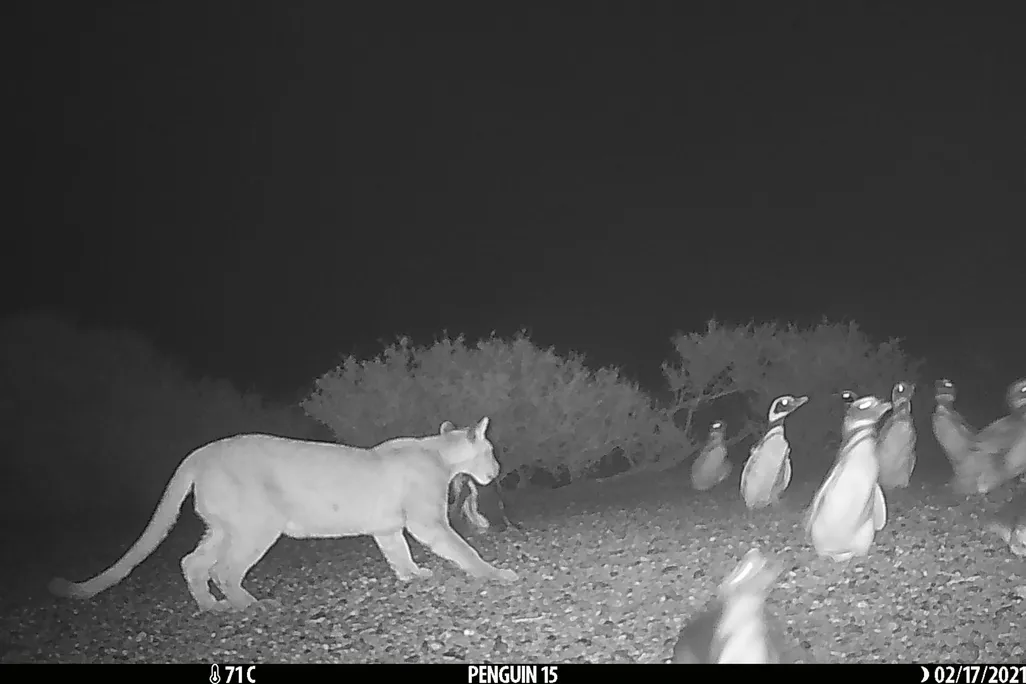
Roughly a century ago, European sheep herders began settling Argentina’s Patagonia region and killed off as many potential predators as possible to protect their flocks. Pumas, also known as mountain lions and cougars, mostly disappeared from the landscape, which allowed other creatures—including Magellanic penguins—to thrive.
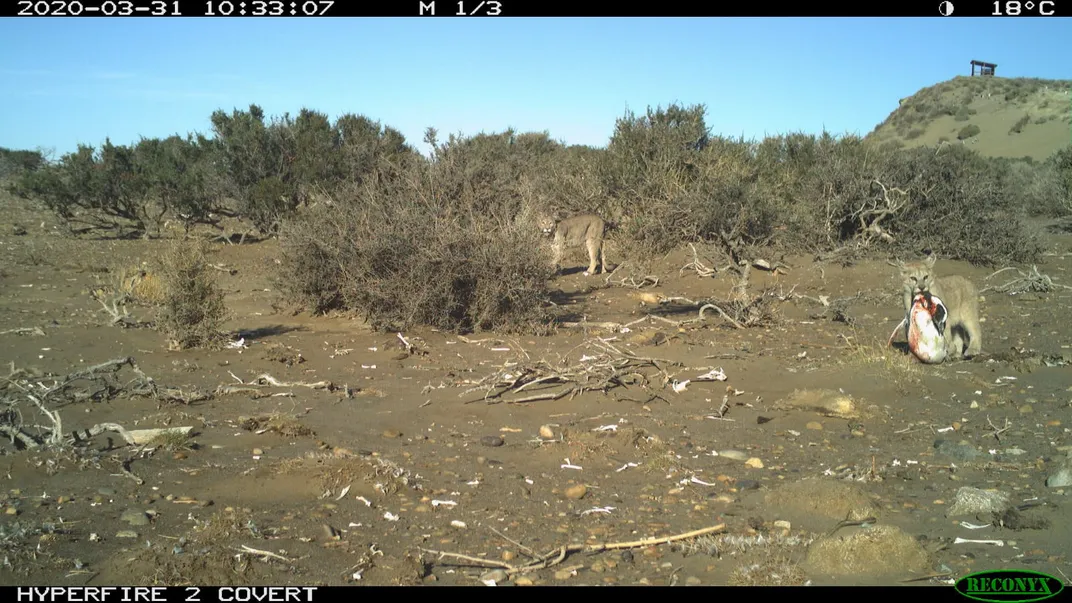
In recent decades, however, pumas have started to rebound. And the cats’ return has led to some unexpected ripple effects: Mountain lions, which are typically solitary animals, are now congregating near seasonal Magellanic penguin colonies to feast upon the little black and white birds, scientists report in a paper published December 17 in the journal Proceedings of the Royal Society B.
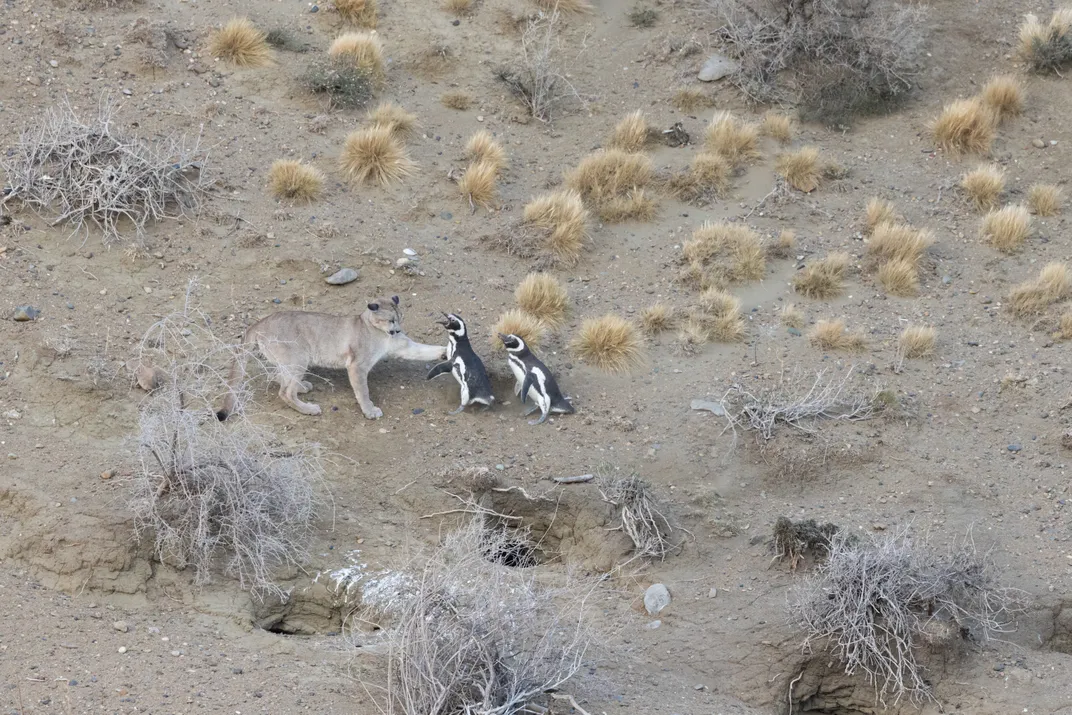
Once pumas were extirpated from the region in the early 20th century, the Magellanic penguins started to move in from nearby islands. Without four-legged predators roaming around, they apparently felt safe and comfortable enough to start breeding on the mainland. Today, their coastal colonies can include tens of thousands of nests.
In 2004, Argentina established Monte León National Park to protect a large swath of coastal Patagonia. The creation of the park helped pumas regain their foothold in the region and led to a novel predator-prey relationship between the large cats and the mid-sized penguins.
Did you know? Pumas aren't "big cats"
Despite their large size, mountain lions aren’t considered “big cats” by scientists. That name technically refers to members of the genus Panthera, which includes lions, tigers, jaguars, leopards and snow leopards. Pumas are the only living members of the Puma genus.
Scientists knew mountain lions were snacking on Magellanic penguins—anecdotal reports started popping up around 2007, study co-author Emiliano Donadio, science director at the Fundación Rewilding Argentina, tells BBC Wildlife Magazine’s Graeme Green.
But Donadio and his colleagues wanted to learn more about how this new food source was affecting the predators’ behavior and movements. Penguins spend part of the year on the coast, during their breeding season, and the rest of the year at sea foraging, so the natural conditions were ideal for research. Did pumas behave differently when the penguins were present versus when the birds were absent?
Researchers put GPS collars on 14 pumas within the park, then tracked their movements from September 2019 to December 2023. They also set up 32 wildlife cameras to watch the cats’ behavior and estimate their numbers when penguins were present versus when they were absent.
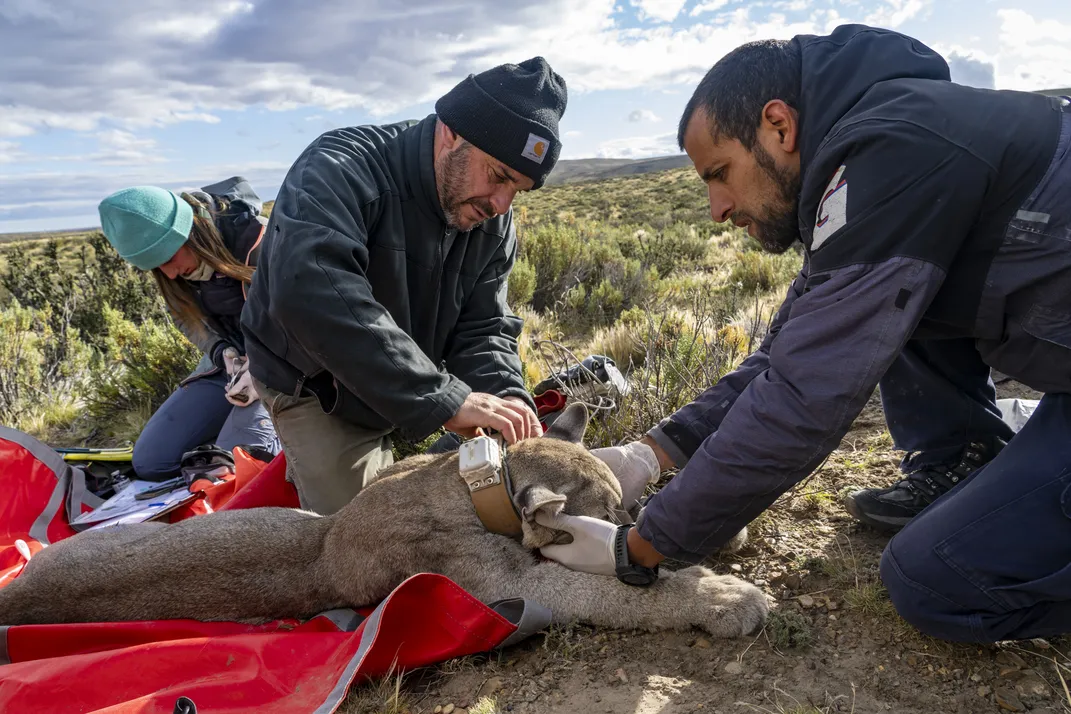
The data showed clear evidence that the pumas had adapted to their new prey. When the penguins showed up and started nesting, the pumas shrank their territories, the study revealed. And when the birds returned to the water at the end of the breeding season, the cats expanded their territories once again.
Regardless of the penguins’ presence, about 13 pumas roamed per 39 square miles, the team found. That’s the largest density of pumas ever documented at one site, which is roughly double the density of the past record-holding location. This means the solitary cats were interacting with each other more often—and doing so relatively peacefully.
The results suggest mountain lions are more tolerant of each other when there’s a smorgasbord of defenseless, predictable, easy-to-snatch prey around—similar to how bears typically congregate without incident along northern rivers during the annual salmon run.
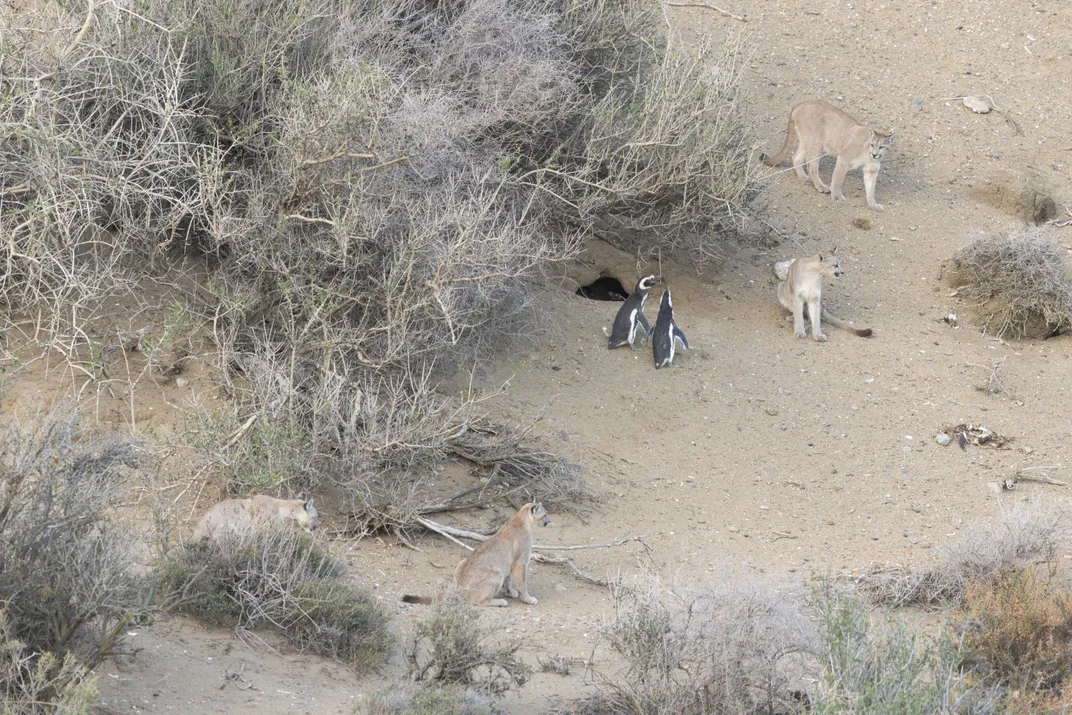
“We tend to think of pumas as extremely aggressive and intolerant,” Donadio tells National Geographic’s Meghie Rodrigues. “But when food is abundant and concentrated, there’s no need to defend it.”
The findings weren’t necessarily surprising to the researchers, as mountain lions are an “incredibly resilient species,” says study co-author Mitchell Serota, an ecologist at Duke Farms, a center of the Doris Duke Foundation, to ABC News’ Julia Jacobo. They inhabit a wide range, from Canada to nearly the southern tip of South America, and they thrive in a variety of ecosystems, including forests, grasslands, shrublands and deserts. They’re also known to have diverse diets and seem willing to take advantage of whatever prey is available—whether that’s tiny mice or enormous elk.
Jake Goheen, a wildlife ecologist at Iowa State University who was not involved with the research, agrees, telling the New York Times’ Alexa Robles-Gil the findings represent “an extraordinary example of how flexible large carnivores can be.”
For now, the study authors say their research has only scratched the surface. They don’t know the long-term effects on the penguins’ numbers, although recent surveys suggest the birds’ population is growing. And mountain lions in the region usually hunt guanacos, a four-legged relative of the llama, so how might their seasonal penguin feasts affect their predation of these creatures?
Moreover, the findings demonstrate the complexity of animal reintroduction and environmental restoration efforts. Contrary to popular belief, reintroducing large carnivores doesn’t mean an ecosystem will revert to its historic state.
“When we start to rewild the land, the species that are coming back might find a system that is a bit different from the one that they used to inhabit 100 years ago—and they adapt to it,” Donadio tells National Geographic.