

Polar bear DNA changing in response to climate change
According to new research, polar bear DNA might be changing to help these creatures adapt to a changing climate. Image via Hans-Jurgen Mager/ Unsplash. EarthSky’s 2026 lunar calendar is available now. Get yours today! Makes a great gift. By Alice Godden, University of East Anglia. Edits by EarthSky. The Arctic Ocean current is at its warmest in the last 125,000 years, and temperatures continue to rise. Due to these warming temperatures, more than 2/3 of polar bears are expected to be extinct by 2050. Total extinction is predicted by the end of this century. But in our new study, my colleagues and I found that the changing climate has been driving changes in polar bear DNA, potentially allowing them to more readily adapt to warmer habitats. Provided these polar bears can source enough food and breeding partners, this suggests they may potentially survive these new challenging climates. Polar bear DNA is changing We discovered a strong link between rising temperatures in southeast Greenland and changes in the polar bear genome, which is the entire set of DNA found in an organism. DNA is the instruction book inside every cell, guiding how an organism grows and develops. In processes called transcription and translation, DNA is copied to generate RNA. These are messenger molecules that transmit genetic information. This can lead to the production of proteins, and copies of transposons, also known as “jumping genes.” These are mobile pieces of the genome that can move around and influence how other genes work. Different regions, different genomes Our research revealed big differences in the temperatures in the northeast of Greenland compared with the southeast. We used publicly available polar bear genetic data from a research group at the University of Washington, U.S., to support our study. This dataset was generated from blood samples collected from polar bears in both northern and south-eastern Greenland. Our work built on a Washington University study which discovered that this southeastern population of Greenland polar bears was genetically different to the north-eastern population. Southeastern bears had migrated from the north and became isolated and separate approximately 200 years ago, it found. Researchers from Washington had extracted RNA – the genetic messenger molecules – from polar bear blood samples and sequenced it. We used this sequencing to look at RNA expression – essentially showing which genes are active – in relation to the climate. This gave us a detailed picture of gene activity, including the behavior of the “jumping genes,” or transposons. Temperatures in Greenland have been closely monitored and recorded by the Danish Meteorological Institute. So we linked this climate data with the RNA data to explore how environmental changes may be influencing polar bear biology. Polar bears face challenging conditions thanks to climate change. But they might be responding to this challenge at a genetic level. Image via Dick Val Beck/ Polar Bears International. Impacts of temperature change We found that temperatures in the southeast were significantly warmer and fluctuated more than in the northeast. This creates habitat changes and challenges for the polar bears living in these regions. In the southeast of Greenland, the edge of the ice sheet – which spans 80% of Greenland – is rapidly receding. That means vast ice and habitat loss. The loss of ice is a substantial problem for the polar bears. That’s because it reduces the availability of hunting platforms to catch seals, leading to isolation and food scarcity. EarthSky’s Will Triggs spoke to Alysa McCall of Polar Bears International on Arctic Sea Ice day – July 15, 2025 – to hear about how the decline in arctic sea ice is affecting polar bears and beluga whales. How climate is changing polar bear DNA Over time, it’s not unusual for an organism’s DNA sequence to slowly change and evolve. But environmental stress, such as a warmer climate, can accelerate this process. Transposons are like genetic puzzle pieces that can rearrange themselves, sometimes helping animals adapt to new environments. They come in many different families and have slightly different behaviors, but in essence are all mobile fragments that can reinsert randomly anywhere in the genome. Approximately 38.1% of the polar bear genome is made up of transposons. For humans that figure is 45%, and plant genomes can be over 70% transposons. There are small protective molecules called piwi-interacting RNAs (piRNAs) that can silence the activity of transposons. But when an environmental stress is too strong, these protective piRNAs cannot keep up with the invasive actions of transposons. We found that the warmer southeast climate led to a mass mobilization of these transposons across the polar bear genome, changing its sequence. We also found that these transposon sequences appeared younger and more abundant in the southeastern bears. And over 1,500 of these sequences were upregulated, meaning gene activity was increased. That points to recent genetic changes that may help bears adapt to rising temperatures. What exactly is changing in polar bear DNA? Some of these elements overlap with genes linked to stress responses and metabolism, hinting at a possible role in coping with climate change. By studying these jumping genes, we uncovered how the polar bear genome adapts and responds in the shorter term to environmental stress and warmer climates. Our research found that some genes linked to heat stress, aging and metabolism are behaving differently in the southeast population of polar bears. This suggests they might be adjusting to their warmer conditions. Additionally, we found active jumping genes in parts of the genome that are involved in areas tied to fat processing, which is important when food is scarce. Considering that northern populations eat mainly fatty seals, this could mean that polar bears in the southeast are slowly adapting to eating the rougher plant-based diets that can be found in the warmer regions. Overall, climate change is reshaping polar bear habitats, leading to genetic changes. Bears of southeastern Greenland are evolving to survive these new terrains and diets. Future research could include other polar bear populations living in challenging climates. Understanding these genetic changes helps researchers see how polar bears might survive in a warming world, and which populations are most at risk. Alice Godden, Senior Research Associate, School of Biological Sciences, University of East Anglia This article is republished from The Conversation under a Creative Commons license. Read the original article. Bottom line: A new study has found that polar bear DNA might be evolving to help these creatures adapt to our changing climate. Read more: Polar bears have unique ice-repelling furThe post Polar bear DNA changing in response to climate change first appeared on EarthSky.
A new study has found that polar bear DNA might be evolving to help these creatures adapt to the stresses of our changing climate. The post Polar bear DNA changing in response to climate change first appeared on EarthSky.
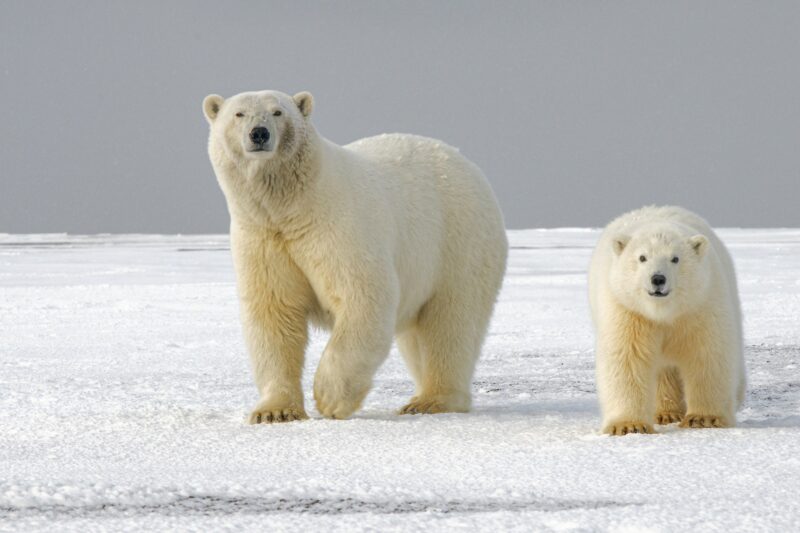
EarthSky’s 2026 lunar calendar is available now. Get yours today! Makes a great gift.
By Alice Godden, University of East Anglia. Edits by EarthSky.
The Arctic Ocean current is at its warmest in the last 125,000 years, and temperatures continue to rise. Due to these warming temperatures, more than 2/3 of polar bears are expected to be extinct by 2050. Total extinction is predicted by the end of this century.
But in our new study, my colleagues and I found that the changing climate has been driving changes in polar bear DNA, potentially allowing them to more readily adapt to warmer habitats. Provided these polar bears can source enough food and breeding partners, this suggests they may potentially survive these new challenging climates.
Polar bear DNA is changing
We discovered a strong link between rising temperatures in southeast Greenland and changes in the polar bear genome, which is the entire set of DNA found in an organism. DNA is the instruction book inside every cell, guiding how an organism grows and develops.
In processes called transcription and translation, DNA is copied to generate RNA. These are messenger molecules that transmit genetic information. This can lead to the production of proteins, and copies of transposons, also known as “jumping genes.” These are mobile pieces of the genome that can move around and influence how other genes work.
Different regions, different genomes
Our research revealed big differences in the temperatures in the northeast of Greenland compared with the southeast. We used publicly available polar bear genetic data from a research group at the University of Washington, U.S., to support our study. This dataset was generated from blood samples collected from polar bears in both northern and south-eastern Greenland.
Our work built on a Washington University study which discovered that this southeastern population of Greenland polar bears was genetically different to the north-eastern population. Southeastern bears had migrated from the north and became isolated and separate approximately 200 years ago, it found.
Researchers from Washington had extracted RNA – the genetic messenger molecules – from polar bear blood samples and sequenced it. We used this sequencing to look at RNA expression – essentially showing which genes are active – in relation to the climate.
This gave us a detailed picture of gene activity, including the behavior of the “jumping genes,” or transposons.
Temperatures in Greenland have been closely monitored and recorded by the Danish Meteorological Institute. So we linked this climate data with the RNA data to explore how environmental changes may be influencing polar bear biology.
Impacts of temperature change
We found that temperatures in the southeast were significantly warmer and fluctuated more than in the northeast. This creates habitat changes and challenges for the polar bears living in these regions.
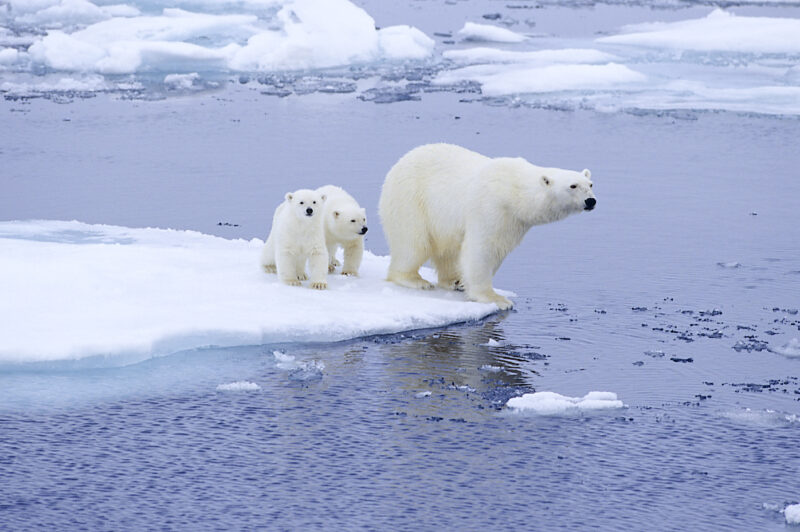
In the southeast of Greenland, the edge of the ice sheet – which spans 80% of Greenland – is rapidly receding. That means vast ice and habitat loss.
The loss of ice is a substantial problem for the polar bears. That’s because it reduces the availability of hunting platforms to catch seals, leading to isolation and food scarcity.
EarthSky’s Will Triggs spoke to Alysa McCall of Polar Bears International on Arctic Sea Ice day – July 15, 2025 – to hear about how the decline in arctic sea ice is affecting polar bears and beluga whales.
How climate is changing polar bear DNA
Over time, it’s not unusual for an organism’s DNA sequence to slowly change and evolve. But environmental stress, such as a warmer climate, can accelerate this process.
Transposons are like genetic puzzle pieces that can rearrange themselves, sometimes helping animals adapt to new environments. They come in many different families and have slightly different behaviors, but in essence are all mobile fragments that can reinsert randomly anywhere in the genome.
Approximately 38.1% of the polar bear genome is made up of transposons. For humans that figure is 45%, and plant genomes can be over 70% transposons.
There are small protective molecules called piwi-interacting RNAs (piRNAs) that can silence the activity of transposons. But when an environmental stress is too strong, these protective piRNAs cannot keep up with the invasive actions of transposons.
We found that the warmer southeast climate led to a mass mobilization of these transposons across the polar bear genome, changing its sequence. We also found that these transposon sequences appeared younger and more abundant in the southeastern bears. And over 1,500 of these sequences were upregulated, meaning gene activity was increased. That points to recent genetic changes that may help bears adapt to rising temperatures.
What exactly is changing in polar bear DNA?
Some of these elements overlap with genes linked to stress responses and metabolism, hinting at a possible role in coping with climate change. By studying these jumping genes, we uncovered how the polar bear genome adapts and responds in the shorter term to environmental stress and warmer climates.
Our research found that some genes linked to heat stress, aging and metabolism are behaving differently in the southeast population of polar bears. This suggests they might be adjusting to their warmer conditions.
Additionally, we found active jumping genes in parts of the genome that are involved in areas tied to fat processing, which is important when food is scarce. Considering that northern populations eat mainly fatty seals, this could mean that polar bears in the southeast are slowly adapting to eating the rougher plant-based diets that can be found in the warmer regions.
Overall, climate change is reshaping polar bear habitats, leading to genetic changes. Bears of southeastern Greenland are evolving to survive these new terrains and diets. Future research could include other polar bear populations living in challenging climates. Understanding these genetic changes helps researchers see how polar bears might survive in a warming world, and which populations are most at risk.
Alice Godden, Senior Research Associate, School of Biological Sciences, University of East Anglia
This article is republished from The Conversation under a Creative Commons license. Read the original article.
Bottom line: A new study has found that polar bear DNA might be evolving to help these creatures adapt to our changing climate.
Read more: Polar bears have unique ice-repelling fur
The post Polar bear DNA changing in response to climate change first appeared on EarthSky.