

Eight Fascinating Scientific Discoveries From 2025 That Could Lead to New Inventions
Eight Fascinating Scientific Discoveries From 2025 That Could Lead to New Inventions By studying the natural world, scientists find blueprints for innovations that can improve human lives—in the genes of a shark, the fur of a polar bear and the flipper of an extinct reptile Carlyn Kranking - Associate Web Editor, Science December 30, 2025 8:00 a.m. Golden apple snails have eyes that are similar to humans’—and they can regenerate an amputated eye in just a month. Scientists uncovered a gene related to that process, laying the groundwork for more research that could help humans with eye injuries. Stowers Institute Humans are excellent inventors, but the best ideas aren’t formed in a vacuum. Sometimes, the spark for innovation comes from learning how things work in the world around us—and taking a page out of nature’s notebook. Biomimicry, or biomimetics, is the principle of creating technology, medications, artistic designs or environmental solutions that are based on the natural world. One day, for example, drones and robots might fold up in ways that resemble an insect’s wings or the creases in a cell wall. In 2025, scientists made new observations about animal biology and behavior that might have implications for solving human problems down the line. Researchers calculated how ants exert force, identified remarkable venom resistance in frogs and watched snails regrow their eyes. Among other findings, these studies are laying the groundwork for technological advances in the future. Here are eight scientific discoveries from the past year that might lead to new inventions. Lizards withstand levels of lead that would kill other animals Brown anole lizards (Anolis sagrei) in New Orleans survive despite high levels of lead in their blood. WebCrawley at English Wikipedia via Wikimedia Commons under CC BY-SA 3.0 Brown anoles in New Orleans might look like regular lizards from the outside, but a study published in August in Environmental Research revealed these reptiles are quietly tolerating some of the most extreme levels of lead exposure ever recorded. Based on the known lead tolerance of other vertebrates on Earth, researchers would have expected these anoles to be severely ill—and, more than likely, dead. Instead, the lizards are thriving. The animals examined by the researchers appeared healthy, had only minor damage to their liver and brain tissue, and performed well in speed, endurance and balance tests. But bone and blood samples from 40 anoles in high-exposure areas revealed they had almost 1,000 micrograms of lead per deciliter of blood on average, and one individual had more than three times that amount. Health experts say there is no safe level of lead exposure for children, and public health interventions would likely be initiated if a child’s blood-lead content reaches a mere 3.5 micrograms of lead per deciliter. New Orleans has “a long history with things like lead paint and leaded gasoline,” co-author Alex Gunderson, an evolutionary biologist at Tulane University, told Popular Science’s Andrew Paul. That lead has found its way into soils and dust, which both lizards and human children can ingest. The study suggests lizards with high levels of lead in their blood could serve as a proxy for finding locations in the city where humans might be at an elevated risk of exposure. And down the line, figuring out the molecular basis for how brown anoles tolerate lead could help scientists develop interventions for humans with heavy metal poisoning.Polar bear fur remains ice-free with natural oils The sebum, or oil, in polar bear fur has natural de-icing properties. Alan D. Wilson via Wikimedia Commons under CC BY-SA 3.0 Even in near-freezing temperatures, polar bears plunge into cold Arctic waters, chasing down seals or moving between patches of sea ice. Then, when they emerge into the frigid air, the mammals don’t get large clumps of ice clinging to their fur. In fact, when researchers have worked with sedated polar bears in the wild, they find the animals are almost inexplicably dry. To measure the ice resistance of polar bear fur, a team of scientists tested how much force was required to move an ice block across four different surfaces: washed and unwashed polar bear fur, human hair and chemical-coated mohair ski skins, which are hair-based coverings for skis used to decrease adherence to the ice. The findings, published in Science Advances in January, suggest the unwashed, greasy polar bear fur was comparable to the best ski equipment, outperforming both the human hair and the washed fur. That’s because the unwashed fur is coated in sebum, or natural oil, that acts as a built-in ice repellant. The researchers analyzed the components of polar bear sebum and found cholesterol, diacylglycerols and fatty acids. But they didn’t find a fatty oil called squalene, which is present in the hair of humans, sea otters and other mammals. They think the polar bears’ lack of squalene is another key to their ice-free fur. Polar bear fur’s de-icing properties have long supported human innovation. For instance, Inuit people have affixed patches of fur beneath the legs of stools to help them slide along the ice without sticking. And now that researchers have an understanding of the components that make polar bear sebum resistant to ice, they might be able to create new alternatives to ice repellants that rely on PFAS. Also known as “forever chemicals,” PFAS compounds remain in the environment for a long time and are typically used for producing nonstick materials and anti-ice coatings. “If we do it in the right way, we have a chance of making [these products] environmentally friendly,” study co-author Bodil Holst, a physicist at the University of Bergen in Norway, told the Washington Post’s Dino Grandoni. Ichthyosaur flippers were primed for stealth An illustration of the Jurassic ichthyosaur Temnodontosaurus (left) and the fossil of its wing-like flipper at Lund University in Sweden (right). Joschua Knüppe (left); Katrin Sachs (right) Maybe you’ve seen an owl swooping through a forest at twilight—but you probably didn’t hear it. With specialized feathers on their wings, the birds of prey can move almost soundlessly through the air. Now, it turns out that ichthyosaurs—massive, predatory marine reptiles that lived during the age of dinosaurs—might have stalked the seas with the same degree of stealth. In 2009, fossil collector Georg Göltz was searching around a road construction site in Germany when he spotted several fossil bits that together formed nearly an entire front flipper of an ichthyosaur. The pieces, incredibly, had soft tissue intact, making the discovery a “once in a lifetime” find. By examining the fragments, a team of scientists found that the rear edge of the flipper was not smooth but serrated—and the toothy serrations were made from cartilage reinforced with calcium. A study describing the flipper, published in Nature in July, used simulations to suggest this structure helped the ichthyosaur, called Temnodontosaurus, to move silently. What’s more, the shape suggests the flipper extended past the end of the skeleton, culminating in a cartilaginous tip that could likely flex to reduce drag, like the winglet on the end of an airplane’s wing. This would have made the predator a more efficient swimmer, reducing the need for it to thrash its tail to move. “Less movement means less noise,” lead author Johan Lindgren, a paleontologist at Lund University in Sweden, told London’s Natural History Museum. This prehistoric flipper might help engineers today by inspiring quieter propellers and hydrofoils on watercraft, ultimately reducing noise pollution in the oceans, Lindgren added. Teams of weaver ants become “superefficient” when building complex nests Scientists stumped by weaver ants complex teamwork In many cases, two hands are better than one—but that idea can quickly get messy as additional people join a team. Imagine a group project where some individuals end up doing more work while others sit idly. Or a tug-of-war match, when having more people pull on the rope only helps to a certain degree—eventually, a large group might get in each other’s way or fail to coordinate their tugs. This phenomenon is known as the Ringelmann effect, named for the 19th-century French engineer Max Ringelmann. It suggests that as more members get involved with a team, each individual becomes less productive. Robots, however, don’t suffer from the Ringelmann effect. With more robots involved in a task, they can be programmed to coordinate their efforts efficiently. But in a Current Biology study published online in August, scientists discovered that weaver ants can outperform even robots: As they increase the size of their team, pulling on leaves to use in building their nests, the ants don’t merely avoid losing efficiency, they actually become stronger—or “superefficient.” In other words, one weaver ant could pull about 60 times its body weight. But put together with a group of 15 comrades, an ant could almost double that, pulling nearly 100 times its weight. The researchers measured this by giving ants paper cutouts of leaves and using a force meter to track the strength of the insects in real time as they linked their bodies into long chains to pull. The key to this power is a system the researchers call the “force ratchet,” in which ants take on different roles depending on their place in the chain. Ants at the front pull on the leaf, while those at the back stretch out their bodies and act as anchors to counterbalance the leaf’s weight. Another part of the ants’ success comes from their six legs, which help them make solid contact with the ground while pulling. Combining this knowledge with the newfound setup of the force ratchet, the team hopes to examine how groups of multi-legged robots might be able to boost their collective force. “Programming robots to adopt ant-inspired cooperative strategies, like the force ratchet, could allow teams of autonomous robots to work together more efficiently, accomplishing more than the sum of their individual efforts,” Chris Reid, a co-author of the study and biologist at Australia’s Macquarie University, said in a statement. Snails regrow amputated eyes within a month Stowers scientists establish apple snail as a research organism for investigating eye regeneration Humans have gone to great lengths to innovate in service of our eyes, from early artificial stand-ins to rare tooth-in-eye surgeries meant to restore vision. But so far, one thing we haven’t been able to achieve is total eye regeneration. On the other hand, golden apple snails—a common aquarium species native to South America—can regenerate their eyes quite quickly. In a study published in Nature Communications in August, scientists describe how the snails grow a new eye after one is amputated—and they do it in just about a month. Within the first 24 hours after amputation, the wound heals enough to prevent fluid loss and infection. The body then sends unspecialized cells to the site, which, over the next week and a half, multiply and specialize into the beginnings of eye structures. All the structures are present within 15 days, but they continue to mature over the following weeks. The eyes of golden apple snails share some key traits with human eyes, despite their seemingly supernatural ability. Both are known as “camera-type” eyes, which operate with a single lens, a protective cornea and a retina with light-detecting cells. What’s more, the development of both species’ eyes is regulated by a gene called pax6: In an experiment, snails that had both copies of that gene deactivated developed without eyes. Now, the researchers want to verify that pax6 is also involved in the regeneration of apple snails’ eyes. Such a discovery could ultimately point to ways to help humans with eye diseases or injuries. “If we find a set of genes that are important for eye regeneration, and these genes are also present in vertebrates, in theory we could activate them to enable eye regeneration in humans,” lead author Alice Accorsi, a biologist at the University of California, Davis, said in a statement. Greenland sharks defy aging, living as long as 400 years Greenland sharks can live for several centuries, and researchers are looking at their DNA to try to figure out how they do it. Hemming1952 via Wikimedia Commons under CC BY-SA 4.0 Next year, the United States will celebrate its 250th birthday. But some sharks might be reaching their 400th. Dwelling within the frigid north Atlantic and Arctic waters, Greenland sharks hold the title of the longest-living fish, reaching maturity at the age of roughly 150 and living as long as 400—or maybe even 500—years. The sharks move very little when they swim, and they’re adapted for cold with a low metabolic rate. Scientists thought these traits might play a role in their longevity, but those factors alone couldn’t explain how the sharks outlive every other vertebrate on Earth. So, researchers looked at their genes. Scientists sequenced the Greenland shark’s genome, which is exceptionally long. In their genetic code, the creatures have roughly 6.5 billion base pairs—the “rungs” in the ladder-like structure of the DNA molecule—which is twice as many as humans have. In a preprint paper posted to bioRxiv in February, which has not yet undergone peer review, researchers report the shark’s long genome has many extra copies of genes tied to the NF-κB signaling pathway, which plays a role in the immune system, managing inflammation and regulating the growth of tumors. Shark species with shorter lifespans have fewer copies of these genes, per the study. “Since immune responses, inflammation and tumor formation significantly affect aging and lifespan, the increase in genes involved in NF-κB signaling might be related to the Greenland shark’s longevity,” study co-author Shigeharu Kinoshita, a researcher at the University of Tokyo, told New Scientist’s Chris Simms. Adding support to that idea is the red sea urchin, which is known to live beyond 100 years. A 2024 study found that the spiny invertebrate also has several copies of genes associated with the NF-κB signaling pathway. If researchers can learn more about the Greenland shark’s genome, they might be able to target places in our own genome with pharmaceuticals or gene therapies that might increase the amount of time humans can stay healthy. Pond frogs make an easy meal out of venomous hornets Pond frog preys on a giant hornet / トノサマガエルはオオスズメバチを捕食する The largest hornet in the world grows up to two inches across—and with its quarter-inch-long stinger, it can deal a potent dose of venom. Known as the northern giant hornet—or the “murder hornet”—the insect has a sting that can kill a mouse or put a human in serious pain. But in a December study in Ecosphere, Shinji Sugiura, an ecologist at Kobe University in Japan, watched black-spotted pond frogs devour these hornets without a second thought. The amphibians sustained multiple stings—and they didn’t even flinch. In a series of experiments, Sugiura tested 45 frogs—15 for each of three hornet species—and presented every one with a single insect. The frogs attacked with staggering success. Nearly 80 percent of the frogs given a northern giant hornet were able to swallow it, while 87 percent of frogs devoured a yellow-vented hornet and 93 percent ate a yellow hornet. Some amphibians produce their own toxins, which might give them an edge when it comes to venom resistance. But now, scientists hope to learn more about the pond frogs’ apparent resistance to the murder hornet’s sting, testing whether the amphibians can withstand other animals’ venoms and measuring just how many stings they can endure. “If pond frogs do possess physiological mechanisms that suppress pain or resist hornet venom, understanding them could one day help us develop new ways to reduce pain or inflammation in humans,” Sugiura told Gizmodo’s Ed Cara. Flamingos form tornado-like vortices as they probe for prey Tornado flamingo chattering A feeding flamingo looks to be performing an odd dance. Head down, with its bill below water, the bird stomps its feet and bobs its neck up and down. While it may look strange, the technique makes the flamingo an extremely effective filter-feeder capable of pulling shrimp and worms from nutrient-poor waters. To study this behavior, a team of scientists set up high-speed video cameras and lasers to record flamingos at the Nashville Zoo as they fed from tubs of water. Using 3D models of the birds’ heads, feet and beaks—as well as a real flamingo bill mounted to a machine that snapped it open and shut—the team modeled how the birds move the water. They published their findings in PNAS in May. As it turns out, the flamingos’ stomping stirs up food from the sediment. Then, the birds chatter their bills and move their tongues, altering the water flow in a way that draws in seven times more prey. And, when they pull their beaks rapidly out of the water, the birds create tiny tornado-like vortices, according to the research. The team suggests that harnessing vortices could lead to technologies that might gather up toxic algae or microplastics from oceans. Researchers are already testing filtration systems based on flamingos’ beaks that might improve wastewater treatment or water desalination. Taking another approach, the mechanics of flamingos’ webbed feet—and the animals’ habit of sliding their feet into the water rather than placing them flat—could inspire robots that walk successfully in mud. Regarding these future goals, co-author Saad Bhamla, a biophysicist at Georgia Tech, told Science News’ Elie Dolgin, “I’m cautiously optimistic.” Get the latest stories in your inbox every weekday.
By studying the natural world, scientists find blueprints for innovations that can improve human lives—in the genes of a shark, the fur of a polar bear and the flipper of an extinct reptile
Eight Fascinating Scientific Discoveries From 2025 That Could Lead to New Inventions
By studying the natural world, scientists find blueprints for innovations that can improve human lives—in the genes of a shark, the fur of a polar bear and the flipper of an extinct reptile
Carlyn Kranking - Associate Web Editor, Science

Humans are excellent inventors, but the best ideas aren’t formed in a vacuum. Sometimes, the spark for innovation comes from learning how things work in the world around us—and taking a page out of nature’s notebook.
Biomimicry, or biomimetics, is the principle of creating technology, medications, artistic designs or environmental solutions that are based on the natural world. One day, for example, drones and robots might fold up in ways that resemble an insect’s wings or the creases in a cell wall.
In 2025, scientists made new observations about animal biology and behavior that might have implications for solving human problems down the line. Researchers calculated how ants exert force, identified remarkable venom resistance in frogs and watched snails regrow their eyes. Among other findings, these studies are laying the groundwork for technological advances in the future.
Here are eight scientific discoveries from the past year that might lead to new inventions.
Lizards withstand levels of lead that would kill other animals
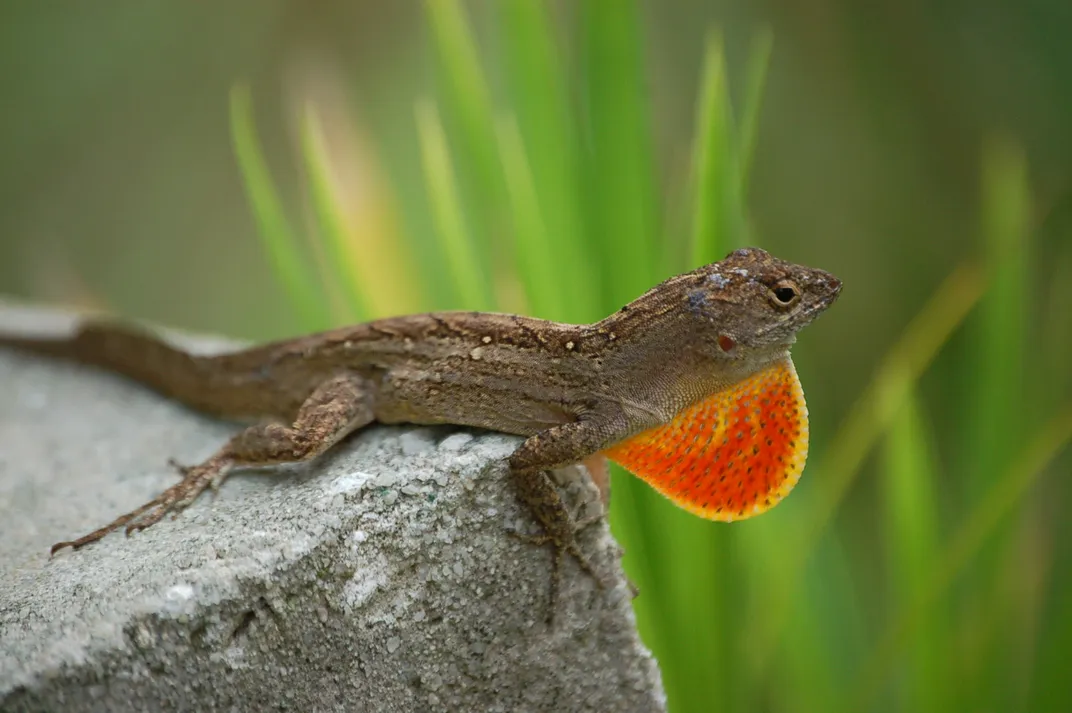
Brown anoles in New Orleans might look like regular lizards from the outside, but a study published in August in Environmental Research revealed these reptiles are quietly tolerating some of the most extreme levels of lead exposure ever recorded. Based on the known lead tolerance of other vertebrates on Earth, researchers would have expected these anoles to be severely ill—and, more than likely, dead.
Instead, the lizards are thriving. The animals examined by the researchers appeared healthy, had only minor damage to their liver and brain tissue, and performed well in speed, endurance and balance tests. But bone and blood samples from 40 anoles in high-exposure areas revealed they had almost 1,000 micrograms of lead per deciliter of blood on average, and one individual had more than three times that amount.
Health experts say there is no safe level of lead exposure for children, and public health interventions would likely be initiated if a child’s blood-lead content reaches a mere 3.5 micrograms of lead per deciliter.
New Orleans has “a long history with things like lead paint and leaded gasoline,” co-author Alex Gunderson, an evolutionary biologist at Tulane University, told Popular Science’s Andrew Paul. That lead has found its way into soils and dust, which both lizards and human children can ingest.
The study suggests lizards with high levels of lead in their blood could serve as a proxy for finding locations in the city where humans might be at an elevated risk of exposure. And down the line, figuring out the molecular basis for how brown anoles tolerate lead could help scientists develop interventions for humans with heavy metal poisoning.
Polar bear fur remains ice-free with natural oils
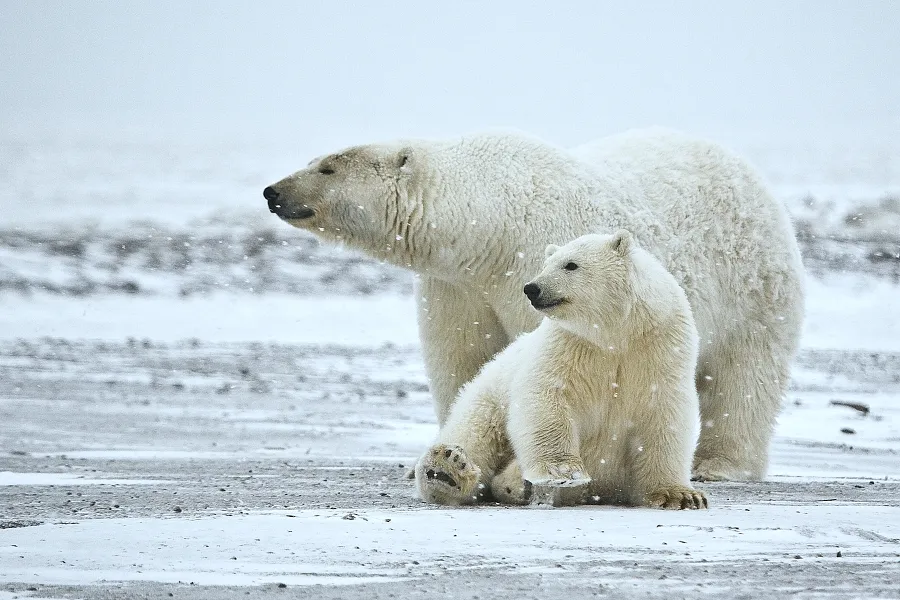
Even in near-freezing temperatures, polar bears plunge into cold Arctic waters, chasing down seals or moving between patches of sea ice. Then, when they emerge into the frigid air, the mammals don’t get large clumps of ice clinging to their fur. In fact, when researchers have worked with sedated polar bears in the wild, they find the animals are almost inexplicably dry.
To measure the ice resistance of polar bear fur, a team of scientists tested how much force was required to move an ice block across four different surfaces: washed and unwashed polar bear fur, human hair and chemical-coated mohair ski skins, which are hair-based coverings for skis used to decrease adherence to the ice. The findings, published in Science Advances in January, suggest the unwashed, greasy polar bear fur was comparable to the best ski equipment, outperforming both the human hair and the washed fur.
That’s because the unwashed fur is coated in sebum, or natural oil, that acts as a built-in ice repellant. The researchers analyzed the components of polar bear sebum and found cholesterol, diacylglycerols and fatty acids. But they didn’t find a fatty oil called squalene, which is present in the hair of humans, sea otters and other mammals. They think the polar bears’ lack of squalene is another key to their ice-free fur.
Polar bear fur’s de-icing properties have long supported human innovation. For instance, Inuit people have affixed patches of fur beneath the legs of stools to help them slide along the ice without sticking.
And now that researchers have an understanding of the components that make polar bear sebum resistant to ice, they might be able to create new alternatives to ice repellants that rely on PFAS. Also known as “forever chemicals,” PFAS compounds remain in the environment for a long time and are typically used for producing nonstick materials and anti-ice coatings. “If we do it in the right way, we have a chance of making [these products] environmentally friendly,” study co-author Bodil Holst, a physicist at the University of Bergen in Norway, told the Washington Post’s Dino Grandoni.
Ichthyosaur flippers were primed for stealth
Maybe you’ve seen an owl swooping through a forest at twilight—but you probably didn’t hear it. With specialized feathers on their wings, the birds of prey can move almost soundlessly through the air. Now, it turns out that ichthyosaurs—massive, predatory marine reptiles that lived during the age of dinosaurs—might have stalked the seas with the same degree of stealth.
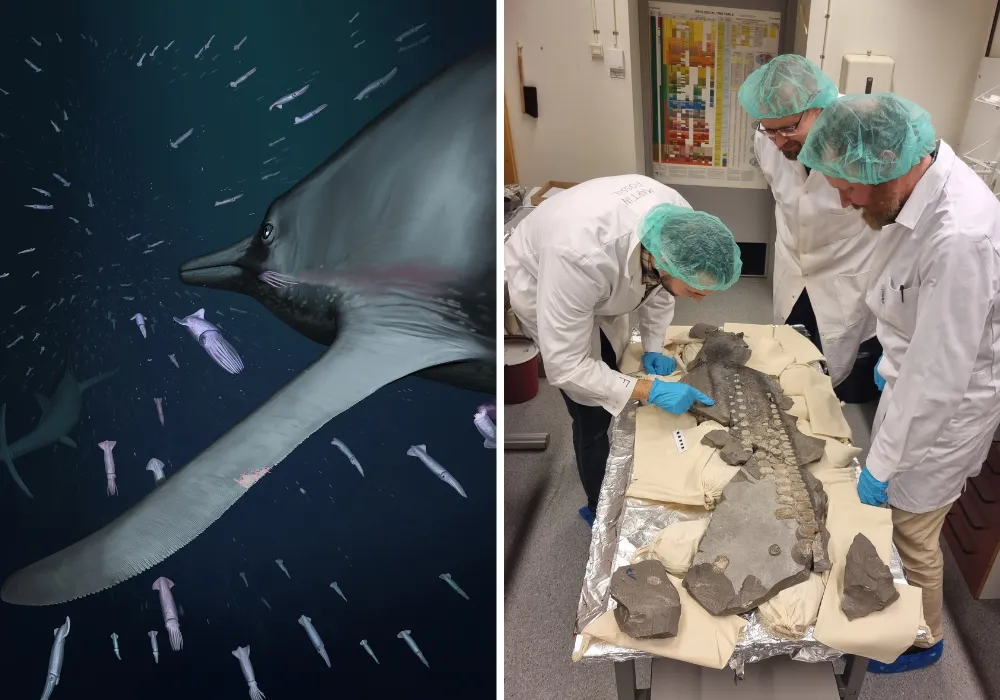
In 2009, fossil collector Georg Göltz was searching around a road construction site in Germany when he spotted several fossil bits that together formed nearly an entire front flipper of an ichthyosaur. The pieces, incredibly, had soft tissue intact, making the discovery a “once in a lifetime” find.
By examining the fragments, a team of scientists found that the rear edge of the flipper was not smooth but serrated—and the toothy serrations were made from cartilage reinforced with calcium. A study describing the flipper, published in Nature in July, used simulations to suggest this structure helped the ichthyosaur, called Temnodontosaurus, to move silently.
What’s more, the shape suggests the flipper extended past the end of the skeleton, culminating in a cartilaginous tip that could likely flex to reduce drag, like the winglet on the end of an airplane’s wing. This would have made the predator a more efficient swimmer, reducing the need for it to thrash its tail to move. “Less movement means less noise,” lead author Johan Lindgren, a paleontologist at Lund University in Sweden, told London’s Natural History Museum.
This prehistoric flipper might help engineers today by inspiring quieter propellers and hydrofoils on watercraft, ultimately reducing noise pollution in the oceans, Lindgren added.
Teams of weaver ants become “superefficient” when building complex nests
Scientists stumped by weaver ants complex teamwork
In many cases, two hands are better than one—but that idea can quickly get messy as additional people join a team. Imagine a group project where some individuals end up doing more work while others sit idly. Or a tug-of-war match, when having more people pull on the rope only helps to a certain degree—eventually, a large group might get in each other’s way or fail to coordinate their tugs.
This phenomenon is known as the Ringelmann effect, named for the 19th-century French engineer Max Ringelmann. It suggests that as more members get involved with a team, each individual becomes less productive.
Robots, however, don’t suffer from the Ringelmann effect. With more robots involved in a task, they can be programmed to coordinate their efforts efficiently. But in a Current Biology study published online in August, scientists discovered that weaver ants can outperform even robots: As they increase the size of their team, pulling on leaves to use in building their nests, the ants don’t merely avoid losing efficiency, they actually become stronger—or “superefficient.”
In other words, one weaver ant could pull about 60 times its body weight. But put together with a group of 15 comrades, an ant could almost double that, pulling nearly 100 times its weight. The researchers measured this by giving ants paper cutouts of leaves and using a force meter to track the strength of the insects in real time as they linked their bodies into long chains to pull.
The key to this power is a system the researchers call the “force ratchet,” in which ants take on different roles depending on their place in the chain. Ants at the front pull on the leaf, while those at the back stretch out their bodies and act as anchors to counterbalance the leaf’s weight.
Another part of the ants’ success comes from their six legs, which help them make solid contact with the ground while pulling. Combining this knowledge with the newfound setup of the force ratchet, the team hopes to examine how groups of multi-legged robots might be able to boost their collective force.
“Programming robots to adopt ant-inspired cooperative strategies, like the force ratchet, could allow teams of autonomous robots to work together more efficiently, accomplishing more than the sum of their individual efforts,” Chris Reid, a co-author of the study and biologist at Australia’s Macquarie University, said in a statement.
Snails regrow amputated eyes within a month
Stowers scientists establish apple snail as a research organism for investigating eye regeneration
Humans have gone to great lengths to innovate in service of our eyes, from early artificial stand-ins to rare tooth-in-eye surgeries meant to restore vision. But so far, one thing we haven’t been able to achieve is total eye regeneration.
On the other hand, golden apple snails—a common aquarium species native to South America—can regenerate their eyes quite quickly. In a study published in Nature Communications in August, scientists describe how the snails grow a new eye after one is amputated—and they do it in just about a month.
Within the first 24 hours after amputation, the wound heals enough to prevent fluid loss and infection. The body then sends unspecialized cells to the site, which, over the next week and a half, multiply and specialize into the beginnings of eye structures. All the structures are present within 15 days, but they continue to mature over the following weeks.
The eyes of golden apple snails share some key traits with human eyes, despite their seemingly supernatural ability. Both are known as “camera-type” eyes, which operate with a single lens, a protective cornea and a retina with light-detecting cells. What’s more, the development of both species’ eyes is regulated by a gene called pax6: In an experiment, snails that had both copies of that gene deactivated developed without eyes.
Now, the researchers want to verify that pax6 is also involved in the regeneration of apple snails’ eyes. Such a discovery could ultimately point to ways to help humans with eye diseases or injuries.
“If we find a set of genes that are important for eye regeneration, and these genes are also present in vertebrates, in theory we could activate them to enable eye regeneration in humans,” lead author Alice Accorsi, a biologist at the University of California, Davis, said in a statement.
Greenland sharks defy aging, living as long as 400 years
Next year, the United States will celebrate its 250th birthday. But some sharks might be reaching their 400th.
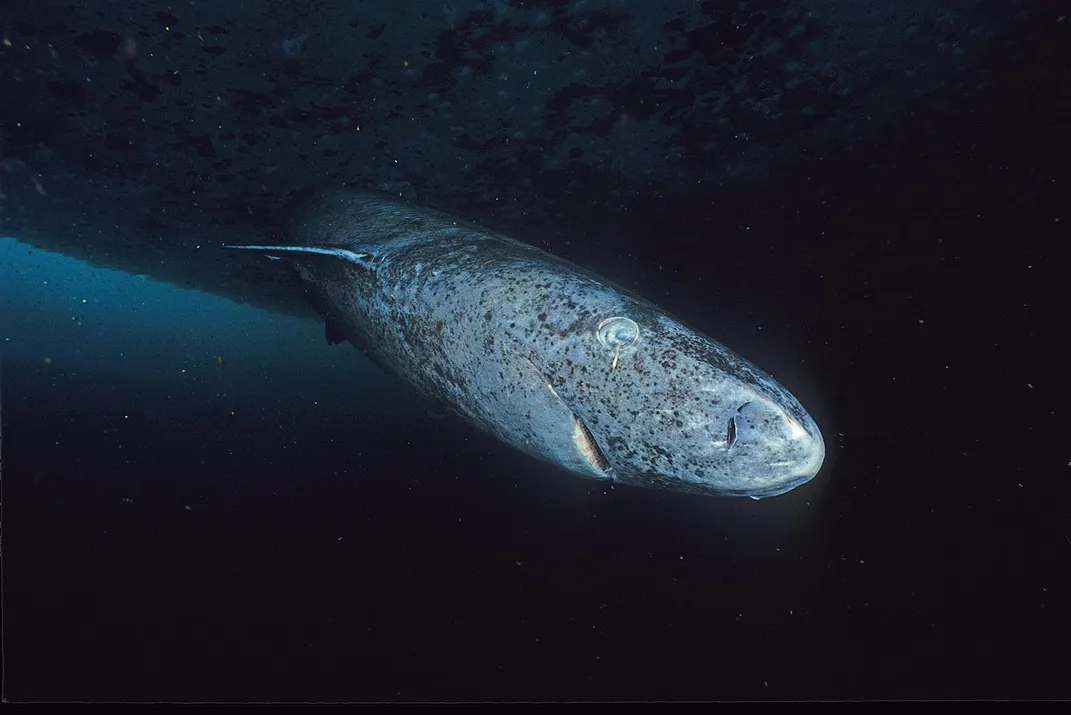
Dwelling within the frigid north Atlantic and Arctic waters, Greenland sharks hold the title of the longest-living fish, reaching maturity at the age of roughly 150 and living as long as 400—or maybe even 500—years. The sharks move very little when they swim, and they’re adapted for cold with a low metabolic rate. Scientists thought these traits might play a role in their longevity, but those factors alone couldn’t explain how the sharks outlive every other vertebrate on Earth. So, researchers looked at their genes.
Scientists sequenced the Greenland shark’s genome, which is exceptionally long. In their genetic code, the creatures have roughly 6.5 billion base pairs—the “rungs” in the ladder-like structure of the DNA molecule—which is twice as many as humans have.
In a preprint paper posted to bioRxiv in February, which has not yet undergone peer review, researchers report the shark’s long genome has many extra copies of genes tied to the NF-κB signaling pathway, which plays a role in the immune system, managing inflammation and regulating the growth of tumors. Shark species with shorter lifespans have fewer copies of these genes, per the study.
“Since immune responses, inflammation and tumor formation significantly affect aging and lifespan, the increase in genes involved in NF-κB signaling might be related to the Greenland shark’s longevity,” study co-author Shigeharu Kinoshita, a researcher at the University of Tokyo, told New Scientist’s Chris Simms.
Adding support to that idea is the red sea urchin, which is known to live beyond 100 years. A 2024 study found that the spiny invertebrate also has several copies of genes associated with the NF-κB signaling pathway.
If researchers can learn more about the Greenland shark’s genome, they might be able to target places in our own genome with pharmaceuticals or gene therapies that might increase the amount of time humans can stay healthy.
Pond frogs make an easy meal out of venomous hornets
Pond frog preys on a giant hornet / トノサマガエルはオオスズメバチを捕食する
The largest hornet in the world grows up to two inches across—and with its quarter-inch-long stinger, it can deal a potent dose of venom. Known as the northern giant hornet—or the “murder hornet”—the insect has a sting that can kill a mouse or put a human in serious pain.
But in a December study in Ecosphere, Shinji Sugiura, an ecologist at Kobe University in Japan, watched black-spotted pond frogs devour these hornets without a second thought. The amphibians sustained multiple stings—and they didn’t even flinch.
In a series of experiments, Sugiura tested 45 frogs—15 for each of three hornet species—and presented every one with a single insect. The frogs attacked with staggering success. Nearly 80 percent of the frogs given a northern giant hornet were able to swallow it, while 87 percent of frogs devoured a yellow-vented hornet and 93 percent ate a yellow hornet.
Some amphibians produce their own toxins, which might give them an edge when it comes to venom resistance. But now, scientists hope to learn more about the pond frogs’ apparent resistance to the murder hornet’s sting, testing whether the amphibians can withstand other animals’ venoms and measuring just how many stings they can endure.
“If pond frogs do possess physiological mechanisms that suppress pain or resist hornet venom, understanding them could one day help us develop new ways to reduce pain or inflammation in humans,” Sugiura told Gizmodo’s Ed Cara.
Flamingos form tornado-like vortices as they probe for prey
Tornado flamingo chattering
A feeding flamingo looks to be performing an odd dance. Head down, with its bill below water, the bird stomps its feet and bobs its neck up and down. While it may look strange, the technique makes the flamingo an extremely effective filter-feeder capable of pulling shrimp and worms from nutrient-poor waters.
To study this behavior, a team of scientists set up high-speed video cameras and lasers to record flamingos at the Nashville Zoo as they fed from tubs of water. Using 3D models of the birds’ heads, feet and beaks—as well as a real flamingo bill mounted to a machine that snapped it open and shut—the team modeled how the birds move the water. They published their findings in PNAS in May.
As it turns out, the flamingos’ stomping stirs up food from the sediment. Then, the birds chatter their bills and move their tongues, altering the water flow in a way that draws in seven times more prey. And, when they pull their beaks rapidly out of the water, the birds create tiny tornado-like vortices, according to the research.
The team suggests that harnessing vortices could lead to technologies that might gather up toxic algae or microplastics from oceans. Researchers are already testing filtration systems based on flamingos’ beaks that might improve wastewater treatment or water desalination. Taking another approach, the mechanics of flamingos’ webbed feet—and the animals’ habit of sliding their feet into the water rather than placing them flat—could inspire robots that walk successfully in mud.
Regarding these future goals, co-author Saad Bhamla, a biophysicist at Georgia Tech, told Science News’ Elie Dolgin, “I’m cautiously optimistic.”