Cookies help us run our site more efficiently.

By clicking “Accept”, you agree to the storing of cookies on your device to enhance site navigation, analyze site usage, and assist in our marketing efforts. View our Privacy Policy for more information or to customize your cookie preferences.

California Coastal Commission approves land deal to extend last nuclear plant through 2030

News Feed
Friday, December 12, 2025

California environmental regulators on Thursday struck a landmark deal with Pacific Gas & Electric to extend the life of the state’s last remaining nuclear power plant in exchange for thousands of acres of new land conservation in San Luis Obispo County.PG&E’s agreement with the California Coastal Commission is a key hurdle for the Diablo Canyon nuclear plant to remain online until at least 2030. The plant was slated to close this year, largely due to concerns over seismic safety, but state officials pushed to delay it — saying the plant remains essential for the reliable operation of California’s electrical grid. Diablo Canyon provides nearly 9% of the electricity generated in the state, making it the state’s single largest source. The Coastal Commission voted 9-3 to approve the plan, settling the fate of some 12,000 acres that surround the power plant as a means of compensation for environmental harm caused by its continued operation. Nuclear power does not emit greenhouse gases. But Diablo Canyon uses an estimated 2.5 billion gallons of ocean water each day to absorb heat in a process known as “once-through cooling,” which kills an estimated two billion or more marine organisms each year. Some stakeholders in the region celebrated the conservation deal, while others were disappointed by the decision to trade land for marine impacts — including a Native tribe that had hoped the land would be returned to them. Diablo Canyon sits along one of the most rugged and ecologically rich stretches of the California coast.Under the agreement, PG&E will immediately transfer a 4,500-acre parcel on the north side of the property known as the “North Ranch” into a conservation easement and pursue transfer of its ownership to a public agency such as the California Department of Parks and Recreation, a nonprofit land conservation organization or tribe. A purchase by State Parks would result in a more than 50% expansion of the existing Montaña de Oro State Park. PG&E will also offer a 2,200-acre parcel on the southern part of the property known as “Wild Cherry Canyon” for purchase by a government agency, nonprofit land conservation organization or tribe. In addition, the utility will provide $10 million to plan and manage roughly 25 miles of new public access trails across the entire property. “It’s going to be something that changes lives on the Central Coast in perpetuity,” Commissioner Christopher Lopez said at the meeting. “This matters to generations that have yet to exist on this planet ... this is going to be a place that so many people mark in their minds as a place that transforms their lives as they visit and recreate and love it in a way most of us can’t even imagine today.”Critically, the plan could see Diablo Canyon remain operational much longer than the five years dictated by Thursday’s agreement. While the state Legislature only authorized the plant to operate through 2030, PG&E’s federal license renewal would cover 20 years of operations, potentially keeping it online until 2045. Should that happen, the utility would need to make additional land concessions, including expanding an existing conservation area on the southern part of the property known as the “South Ranch” to 2,500 acres. The plan also includes rights of first refusal for a government agency or a land conservation group to purchase the entirety of the South Ranch, 5,000 acres, along with Wild Cherry Canyon — after 2030. Pelicans along the concrete breakwater at Pacific Gas and Electric’s Diablo Canyon Power Plant (Brian van der Brug/Los Angeles Times) Many stakeholders were frustrated by the carve-out for the South Ranch, but still saw the agreement as an overall victory for Californians. “It is a once in a lifetime opportunity,” Sen. John Laird (D-Santa Cruz) said in a phone call ahead of Thursday’s vote. “I have not been out there where it has not been breathtakingly beautiful, where it is not this incredible, unique location, where you’re not seeing, for much of it, a human structure anywhere. It is just one of those last unique opportunities to protect very special land near the California coast.”Others, however, described the deal as disappointing and inadequate.That includes many of the region’s Native Americans who said they felt sidelined by the agreement. The deal does not preclude tribal groups from purchasing the land in the future, but it doesn’t guarantee that or give them priority.The yak titʸu titʸu yak tiłhini Northern Chumash Tribe of San Luis Obispo County and Region, which met with the Coastal Commission several times in the lead-up to Thursday’s vote, had hoped to see the land returned to them. Scott Lanthrop is a member of the tribe’s board and has worked on the issue for several years. “The sad part is our group is not being recognized as the ultimate conservationist,” he told The Times. “Any normal person, if you ask the question, would you rather have a tribal group that is totally connected to earth and wind and water, or would you like to have some state agency or gigantic NGO manage this land, I think the answer would be, ‘Hey, you probably should give it back to the tribe.’” Tribe chair Mona Tucker said she fears that free public access to the land could end up harming it instead of helping it, as the Coastal Commission intends. “In my mind, I’m not understanding how taking the land ... is mitigation for marine life,” Tucker said. “It doesn’t change anything as far as impacts to the water. It changes a lot as far as impacts to the land.” (Christopher Reynolds / Los Angeles Times) The deal has been complicated by jurisdictional questions, including who can determine what happens to the land. While PG&E owns the North Ranch parcel that could be transferred to State Parks, the South Ranch and Wild Cherry Canyon are owned by its subsidiary, Eureka Energy Company. What’s more, the California Public Utilities Commission, which regulates utilities such as PG&E, has a Tribal Land Transfer Policy that calls for investor-owned power companies to transfer land they no longer want to Native American tribes. In the case of Diablo Canyon, the Coastal Commission became the decision maker because it has the job of compensating for environmental harm from the facility’s continued operation. Since the commission determined Diablo’s use of ocean water can’t be avoided, it looked at land conservation as the next best method.This “out-of-kind” trade-off is a rare, but not unheard of way of making up for the loss of marine life. It’s an approach that is “feasible and more likely to succeed” than several other methods considered, according to the commission’s staff report. “This plan supports the continued operation of a major source of reliable electricity for California, and is in alignment with our state’s clean energy goals and focus on coastal protection,” Paula Gerfen, Diablo Canyon’s senior vice president and chief nuclear officer, said in a statement. But Assemblymember Dawn Addis (D-Morro Bay) said the deal was “not the best we can do” — particularly because the fate of the South Ranch now depends on the plant staying in operation beyond 2030.“I believe the time really is now for the immediate full conservation of the 12,000 [acres], and to bring accountability and trust back for the voters of San Luis Obispo County,” Addis said during the meeting. There are also concerns about the safety of continuing to operate a nuclear plant in California, with its radioactive waste stored in concrete casks on the site. Diablo Canyon is subject to ground shaking and earthquake hazards, including from the nearby Hosgri Fault and the Shorline Fault, about 2.5 miles and 1 mile from the facility, respectively. PG&E says the plant has been built to withstand hazards. It completed a seismic hazard assessment in 2024, and determined Diablo Canyon is safe to continue operation through 2030. The Coastal Commission, however, found if the plant operates longer, it would warrant further seismic study.A key development for continuing Diablo Canyon’s operation came in 2022 with Senate Bill 846, which delayed closure by up to five additional years. At the time, California was plagued by rolling blackouts driven extreme heat waves, and state officials were growing wary about taking such a major source of power offline.But California has made great gains in the last several years — including massive investments in solar energy and battery storage — and some questioned whether the facility is still needed at all. Others said conserving thousands of acres of land still won’t make up for the harms to the ocean.“It is unmitigatable,” said David Weisman, executive director of the nonprofit Alliance for Nuclear Responsibility. He noted that the Coastal Commission’s staff report says it would take about 99 years to balance the loss of marine life with the benefits provided by 4,500 acres of land conservation. Twenty more years of operation would take about 305 years to strike that same balance.But some pointed out that neither the commission nor fisheries data find Diablo’s operations cause declines in marine life. Ocean harm may be overestimated, said Seaver Wang, an oceanographer and the climate and energy director at the Breakthrough Institute, a Berkeley-based research center.In California’s push to transition to clean energy, every option comes with downsides, Wang said. In the case of nuclear power — which produces no greenhouse gas emissions — it’s all part of the trade off, he said. “There’s no such thing as impacts-free energy,” he said.The Coastal Commission’s vote is one of the last remaining obstacles to keeping the plant online. PG&E will also need a final nod from the Regional Water Quality Control Board, which decides on a pollution discharge permit in February.The federal Nuclear Regulatory Commission will also have to sign off on Diablo’s extension.

A landmark deal with Pacific Gas & Electric will extend the life of the state's remaining nuclear power plant in exchange for thousands of acres of new conservation in San Luis Obispo County.

California environmental regulators on Thursday struck a landmark deal with Pacific Gas & Electric to extend the life of the state’s last remaining nuclear power plant in exchange for thousands of acres of new land conservation in San Luis Obispo County.

PG&E’s agreement with the California Coastal Commission is a key hurdle for the Diablo Canyon nuclear plant to remain online until at least 2030. The plant was slated to close this year, largely due to concerns over seismic safety, but state officials pushed to delay it — saying the plant remains essential for the reliable operation of California’s electrical grid. Diablo Canyon provides nearly 9% of the electricity generated in the state, making it the state’s single largest source.

The Coastal Commission voted 9-3 to approve the plan, settling the fate of some 12,000 acres that surround the power plant as a means of compensation for environmental harm caused by its continued operation.

Nuclear power does not emit greenhouse gases. But Diablo Canyon uses an estimated 2.5 billion gallons of ocean water each day to absorb heat in a process known as “once-through cooling,” which kills an estimated two billion or more marine organisms each year.

Some stakeholders in the region celebrated the conservation deal, while others were disappointed by the decision to trade land for marine impacts — including a Native tribe that had hoped the land would be returned to them. Diablo Canyon sits along one of the most rugged and ecologically rich stretches of the California coast.

Under the agreement, PG&E will immediately transfer a 4,500-acre parcel on the north side of the property known as the “North Ranch” into a conservation easement and pursue transfer of its ownership to a public agency such as the California Department of Parks and Recreation, a nonprofit land conservation organization or tribe. A purchase by State Parks would result in a more than 50% expansion of the existing Montaña de Oro State Park.

PG&E will also offer a 2,200-acre parcel on the southern part of the property known as “Wild Cherry Canyon” for purchase by a government agency, nonprofit land conservation organization or tribe. In addition, the utility will provide $10 million to plan and manage roughly 25 miles of new public access trails across the entire property.

“It’s going to be something that changes lives on the Central Coast in perpetuity,” Commissioner Christopher Lopez said at the meeting. “This matters to generations that have yet to exist on this planet ... this is going to be a place that so many people mark in their minds as a place that transforms their lives as they visit and recreate and love it in a way most of us can’t even imagine today.”

Critically, the plan could see Diablo Canyon remain operational much longer than the five years dictated by Thursday’s agreement. While the state Legislature only authorized the plant to operate through 2030, PG&E’s federal license renewal would cover 20 years of operations, potentially keeping it online until 2045.

Should that happen, the utility would need to make additional land concessions, including expanding an existing conservation area on the southern part of the property known as the “South Ranch” to 2,500 acres. The plan also includes rights of first refusal for a government agency or a land conservation group to purchase the entirety of the South Ranch, 5,000 acres, along with Wild Cherry Canyon — after 2030.
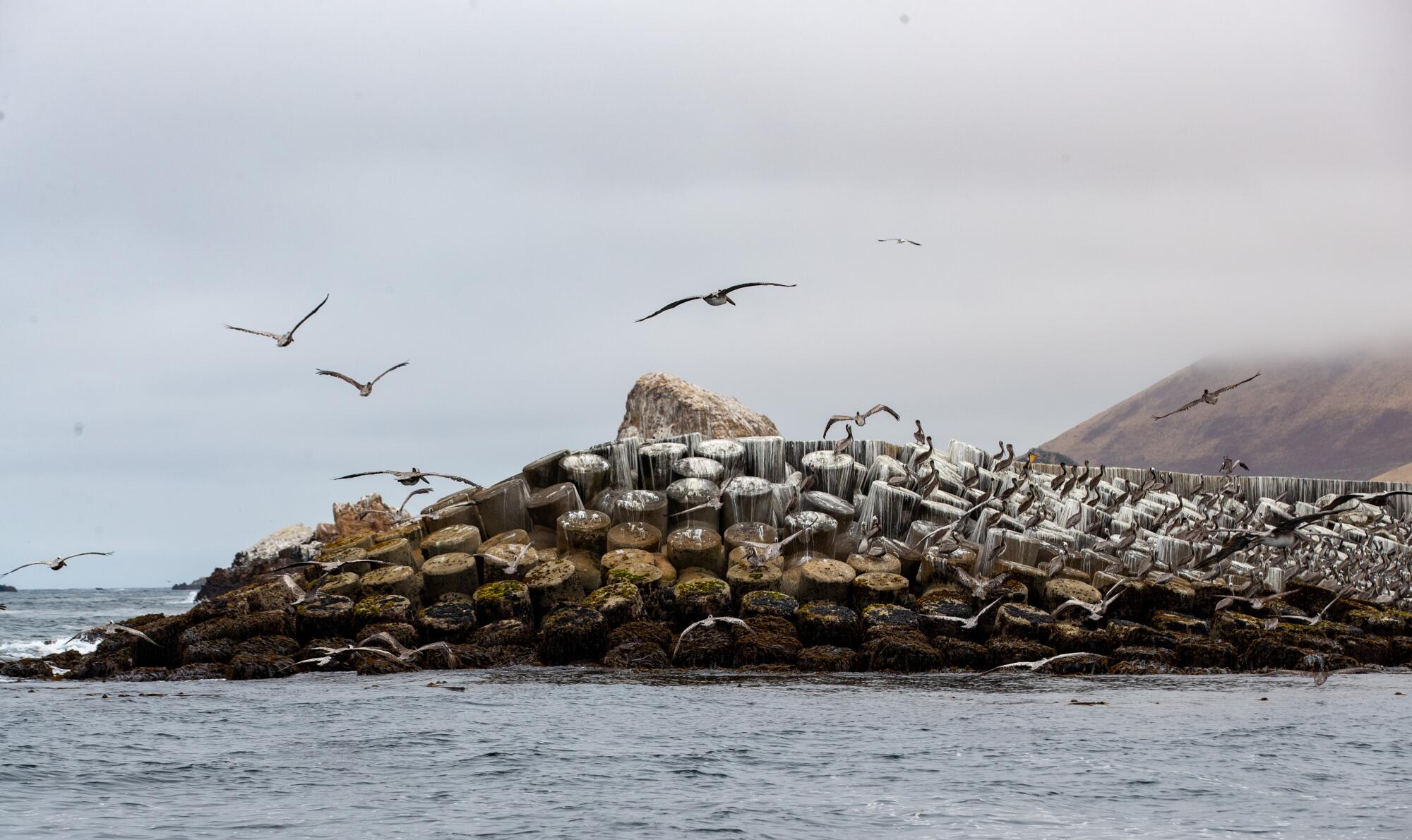
Pelicans along the concrete breakwater at Pacific Gas and Electric's Diablo Canyon Power Plant

Pelicans along the concrete breakwater at Pacific Gas and Electric’s Diablo Canyon Power Plant

(Brian van der Brug/Los Angeles Times)

Many stakeholders were frustrated by the carve-out for the South Ranch, but still saw the agreement as an overall victory for Californians.

“It is a once in a lifetime opportunity,” Sen. John Laird (D-Santa Cruz) said in a phone call ahead of Thursday’s vote. “I have not been out there where it has not been breathtakingly beautiful, where it is not this incredible, unique location, where you’re not seeing, for much of it, a human structure anywhere. It is just one of those last unique opportunities to protect very special land near the California coast.”

Others, however, described the deal as disappointing and inadequate.

That includes many of the region’s Native Americans who said they felt sidelined by the agreement. The deal does not preclude tribal groups from purchasing the land in the future, but it doesn’t guarantee that or give them priority.

The yak titʸu titʸu yak tiłhini Northern Chumash Tribe of San Luis Obispo County and Region, which met with the Coastal Commission several times in the lead-up to Thursday’s vote, had hoped to see the land returned to them.

Scott Lanthrop is a member of the tribe’s board and has worked on the issue for several years.

“The sad part is our group is not being recognized as the ultimate conservationist,” he told The Times. “Any normal person, if you ask the question, would you rather have a tribal group that is totally connected to earth and wind and water, or would you like to have some state agency or gigantic NGO manage this land, I think the answer would be, ‘Hey, you probably should give it back to the tribe.’”

Tribe chair Mona Tucker said she fears that free public access to the land could end up harming it instead of helping it, as the Coastal Commission intends.

“In my mind, I’m not understanding how taking the land ... is mitigation for marine life,” Tucker said. “It doesn’t change anything as far as impacts to the water. It changes a lot as far as impacts to the land.”
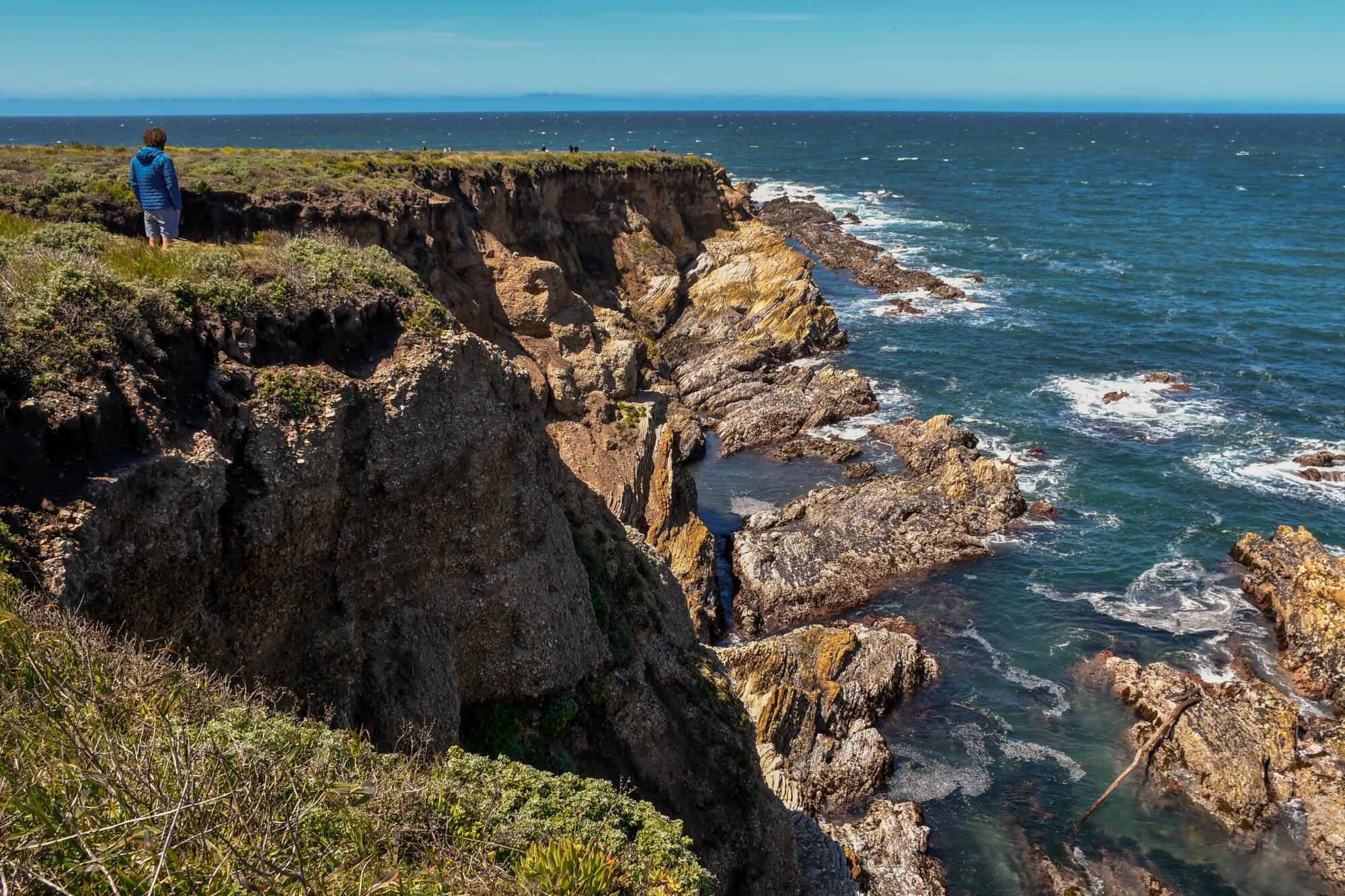
Montaña de Oro State Park.

(Christopher Reynolds / Los Angeles Times)

The deal has been complicated by jurisdictional questions, including who can determine what happens to the land. While PG&E owns the North Ranch parcel that could be transferred to State Parks, the South Ranch and Wild Cherry Canyon are owned by its subsidiary, Eureka Energy Company.

What’s more, the California Public Utilities Commission, which regulates utilities such as PG&E, has a Tribal Land Transfer Policy that calls for investor-owned power companies to transfer land they no longer want to Native American tribes.

In the case of Diablo Canyon, the Coastal Commission became the decision maker because it has the job of compensating for environmental harm from the facility’s continued operation. Since the commission determined Diablo’s use of ocean water can’t be avoided, it looked at land conservation as the next best method.

This “out-of-kind” trade-off is a rare, but not unheard of way of making up for the loss of marine life. It’s an approach that is “feasible and more likely to succeed” than several other methods considered, according to the commission’s staff report.

“This plan supports the continued operation of a major source of reliable electricity for California, and is in alignment with our state’s clean energy goals and focus on coastal protection,” Paula Gerfen, Diablo Canyon’s senior vice president and chief nuclear officer, said in a statement.

But Assemblymember Dawn Addis (D-Morro Bay) said the deal was “not the best we can do” — particularly because the fate of the South Ranch now depends on the plant staying in operation beyond 2030.

“I believe the time really is now for the immediate full conservation of the 12,000 [acres], and to bring accountability and trust back for the voters of San Luis Obispo County,” Addis said during the meeting.

There are also concerns about the safety of continuing to operate a nuclear plant in California, with its radioactive waste stored in concrete casks on the site. Diablo Canyon is subject to ground shaking and earthquake hazards, including from the nearby Hosgri Fault and the Shorline Fault, about 2.5 miles and 1 mile from the facility, respectively.

PG&E says the plant has been built to withstand hazards. It completed a seismic hazard assessment in 2024, and determined Diablo Canyon is safe to continue operation through 2030. The Coastal Commission, however, found if the plant operates longer, it would warrant further seismic study.

A key development for continuing Diablo Canyon’s operation came in 2022 with Senate Bill 846, which delayed closure by up to five additional years. At the time, California was plagued by rolling blackouts driven extreme heat waves, and state officials were growing wary about taking such a major source of power offline.

But California has made great gains in the last several years — including massive investments in solar energy and battery storage — and some questioned whether the facility is still needed at all.

Others said conserving thousands of acres of land still won’t make up for the harms to the ocean.

“It is unmitigatable,” said David Weisman, executive director of the nonprofit Alliance for Nuclear Responsibility. He noted that the Coastal Commission’s staff report says it would take about 99 years to balance the loss of marine life with the benefits provided by 4,500 acres of land conservation. Twenty more years of operation would take about 305 years to strike that same balance.

But some pointed out that neither the commission nor fisheries data find Diablo’s operations cause declines in marine life. Ocean harm may be overestimated, said Seaver Wang, an oceanographer and the climate and energy director at the Breakthrough Institute, a Berkeley-based research center.

In California’s push to transition to clean energy, every option comes with downsides, Wang said. In the case of nuclear power — which produces no greenhouse gas emissions — it’s all part of the trade off, he said.

“There’s no such thing as impacts-free energy,” he said.

The Coastal Commission’s vote is one of the last remaining obstacles to keeping the plant online. PG&E will also need a final nod from the Regional Water Quality Control Board, which decides on a pollution discharge permit in February.

The federal Nuclear Regulatory Commission will also have to sign off on Diablo’s extension.

Read the full story here.
Photos courtesy of

Banksy Unveils Two New Murals of Children Gazing Up at the Sky Days Before Christmas

Some onlookers are interpreting the identical artworks, which appeared on the streets of London, as a commentary on homelessness in the city

Banksy Unveils Two New Murals of Children Gazing Up at the Sky Days Before Christmas Some onlookers are interpreting the identical artworks, which appeared on the streets of London, as a commentary on homelessness in the city The new Banksy artwork near the Centre Point tower in London MEGA / GC Images via Getty Images Ahead of the holidays, Banksy has unveiled a new mural in London. The black-and-white image depicts two children in winter coats and hats, lying on their backs and gazing upward. The anonymous street artist posted a photo of the mural on his official Instagram account on December 22. The same image appeared in two locations: above a row of garages on Queen’s Mews in western London and outside the Centre Point tower in central London. Banksy only posted the Queen’s Mews mural online, but both have been attributed to him, per BBC News’ Aurelia Foster and Nicky Ford. The other new Banksy mural, located above a row of garages in western London Leon Neal / Getty Images The artist doesn’t typically offer information about the intent behind his works, but the new murals were “interpreted by some observers in the street art world as a statement on rising child homelessness in Britain,” per the New York Times’ Ephrat Livni. One of those observers is Daniel Lloyd-Morgan, an artist and Banksy fan. “Everybody is having a good time, but there are a lot of children who are not having a good time at Christmas,” he tells BBC News. Quick fact: Banksy’s Christmas murals In December 2019, the street artist unveiled a reindeer mural in Birmingham, England, that also appeared to comment on homelessness. Lloyd-Morgan thinks Banksy chose to paint the mural at Centre Point for a reason. The tower was built as an office building in 1966, but it sat empty for most of the following decade. In 1969, Reverend Ken Leech opened a shelter for homeless youths in a nearby church. Frustrated by the empty building towering over his neighborhood, Leech named his charity Centrepoint. In 1974, nearly 100 people occupied the empty Centre Point tower to protest rising homelessness in London, according to Hyperallergic’s Rhea Nayyar. Today, the tower is home to luxury apartments, offices and stores. According to government data released in October, about 170,000 children are currently unhoused in Britain—up from 70,000 in 2010. People walking by the mural were “ignoring it,” Lloyd-Morgan tells BBC News. “It’s a busy area. Quite poignant that people aren’t stopping. They walk past homeless people and they don’t see them lying on the street.” Banksy is known for his street art that doubles as social commentary. Many of his artworks, including a series of murals in Ukraine, feature anti-war themes. Some of his pieces have been interpreted as reflections on environmental conservation, domestic violence and refugees. In the new murals, one of the children is pointing skyward. “It’s kind of like they’re stargazing,” Lloyd-Morgan tells BBC News. Some onlookers think the artworks are commenting on children’s imaginations. As Artnet’s Jo Lawson-Tancred writes, “The classic Oscar Wilde line, ‘We are all in the gutter, but some of us are looking at the stars,’ comes to mind.” Get the latest stories in your inbox every weekday.

‘Unashamedly capitalist’ rewilders claim ‘Moneyball’ approach could make millions - but experts sceptical

Rich Stockdale says model of ‘regenerative capitalism’ would maximise profits by planting trees, restoring peatlands, and installing windfarms across its estatesThe founder of an investment firm buying large estates across Britain to restore woods and peatland has said it is “unashamedly and proudly” capitalist, and plans to make tens of millions of pounds in profit.Rich Stockdale, the chief executive of Oxygen Conservation, said his model of “regenerative capitalism” was a “force for good” because it would offer investors significant profits by planting trees, restoring peatlands, operating solar farms and holiday homes and installing new windfarms across its estates. Continue reading...

The founder of an investment firm buying large estates across Britain to restore woods and peatland has said it is “unashamedly and proudly” capitalist, and plans to make tens of millions of pounds in profit.Rich Stockdale, the chief executive of Oxygen Conservation, said his model of “regenerative capitalism” was a “force for good” because it would offer investors significant profits by planting trees, restoring peatlands, operating solar farms and holiday homes and installing new windfarms across its estates.The Exeter-based firm, which has bought 13 estates in under four years, plans to rapidly become the UK’s largest private landowner by expanding its current landholding of 50,000 acres (20,234 hectares) over the next five years to 250,000 acres.“We are applying a capitalist model, unashamedly and proudly,” Stockdale said, on a tour of Oxygen’s estate at Dorback near Grantown-on-Spey in the Cairngorms.“We think releasing, activating and motivating more capital into this space is the only way we can scale conservation for the better of climate, wildlife, people and everyone concerned.”He said Oxygen Conservation was creating a new market for “premium” carbon credits because some wealthy private and institutional investors would pay much higher prices to store carbon in new woodlands or peatland if they included high environmental and social benefit.Rich Stockdale, who runs Oxygen Conservation Photograph: Murdo MacLeod/The GuardianIts goal is to sell two million tonnes of carbon credits at well above the normal market rate, to prove that “regenerative capitalism” can work, he added.Stockdale likened his firm’s approach to the Brad Pitt movie Moneyball, in which a baseball coach used performance data to build a winning team. Oxygen Conservation uses Lidar laser scanning, thermal imaging to track deer and photogrammetry to build up 3D images of their estates.“We’ve taken very much a moneyball approach to the environment that’s previously been applied to sport. And that’s where you see all these threads that run through data, sport, high performance, US tech culture. We’ve brought that to the environmental world.”Campaigners and experts in natural capital who have been closely watching Oxygen Conservation’s rapid growth are sceptical about its methodology. They say it is based on significant levels of borrowing and speculative bets on the future value of its investments.Residents near Comrie in the Scottish Highlands, where Oxygen Conservation plans to build a large new 50MW windfarm, and around Dartmoor in south-west England where it bought a large hill farm, have accused the firm of ignoring local concerns and opposition.Josh Doble, the policy director at Community Land Scotland, a community-ownership advisory and campaign group, said Oxygen Conservation was the most bullish of a new generation of “mega lairds” accumulating extensive land-holdings.Their profit-driven approach “raised questions about the long-term commitment to restoring nature, rather than treating land as another investible commodity,” Doble said.“If absentee investor landowners own large parts of rural Britain, they must engage with the fact that owning land comes with responsibility. If you have a risky model, you need to be very careful because you’re not just making risky decisions in a boardroom, you’re playing with people’s lives.”Despite insisting Oxygen Conservation would be transparent about its plans and its business model, Stockdale refused to confirm or deny reports from natural capital experts he had already spent £150m and planned to spend another £100m on land.He said he could not say how much he paid the brewing firm BrewDog this summer for its estate at Kinrara near Kingussie or for Dorback because their owners had requested confidentiality.The Kinrara Estate which Oxygen Conservation. bought from BrewDog. Photograph: Murdo MacLeod/The GuardianCampaigners said withholding the sale price for a Highland estate is unusual, undermined transparency and risked concealing changes in the land market.Its biggest investors include Mike Dixon, a billionaire statistician who holds most of its shares, the self-styled ethical bank Triodos and Tony Bloom, a gambling billionaire who owns Brighton and Hove Albion FC. Bloom is currently being sued in a lawsuit alleging his gambling syndicate used “frontmen” to place bets. It is understood Bloom intends to file a defence to the claim.The latest accounts for its parent company, Oxygen House Group, which is also the majority shareholder in Low Carbon, the firm building its two Scottish windfarms, show the firm has two large bank loans totalling £106m to be repaid by 2033.Its critics point out that the two Scottish estates where it wants to build new 50MW windfarms, at Invergeldie near Loch Lomond and Trossachs national park, and at Blackburn and Hartsgarth estate near Langholm in the Borders, had bank loans worth £20.5m tied to them.Andrew Thompson, who helps run a local group opposing the windfarm, said residents feared those loans meant Oxygen Conservation had to push the windfarm through to pay off that debt, despite well-founded objections to the project from the conservation agency NatureScot and the national park authority. “Otherwise they’re completely screwed,” he said.A stream on the Kinrara Estate bought by Oxygen Conservation. Photograph: Murdo MacLeod/The GuardianStockdale claimed Oxygen’s investments are already worth more than £300m, and said its backers could see returns as high as 15% a year because the price of its carbon credits would climb to up to £180 a tonne and its biodiversity net gain credits were already worth £25,000 each.The average price for carbon in the UK last year was £37 a tonne. He said the appetite for premium credits had been proven when Burges Salmon, the law firm which acts for Oxygen Conservation, paid £125 a tonne earlier this year. The civil engineering firm Arup also paid £100 a tonne to a nature capital firm called Nattergal which owns rewilding estates in eastern England this year.He said one way to pay its investors was to sell off its estates after five years or so at a significant profit, with Oxygen Conservation remaining in charge of running the estate.He said wealthy investors including pension funds and international companies were willing to pay well above market rates for these credits, similar to some drivers preferring a Prius over a Ford. European investors were clamouring for Oxygen Conservation to invest on the continent.“We’re taking more risk, we’re pushing this out, we are doing things faster and different. I’ve been able to do that because of an incredible set of investors, an incredible team. Please don’t judge us by the norm, we aren’t trying to be,” Stockdale said.

2025 is ‘year of the octopus’ as record numbers spotted off England’s south coast

Milder weather led to a bloom in the invertebrates in south Cornwall and Devon, wildlife charity saysRecord numbers of sightings of one of the world’s most intelligent invertebrates over the summer have led the Wildlife Trusts to declare 2025 “the year of the octopus” in its annual review of Britain’s seas.A mild winter followed by an exceptionally warm spring prompted unprecedented numbers of Mediterranean octopuses to take up residence along England’s south coast, from Penzance in Cornwall to south Devon. Continue reading...

Record numbers of sightings of one of the world’s most intelligent invertebrates over the summer have led the Wildlife Trusts to declare 2025 “the year of the octopus” in its annual review of Britain’s seas.A mild winter followed by an exceptionally warm spring prompted unprecedented numbers of Mediterranean octopuses to take up residence along England’s south coast, from Penzance in Cornwall to south Devon.“The scale of the catch [recorded by local fishers] was of the order of about 13 times what we would normally expect in Cornish waters,” said Matt Slater, a marine conservation officer at Cornwall Wildlife Trust. “When we added up the numbers, approximately 233,000 octopuses were caught in UK waters this year – that’s a huge increase from what you would normally expect.”Octopus walking by Jenny KentThe common or Mediterranean octopus, Octopus vulgaris, is native to UK waters but ordinarily in such small numbers it is rarely seen. A sudden increase in the population – a bloom – is caused by a combination of a mild winter followed by a warm breeding season in the spring. The ideal conditions meant that more of the larvae of the common octopus were likely to survive, said Slater, possibly in part fuelled by the large numbers of spider crabs that have also been recorded along the south coast in recent years.The last time an octopus bloom of the size observed in 2025 was recorded was 1950, with records from the UK’s Marine Biological Association showing the last bloom recorded prior to that was in 1900.The huge numbers of octopuses along the south coast meant they could be easily spotted in shallow waters for the first time in recent history. Video footage from divers shows octopuses gathering in groups – they are usually solitary – as well as “walking” along the seabed on the tips of their limbs. One was even filmed grabbing at an underwater camera.“The first time I dived off the Lizard peninsula this year I saw five octopuses,” said Slater. “And these are big. There are two types of octopus in UK waters. There is the curled octopus, which is quite small, only getting to about the size of a football, but these common octopuses can be up to a metre and a half wide.”Another mild winter going into 2026 meant it was possible there could be a second bloom next year, said Slater, because historically, under these conditions, the blooms have repeated themselves for two consecutive years.Octopus grabbing a camera by Matthew Bradshaw“However, it is unlikely, based on past events, that it will go on for a long time,” he said. “But the sea keeps giving us surprises at the moment so it’s quite an unpredictable situation.”The Wildlife Trusts noted some of the other “surprises, successes and joyful moments” around the UK coastline included a record number of grey seals observed by the Cumbria Wildlife Trust, as well as record numbers of puffins on Skomer, an island off the coast of Wales famed for the birds.Other wildlife was recorded in unusual places. A volunteer with Shoresearch, the Wildlife Trusts’ national citizen science survey programme, recorded the first Capellinia fustifera sea slug in Yorkshire, a 12mm mollusc that resembles a gnarly root vegetable and is usually found in the south-west. In addition, a variable blenny, a Mediterranean fish, was discovered off the coast of Sussex for the first time. Populations had previously been limited to the West Country.A group of grey seals in South Walney, Cumbria. Photograph: Gemma de Gouveia/Wildlife TrustsNot everything was good news, though. “The year was bookended by environmental disasters,” said Ruth Williams, head of marine conservation at the Wildlife Trusts. “[There was] the North Sea tanker collision in March and in November the release of tonnes of biobeads off the Sussex coast. Our Wildlife Trusts staff and volunteers are making huge efforts to protect and restore our shorelines.”

Costa Rica Biologists Identify New Insect Species in Museum Collections

Biologists at the University of Costa Rica have uncovered 16 new species of leafhoppers after examining insect collections that sat untouched in museums for over three decades. The find also includes nine species newly recorded in the country, pushing the total known Scaphytopius species in Costa Rica to 29. Carolina Godoy and Andrés Arias-Penna led […] The post Costa Rica Biologists Identify New Insect Species in Museum Collections appeared first on The Tico Times | Costa Rica News | Travel | Real Estate.

Biologists at the University of Costa Rica have uncovered 16 new species of leafhoppers after examining insect collections that sat untouched in museums for over three decades. The find also includes nine species newly recorded in the country, pushing the total known Scaphytopius species in Costa Rica to 29. Carolina Godoy and Andrés Arias-Penna led the research, starting their review in 2023. They pored over specimens from the University of Costa Rica’s insect museum and others held in U.S. institutions. “We looked at material stored for years and spotted many unidentified species in the Scaphytopius genus,” Godoy explained. “This led us to detail their taxonomy and confirm the new ones.” These leafhoppers, part of one of the planet’s largest insect families, feed on plants and jump like small cicadas. Adults measure under six millimeters, with younger stages even smaller. Though not widely recognized, they hold key positions in ecosystems and signal environmental conditions. The team pinpointed the new species in biologically rich spots across Costa Rica. Locations include La Selva Biological Station in Sarapiquí, humid Caribbean forests, the Osa Peninsula, and Talamanca’s mountains. Some names reflect local features or pay tribute to scientists: Scaphytopius vulcanus draws from Guanacaste’s Cacao Volcano, while S. hansoni honors biologist Paul Hanson. Others, like S. ancorus and S. viperans, evoke their distinct forms. Before this study, published in Zootaxa in September 2025, records of the genus in Costa Rica stopped at four species in 1982. The update fills a long-standing gap and shows how museum archives can yield fresh insights. Arias-Penna, who curates the UCR insect museum, noted that these insects might appear in everyday settings. “People could find them in their gardens without realizing,” he said. The discovery underscores Costa Rica’s role as a biodiversity hub, where protected areas still hide unknowns. Researchers stress that the actual number of species may exceed current counts, calling for continued exploration. Godoy and Arias-Penna’s work not only adds to global knowledge but also supports conservation efforts by highlighting overlooked groups. This breakthrough came from routine checks of old collections, proving that science advances through patient review. As Costa Rica protects its natural wealth, findings like these reinforce the need to study even the smallest inhabitants. The post Costa Rica Biologists Identify New Insect Species in Museum Collections appeared first on The Tico Times | Costa Rica News | Travel | Real Estate.

Along the Texas Coast, a New Sanctuary Aims to Protect the Endangered and Rare Whooping Crane

Partners at the International Crane Foundation and The Conservation Fund have secured permanent protection of more than 3,300 acres of high-priority wintering habitat for whooping cranes near Port Aransas, Texas

WOLFBERRY WHOOPING CRANE SANCTUARY, Texas (AP) — Carter Crouch has been fascinated by the whooping crane’s conservation story for as long as he can remember. The white bird, named for its “whooping” call, is one of the rarest in North America and was among the first to be protected by the Endangered Species Act.It’s a story that began decades ago when they were on the brink of extinction. Today, more than 550 whooping cranes migrate from Canada to Texas in the winter. It's the last self-sustaining wild flock in the world.A new sanctuary aims to further protect them. The International Crane Foundation, The Conservation Fund and the Coastal Bend Bays & Estuaries Program announced Thursday the acquisition of more than 3,300 acres (1,336 hectares) of vital winter habitat for the whooping crane. Only 16 of the birds existed in Texas in the early 1940s, but thanks to decades of conservation work, they’ve rebounded. Still, more work remains as the birds face threats from urban development, climate change, infrastructure for planet-warming oil, gas and coal and more.Crouch, director of Gulf Coast programs for the International Crane Foundation, said the crane’s story is complicated with many successes and some setbacks, but all in all, conservationists have come a long way. “We have a long way to go still, so there’s a lot of story to be written, and I’m super excited to be a small part of that.” An imperiled species, threatened habitat Standing at about 5 feet (1.5 meters) tall, the whooping crane is the tallest bird in North America with wingspans of up to 7.5 feet (2.3 meters) wide, so they need large landscapes to live in. They're snowy white as adults with black wing tips and a red forehead. It's one of 15 crane species in the world across Africa, Asia, Australia, Europe and North America — 10 of which are threatened with extinction. The last wild and self-sustaining flock of whooping cranes breeds and nests in the wetlands in and around Canada’s Wood Buffalo National Park before beginning their 45-day 2,500-mile (4,023-kilometer) southern migration each winter to forage and roost in and near Texas’ Aransas National Wildlife Refuge. The birds, which can live more than 20 years in the wild, mate for life and spend much of their lives raising families. Cranes around the world face numerous challenges. Poaching and poisons threaten some species, and the wetlands and grasslands they need to survive are disappearing. Since the 1970s, 35% of the world’s wetlands have been lost because of human activities, according to the United Nations. The Fish and Wildlife Service estimates the U.S. alone has lost at least 80% of its grasslands.Climate change is worsening the threats. Sea level rise can wipe out the low-lying coastal wetlands in Texas, and loss of permafrost due to warming is among their habitat threats in Canada. Changing rain patterns mean there's less wetland availability in the Great Plains and other regions. “Generally it’s just a really long-lived group of birds, so they’re pretty sensitive to some of these threats that we’re throwing at them,” Crouch said. A safe haven for whooping cranes and other species On a recent morning, after a thick fog cleared, Crouch and a team of scientists roared a boat aptly called Crane Seeker down a channel along the Gulf of Mexico to look for whooping cranes. They anchored the boat, pointed their spotting scope, and patiently observed the birds for nearly an hour, diligently jotting down every minute what they were doing. Flying. Wading in shallow water. Eating crabs or wolfberries.The federally endangered aplomado falcon and the threatened black rail bird also call this region home. The new sanctuary southwest of Houston is made up of two properties purchased for just over $8.4 million thanks to grants, fundraising and hundreds of donations. One property, named the Wolfberry Whooping Crane Sanctuary, will be owned and managed by the International Crane Foundation, and the other by The Conservation Fund until the Coastal Bend Bays & Estuaries Program buys it off and ultimately owns it. The name is inspired by the Carolina wolfberry, a shrub that produces a small, red berry whooping cranes love to eat. It's found here in the coastal habitats of Texas, along with the blue crabs, mollusks and fish they also eat. Conservationists have a lot of work to do on the sanctuary. Much of the prairie has been overtaken by shrubs, so they'll be using prescribed burns and other means to restore the grassland. With the public's help, they'll also plant smooth cordgrass to improve the marshes and protect shorelines from erosion, which will also serve as storm buffers for nearby residents. Volunteers will also assist with the annual Christmas bird counts. And once the sanctuary is up and running, they hope to add guided tours and other educational events. A reliable place to see whooping cranes These protected lands near Texas’ Aransas National Wildlife Refuge are the only place in the U.S. where people can reliably see whooping cranes, said Julie Shackelford, Texas director for The Conservation Fund. It's a destination for birders worldwide, with visitors boosting the economies of nearby communities like Rockport and Port Aransas. In the winters, a “couple hundred people every day go out just to see the whooping crane” with their young, said Shackelford, a fellow bird enthusiast. She described helping to protect the land for future generations as “super gratifying.” Mike Forsberg knows these birds intimately. As a conservation photographer, he's spent countless hours over the years taking photos of North America's cranes, even publishing books about them. He has a podcast about whooping cranes, too, and just finished shooting a documentary. He calls himself a proud member of the growing “craniac community.” “The heart of keeping anything on the Earth ... has to do with making it personal to you, and cranes are just a great doorway in,” said Forsberg, a faculty member at the University of Nebraska. His 2024 book, “Into Whooperland: A Photographer’s Journey with Whooping Cranes” posed the question of whether these birds can survive a 21st century world. “Of course they can,” he said. “They’re resilient. But it’s up to us. And these habitats that are being protected now by the (International) Crane Foundation and by folks who just manage their land with a certain ethos ... that’s critical.”Pineda reported from Los Angeles.The Associated Press receives support from the Walton Family Foundation for coverage of water and environmental policy. The AP is solely responsible for all content. For all of AP’s environmental coverage, visit https://apnews.com/hub/climate-and-environmentCopyright 2025 The Associated Press. All rights reserved. This material may not be published, broadcast, rewritten or redistributed.Photos You Should See – December 2025

Suggested Viewing

Join us to forge
a sustainable future

Our team is always growing.
Become a partner, volunteer, sponsor, or intern today.
Let us know how you would like to get involved!

CONTACT US

sign up for our mailing list to stay informed on the latest films and environmental headlines.

Subscribers receive a free day pass for streaming Cinema Verde.
Thank you! Your submission has been received!
Oops! Something went wrong while submitting the form.