Cookies help us run our site more efficiently.

By clicking “Accept”, you agree to the storing of cookies on your device to enhance site navigation, analyze site usage, and assist in our marketing efforts. View our Privacy Policy for more information or to customize your cookie preferences.

Unlocking Tomorrow’s Water Secrets Through Sci-Fi

News Feed
Saturday, April 13, 2024

Human activities are reshaping the Earth’s water cycle, leading to significant changes in cloud formation and precipitation. Colorado State University’s Patrick Keys has explored these impacts through interdisciplinary research, employing narrative scenarios to envision future water management challenges. Credit: SciTechDaily.comThrough a blend of science and storytelling, new research delves into the future of water management amidst changing environmental dynamics.Human activity is changing the way water flows between the Earth and atmosphere in complex ways and with likely long-lasting consequences that are hard to picture.Land use change is altering where clouds form and how precipitation is distributed. Meanwhile, weather modification activities like cloud seeding are shifting how nations plan for water use in the face of climate change. These and other changes to the planet’s atmospheric water cycle were once hard to imagine but are increasingly part of modern water management on the planet. Interdisciplinary Research and StorytellingColorado State University Assistant Professor Patrick Keys is an expert in climate and societal change. He has been studying these types of issues for years and realized there was a potential gap when it came to understanding – not only in the public but among the water research community – the lasting implications of these changes.To better grasp how those kinds of activities could shape the world, he enlisted water scientists from around the globe to write story-based scenarios about the possible futures humanity is facing but perhaps can’t quite comprehend yet. The results were recently published in Global Sustainability as part of a creative pathway to understand atmospheric water research with an eye towards the potential economic and policy issues that may be just beyond the horizon.An artist generated image illustrating possible futures in policy and research due to human modifications of the atmospheric water cycle. Credit: Patrick Keys and Fabio CominThe work features striking artist-made images that pair with traditional science fiction narratives as well as alternative story forms like first-person journal entries. Keys said the package offers a wide path – grounded in science – to build a shared understanding of future water management activities and problems.“Stories are everywhere and are an integral part of human life,” he said. “They tell you something different from a graph in a research paper. They allow you to explore how people may feel or react to these kinds of changes. This kind of work provides agency for people and an opportunity to consider these changes no matter their background or level of understanding.”Research for this work came in three distinct phases, according to Keys. First, he used computational text analysis to find recurring themes in journal abstracts about the current state of atmospheric water cycle research. He then sorted the data – identifying clusters of recurring terms against a grid of common economic goods principles for discussion. The goal, he said, was to better describe the ways humans and institutions may interact with the atmospheric water cycle in the future. Specifically: how entities in the future, such as countries or private actors, could eventually act to protect their own resources or how they may leverage advantages to gain access to water as a crucial natural resource in the future.It’s those relationships and interactions, Keys wanted to explore in the third part of this research and where science fiction comes into play.Scientific Exploration Through FictionWith a better grip on the potential future relationships of water management in this space, Keys next asked experts to imagine a world that is decades in the future where activities like cloud seeding were common and the long-term results are more apparent.The result was an exercise in science fiction storytelling with the specific goal of probing reality and envisioning even the weirdest possible outcomes.An artist generated image illustrating possible futures in policy and research due to human modifications of the atmospheric water cycle. Credit: Patrick Keys and Fabio Comin“I think we have a sense that some futures are more likely than others, but we need to realize that to adequately cover the possible trajectories our world could head toward, models alone may not cut it,” he said. “Especially when we are talking about things that are hard to quantify, like culture or perception, that may wind up playing a large part in the actual outcomes.”To create the narratives Keys hosted a series of workshops with interdisciplinary water experts from all fields and backgrounds and walked them through a ‘futures thinking’ approach. The experts were not siloed by discipline and topic during the exercise, with the hope of sparking even more creativity. In the end, 10 story-based scenarios were developed and are included in the paper. Keys also worked with the artist Fabio Comin over the course of a year to create the accompanying imagery.Keys is based in the Department of Atmospheric Science in the Walter Scott, Jr. College of Engineering. He had several partners in the paper including postdoctoral fellow Rekha Warrier from the Human Dimensions of Natural Resources Department at CSU. Other researchers came from the University of California, Davis, the University of California, Los Angeles, the Stockholm Resilience Centre, and the Potsdam Institute for Climate Impact Research.Keys said he is now using similar approaches for another project with the Colorado Water Center. He added that one of his goals with both projects was to ignite conversations around the water cycle at what is becoming a key moment for action globally.“These scenarios have an ability to raise interesting questions about policy, regulation and enforcement – what those all may look like,” he said. “This approach can also help us recognize some of the aspects we may not be paying attention to and make better sense of it all.”Reference: “The dry sky: future scenarios for humanity’s modification of the atmospheric water cycle” by Patrick W. Keys, Lan Wang-Erlandsson, Michele-Lee Moore, Agnes Pranindita, Fabian Stenzel, Olli Varis, Rekha Warrier, R. Bin Wong, Paolo D’Odorico and Carl Folke, 20 March 2024, Global Sustainability.DOI: 10.1017/sus.2024.9

Through a blend of science and storytelling, new research delves into the future of water management amidst changing environmental dynamics. Human activity is changing the...
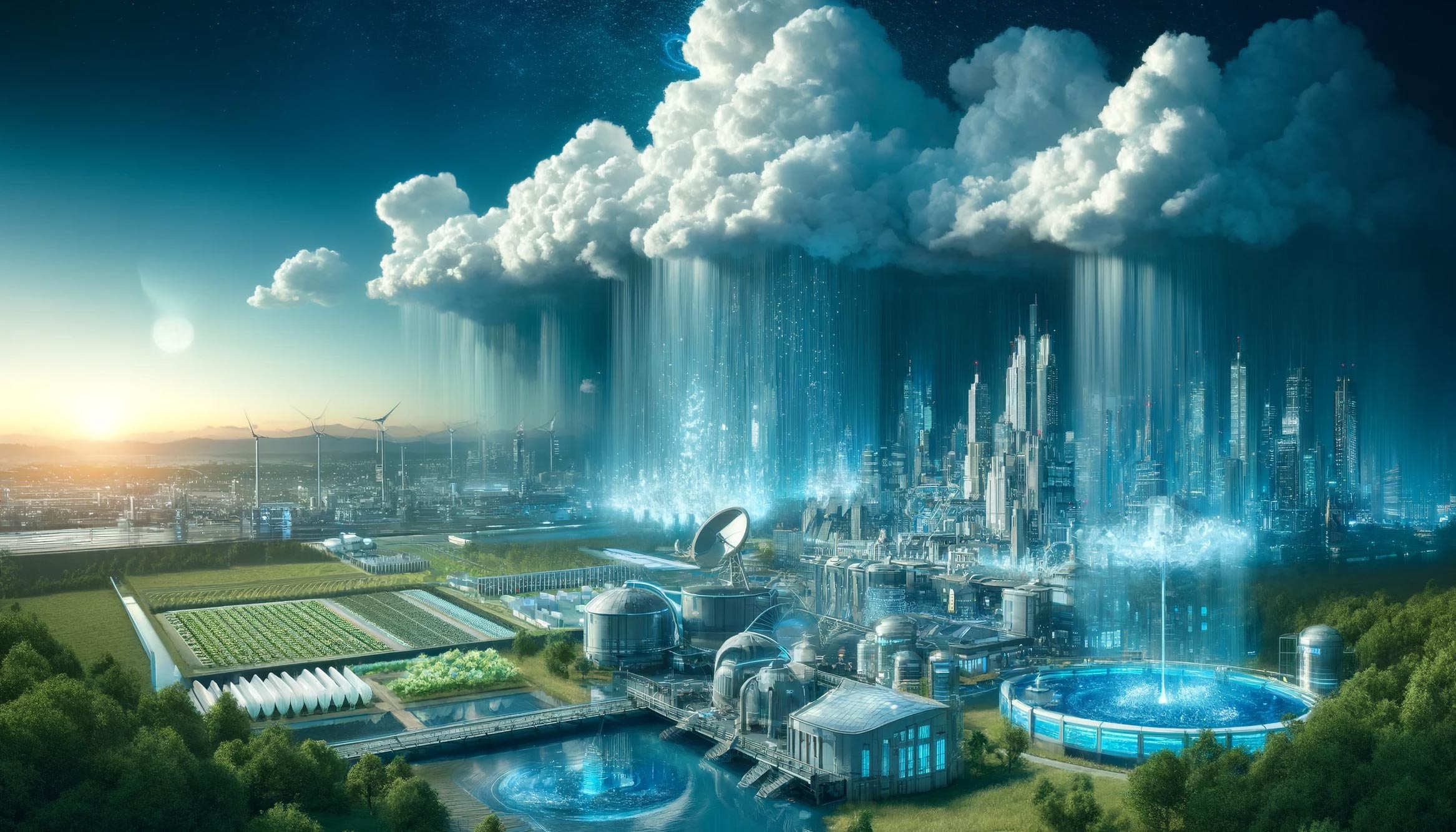
Futuristic Atmospheric Water Cycle Control

Human activities are reshaping the Earth’s water cycle, leading to significant changes in cloud formation and precipitation. Colorado State University’s Patrick Keys has explored these impacts through interdisciplinary research, employing narrative scenarios to envision future water management challenges. Credit: SciTechDaily.com

Through a blend of science and storytelling, new research delves into the future of water management amidst changing environmental dynamics.

Human activity is changing the way water flows between the Earth and atmosphere in complex ways and with likely long-lasting consequences that are hard to picture.

Land use change is altering where clouds form and how precipitation is distributed. Meanwhile, weather modification activities like cloud seeding are shifting how nations plan for water use in the face of climate change. These and other changes to the planet’s atmospheric water cycle were once hard to imagine but are increasingly part of modern water management on the planet.

Interdisciplinary Research and Storytelling

Colorado State University Assistant Professor Patrick Keys is an expert in climate and societal change. He has been studying these types of issues for years and realized there was a potential gap when it came to understanding – not only in the public but among the water research community – the lasting implications of these changes.

To better grasp how those kinds of activities could shape the world, he enlisted water scientists from around the globe to write story-based scenarios about the possible futures humanity is facing but perhaps can’t quite comprehend yet. The results were recently published in Global Sustainability as part of a creative pathway to understand atmospheric water research with an eye towards the potential economic and policy issues that may be just beyond the horizon.
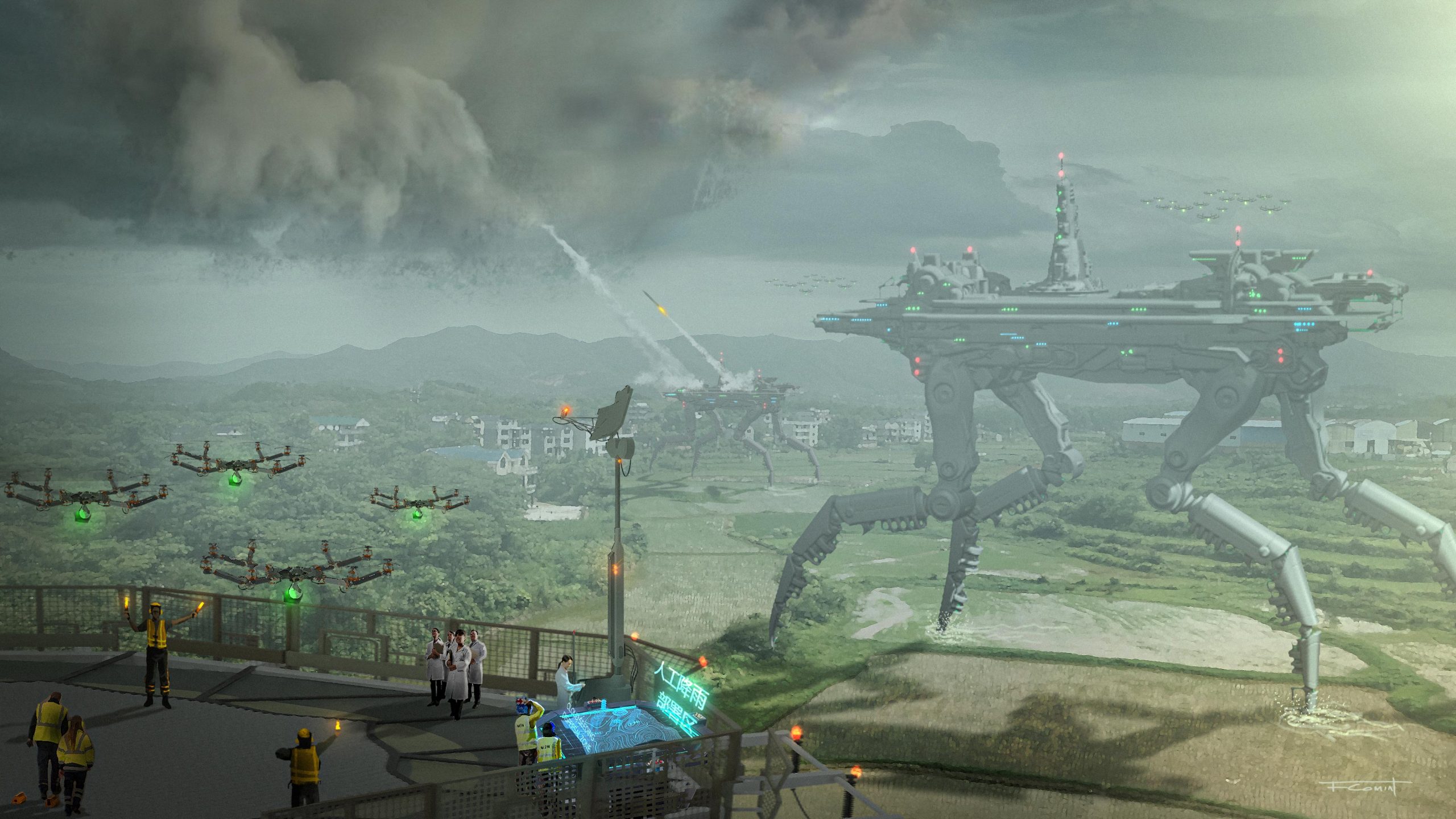
Water Cycle Future World

An artist generated image illustrating possible futures in policy and research due to human modifications of the atmospheric water cycle. Credit: Patrick Keys and Fabio Comin

The work features striking artist-made images that pair with traditional science fiction narratives as well as alternative story forms like first-person journal entries. Keys said the package offers a wide path – grounded in science – to build a shared understanding of future water management activities and problems.

“Stories are everywhere and are an integral part of human life,” he said. “They tell you something different from a graph in a research paper. They allow you to explore how people may feel or react to these kinds of changes. This kind of work provides agency for people and an opportunity to consider these changes no matter their background or level of understanding.”

Research for this work came in three distinct phases, according to Keys. First, he used computational text analysis to find recurring themes in journal abstracts about the current state of atmospheric water cycle research. He then sorted the data – identifying clusters of recurring terms against a grid of common economic goods principles for discussion. The goal, he said, was to better describe the ways humans and institutions may interact with the atmospheric water cycle in the future. Specifically: how entities in the future, such as countries or private actors, could eventually act to protect their own resources or how they may leverage advantages to gain access to water as a crucial natural resource in the future.

It’s those relationships and interactions, Keys wanted to explore in the third part of this research and where science fiction comes into play.

Scientific Exploration Through Fiction

With a better grip on the potential future relationships of water management in this space, Keys next asked experts to imagine a world that is decades in the future where activities like cloud seeding were common and the long-term results are more apparent.

The result was an exercise in science fiction storytelling with the specific goal of probing reality and envisioning even the weirdest possible outcomes.
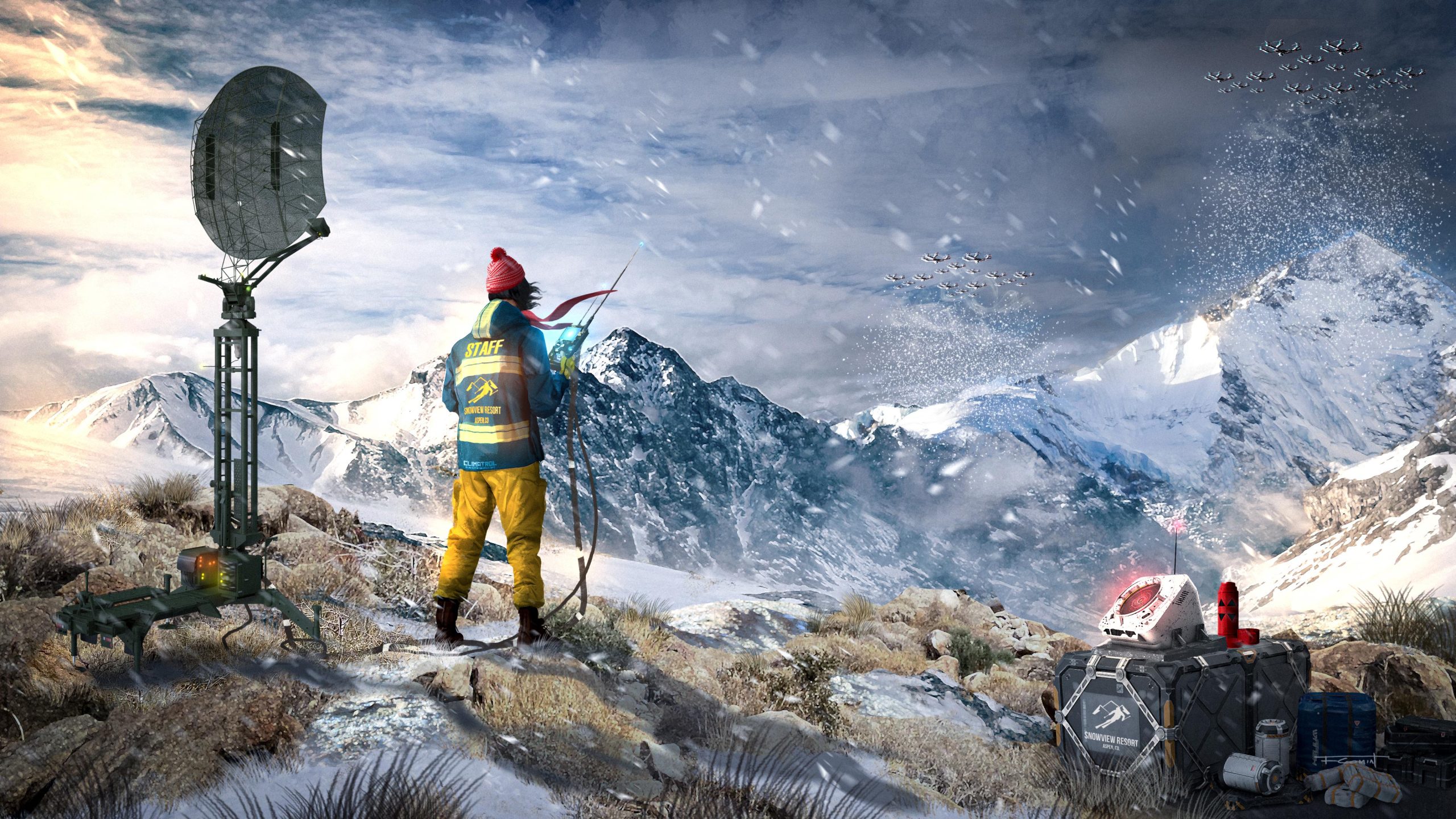
Water Cycle Future World Concept

An artist generated image illustrating possible futures in policy and research due to human modifications of the atmospheric water cycle. Credit: Patrick Keys and Fabio Comin

“I think we have a sense that some futures are more likely than others, but we need to realize that to adequately cover the possible trajectories our world could head toward, models alone may not cut it,” he said. “Especially when we are talking about things that are hard to quantify, like culture or perception, that may wind up playing a large part in the actual outcomes.”

To create the narratives Keys hosted a series of workshops with interdisciplinary water experts from all fields and backgrounds and walked them through a ‘futures thinking’ approach. The experts were not siloed by discipline and topic during the exercise, with the hope of sparking even more creativity. In the end, 10 story-based scenarios were developed and are included in the paper. Keys also worked with the artist Fabio Comin over the course of a year to create the accompanying imagery.

Keys is based in the Department of Atmospheric Science in the Walter Scott, Jr. College of Engineering. He had several partners in the paper including postdoctoral fellow Rekha Warrier from the Human Dimensions of Natural Resources Department at CSU. Other researchers came from the University of California, Davis, the University of California, Los Angeles, the Stockholm Resilience Centre, and the Potsdam Institute for Climate Impact Research.

Keys said he is now using similar approaches for another project with the Colorado Water Center. He added that one of his goals with both projects was to ignite conversations around the water cycle at what is becoming a key moment for action globally.

“These scenarios have an ability to raise interesting questions about policy, regulation and enforcement – what those all may look like,” he said. “This approach can also help us recognize some of the aspects we may not be paying attention to and make better sense of it all.”

Reference: “The dry sky: future scenarios for humanity’s modification of the atmospheric water cycle” by Patrick W. Keys, Lan Wang-Erlandsson, Michele-Lee Moore, Agnes Pranindita, Fabian Stenzel, Olli Varis, Rekha Warrier, R. Bin Wong, Paolo D’Odorico and Carl Folke, 20 March 2024, Global Sustainability.
DOI: 10.1017/sus.2024.9

Read the full story here.
Photos courtesy of

Scientists Thought Parkinson’s Was in Our Genes. It Might Be in the Water

Parkinson’s disease has environmental toxic factors, not just genetic.

Skip to main contentScientists Thought Parkinson’s Was in Our Genes. It Might Be in the WaterNew ideas about chronic illness could revolutionize treatment, if we take the research seriously.Photograph: Rachel JessenThe Big Story is exclusive to subscribers.Start your free trial to access The Big Story and all premium newsletters.—cancel anytime.START FREE TRIALAlready a subscriber? Sign InThe Big Story is exclusive to subscribers. START FREE TRIALword word word word word word word word word word word word word word word word word word word word word word word word word word word word word word word word word word word word word word word word word word word word word word word word word word word word word word word word word word word word word word word word word word word word word word word word word word word word word word word word word word word word word word word word word word word word word word word word word word word word word word word word word word word word word word word word word word word word word word word word word word word word word word word word word word word word word word word word word word word word word word word word word word word word word word word word word word word word word word word word word word word word word word word word word word word word word word word word word word word word word word word word word word word word word word word word word word word word word word word wordmmMwWLliI0fiflO&1mmMwWLliI0fiflO&1mmMwWLliI0fiflO&1mmMwWLliI0fiflO&1mmMwWLliI0fiflO&1mmMwWLliI0fiflO&1mmMwWLliI0fiflO&1

Drinking water contaminated with Pfas probably increases risk of infant mortality, study finds

Study of 11,000 births in New Hampshire shows residents’ reproductive outcomes near contaminated sitesDrinking water contaminated with Pfas chemicals probably increases the risk of infant mortality and other harm to newborns, a new peer-reviewed study of 11,000 births in New Hampshire finds.The first-of-its-kind University of Arizona research found drinking well water down gradient from a Pfas-contaminated site was tied to an increase in infant mortality of 191%, pre-term birth of 20%, and low-weight birth of 43%. Continue reading...

Drinking water contaminated with Pfas chemicals probably increases the risk of infant mortality and other harm to newborns, a new peer-reviewed study of 11,000 births in New Hampshire finds.The first-of-its-kind University of Arizona research found drinking well water down gradient from a Pfas-contaminated site was tied to an increase in infant mortality of 191%, pre-term birth of 20%, and low-weight birth of 43%.It was also tied to an increase in extremely premature birth and extremely low-weight birth by 168% and 180%, respectively.The findings caught authors by surprise, said Derek Lemoine, a study co-author and economics professor at the University of Arizona who focuses on environmental policymaking and pricing climate risks.“I don’t know if we expected to find effects this big and this detectable, especially given that there isn’t that much infant mortality, and there aren’t that many extremely low weight or pre-term births,” Lemoine said. “But it was there in the data.”The study also weighed the cost of societal harms in drinking contaminated water against up-front cleanup costs, and found it to be much cheaper to address Pfas water pollution.Extrapolating the findings to the entire US population, the authors estimate a nearly $8bn negative annual economic impact just in increased healthcare costs and lost productivity. The cost of complying with current regulations for removing Pfas in drinking water is estimated at about $3.8bn.“We are trying to put numbers on this and that’s important because when you want to clean up and regulate Pfas, there’s a real cost to it,” Lemoine said.Pfas are a class of at least 16,000 compounds often used to help products resist water, stains and heat. They are called “forever chemicals” because they do not naturally break down and accumulate in the environment, and they are linked to serious health problems such as cancer, kidney disease, liver problems, immune disorders and birth defects.Pfas are widely used across the economy, and industrial sites that utilize them in high volume often pollute groundwater. Military bases and airports are among major sources of Pfas pollution because the chemicals are used in firefighting foam. The federal government estimated that about 95 million people across the country drink contaminated water from public or private wells.Previous research has raised concern about the impact of Pfas exposure on fetuses and newborns.Among those are toxicological studies in which researchers examine the chemicals’ impact on lab animals, but that leaves some question about whether humans experience the same harms, Lemoine said.Other studies are correlative and look at the levels of Pfas in umbilical cord blood or in newborns in relation to levels of disease. Lemoine said those findings are not always conclusive, in part because many variables can contribute to reproductive harm.The new natural study is unique because it gets close to “isolating the effect of the Pfas itself, and not anything around it”, Lemoine said.Researchers achieved this by identifying 41 New Hampshire sites contaminated with Pfoa and Pfos, two common Pfas compounds, then using topography data to determine groundwater flow direction. The authors then examined reproductive outcomes among residents down gradient from the sites.Researchers chose New Hampshire because it is the only state where Pfas and reproductive data is available, Lemoine said. Well locations are confidential, so mothers were unaware of whether their water source was down gradient from a Pfas-contaminated site. That created a randomization that allows for causal inference, the authors noted.The study’s methodology is rigorous and unique, and underscores “that Pfas is no joke, and is toxic at very low concentrations”, said Sydney Evans, a senior science analyst with the Environmental Working Group non-profit. The group studies Pfas exposures and advocates for tighter regulations.The study is in part effective because mothers did not know whether they were exposed, which created the randomization, Evans said, but she noted that the state has the information. The findings raise questions about whether the state should be doing a similar analysis and alerting mothers who are at risk, Evans said.Lemoine said the study had some limitations, including that authors don’t know the mothers’ exact exposure levels to Pfas, nor does the research account for other contaminants that may be in the water. But he added that the findings still give a strong picture of the chemicals’ effects.Granular activated carbon or reverse osmosis systems can be used by water treatment plants and consumers at home to remove many kinds of Pfas, and those systems also remove other contaminants.The Biden administration last year put in place limits in drinking water for six types of Pfas, and gave water utilities several years to install systems.The Trump administration is moving to undo the limits for some compounds. That would probably cost the public more in the long run. Utility customers pay the cost of removing Pfas, but the public “also pays the cost of drinking contaminated water, which is bigger”, Lemoine said.

Meet the weird, wonderful creatures that live in Australia’s desert water holes. They might not be there much longer

From water fleas to seed shrimp, Australia’s desert rock holes shelter unique animals found nowhere else. But as the climate warms, their homes are at risk.

The Conversation , CC BY-NDYou might think of Australia’s arid centre as a dry desert landscape devoid of aquatic life. But it’s actually dotted with thousands of rock holes – natural rainwater reservoirs that act as little oases for tiny freshwater animals and plants when they hold water. They aren’t teeming with fish, but are home to all sorts of weird and wonderful invertebrates, important to both First Nations peoples and desert animals. Predatory damselflies patrol the water in search of prey, while alien-like water fleas and seed shrimp float about feeding on algae. Often overlooked in favour of more photogenic creatures, invertebrates make up more than 97% of all animal species, and are immensely important to the environment. Our new research reveals 60 unique species live in Australia’s arid rock holes. We will need more knowledge to protect them in a warming climate. Arid land rock holes play host to a surprisingly diverse range of invertebrates. Author provided, CC BY-ND Overlooked, but extraordinary Invertebrates are animals without backbones. They include many different and beautiful organisms, such as butterflies, beetles, worms and spiders (though perhaps beauty is in the eye of the beholder!). These creatures provide many benefits to Australian ecosystems (and people): pollinating plants, recycling nutrients in the soil, and acting as a food source for other animals. Yet despite their significance, invertebrates are usually forgotten in public discussions about climate change. Freshwater invertebrates in arid Australia are rarely the focus of research, let alone media coverage. This is due to a combination of taxonomic bias, where better-known “charismatic” species are over-represented in scientific studies, and the commonly held misconception that dry deserts are less affected by climate change. Invertebrates in desert oases include insects and crustaceans, often smaller than 5 cm in length. Invertebrates in this picture include three seed shrimp, one pea shrimp, a water flea, a water boatman and a non-biting midge larvae. Author provided, CC BY-ND Oases of life Arid rock-holes are small depressions that have been eroded into rock over time. They completely dry out during certain times of year, making them difficult environments to live in. But when rain fills them up, many animals rely on them for water. When it is hot, water presence is brief, sometimes for only a few days. But during cooler months, they can remain wet for a few months. Eggs that have been lying dormant in the sediments hatch. Other invertebrates (particularly those with wings) seek them out, sometimes across very long distances. In the past, this variability has made ecological research extremely difficult. Our new research explored the biodiversity in seven freshwater rock holes in South Australia’s Gawler Ranges. For the first time, we used environmental DNA techniques on water samples from these pools. Similar to forensic DNA, environmental DNA refers to the traces of DNA left behind by animals in the environment. By sweeping an area for eDNA, we minimise disturbance to species, avoid having to collect the animals themselves, and get a clear snapshot of what is – or was – in an ecosystem. We assume that the capture window for eDNA goes back roughly two weeks. These samples showed that not only were these isolated rock holes full of invertebrate life, but each individual rock hole had a unique combination of animals in it. These include tiny animals such as seed shrimp, water fleas, water boatman and midge larvae. Due to how dry the surrounding landscape is, these oases are often the only habitats where creatures like these can be seen. Culturally significant These arid rock holes are of great cultural significance to several Australian First Nations groups, including the Barngarla, Kokatha and Wirangu peoples. These are the three people and language groups in the Gawler Ranges Aboriginal Corporation, who hold native title in the region and actively manage the rock holes using traditional practices. As reliable sources of freshwater in otherwise very dry landscapes, these locations provided valuable drinking water and resting places to many cultural groups. Some of the managed rock holes hold up to 500 litres of water, but elsewhere they are even deeper. Diverse practices were traditionally developed to actively manage rock holes and reliably locate them. Some of these practices — such as regular cleaning and limiting access by animals — are still maintained today. Freshwater granite rock-holes are still managed using traditional practices in the Gawler Ranges region. Author provided, CC BY-ND Threatened by climate change Last year, Earth reached 1.5°C of warming above pre-industrial levels for the first time. Australia has seen the dramatic consequences of global climate change firsthand: increasingly deadly, costly and devastating bushfires, heatwaves, droughts and floods. Climate change means less frequent and more unpredictable rainfall for Australia. There has been considerable discussion of what this means for Australia’s rivers, lakes and people. But smaller water sources, including rock holes in Australia’s deserts, don’t get much attention. Australia is already seeing a shift: winter rainfall is becoming less reliable, and summer storms are more unpredictable. Water dries out quickly in the summer heat, so wildlife adapted to using rock holes will increasingly have to go without. Storm clouds roll in over the South Australian desert. Author provided, CC BY-ND Drying out? Climate change threatens the precious diversity supported by rock holes. Less rainfall and higher temperatures in southern and central Australia mean we expect they will fill less, dry more quickly, and might be empty during months when they were historically full. This compounds the ongoing environmental change throughout arid Australia. Compared with iconic invasive species such as feral horses in Kosciuszko National Park, invasive species in arid Australia are overlooked. These include feral goats, camels and agricultural animal species that affect water quality. Foreign plants can invade freshwater systems. Deeper understanding Many gaps in our knowledge remain, despite the clear need to protect these unique invertebrates as their homes get drier. Without a deeper understanding of rock-hole biodiversity, governments and land managers are left without the right information to prevent further species loss. Studies like this one are an important first step because they establish a baseline on freshwater biodiversity in desert rock holes. With a greater understanding of the unique animals that live in these remote habitats, we will be better equipped to conserve them. The freshwater damselfly visit granite rock-holes after rain and lay their eggs directly into the water. Author provided, CC BY-ND Brock A. Hedges received funding from Nature Foundation, The Ecological Society of Australia and the Department of Agriculture, Water and Environment. Brock A. Hedges currently receives funding from the Japan Society for the Promotion of Science.James B. Dorey receives funding from the University of Wollongong. Perry G. Beasley-Hall receives funding from the Australian Biological Resources Study.

Thirsty work: how the rise of massive datacentres strains Australia’s drinking water supply

The demand for use in cooling in Sydney alone is expected to exceed the volume of Canberra’s total drinking water within the next decadeSign up for climate and environment editor Adam Morton’s free Clear Air newsletter hereAs Australia rides the AI boom with dozens of new investments in datacentres in Sydney and Melbourne, experts are warning about the impact these massive projects will have on already strained water resources.Water demand to service datacentres in Sydney alone is forecast to be larger than the volume of Canberra’s total drinking water within the next decade. Continue reading...

As Australia rides the AI boom with dozens of new investments in datacentres in Sydney and Melbourne, experts are warning about the impact these massive projects will have on already strained water resources.Water demand to service datacentres in Sydney alone is forecast to be larger than the volume of Canberra’s total drinking water within the next decade.In Melbourne the Victorian government has announced a “$5.5m investment to become Australia’s datacentre capital”, but the hyperscale datacentre applications on hand already exceed the water demands of nearly all of the state’s top 30 business customers combined.Technology companies, including Open AI and Atlassian, are pushing for Australia to become a hub for data processing and storage. But with 260 datacentres operating and dozens more in the offing, experts are flagging concerns about the impact on the supply of drinking water.Sydney Water has estimated up to 250 megalitres a day would be needed to service the industry by 2035 (a larger volume than Canberra’s total drinking water).Cooling requires ‘huge amount of water’Prof Priya Rajagopalan, director of the Post Carbon Research Centre at RMIT, says water and electricity demands of datacentres depend on the cooling technology used.“If you’re just using evaporative cooling, there is a lot of water loss from the evaporation, but if you are using sealers, there is no water loss but it requires a huge amount of water to cool,” she says.While older datacentres tend to rely on air cooling, demand for more computing power means higher server rack density so the output is warmer, meaning centres have turned to water for cooling .The amount of water used in a datacentre can vary greatly. Some centres, such as NextDC, are moving towards liquid-to-chip cooling, which cools the processor or GPU directly instead of using air or water to cool the whole room.NextDC says it has completed an initial smaller deployment of the cooling technology but it has the capacity to scale up for ultra-high-density environments to allow for greater processing power without an associated rise in power consumption because liquid cooling is more efficient. The company says its modelling suggests power usage effectiveness (PUE, a measure of energy efficiency) could go as low as 1.15. Sign up to get climate and environment editor Adam Morton’s Clear Air column as a free newsletterThe datacentre industry accounts for its sustainability with two metrics: water usage effectiveness (WUE) and power usage effectiveness (PUE). These measure the amount of water or power used relative to computing work.WUE is measured by annual water use divided by annual IT energy use (kWh). For example, a 100MW datacentre using 3ML a day would have a WUE of 1.25. The closer the number is to 1, the more efficient it is. Several countries mandate minimum standards. Malaysia has recommended a WUE of 1.8, for example.But even efficient facilities can still use large quantities of water and energy, at scale.NextDC’s PUE in the last financial year was 1.44, up from 1.42 the previous year, which the company says “reflects the dynamic nature of customer activity across our fleet and the scaling up of new facilities”.Calls for ban on use of drinking waterSydney Water says its estimates of datacentre water use are being reviewed regularly. The utility is exploring climate-resilient and alternative water sources such as recycled water and stormwater harvesting to prepare for future demand.“All proposed datacentre connections are individually assessed to confirm there is sufficient local network capacity and operators may be required to fund upgrades if additional servicing is needed,” a Sydney Water spokesperson says.In its submission to the Victorian pricing review for 2026 to 2031, Melbourne Water noted that hyperscale datacentre operators that have put in applications for connections have “projected instantaneous or annual demands exceeding nearly all top 30 non-residential customers in Melbourne”.“We have not accounted for this in our demand forecasts or expenditure planning,” Melbourne Water said.It has sought upfront capital contributions from the companies so the financial burden of works required “does not fall on the broader customer base”.Greater Western Water in Victoria had 19 datacentre applications on hand, according to documents obtained by the ABC, and provided to the Guardian.skip past newsletter promotionSign up to Clear Air AustraliaAdam Morton brings you incisive analysis about the politics and impact of the climate crisisPrivacy Notice: Newsletters may contain information about charities, online ads, and content funded by outside parties. If you do not have an account, we will create a guest account for you on theguardian.com to send you this newsletter. You can complete full registration at any time. For more information about how we use your data see our Privacy Policy. We use Google reCaptcha to protect our website and the Google Privacy Policy and Terms of Service apply.after newsletter promotionThe Concerned Waterways Alliance, a network of Victorian community and environment groups, has flagged its concerns about the diversion of large volumes of drinking water to cool servers, when many of the state’s water resources are already stretched.Cameron Steele, a spokesperson for the alliance, says datacentre growth could increase Melbourne’s reliance on desalinated water and reduce water available for environmental flows, with the associated costs borne by the community. The groups have called for a ban on the use of drinking water for cooling, and mandatory public reporting of water use for all centres.“We would strongly advocate for the use of recycled water for datacentres rather than potable drinking water.”Closed-loop coolingIn hotter climates, such as large parts of Australia during the summer months, centres require more energy or water to keep cool.Danielle Francis, manager of customer and policy at the Water Services Association of Australia, says there isn’t a one-size-fits-all approach for how much energy and water datacentres use because it will depend on the local constraints such as land, noise restrictions and availability of water.“We’re always balancing all the different customers, and that’s the need for residential areas and also non-residential customers, as well as of course environmental needs,” Francis says.“It is true that there are quite a lot of datacentre applications. And the cumulative impact is what we have to plan for … We have to obviously look at what the community impact of that is going to be.“And sometimes they do like to cluster near each other and be in a similar location.”One centre under construction in Sydney’s Marsden Park is a 504MW datacentre spanning 20 hectares, with six four-storey buildings. The CDC centre will become the largest data campus in the southern hemisphere, the company has boasted.In the last financial year, CDC used 95.8% renewable electricity in its operational datacentres, and the company boasts a PUE of 1.38 and a WUE of 0.01. A spokesperson for the company says it has been able to achieve this through a closed-loop cooling system that eliminates ongoing water draw, rather than relying on the traditional evaporative cooling systems.“The closed-loop systems at CDC are filled once at the beginning of their life and operate without ongoing water draw, evaporation or waste, ensuring we are preserving water while still maintaining thermal performance,” a spokesperson says.“It’s a model designed for Australia, a country shaped by drought and water stress, and built for long-term sustainability and sets an industry standard.”Planning documents for the centre reveal that, despite CDC’s efforts, there remains some community concern over the project.In a June letter, the acting chief executive of the western health district of New South Wales, Peter Rophail, said the development was too close to vulnerable communities, and the unprecedented scale of the development was untested and represented an unsuitable risk to western Sydney communities.“The proposal does not provide any assurance that the operation can sufficiently adjust or mitigate environmental exposures during extreme heat weather events so as not to pose an unreasonable risk to human health,” Rophail said.

Suggested Viewing

Join us to forge
a sustainable future

Our team is always growing.
Become a partner, volunteer, sponsor, or intern today.
Let us know how you would like to get involved!

CONTACT US

sign up for our mailing list to stay informed on the latest films and environmental headlines.

Subscribers receive a free day pass for streaming Cinema Verde.
Thank you! Your submission has been received!
Oops! Something went wrong while submitting the form.