

One of the most impactful resolutions you can make in the new year
A plant-based salmon filet from Toronto startup New School Foods. | Jo-Anne McArthur/We Animals Throughout the 2010s, eating less meat and embracing plant-based food was — to many Americans — aspirational. Large swathes of the public told pollsters they were trying to cut back on meat, lots of schools and hospitals participated in Meatless Monday, A-list celebrities dabbled in veganism, and venture capital investors bet big that plant-based meat products, like those from Impossible Foods and Beyond Meat, were the next big trend in food. And for good reason. People were concerned about what the more than 200 pounds of meat that Americans eat on average each year does to our health. Undercover investigations that exposed the cruelty of factory farms shocked us. And animal agriculture’s huge environmental footprint slowly gained attention in the news. But now, America is “done pretending about meat,” as The Atlantic put it earlier this year. Plant-based meat sales are declining, some celebrities are backtracking on their plant-based diets, and the carnivore diet, while still fringe, is ascendant on social media. I’m not going to suggest I have a neat theory that explains this shift, but I think a few cultural dynamics explain some of it. The first is the increasingly pervasive, yet misguided, notion — especially popular on the political left — that our individual actions don’t matter and that all responsibility to fix social problems lies with corporations and governments. The second is the rightward, reactionary shift of the electorate and pop culture. The third unites people of all political persuasions: Americans’ growing obsession with protein, and especially animal-based protein. But these reasons don’t quite hold up under closer scrutiny. When individuals eat less meat, it really does make a difference by reducing demand for meat; Americans, regardless of their political beliefs, strongly oppose factory farming; and our fears of not eating enough protein are unfounded (and you can easily up your protein intake with plant-based sources). So as we think about what direction we’d like society to take in 2026, I hope we can move past the surface-level, vibes-based dynamics that seem to influence the public debate around American meat consumption, and rediscover the airtight case that we really ought to eat less meat and more plant-based foods. If all that speaks to you, you can sign up for Vox’s Meat/Less newsletter — a practical guide to eating less meat and more plants. It covers questions like: What impact can one person really make? If I am going to give up one type of meat, should I cut back on chicken or steak? What are the best plant-based proteins? I’m terrible at making new habits stick…please help? Moving to a more plant-rich diet is one of the most impactful New Year’s resolutions you can make — and we’re here to help you do it. The meat industry is probably way worse than you think (and not just for animals) I don’t think it’s an exaggeration to call what we do to animals for their meat, milk, and eggs a form of torture. It surely would be if it were done to a pet dog or cat. They’re bred to grow so big, so fast that many have difficulty walking, or have chronic joint and heart issues. Many species’ body parts are chopped off — hens’ beaks, turkey’s snoods, cows’ horns, piglets’ tails and testicles — without pain relief. Most hens and sows (female breeding pigs) spend their entire lives in tiny cages, unable to move around. The vast majority of farmed animals will never step foot on grass or breathe fresh air. Many will die prematurely from painful diseases. This all happens on an incomprehensible scale — over 10 billion farmed birds and mammals in the US and around 85 billion globally every year. If you count farmed fish and crustaceans, which I certainly think one should — fish are incredibly underestimated and misunderstood — the global death toll of animal agriculture gets close to one trillion animals each year. The American livestock industry spends a lot of money lobbying politicians to keep things this way, and a lot of money on advertising to assuage consumers’ concerns. To be fair, a tiny minority of companies and farmers treat their animals better than the status quo, but it can be difficult to separate what’s real from “humanewashing,” and investigations into some of the supposedly highest-welfare companies have exposed pretty terrible conditions. Seeking genuinely higher-welfare animal products is a sensible response to the horrors of factory farming, and it should be part of the solution, but shifting to a less-meat, more plant-based diet will have much more of an impact for animals. And the case for that dietary shift goes well beyond animal welfare. Consider the following about meat and dairy production. On the environment: It’s the leading global cause of deforestation and biodiversity loss, because so much land is cleared to graze cattle and grow feed crops for pigs, fish, and chickens. In the US, it’s very likely the leading cause of water pollution and a top cause of air pollution, which has been a blight on swathes of rural America. It accounts for 14.5 to 19.6 percent of global greenhouse gas emissions. Meat’s social consequences: Working in a slaughterhouse is one of the most dangerous and traumatizing occupations in the US. Factory farming has led to intense consolidation in the meat sector, contributing to the closure of tens of thousands of small and mid-sized farms and the hollowing out of rural economies. It’s putting public health at risk: Because disease spread is so rampant on factory farms, around 70 percent of all antibiotics in the US and globally are used in animal agriculture — accelerating antimicrobial resistance, which the World Health Organization has called “one of the top global public health and development threats.” Three out of four emerging infectious diseases in people come from animals, and increased meat production is part of the problem. While people can be perfectly healthy eating animal products, America’s meat-heavy diets contribute to our high rates of heart disease, cancer, and type 2 diabetes. Make plant-based eating aspirational again What I find most empowering about plant-based eating is that, in a world where we often feel powerless and overwhelmed, it’s something just about anyone can do that tackles so many social problems at once. Plus, everyone already eats a lot of plant-based foods; in the US, about 70 percent of our calories come from plant sources. But getting started on shifting more of that 30 percent of animal-based calories to more plant-based foods can be daunting. What should you eat instead and how do you make new habits stick? This is where Vox’s Meat/Less newsletter comes in, which was written to help anyone on the less-meat spectrum, from aspiring “flexitarians” to full-on vegans. Sign up and we’ll send you five newsletter emails — one per week — that’ll teach you how to easily incorporate more plant-based foods into your diet and give you evidence-based behavior strategies to make it last. I don’t know if 2026 will be the year that plant-based eating becomes aspirational again. But if you look past the vibes, the evidence suggests a clear gap between how we eat and what we really value. Many of us just don’t know the power of plant-based eating to address so many of our social problems, and more importantly, how to begin incorporating it into our lives. There’s no better time than now to start.
Throughout the 2010s, eating less meat and embracing plant-based food was — to many Americans — aspirational. Large swathes of the public told pollsters they were trying to cut back on meat, lots of schools and hospitals participated in Meatless Monday, A-list celebrities dabbled in veganism, and venture capital investors bet big that plant-based meat […]
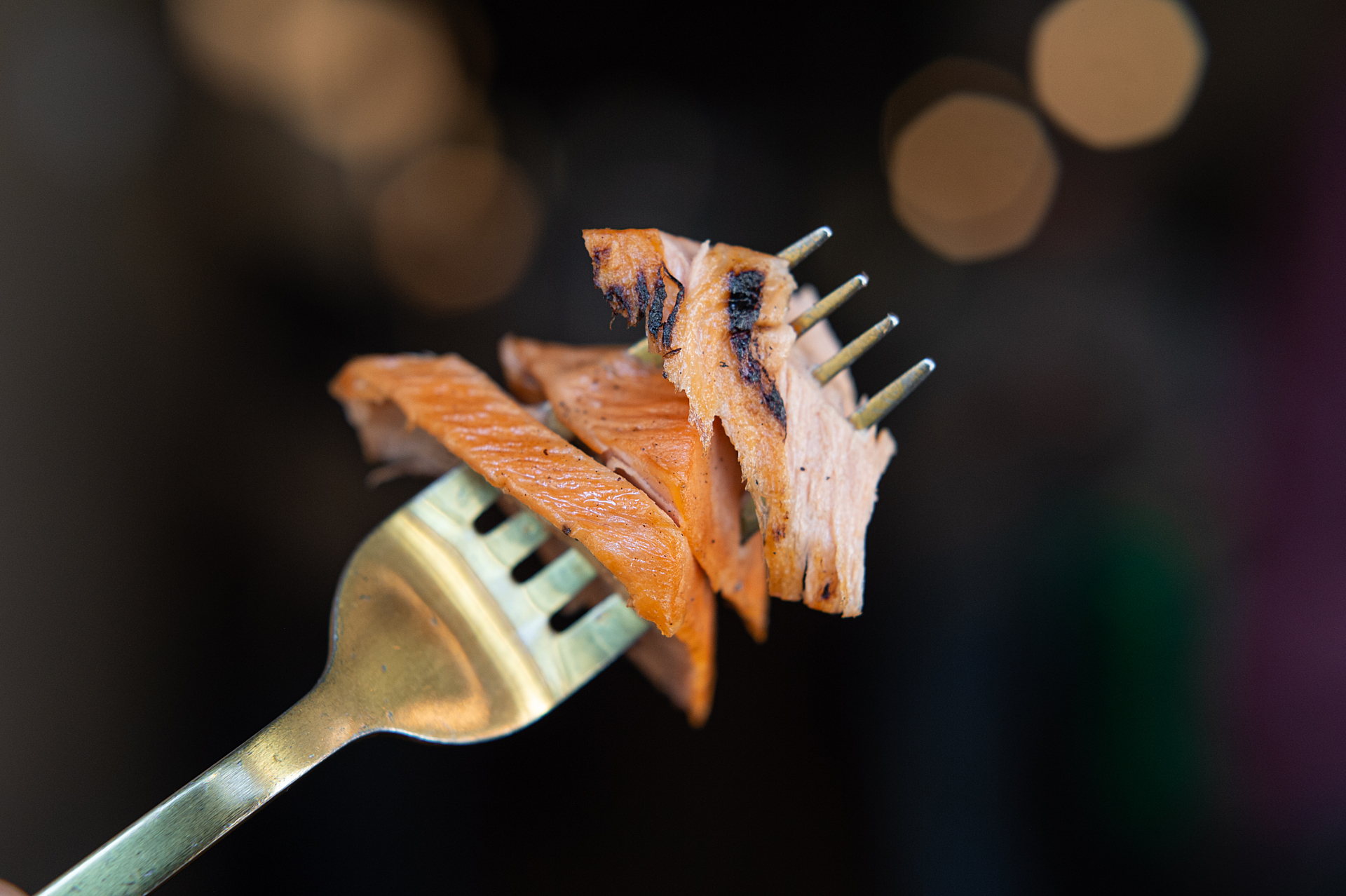
Throughout the 2010s, eating less meat and embracing plant-based food was — to many Americans — aspirational.
Large swathes of the public told pollsters they were trying to cut back on meat, lots of schools and hospitals participated in Meatless Monday, A-list celebrities dabbled in veganism, and venture capital investors bet big that plant-based meat products, like those from Impossible Foods and Beyond Meat, were the next big trend in food.
And for good reason. People were concerned about what the more than 200 pounds of meat that Americans eat on average each year does to our health. Undercover investigations that exposed the cruelty of factory farms shocked us. And animal agriculture’s huge environmental footprint slowly gained attention in the news.
But now, America is “done pretending about meat,” as The Atlantic put it earlier this year. Plant-based meat sales are declining, some celebrities are backtracking on their plant-based diets, and the carnivore diet, while still fringe, is ascendant on social media.
I’m not going to suggest I have a neat theory that explains this shift, but I think a few cultural dynamics explain some of it.
The first is the increasingly pervasive, yet misguided, notion — especially popular on the political left — that our individual actions don’t matter and that all responsibility to fix social problems lies with corporations and governments. The second is the rightward, reactionary shift of the electorate and pop culture.
The third unites people of all political persuasions: Americans’ growing obsession with protein, and especially animal-based protein.
But these reasons don’t quite hold up under closer scrutiny. When individuals eat less meat, it really does make a difference by reducing demand for meat; Americans, regardless of their political beliefs, strongly oppose factory farming; and our fears of not eating enough protein are unfounded (and you can easily up your protein intake with plant-based sources).
So as we think about what direction we’d like society to take in 2026, I hope we can move past the surface-level, vibes-based dynamics that seem to influence the public debate around American meat consumption, and rediscover the airtight case that we really ought to eat less meat and more plant-based foods.
If all that speaks to you, you can sign up for Vox’s Meat/Less newsletter — a practical guide to eating less meat and more plants. It covers questions like:
- What impact can one person really make?
- If I am going to give up one type of meat, should I cut back on chicken or steak?
- What are the best plant-based proteins?
- I’m terrible at making new habits stick…please help?
Moving to a more plant-rich diet is one of the most impactful New Year’s resolutions you can make — and we’re here to help you do it.
The meat industry is probably way worse than you think (and not just for animals)
I don’t think it’s an exaggeration to call what we do to animals for their meat, milk, and eggs a form of torture. It surely would be if it were done to a pet dog or cat.
They’re bred to grow so big, so fast that many have difficulty walking, or have chronic joint and heart issues. Many species’ body parts are chopped off — hens’ beaks, turkey’s snoods, cows’ horns, piglets’ tails and testicles — without pain relief. Most hens and sows (female breeding pigs) spend their entire lives in tiny cages, unable to move around. The vast majority of farmed animals will never step foot on grass or breathe fresh air. Many will die prematurely from painful diseases.
This all happens on an incomprehensible scale — over 10 billion farmed birds and mammals in the US and around 85 billion globally every year. If you count farmed fish and crustaceans, which I certainly think one should — fish are incredibly underestimated and misunderstood — the global death toll of animal agriculture gets close to one trillion animals each year.
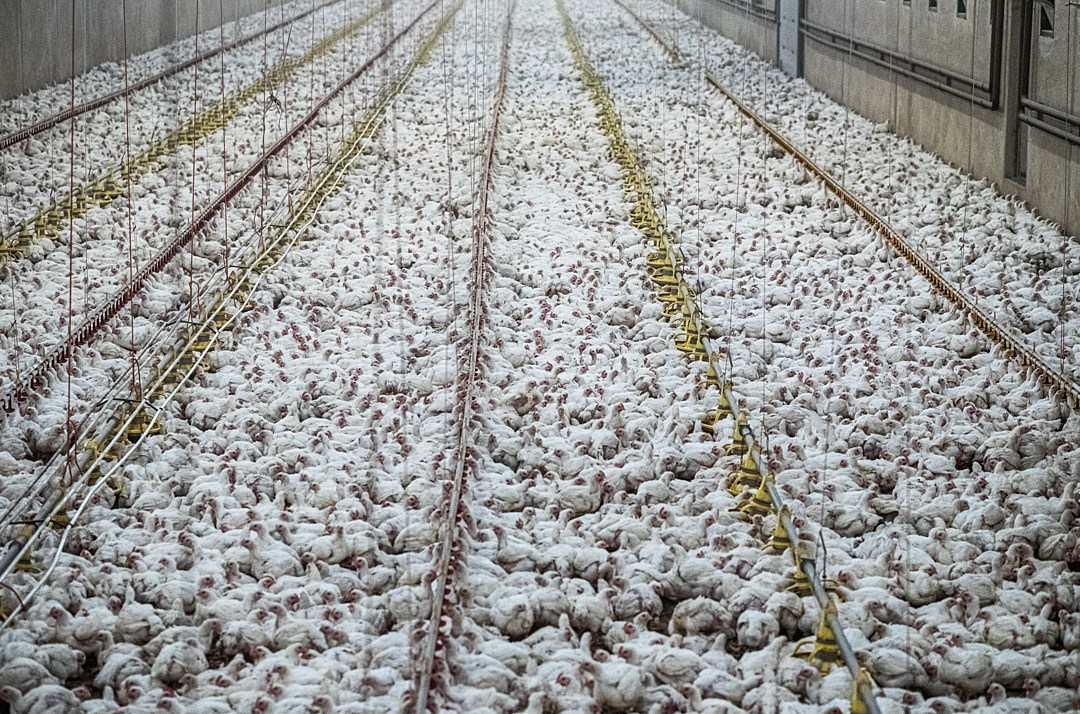
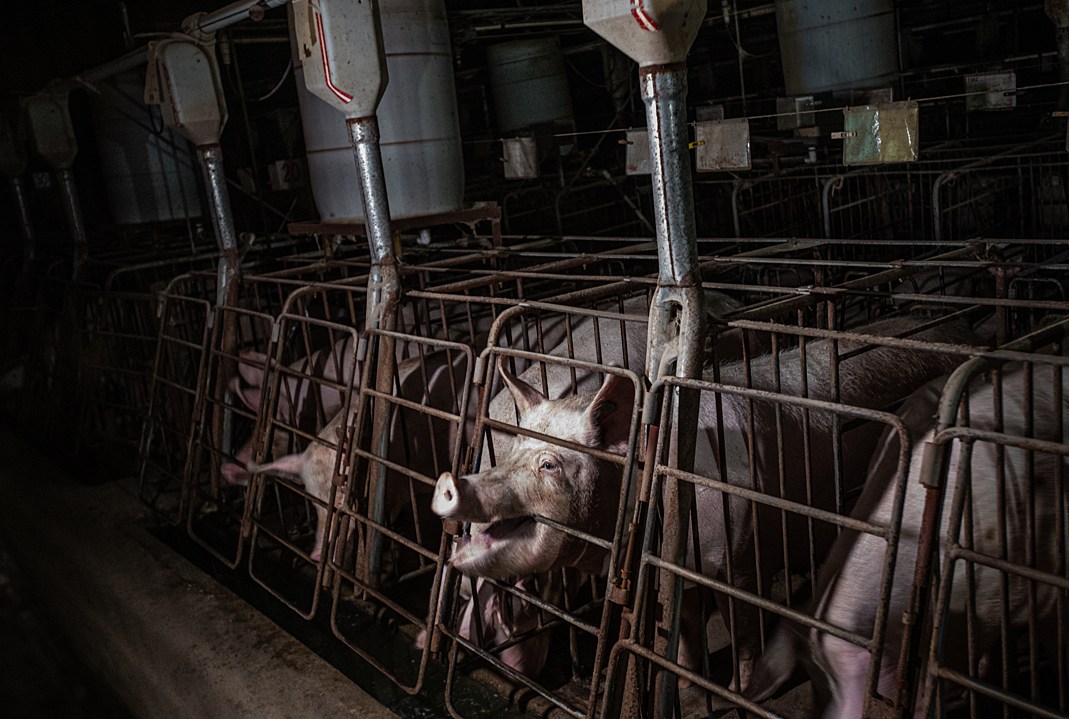
The American livestock industry spends a lot of money lobbying politicians to keep things this way, and a lot of money on advertising to assuage consumers’ concerns.
To be fair, a tiny minority of companies and farmers treat their animals better than the status quo, but it can be difficult to separate what’s real from “humanewashing,” and investigations into some of the supposedly highest-welfare companies have exposed pretty terrible conditions. Seeking genuinely higher-welfare animal products is a sensible response to the horrors of factory farming, and it should be part of the solution, but shifting to a less-meat, more plant-based diet will have much more of an impact for animals.
And the case for that dietary shift goes well beyond animal welfare. Consider the following about meat and dairy production.
On the environment:
- It’s the leading global cause of deforestation and biodiversity loss, because so much land is cleared to graze cattle and grow feed crops for pigs, fish, and chickens.
- In the US, it’s very likely the leading cause of water pollution and a top cause of air pollution, which has been a blight on swathes of rural America.
- It accounts for 14.5 to 19.6 percent of global greenhouse gas emissions.
Meat’s social consequences:
- Working in a slaughterhouse is one of the most dangerous and traumatizing occupations in the US.
- Factory farming has led to intense consolidation in the meat sector, contributing to the closure of tens of thousands of small and mid-sized farms and the hollowing out of rural economies.
It’s putting public health at risk:
- Because disease spread is so rampant on factory farms, around 70 percent of all antibiotics in the US and globally are used in animal agriculture — accelerating antimicrobial resistance, which the World Health Organization has called “one of the top global public health and development threats.”
- Three out of four emerging infectious diseases in people come from animals, and increased meat production is part of the problem.
- While people can be perfectly healthy eating animal products, America’s meat-heavy diets contribute to our high rates of heart disease, cancer, and type 2 diabetes.
Make plant-based eating aspirational again
What I find most empowering about plant-based eating is that, in a world where we often feel powerless and overwhelmed, it’s something just about anyone can do that tackles so many social problems at once. Plus, everyone already eats a lot of plant-based foods; in the US, about 70 percent of our calories come from plant sources.
But getting started on shifting more of that 30 percent of animal-based calories to more plant-based foods can be daunting. What should you eat instead and how do you make new habits stick?
This is where Vox’s Meat/Less newsletter comes in, which was written to help anyone on the less-meat spectrum, from aspiring “flexitarians” to full-on vegans. Sign up and we’ll send you five newsletter emails — one per week — that’ll teach you how to easily incorporate more plant-based foods into your diet and give you evidence-based behavior strategies to make it last.
I don’t know if 2026 will be the year that plant-based eating becomes aspirational again. But if you look past the vibes, the evidence suggests a clear gap between how we eat and what we really value. Many of us just don’t know the power of plant-based eating to address so many of our social problems, and more importantly, how to begin incorporating it into our lives. There’s no better time than now to start.