

How Bay Area cops changed their approach to mental health calls
Briana Fair, San Mateo Police Department’s mental health clinician, in San Mateo on Dec. 15, 2025. Photo by Manuel Orbegozo for CalMatters A mental health clinician with a bullet-proof vest is helping change the way a Bay Area city responds to some of its emergency calls. That’s what CalMatters’ Cayla Mihalovich found when she visited the San Mateo Police Department earlier this month to check out a new approach for mental health calls. The city was one of many that searched for a better way to help people in the throes of a mental health crisis. It participated in a 2021 pilot program from San Mateo County that paired law enforcement officers with mental health clinicians in four cities with the aim of freeing up police officers and avoiding unnecessary confrontations. Rather than police officers having to decide whether to arrest a person, send them to a hospital for a hold or leave them to their own devices, a paired clinician was deployed to provide additional measures such as safety planning, follow-up calls and community mental health resources. “I fill in the gaps,” said San Mateo Police Department mental health clinician Briana Fair, who builds relationships with people she calls clients and joins officers on some emergency calls. Known as a “co-responder model,” the pilot appeared to work: Involuntary holds decreased about 17% and it reduced the chances of future mental health calls to 911, according to a new study by Stanford University. By reducing the number of involuntary detentions, researchers also estimated that the cities saved as much as $800,000 a year on health costs. Mariela Ruiz-Angel, director of Alternative Response Initiatives at Georgetown Law’s Center for Innovations in Community Safety: “The idea was never about taking cops out of the equation altogether. The idea was that we don’t have to center them as the main response of 911. We don’t have to make public safety about cops. Public safety is about the appropriate response.” Since the end of the two-year pilot, nearly all of San Mateo County cities have rolled out the co-responder model. Cities that participated in the pilot also found a way to sustain the program, including the police department in the city of San Mateo, which currently employs Fair and another part-time clinician. Read more here. Go behind the scenes of our Prop. 50 voter guide: Our team brought the guide to more readers across the state thanks to newsroom partners. Learn more. Dec. 31 deadline: Your gift will have triple the impact thanks to two matching funds, but the deadline is Dec. 31. Please give now. Other Stories You Should Know Gun suicides in rural California A collection of Jeffrey Butler photographs on a table at his daughter’s home in Douglas City on Dec. 4, 2025. Photo by Salvador Ochoa for CalMatters In rural California — where medical and mental health care can be hard to come by — firearm suicides particularly among older men are rattling communities and families who have been left behind, reports CalMatters’ Ana B. Ibarra. Rural counties in Northern California have some of the country’s highest rates of gun suicides among older adults. In Trinity County, for example, at least eight men 70 and older died from an apparent firearm suicide between 2020 and 2024. Over the course of 15 years, the gun suicide rate of adults in this age group in seven northern counties, including Trinity, was more than triple the statewide rate. In addition to owning more guns, residents in these areas have more limited access to medical and mental health services. When these services are farther away, people often remain in pain for longer because of missed or delayed appointments. In California, more than half of people 70 and over who died by gun suicide had a contributing physical health problem, and over a quarter had a diagnosed mental health condition. Jake Ritter, on the death of his 81-year-old grandfather, Jeffrey Butler, who had health and pain issues and died in Trinity County in 2024 from a self-inflicted gunshot: “I’m sad that he didn’t get the help that he needed, and I’m sad that he felt so strongly that this is the road that he chose.” Read more here. New law to prevent sex abuse at schools Students in a classroom in Sacramento on May 11, 2022. Photo by Miguel Gutierrez Jr., CalMatters By July 2026 all California K-12 schools — including private schools — must have protocols in place to help protect schoolchildren from being sexually abused by educators, as directed by a new state law, writes CalMatters’ Carolyn Jones. The law, which goes into effect Jan. 1, requires schools to enact a number of measures to rein in abuse and hold themselves accountable, including training students, teachers and other school staff to recognize signs of sexual grooming and report misconduct. The law’s most notable provision is the creation of a database that keeps track of teachers credibly accused of abuse. The database will be available to schools so that administrators can use it to vet prospective teachers. The database is intended to curb the practice of schools re-hiring teachers who have resigned from another school after being accused of sexual misconduct. Read more here. And lastly: Power-guzzling data centers An employee works in a Broadcom data center in San Jose on Sept. 5, 2025. Photo by Brittany Hosea-Small, Reuters A recent report finds electricity use and carbon emissions from California data centers nearly doubled in recent years, with water use climbing even more. CalMatters’ Alejandro Lazo and video strategy director Robert Meeks have a video segment on the environmental report as part of our partnership with PBS SoCal. Watch it here. SoCalMatters airs at 5:58 p.m. weekdays on PBS SoCal. California Voices CalMatters contributor Jim Newton: Despite making gains on her promise to reduce Los Angeles’ homelessness population, Mayor Karen Bass battles a difficult perception problem. California’s elected leaders must oppose the Trump administration’s plans to expand oil and gas drilling on the state’s public lands, writes Ashley McClure, East Bay physician and co-founder of Climate Health Now. Reader reaction: CARE Court can produce positive results in some cases, but it should not be treated as an automatic path to LPS conservatorship, writes Tom Scott, executive director of the California State Association of Public Administrators, Public Guardians and Public Conservators. Other things worth your time: Some stories may require a subscription to read. State attorneys general sue Trump administration over efforts to shutter CFPB // Politico Why cities spend your tax dollars on lobbyists // The Sacramento Bee CA’s homeless ‘purgatory’ leaves thousands on a waitlist to nowhere // The San Francisco Standard How Trump broke CA’s grip on the auto market // Politico Central Valley surpassed all of CA in job losses this year // The Fresno Bee How private investors stand to profit from billions in LA County sex abuse settlements // Los Angeles Times San Diego just fast-tracked new fire-safety rules for homes // The San Diego Union-Tribune Chronic illness and longing define life in the Tijuana River valley // inewsource
A mental health clinician with a bullet-proof vest is helping change the way a Bay Area city responds to some of its emergency calls. That’s what CalMatters’ Cayla Mihalovich found when she visited the San Mateo Police Department earlier this month to check out a new approach for mental health calls. The city was one […]
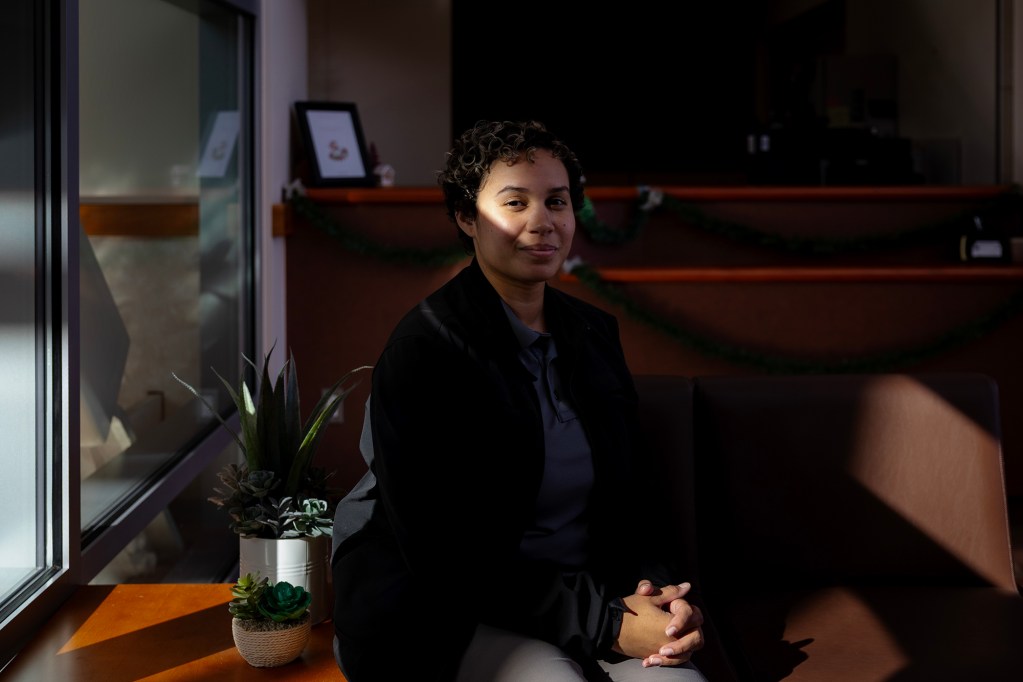
A mental health clinician with a bullet-proof vest is helping change the way a Bay Area city responds to some of its emergency calls.
That’s what CalMatters’ Cayla Mihalovich found when she visited the San Mateo Police Department earlier this month to check out a new approach for mental health calls.
The city was one of many that searched for a better way to help people in the throes of a mental health crisis. It participated in a 2021 pilot program from San Mateo County that paired law enforcement officers with mental health clinicians in four cities with the aim of freeing up police officers and avoiding unnecessary confrontations.
Rather than police officers having to decide whether to arrest a person, send them to a hospital for a hold or leave them to their own devices, a paired clinician was deployed to provide additional measures such as safety planning, follow-up calls and community mental health resources.
“I fill in the gaps,” said San Mateo Police Department mental health clinician Briana Fair, who builds relationships with people she calls clients and joins officers on some emergency calls.
Known as a “co-responder model,” the pilot appeared to work: Involuntary holds decreased about 17% and it reduced the chances of future mental health calls to 911, according to a new study by Stanford University. By reducing the number of involuntary detentions, researchers also estimated that the cities saved as much as $800,000 a year on health costs.
- Mariela Ruiz-Angel, director of Alternative Response Initiatives at Georgetown Law’s Center for Innovations in Community Safety: “The idea was never about taking cops out of the equation altogether. The idea was that we don’t have to center them as the main response of 911. We don’t have to make public safety about cops. Public safety is about the appropriate response.”
Since the end of the two-year pilot, nearly all of San Mateo County cities have rolled out the co-responder model. Cities that participated in the pilot also found a way to sustain the program, including the police department in the city of San Mateo, which currently employs Fair and another part-time clinician.
Go behind the scenes of our Prop. 50 voter guide: Our team brought the guide to more readers across the state thanks to newsroom partners. Learn more.
Dec. 31 deadline: Your gift will have triple the impact thanks to two matching funds, but the deadline is Dec. 31. Please give now.
Other Stories You Should Know
Gun suicides in rural California
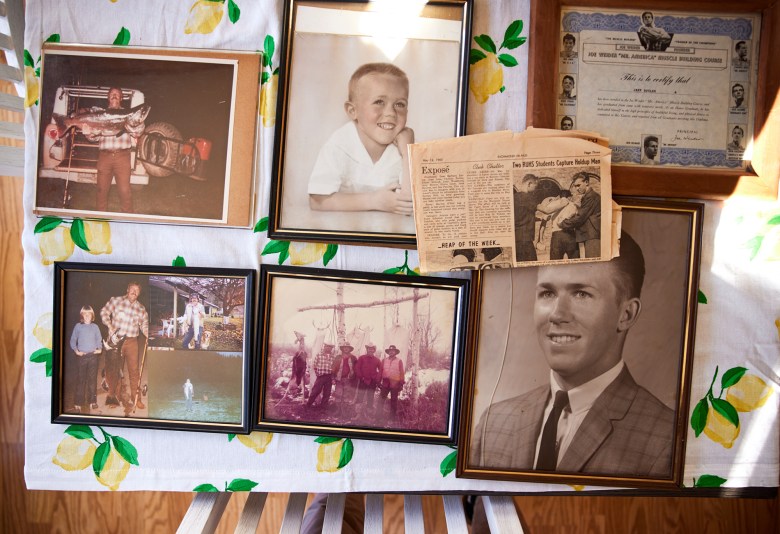
In rural California — where medical and mental health care can be hard to come by — firearm suicides particularly among older men are rattling communities and families who have been left behind, reports CalMatters’ Ana B. Ibarra.
Rural counties in Northern California have some of the country’s highest rates of gun suicides among older adults. In Trinity County, for example, at least eight men 70 and older died from an apparent firearm suicide between 2020 and 2024. Over the course of 15 years, the gun suicide rate of adults in this age group in seven northern counties, including Trinity, was more than triple the statewide rate.
In addition to owning more guns, residents in these areas have more limited access to medical and mental health services. When these services are farther away, people often remain in pain for longer because of missed or delayed appointments. In California, more than half of people 70 and over who died by gun suicide had a contributing physical health problem, and over a quarter had a diagnosed mental health condition.
- Jake Ritter, on the death of his 81-year-old grandfather, Jeffrey Butler, who had health and pain issues and died in Trinity County in 2024 from a self-inflicted gunshot: “I’m sad that he didn’t get the help that he needed, and I’m sad that he felt so strongly that this is the road that he chose.”
New law to prevent sex abuse at schools

By July 2026 all California K-12 schools — including private schools — must have protocols in place to help protect schoolchildren from being sexually abused by educators, as directed by a new state law, writes CalMatters’ Carolyn Jones.
The law, which goes into effect Jan. 1, requires schools to enact a number of measures to rein in abuse and hold themselves accountable, including training students, teachers and other school staff to recognize signs of sexual grooming and report misconduct.
The law’s most notable provision is the creation of a database that keeps track of teachers credibly accused of abuse. The database will be available to schools so that administrators can use it to vet prospective teachers. The database is intended to curb the practice of schools re-hiring teachers who have resigned from another school after being accused of sexual misconduct.
And lastly: Power-guzzling data centers

A recent report finds electricity use and carbon emissions from California data centers nearly doubled in recent years, with water use climbing even more. CalMatters’ Alejandro Lazo and video strategy director Robert Meeks have a video segment on the environmental report as part of our partnership with PBS SoCal. Watch it here.
SoCalMatters airs at 5:58 p.m. weekdays on PBS SoCal.
California Voices
CalMatters contributor Jim Newton: Despite making gains on her promise to reduce Los Angeles’ homelessness population, Mayor Karen Bass battles a difficult perception problem.
California’s elected leaders must oppose the Trump administration’s plans to expand oil and gas drilling on the state’s public lands, writes Ashley McClure, East Bay physician and co-founder of Climate Health Now.
Reader reaction: CARE Court can produce positive results in some cases, but it should not be treated as an automatic path to LPS conservatorship, writes Tom Scott, executive director of the California State Association of Public Administrators, Public Guardians and Public Conservators.
Other things worth your time:
Some stories may require a subscription to read.
State attorneys general sue Trump administration over efforts to shutter CFPB // Politico
Why cities spend your tax dollars on lobbyists // The Sacramento Bee
CA’s homeless ‘purgatory’ leaves thousands on a waitlist to nowhere // The San Francisco Standard
How Trump broke CA’s grip on the auto market // Politico
Central Valley surpassed all of CA in job losses this year // The Fresno Bee
How private investors stand to profit from billions in LA County sex abuse settlements // Los Angeles Times
San Diego just fast-tracked new fire-safety rules for homes // The San Diego Union-Tribune
Chronic illness and longing define life in the Tijuana River valley // inewsource