Cookies help us run our site more efficiently.

By clicking “Accept”, you agree to the storing of cookies on your device to enhance site navigation, analyze site usage, and assist in our marketing efforts. View our Privacy Policy for more information or to customize your cookie preferences.

First, the frogs died. Then people got sick.

News Feed
Friday, November 14, 2025

First, the frogs died. Then people got sick.An emerging area of research is uncovering hidden links between nature and human health.This reporting was supported by the Pulitzer Center....moreThis reporting was supported by the Pulitzer Center....moreNovember 14, 2025 at 6:00 a.m. EST9 minutes agoALTOS DE CAMPANA NATIONAL PARK, Panama — Brian Gratwicke’s lunch box was full of frogs.Kneeling on the muddy rainforest floor, the biologist opened his red Coleman cooler and scooped one up. It was a Pratt’s rocket frog — about the size of a walnut, sporting black-and-white racing stripes. Gratwicke deposited the frog in a small mesh tent, a “catio” for indoor pets to glimpse the outdoors, and encouraged it to acclimate to its transitional home.“There you go,” he told it. “Look at all that nice leaf litter.” The frog darted into the carpet of leaves, unaware it had just leaped into a high-stakes experiment.Conservation biologist Brian Gratwicke searches with his team for frogs in Altos de Campana National Park in Panama.Nate Weisenbeck, a research intern with the Panama Amphibian Rescue and Conservation Project, checks on how a pair of Pratt’s rocket frogs are acclimating to the forest.Gratwicke is a conservation biologist who leads amphibian work at the Smithsonian’s National Zoo and Conservation Biology Institute. He had flown to Panama, in the middle of rainy season, to help resurrect frog species that had vanished from the cloud forest decades ago.Whether these amphibians can strike out on their own and thrive here again is uncertain.What is becoming increasingly clear is that without them, humans are in trouble. It turns out that frogs — in biblical times regarded as a plague — are actually guardians against disease.50 Species that Save UsThis series highlights emerging research on how plants and animals protect human health – and how their disappearance is already sickening thousands of people around the world. Explore these connections in our illustrated, interactive species cards.As dozens of frog species have declined across Central America, scientists have witnessed a remarkable chain of events: With fewer tadpoles to eat mosquito larvae, rates of mosquito-borne malaria in the region have climbed, resulting in a fivefold increase in cases.The discovery of this link is part of an emerging area of research in which ecologists and economists are trying to calculate the costs of species decline.They are revealing hidden ways that thriving populations of many plants and animals — including wolves, bats, birds and trees — underpin humanity’s well-being.They are learning that without saving nature, we cannot save ourselves.The mystery of the vanishing frogsAt first, no one knew why frogs seemed to be disappearing everywhere.In Texas, some herpetologists thought egrets were eating them. In Connecticut, people accused raccoons. In Brazil, they blamed a bout of chilly weather. But the fact that so many frogs were vanishing from so many places in the early 1990s suggested something widespread but invisible was behind the decline.Karen Lips was a graduate student at the time, working with amphibians in Costa Rica, near the border with Panama. During a trip there in 1993, she couldn’t find the toads she had been studying. “Almost everything was gone,” she recalled. At first, she blamed the weather, her headlamp, her searching technique.Then she remembered a related toad species had disappeared a few hundred miles to the north. It dawned on her: Perhaps a frog-killing “wave” was sweeping from mountain to mountain.Weisenbeck works with harlequin frogs raised at the Panama Amphibian Rescue and Conservation Project in Gamboa.Lemur leaf frogs are grouped in a breeding tank with multiple males and females at the Panama Amphibian Rescue and Conservation Project.Whatever it was, she wanted to get ahead of it. She set up camp farther east, in a cloud forest in Panama. She thought she’d have many years to study the 40-odd species of frogs there. But by 1996, many of the ones she was picking up were leathery and lethargic.“Sometimes they would make one jump and it would be their last bout of energy,” recalled Lips, today an ecologist at the International Institute for Applied Systems Analysis. “They’d make a big jump to try and escape. And then they couldn’t move anymore at all, and they would just die there.”After she helped publish a photo of an infection on the frogs’ skin, herpetologists studying wild frogs in Australia and captive ones at the National Zoo realized they were all dealing with the same disease: a fungus that would be dubbed Batrachochytrium dendrobatidis, or Bd for short.The researchers swab a yellow-flecked glass frog to assess the prevalence of Bd in wild frog communities in Altos de Campana National Park.Thought to have originated in Asia or Africa, Bd may have hitched a ride on ships or planes to traverse otherwise insurmountable oceans. It now coats every continent except Antarctica (where there are no frogs).The microscopic pathogen kills by burrowing into an amphibian’s sensitive skin, blocking electrolytes and sapping muscles of their strength. Ultimately, an infected frog becomes so fatigued that its heart stops.As the fungus swept eastward through Panama, Gratwicke and his colleagues raced to rescue as many frogs as they could. They persuaded a shipping company to donate seven containers to a Smithsonian facility an hour outside Panama City. There, along the Panama Canal, they built a makeshift ark, stacking each container floor-to-ceiling with terrariums full of frogs for a captive breeding program.The Smithsonian focused on saving nine species it assessed to be in the direst state. “It’s absolute triage,” Gratwicke said. “We can’t look after 200 species.”Among those targeted for preservation was the Panamanian golden frog, a national icon and symbol of good luck that is depicted on banners and beer cans.“It’s a huge weight of responsibility on our shoulders,” Gratwicke said. “Because if we screw this up, we screw it up for an entire species.”This year, the researchers also brought into captivity a population of Pratt’s rocket frogs that had disappeared in the national park but survived elsewhere, possibly because they had developed some immunity to the fungus. Gratwicke and his colleagues were relocating two dozen of those potentially resistant frogs to Altos de Campana. After two weeks, the researchers would unzip them from the tents, with the hope that the transplanted frogs might help repopulate the park.Globally, frog populations have crashed as a result of Bd. The fungus has affected more than 500 amphibian species, decimating at least 90 to the point where they are thought to be extinct in the wild. For the researchers watching it all unfold over the past three decades, it was clear a frog apocalypse was underway. The fungus, along with climate change and habitat loss, has made amphibians the most vulnerable group of vertebrates on Earth.Lips began studying the cascading effects of these massive losses. She found algae thrived in spots where there were no tadpoles to eat it. Snake populations, meanwhile, dwindled with fewer adult frogs to eat.When describing this upheaval in a call with other scientists, she piqued the interest of Michael Springborn, an environmental economist at the University of California at Davis. “I’d heard a little bit about Bd,” he recalled, “but I was embarrassed to learn that I didn’t really understand how impactful that had been.” The two decided to work together.Lemur leaf frogs are among the lab-raised specimens at the Panama Amphibian Rescue and Conservation Project.With statistical tools more commonly used in economics, they mapped the frog die-offs and spread of the fungus county-by-county across Costa Rica and Panama.Then they compared that spread to county-level health records of malaria in humans. They found a striking pattern: a fivefold spike in malaria cases after the fungus arrived and the frogs died. Lips, Springborn and their colleagues published the discovery in 2022 in the journal Environmental Research Letters.The region’s tapered shape, bound on either side by the Caribbean and the Pacific, allowed them to track the spread of the disease in detail. “We got lucky in a sense that there’s this … narrow strip where you had Bd arguably channeled through,” Springborn said.Some herpetologists, Lips said, would be content to stay in their lane and just “count the frogs.” But she anticipated that “if we could link it to people, maybe we could get more traction. Maybe people would care.”Biologists have long documented ways in which people benefit from nature — what, in academic circles, are called “ecosystem services.” Bees pollinate crops, trees suck heat-trapping carbon dioxide out of the air, and coral reefs guard coastal communities from storms and foster fish for food.But the interdisciplinary effort to uncover the relationship between biodiversity and human health — an approach dubbed “One Health” — is just beginning to tease out even deeper connections.The researchers are working toward the release of Panamanian golden frogs, an icon of the country.In the United States, researchers have shown that a collapse of insect-eating bat populations prompted farmers to use more pesticide on crops, which in turn led to a higher human infant mortality rate.Around the Great Lakes, the reemergence of gray wolves has had the surprising effect of keeping motorists safe. The canines prowl along roads while hunting, spooking deer from crossing and reducing collisions with cars.Also in North America, invasive emerald ash borers devastated ash trees, contributing to elevated temperatures and an increase in cardiovascular and respiratory deaths.India may have witnessed the most astounding ecological breakdown of them all. After vultures experienced a mass die-off, the livestock carcasses they once scavenged piled up. Packs of feral dogs took the place of vultures, resulting in a rise in deaths from rabies.Eyal Frank, a University of Chicago economist who helped connect the dots in the bat and vulture case studies, said we often don’t realize how crucial a plant or animal is to our well-being until it is gone.“Why preserve biodiversity?” Frank said. “We might not realize now that this species is important. But we might realize in the future that it’s important.”By 2012, the frog-killing fungus had conquered Panama, reaching its easternmost point, the Darién Gap.A remote and roadless jungle, the area is known as a treacherous stretch for migrants trying to make their way from North to South America. The resident population is small and mostly made up of Indigenous tribes.Jando Mejia, from the seminomadic Wounaan people, figures he was bitten when he was visiting his mother there in 2023. When a mosquito latched onto his skin and sucked his blood, it must have dropped a single-celled parasite called a plasmodium into his body.Within days the parasite began wreaking havoc, invading and multiplying within his red blood cells. His eyes and tongue turned yellow. His head felt like it was splitting open with pain.“I couldn’t taste food,” he said. “I lost my appetite, and I felt dizzy and weak. I couldn’t do anything.”Mejia, 23, believes he contracted malaria in eastern Panama.Mejia was at that point staying with his sister in central Panama. Her house is on concrete stilts to deter snakes and other wildlife, but its plywood walls and open-air windows provide little protection from buzzing mosquitos. Smoke wafts from spiral-shaped repellents to keep the insects away. Nearby, vendors in the village sell golden frog figurines.His sister set up a bed for him on the floor. His mother made the journey from the Darién Gap to help. “I was in bed for a week,” he said. “I could hardly remember anything.”Even after the worst of the symptoms subsided, it was weeks before he had enough strength to return to his $15-a-day job on a farm growing coffee and plantains.“He wasn’t normal,” his sister, Chanita Mejia, recalled. “Even climbing a small hill was hard. He felt tired.”By the time he could go back to work, he had lost out on a month of income.Telbinia Toscon, a traditional craftswoman in the Embera village, lost her mother to malaria.Frogs are a recurring image in Panamanian crafts.No single case of malaria can be attributed to the wave of frog deaths. And other factors, too, may have contributed to the rise in cases. José Ricardo Rovira, a mosquito researcher at Indicasat, a Panamanian institute, noted that paths made by migrants crisscrossing the Darién have further enabled the spread of malaria-carrying mosquitos.But Springborn, Lips and their colleagues estimate there were tens of thousands of additional cases of the disease in Panama and Costa Rica in the decade following the amphibian decline. Although it’s difficult to estimate, that increase in cases would have led to “a handful” of additional deaths each year, Springborn said.Rovira knows how debilitating the disease can be. He vividly remembers the fever and chills he experienced after twice contracting malaria while setting mosquito traps in the Darién.He said he doesn’t fear malaria, but has learned to respect it. Now 75, he appreciates he must be cautious. “I’m not going out to the field much anymore,” he said.Working to restore the frogsOn Gratwicke’s recent Panama trip, after depositing the Pratt’s rocket frogs in their tent, he turned to the question of how much Bd was still out there.He bounded down a series of waterfalls on a rumbling creek, sweeping his flashlight along the muddy embankment. The light caught a glint of yellow. It was a Panama rocket frog, a related species. True to its name, it shot off after being spotted. The hunt was on.With a stick, Gratwicke prodded the fugitive frog into the water. “Just wait, he’ll come up,” he said leaning over the stream. The birdlike chirps of rocket frogs used to fill this gully, he explained. Now, save for the rush of the water, it was mostly silent.“Oh, I got it!” Gratwicke yelped after reaching his gloved hands into the stream. Pulling out a long cotton swab, he dabbed the frogs’ feet, thighs and belly before letting it go. (Lab tests on the swabs would later reveal that Bd was on a third of the frogs plucked from the water that day.)Gratwicke and his team listen to frog calls while walking through Altos de Campana National Park.Conservation scientists Julie Dogger, Oliver Granucci and Orlando Garces check on tadpole development in Altos de Campana National Park. Next stop was the encampment of a crowned tree frog. This chocolate brown frog had been bred in a Smithsonian lab, and after two weeks acclimating to the forest, it was ready for release — into a still perilous place.Nate Weisenbeck, Gratwicke’s colleague from the Smithsonian, reached up and unlatched the front of a mesh cube nailed to a tree teetering on the mountainside.“This is a pilot,” Gratwicke said. “Because it’s the first time this has ever been done, you can’t really predict all the ways in which things can go wrong.”The researchers are trying to set their frogs up with the best shot at survival, but don’t know if they will succumb to the fungus or other predators. (The work is supported financially by the Bezos Earth Fund, a philanthropic initiative of Washington Post owner Jeff Bezos, as well as the Cheyenne Mountain Zoo, Zoo New England and the Panamanian government.)Weisenbeck had installed a variety of possible shelters for the frog to choose next: a hollow stalk of bamboo, a stack of black plastic pots, a wooden birdhouse.When the researchers came back about six hours later, wearing headlamps to navigate the pitch-black jungle at night, all those potential homes were empty.Weisenbeck unfurled a six-pronged antenna on a device that beeped to indicate whether he was homing in on the tracker tied to the frog’s back.A metamorphosing lemur leaf frog tadpole hangs on the edge of Dogger’s net. A crowned tree frog wears a radio transmitter to enable tracking within the national park.He circled the tree: beep… beep…He was careful with his feet, so as not to inadvertently step on a frog. The device grew louder. Beep… Beep…He twisted to prevent the antenna from getting tangled in the vegetation. BEEP… BEEP… BEEP…“Well done, Nate,” Gratwicke said. Weisenbeck bent down to capture one last photo of his frog, resting on a cigar plant about 30 feet from the tree.“Yeah, this could be the last time we see him,” Weisenbeck said. “He’s wild.”Two variable harlequin frogs at the Panama Amphibian Rescue and Conservation Project in Gamboa.About this storyThis article is part of The Washington Post’s “Species That Save Us” series, highlighting hidden links between nature and human health. Photos and video by Melina Mara. Design and development by Hailey Haymond. Editing by Marisa Bellack, Juliet Eilperin, John Farrell, Dominique Hildebrand and Joe Moore. Copy editing by Mike Cirelli.

An emerging area of research is uncovering hidden links between nature and human health.

First, the frogs died. Then people got sick.
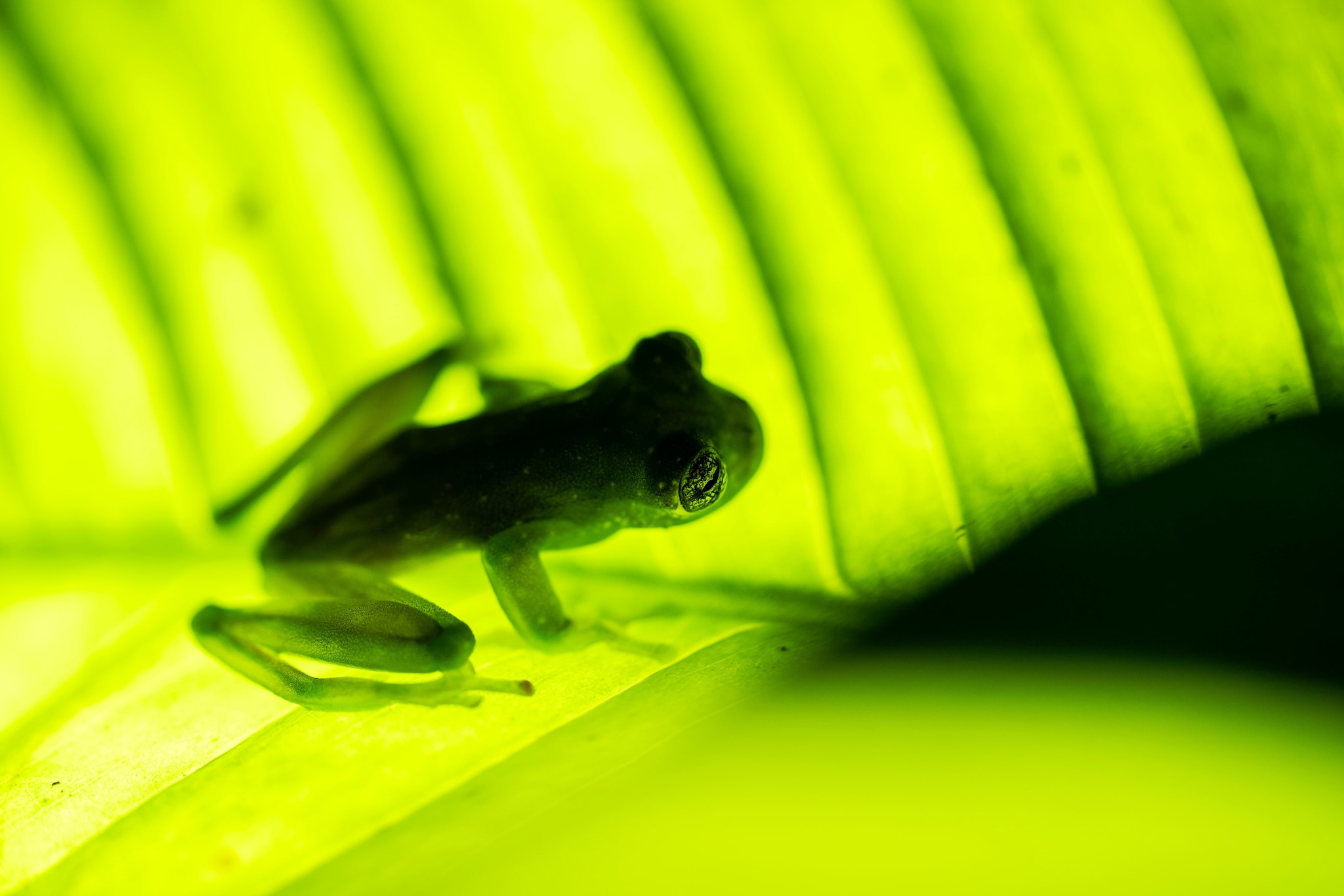
An emerging area of research is uncovering hidden links between nature and human health.

This reporting was supported by the Pulitzer Center....more

This reporting was supported by the Pulitzer Center....more

ALTOS DE CAMPANA NATIONAL PARK, Panama — Brian Gratwicke’s lunch box was full of frogs.

Kneeling on the muddy rainforest floor, the biologist opened his red Coleman cooler and scooped one up. It was a Pratt’s rocket frog — about the size of a walnut, sporting black-and-white racing stripes. Gratwicke deposited the frog in a small mesh tent, a “catio” for indoor pets to glimpse the outdoors, and encouraged it to acclimate to its transitional home.

“There you go,” he told it. “Look at all that nice leaf litter.” The frog darted into the carpet of leaves, unaware it had just leaped into a high-stakes experiment.
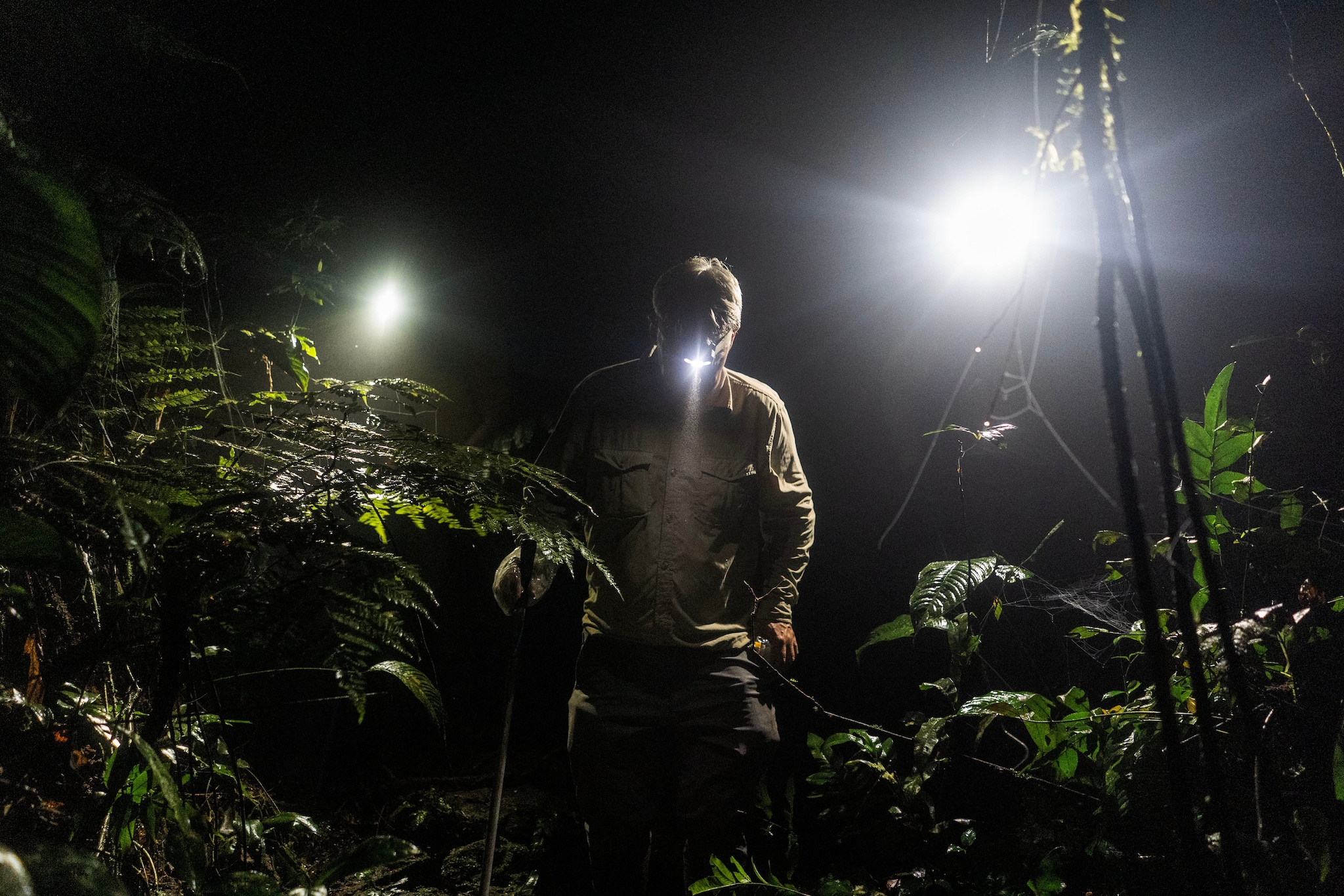
Conservation biologist Brian Gratwicke searches with his team for frogs in Altos de Campana National Park in Panama.
Nate Weisenbeck, a research intern with the Panama Amphibian Rescue and Conservation Project, checks on how a pair of Pratt’s rocket frogs are acclimating to the forest.

Gratwicke is a conservation biologist who leads amphibian work at the Smithsonian’s National Zoo and Conservation Biology Institute. He had flown to Panama, in the middle of rainy season, to help resurrect frog species that had vanished from the cloud forest decades ago.

Whether these amphibians can strike out on their own and thrive here again is uncertain.

What is becoming increasingly clear is that without them, humans are in trouble. It turns out that frogs — in biblical times regarded as a plague — are actually guardians against disease.

50 Species that Save Us

This series highlights emerging research on how plants and animals protect human health – and how their disappearance is already sickening thousands of people around the world. Explore these connections in our illustrated, interactive species cards.

As dozens of frog species have declined across Central America, scientists have witnessed a remarkable chain of events: With fewer tadpoles to eat mosquito larvae, rates of mosquito-borne malaria in the region have climbed, resulting in a fivefold increase in cases.

The discovery of this link is part of an emerging area of research in which ecologists and economists are trying to calculate the costs of species decline.

They are revealing hidden ways that thriving populations of many plants and animals — including wolves, bats, birds and trees — underpin humanity’s well-being.

They are learning that without saving nature, we cannot save ourselves.

The mystery of the vanishing frogs

At first, no one knew why frogs seemed to be disappearing everywhere.

In Texas, some herpetologists thought egrets were eating them. In Connecticut, people accused raccoons. In Brazil, they blamed a bout of chilly weather. But the fact that so many frogs were vanishing from so many places in the early 1990s suggested something widespread but invisible was behind the decline.

Karen Lips was a graduate student at the time, working with amphibians in Costa Rica, near the border with Panama. During a trip there in 1993, she couldn’t find the toads she had been studying. “Almost everything was gone,” she recalled. At first, she blamed the weather, her headlamp, her searching technique.

Then she remembered a related toad species had disappeared a few hundred miles to the north. It dawned on her: Perhaps a frog-killing “wave” was sweeping from mountain to mountain.

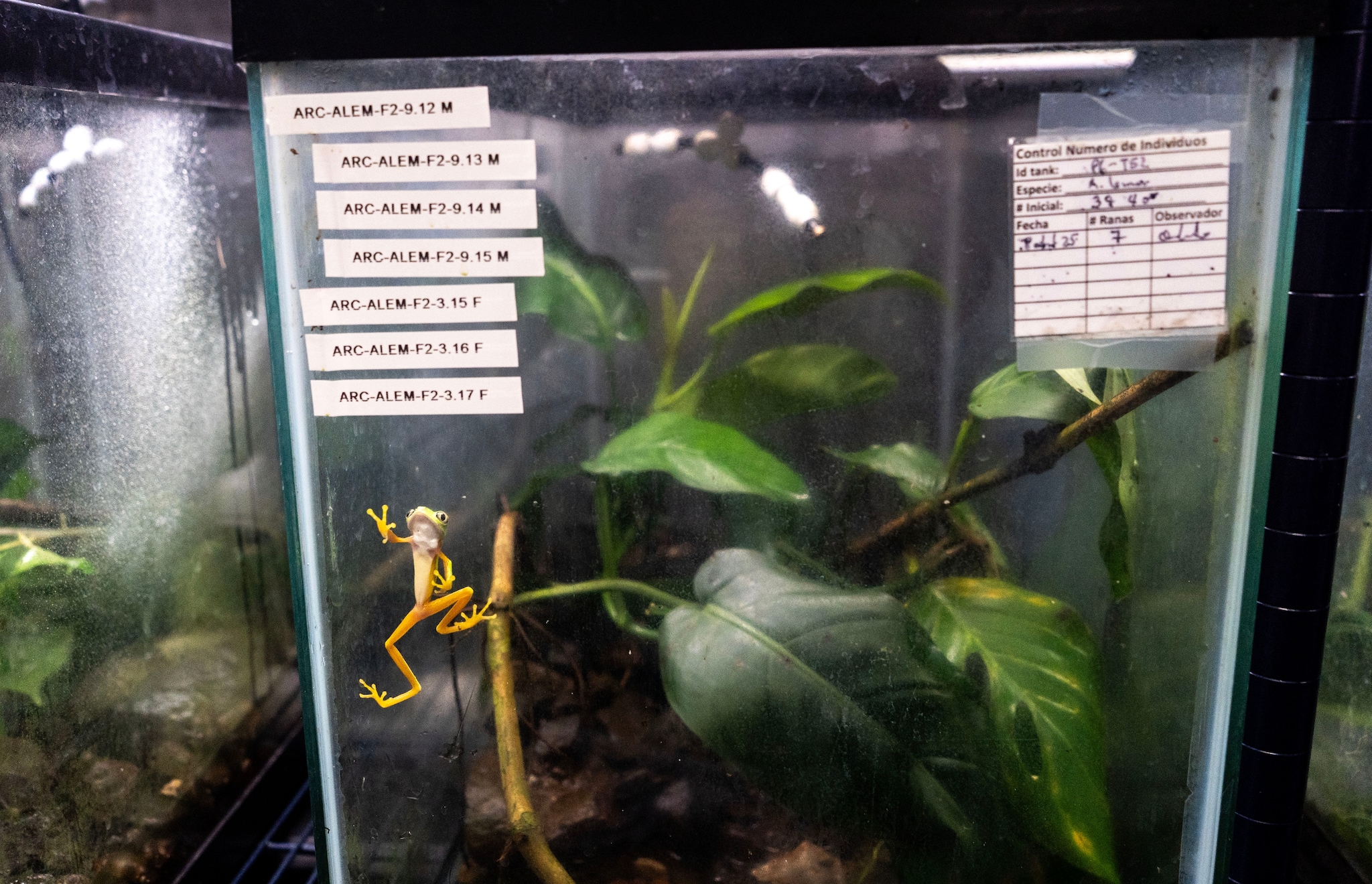
Weisenbeck works with harlequin frogs raised at the Panama Amphibian Rescue and Conservation Project in Gamboa.
Lemur leaf frogs are grouped in a breeding tank with multiple males and females at the Panama Amphibian Rescue and Conservation Project.

Whatever it was, she wanted to get ahead of it. She set up camp farther east, in a cloud forest in Panama. She thought she’d have many years to study the 40-odd species of frogs there. But by 1996, many of the ones she was picking up were leathery and lethargic.

“Sometimes they would make one jump and it would be their last bout of energy,” recalled Lips, today an ecologist at the International Institute for Applied Systems Analysis. “They’d make a big jump to try and escape. And then they couldn’t move anymore at all, and they would just die there.”

After she helped publish a photo of an infection on the frogs’ skin, herpetologists studying wild frogs in Australia and captive ones at the National Zoo realized they were all dealing with the same disease: a fungus that would be dubbed Batrachochytrium dendrobatidis, or Bd for short.
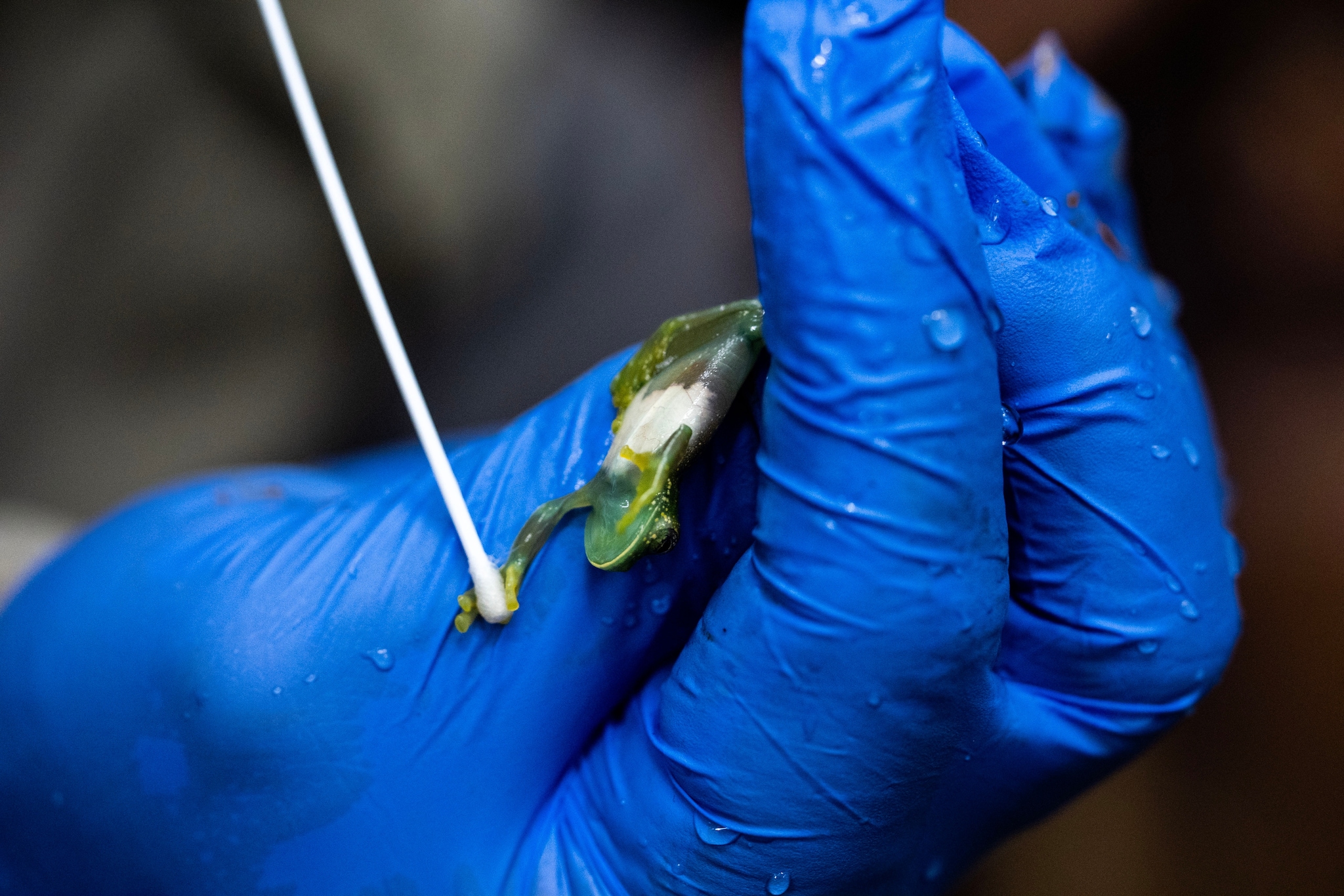
The researchers swab a yellow-flecked glass frog to assess the prevalence of Bd in wild frog communities in Altos de Campana National Park.

Thought to have originated in Asia or Africa, Bd may have hitched a ride on ships or planes to traverse otherwise insurmountable oceans. It now coats every continent except Antarctica (where there are no frogs).

The microscopic pathogen kills by burrowing into an amphibian’s sensitive skin, blocking electrolytes and sapping muscles of their strength. Ultimately, an infected frog becomes so fatigued that its heart stops.

As the fungus swept eastward through Panama, Gratwicke and his colleagues raced to rescue as many frogs as they could. They persuaded a shipping company to donate seven containers to a Smithsonian facility an hour outside Panama City. There, along the Panama Canal, they built a makeshift ark, stacking each container floor-to-ceiling with terrariums full of frogs for a captive breeding program.

The Smithsonian focused on saving nine species it assessed to be in the direst state. “It’s absolute triage,” Gratwicke said. “We can’t look after 200 species.”

Among those targeted for preservation was the Panamanian golden frog, a national icon and symbol of good luck that is depicted on banners and beer cans.

“It’s a huge weight of responsibility on our shoulders,” Gratwicke said. “Because if we screw this up, we screw it up for an entire species.”

This year, the researchers also brought into captivity a population of Pratt’s rocket frogs that had disappeared in the national park but survived elsewhere, possibly because they had developed some immunity to the fungus. Gratwicke and his colleagues were relocating two dozen of those potentially resistant frogs to Altos de Campana. After two weeks, the researchers would unzip them from the tents, with the hope that the transplanted frogs might help repopulate the park.

Globally, frog populations have crashed as a result of Bd. The fungus has affected more than 500 amphibian species, decimating at least 90 to the point where they are thought to be extinct in the wild. For the researchers watching it all unfold over the past three decades, it was clear a frog apocalypse was underway. The fungus, along with climate change and habitat loss, has made amphibians the most vulnerable group of vertebrates on Earth.

Lips began studying the cascading effects of these massive losses. She found algae thrived in spots where there were no tadpoles to eat it. Snake populations, meanwhile, dwindled with fewer adult frogs to eat.

When describing this upheaval in a call with other scientists, she piqued the interest of Michael Springborn, an environmental economist at the University of California at Davis. “I’d heard a little bit about Bd,” he recalled, “but I was embarrassed to learn that I didn’t really understand how impactful that had been.” The two decided to work together.

Lemur leaf frogs are among the lab-raised specimens at the Panama Amphibian Rescue and Conservation Project.

With statistical tools more commonly used in economics, they mapped the frog die-offs and spread of the fungus county-by-county across Costa Rica and Panama.

Then they compared that spread to county-level health records of malaria in humans. They found a striking pattern: a fivefold spike in malaria cases after the fungus arrived and the frogs died. Lips, Springborn and their colleagues published the discovery in 2022 in the journal Environmental Research Letters.

The region’s tapered shape, bound on either side by the Caribbean and the Pacific, allowed them to track the spread of the disease in detail. “We got lucky in a sense that there’s this … narrow strip where you had Bd arguably channeled through,” Springborn said.

Some herpetologists, Lips said, would be content to stay in their lane and just “count the frogs.” But she anticipated that “if we could link it to people, maybe we could get more traction. Maybe people would care.”

Biologists have long documented ways in which people benefit from nature — what, in academic circles, are called “ecosystem services.” Bees pollinate crops, trees suck heat-trapping carbon dioxide out of the air, and coral reefs guard coastal communities from storms and foster fish for food.

But the interdisciplinary effort to uncover the relationship between biodiversity and human health — an approach dubbed “One Health” — is just beginning to tease out even deeper connections.
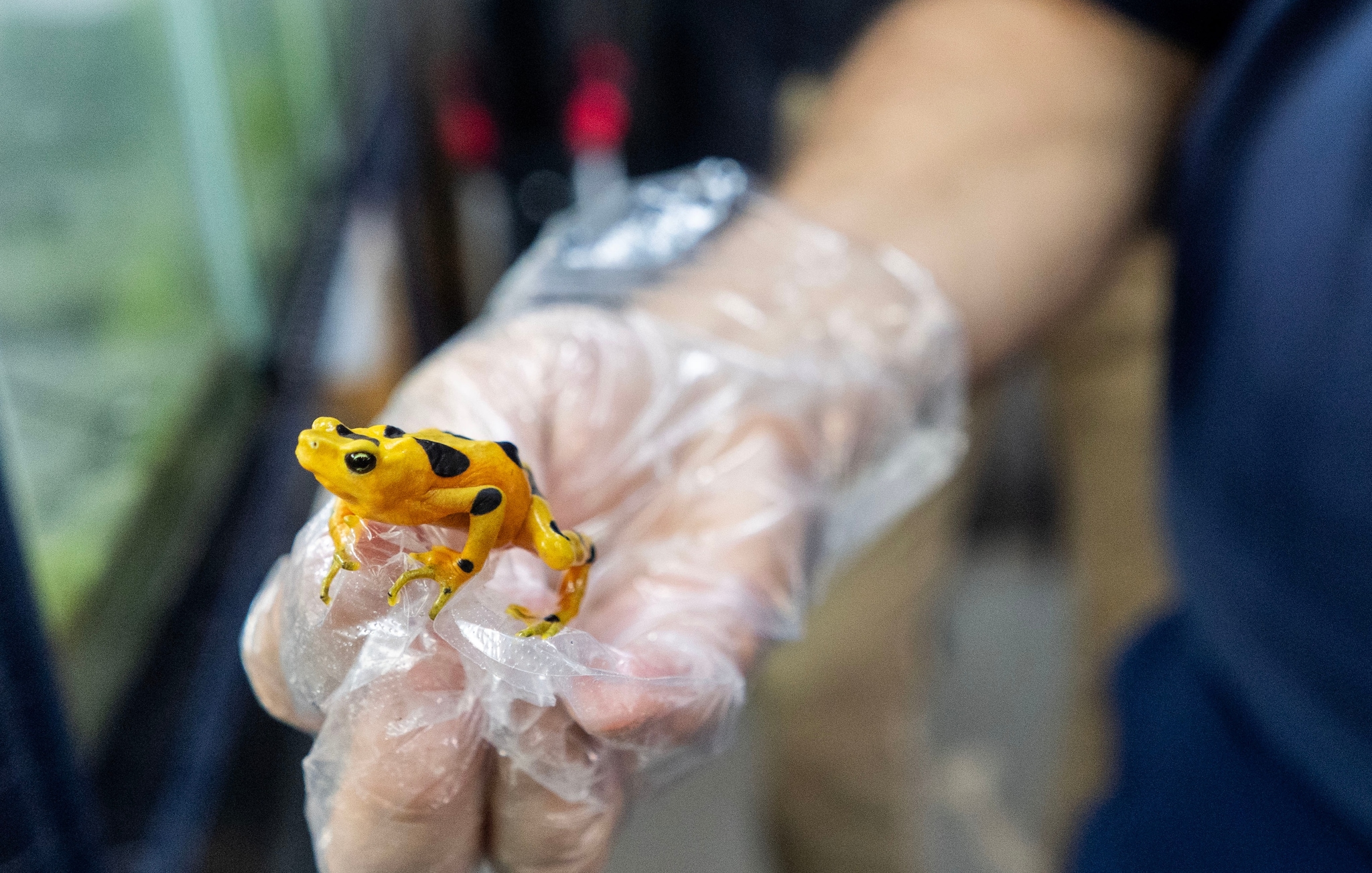
The researchers are working toward the release of Panamanian golden frogs, an icon of the country.

In the United States, researchers have shown that a collapse of insect-eating bat populations prompted farmers to use more pesticide on crops, which in turn led to a higher human infant mortality rate.

Around the Great Lakes, the reemergence of gray wolves has had the surprising effect of keeping motorists safe. The canines prowl along roads while hunting, spooking deer from crossing and reducing collisions with cars.

Also in North America, invasive emerald ash borers devastated ash trees, contributing to elevated temperatures and an increase in cardiovascular and respiratory deaths.

India may have witnessed the most astounding ecological breakdown of them all. After vultures experienced a mass die-off, the livestock carcasses they once scavenged piled up. Packs of feral dogs took the place of vultures, resulting in a rise in deaths from rabies.

Eyal Frank, a University of Chicago economist who helped connect the dots in the bat and vulture case studies, said we often don’t realize how crucial a plant or animal is to our well-being until it is gone.

“Why preserve biodiversity?” Frank said. “We might not realize now that this species is important. But we might realize in the future that it’s important.”

By 2012, the frog-killing fungus had conquered Panama, reaching its easternmost point, the Darién Gap.

A remote and roadless jungle, the area is known as a treacherous stretch for migrants trying to make their way from North to South America. The resident population is small and mostly made up of Indigenous tribes.

Jando Mejia, from the seminomadic Wounaan people, figures he was bitten when he was visiting his mother there in 2023. When a mosquito latched onto his skin and sucked his blood, it must have dropped a single-celled parasite called a plasmodium into his body.

Within days the parasite began wreaking havoc, invading and multiplying within his red blood cells. His eyes and tongue turned yellow. His head felt like it was splitting open with pain.

“I couldn’t taste food,” he said. “I lost my appetite, and I felt dizzy and weak. I couldn’t do anything.”
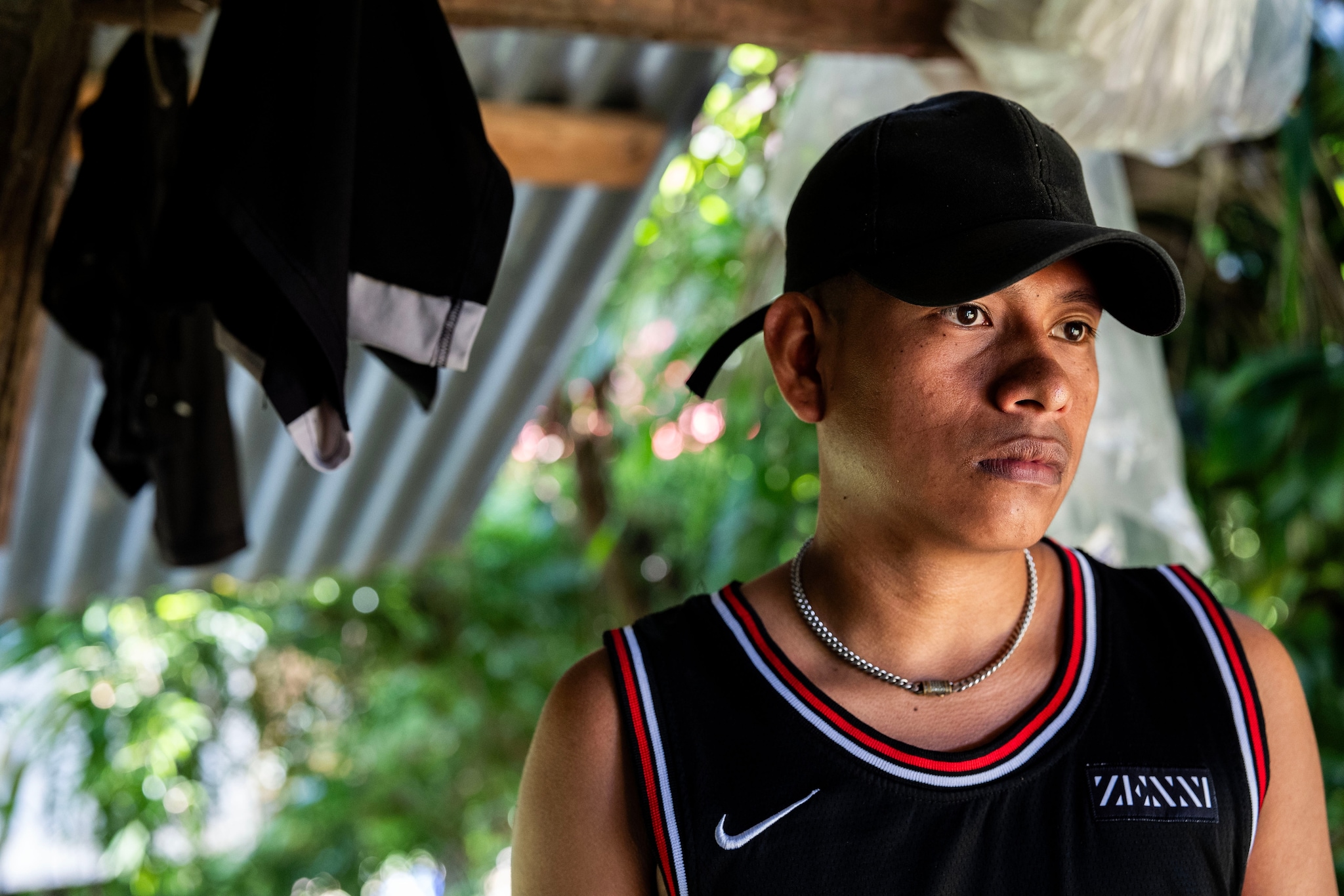
Mejia, 23, believes he contracted malaria in eastern Panama.

Mejia was at that point staying with his sister in central Panama. Her house is on concrete stilts to deter snakes and other wildlife, but its plywood walls and open-air windows provide little protection from buzzing mosquitos. Smoke wafts from spiral-shaped repellents to keep the insects away. Nearby, vendors in the village sell golden frog figurines.

His sister set up a bed for him on the floor. His mother made the journey from the Darién Gap to help. “I was in bed for a week,” he said. “I could hardly remember anything.”

Even after the worst of the symptoms subsided, it was weeks before he had enough strength to return to his $15-a-day job on a farm growing coffee and plantains.

“He wasn’t normal,” his sister, Chanita Mejia, recalled. “Even climbing a small hill was hard. He felt tired.”

By the time he could go back to work, he had lost out on a month of income.
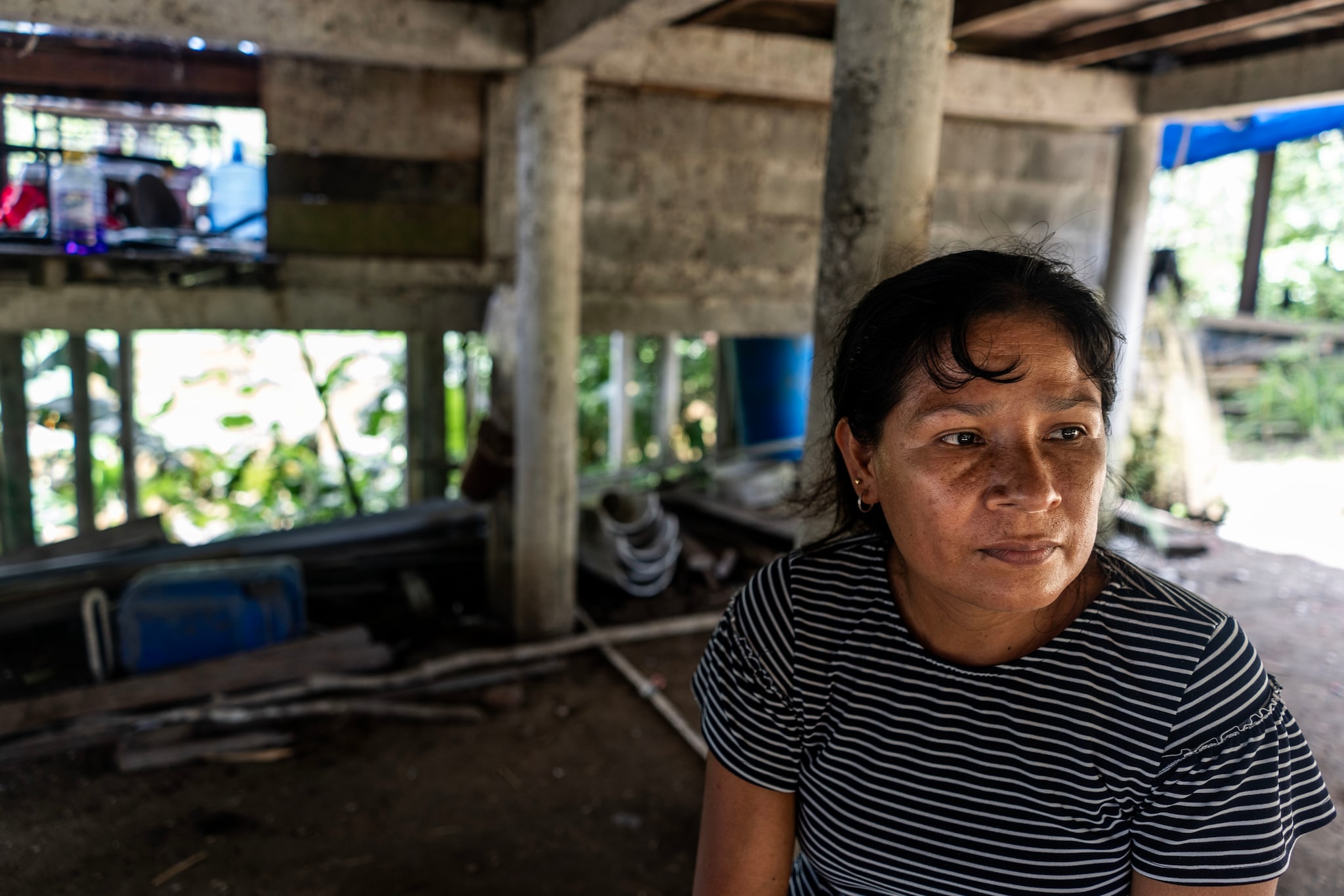
Telbinia Toscon, a traditional craftswoman in the Embera village, lost her mother to malaria.
Frogs are a recurring image in Panamanian crafts.

No single case of malaria can be attributed to the wave of frog deaths. And other factors, too, may have contributed to the rise in cases. José Ricardo Rovira, a mosquito researcher at Indicasat, a Panamanian institute, noted that paths made by migrants crisscrossing the Darién have further enabled the spread of malaria-carrying mosquitos.

But Springborn, Lips and their colleagues estimate there were tens of thousands of additional cases of the disease in Panama and Costa Rica in the decade following the amphibian decline. Although it’s difficult to estimate, that increase in cases would have led to “a handful” of additional deaths each year, Springborn said.

Rovira knows how debilitating the disease can be. He vividly remembers the fever and chills he experienced after twice contracting malaria while setting mosquito traps in the Darién.

He said he doesn’t fear malaria, but has learned to respect it. Now 75, he appreciates he must be cautious. “I’m not going out to the field much anymore,” he said.

Working to restore the frogs

On Gratwicke’s recent Panama trip, after depositing the Pratt’s rocket frogs in their tent, he turned to the question of how much Bd was still out there.

He bounded down a series of waterfalls on a rumbling creek, sweeping his flashlight along the muddy embankment. The light caught a glint of yellow. It was a Panama rocket frog, a related species. True to its name, it shot off after being spotted. The hunt was on.

With a stick, Gratwicke prodded the fugitive frog into the water. “Just wait, he’ll come up,” he said leaning over the stream. The birdlike chirps of rocket frogs used to fill this gully, he explained. Now, save for the rush of the water, it was mostly silent.

“Oh, I got it!” Gratwicke yelped after reaching his gloved hands into the stream. Pulling out a long cotton swab, he dabbed the frogs’ feet, thighs and belly before letting it go. (Lab tests on the swabs would later reveal that Bd was on a third of the frogs plucked from the water that day.)

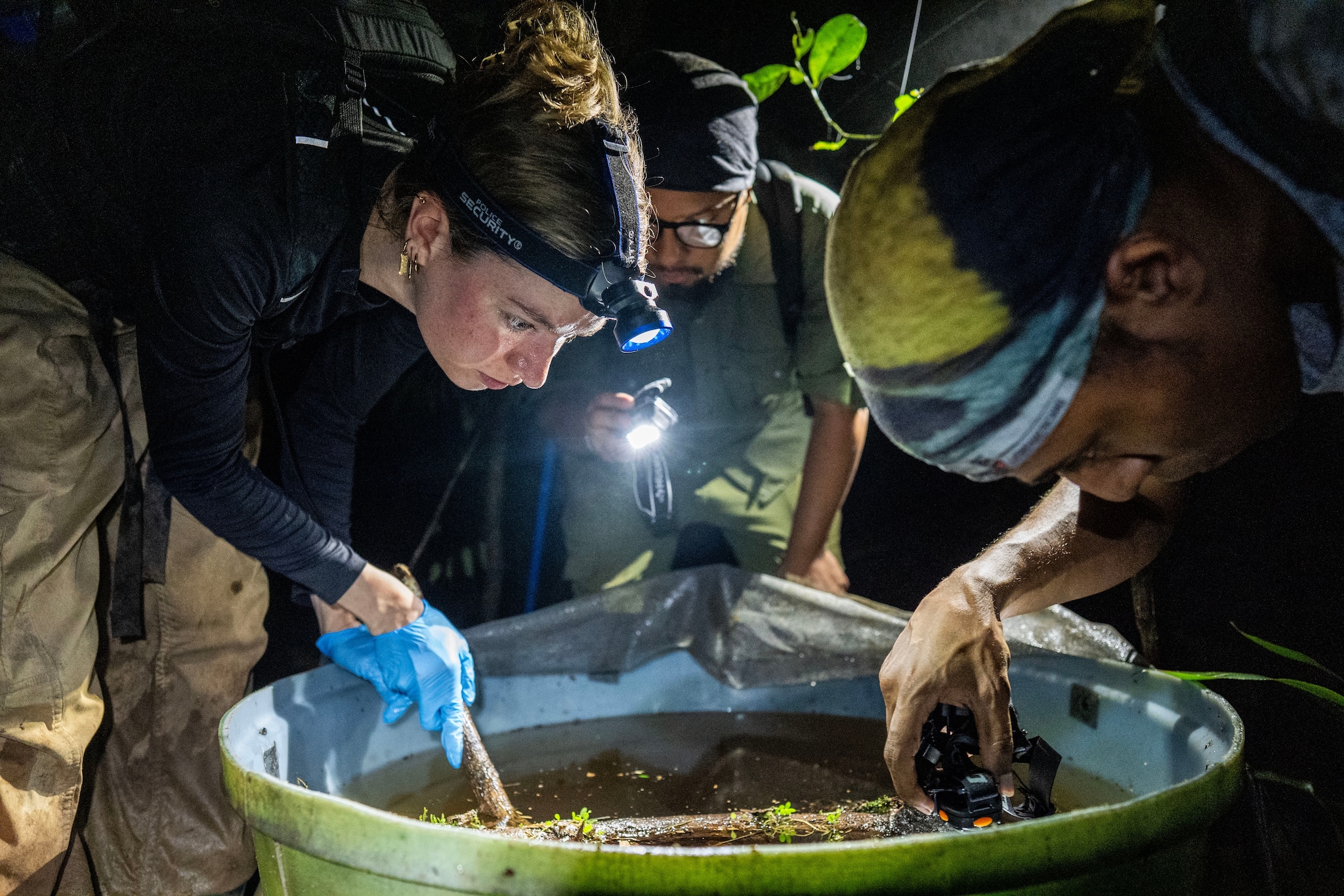
Gratwicke and his team listen to frog calls while walking through Altos de Campana National Park.
Conservation scientists Julie Dogger, Oliver Granucci and Orlando Garces check on tadpole development in Altos de Campana National Park.

Next stop was the encampment of a crowned tree frog. This chocolate brown frog had been bred in a Smithsonian lab, and after two weeks acclimating to the forest, it was ready for release — into a still perilous place.

Nate Weisenbeck, Gratwicke’s colleague from the Smithsonian, reached up and unlatched the front of a mesh cube nailed to a tree teetering on the mountainside.

“This is a pilot,” Gratwicke said. “Because it’s the first time this has ever been done, you can’t really predict all the ways in which things can go wrong.”

The researchers are trying to set their frogs up with the best shot at survival, but don’t know if they will succumb to the fungus or other predators. (The work is supported financially by the Bezos Earth Fund, a philanthropic initiative of Washington Post owner Jeff Bezos, as well as the Cheyenne Mountain Zoo, Zoo New England and the Panamanian government.)

Weisenbeck had installed a variety of possible shelters for the frog to choose next: a hollow stalk of bamboo, a stack of black plastic pots, a wooden birdhouse.

When the researchers came back about six hours later, wearing headlamps to navigate the pitch-black jungle at night, all those potential homes were empty.

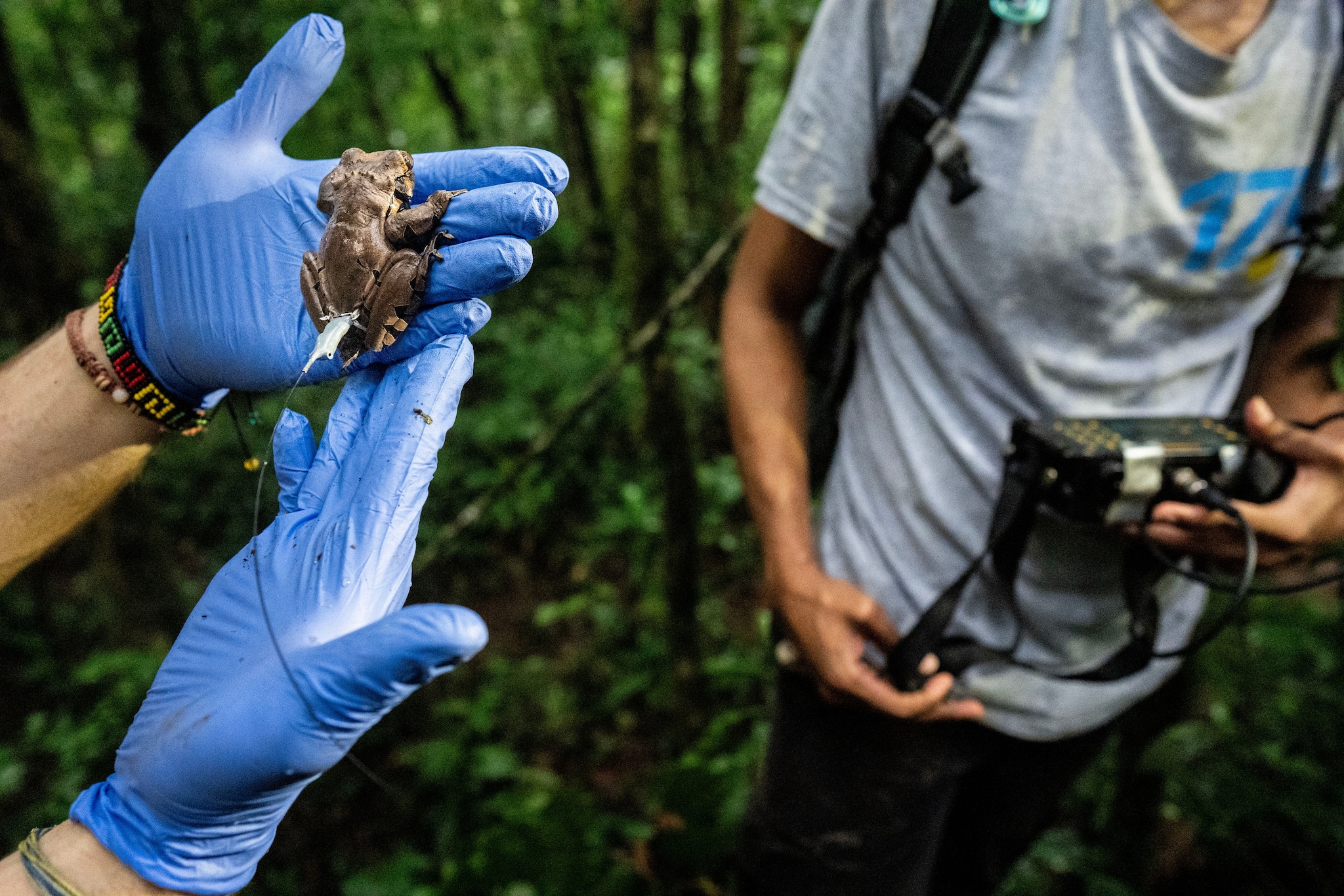
Weisenbeck unfurled a six-pronged antenna on a device that beeped to indicate whether he was homing in on the tracker tied to the frog’s back.

A metamorphosing lemur leaf frog tadpole hangs on the edge of Dogger’s net.
A crowned tree frog wears a radio transmitter to enable tracking within the national park.

He circled the tree: beep… beep…

He was careful with his feet, so as not to inadvertently step on a frog. The device grew louder. Beep… Beep…

He twisted to prevent the antenna from getting tangled in the vegetation. BEEP… BEEP… BEEP…

“Well done, Nate,” Gratwicke said. Weisenbeck bent down to capture one last photo of his frog, resting on a cigar plant about 30 feet from the tree.

“Yeah, this could be the last time we see him,” Weisenbeck said. “He’s wild.”

Two variable harlequin frogs at the Panama Amphibian Rescue and Conservation Project in Gamboa.

About this story

This article is part of The Washington Post’s “Species That Save Us” series, highlighting hidden links between nature and human health. Photos and video by Melina Mara. Design and development by Hailey Haymond. Editing by Marisa Bellack, Juliet Eilperin, John Farrell, Dominique Hildebrand and Joe Moore. Copy editing by Mike Cirelli.

Read the full story here.
Photos courtesy of

Household burning of plastic waste in developing world is hidden health threat, study shows

The practice is ‘much more widespread’ than previously realised, researchers say, with serious environmental impactThe household burning of plastic for heating and cooking is widespread in developing countries, suggests a global study that raises concerns about its health and environmental impacts.The research, published in the journal Nature Communications, surveyed more than 1,000 respondents across 26 countries. Continue reading...

The household burning of plastic for heating and cooking is widespread in developing countries, suggests a global study that raises concerns about its health and environmental impacts.The research, published in the journal Nature Communications, surveyed more than 1,000 respondents across 26 countries.One in three people reported being aware of households burning plastic, while 16% said they had burned plastic themselves.Respondents worked closely with low-income urban neighbourhoods and included researchers, government workers and community leaders.Dr Bishal Bharadwaj, the lead author of the study and a research associate at the University of Calgary, said the work provided broad global evidence on households burning plastic, a practice that had been “difficult to get accurate data on”.“When families can’t afford cleaner fuels and have no reliable waste collection, plastic becomes both a nuisance and a last-resort energy source. We found evidence of people burning everything from plastic bags and wrappers to bottles and packaging, just to meet basic household needs,” Bharadwaj said in a statement.“The practice is far more widespread than anyone realised, but because it happens in marginalised communities and is often hidden, it has escaped meaningful global attention despite the severe risks to health and the environment.”The researchers surveyed people in low- and middle-income countries in Asia, Africa and Latin America, and suggest that plastic burning “does not result solely from energy poverty, but also represents a vital informal solution in many settings to cope with … a high rate of mismanaged plastic”.The study’s authors highlighted health risks such as inhalation of toxic emissions in confined spaces as well as contamination of food. Burning plastic releases noxious compounds such as dioxins, furans and heavy metals, while previous research has identified toxic compounds in egg samples near plastic burn sites.The researchers described the work as “an initial step toward filling critical knowledge gaps in this domain”, but noted that more work was needed to give a true sense of the “scale and distribution of plastic waste burning”.Prof Peta Ashworth, the director of the Curtin Institute for Energy Transition in Perth and a study co-author, described the burning as resulting from a “confluence of issues”.“Part of the reason is because these people are more vulnerable and they just don’t have the funds to be able to purchase any form of clean cooking [fuel],” she said, adding that growing plastic pollution and inadequate waste disposal were also contributing factors.Global plastic waste is projected to almost triple by 2060, according to the OECD. Ashworth said governments needed to improve waste management programs as well as “access to other clean cooking, through subsidies and other interventions”.Educational campaigns highlighting the hazards of burning plastic and introducing new technologies for cleaner plastic burning are also solutions, the researchers suggest.“As rapid urbanisation continues to outpace the expansion of essential services in many regions, the urgency of implementing these measures will only intensify.”

Texas clears the way for petrochemical expansion as experts warn of health risks

Public Health Watch chronicles a fossil-fuel infrastructure boom that could worsen air pollution in some areas and exacerbate climate change.

Let’s establish some baselines.  Texas is responsible for more greenhouse-gas emissions than Saudi Arabia or the global maritime industry. Its oil, gas and petrochemical operations discharge tens of millions of pounds of toxic pollutants into the air each year, comprising almost one-fifth of such releases in the United States. It is the nation’s top emitter of the carcinogens benzene, ethylene oxide and 1,3-butadiene.  It accounts for 75 percent of the petrochemicals made in the U.S. It is an engine of the world’s plastics industry, whose products clog oceans and landfills and, upon breaking down, infuse human bodies with potentially dangerous microplastics. Despite all of this, the state’s commitment to fossil-fuel infrastructure is unwavering, driven by economics. Oil and gas extraction, transportation and processing contributed $249 billion to the state’s gross domestic product and supported 661,000 jobs in 2021, according to the most recent reports from the Texas Economic Development & Tourism Office. An industrial construction spurt is well into its second decade, with little sign of slowing. Since 2013, 57 petrochemical facilities have been built or expanded in the state, according to the nonprofit Environmental Integrity Project’s Oil & Gas Watch, which tracks these activities.  Over half are in majority-minority neighborhoods, the group’s data show. Over the next five years, 18 new plants and 23 expansions are planned or are already under  construction. Twelve of these projects collectively will be allowed to release the same amount of greenhouse gases as 41 natural gas-fired power plants, according to the companies’ filings with the state. Emissions estimates for the other projects were not available.  All 41 petrochemical projects will also be permitted to release 38.6 million pounds of the U.S. Environmental Protection Agency’s highest-priority pollutants, including carcinogens and respiratory irritants, according to company filings. Places like Jefferson County, in far southeastern Texas, and Harris County, which includes Houston, could see their air quality deteriorate, putting the public at increased risk of cancer, respiratory illness, reproductive effects and other life-altering conditions. Five projects are to be sited within a five-mile radius of Channelview, an unincorporated part of Harris County plagued by extremely high levels of cancer-causing benzene and a surge in barge traffic – an underappreciated cause of air pollution – on the San Jacinto River. Companies have announced dozens more projects, including seven near Channelview, but haven’t begun the process of obtaining permits from the Texas Commission on Environmental Quality, or TCEQ, which will allow them to construct facilities that release pollutants into the air. The odds are in their favor: In the past quarter-century, the TCEQ has denied less than 0.5 percent of new air permits and amendments, often required for plant expansions. For six months, Public Health Watch has been reviewing TCEQ permits, analyzing air-quality and census data and talking to scientific experts, advocates, elected officials, industry representatives and residents of Harris and Jefferson counties to try to capture the scope and potential health consequences of the petrochemical buildout.  Here are three out of 13 scenes from that buildout. View the full interactive feature at publichealthwatch.org. Andy Morris-Ruiz Home of Spindletop booms again: Jefferson County Jefferson County has a quarter-million residents and stretches from Beaumont in the northeast to McFaddin National Wildlife Refuge on the Gulf of Mexico. Its Spindletop field birthed Texas’s first full-scale oil boom in 1901; today it is once again an axis of industry zeal. Just off Twin City Highway, where Nederland meets Beaumont, cranes are assembling a plant that will produce anhydrous ammonia and other chemicals used to make fertilizer and alternative fuels. According to state permits issued to owner Woodside Energy, the facility is authorized to annually add almost 80,000 pounds of nitrogen oxides, which can cause acute and chronic respiratory distress, to Nederland’s air. Nitrogen oxides also contribute to ground-level ozone pollution, the primary component in smog. Uncontained, ammonia can sear the lungs and kill in sufficient concentrations. Four people formally objected to the facility’s expansion last summer but were unable to stop it. Officials in Jefferson County embraced the plant, granting Woodside a 10-year property-tax exemption, and a $209 million tax abatement from the Beaumont Independent School District. About two miles to the southeast of Woodside, Energy Transfer wants to erect a large ethane cracker on the Neches River. The hulking plant will heat ethane, a component of natural gas, to extremely high temperatures, “cracking” the molecules to make ethylene, a building block for plastics. According to Energy Transfer’s permit application, the cracker would be allowed to release nearly 10 million of pounds of volatile organic compounds, or VOCs, which contribute to ozone and can cause effects ranging from throat and eye irritation to cancer, along with nitrogen oxides and carbon monoxide, another smog-forming chemical that interferes with the body’s oxygen supply.  The TCEQ told Public Health Watch in an email that the project “is protective of human health and the environment and no adverse effects are expected to occur.”  There were seven formal objectors to the ethane cracker, among them Reanna Panelo, a lifelong Nederland resident who was 23 when she wrote to the TCEQ two years ago. “It is not fair nor is it morally right to build such a monstrous and horrendous plant designed to kill the surrounding area, residents and environment, for company gain,” wrote Panelo, who said generations of her family had been tormented by cancer. The TCEQ executive director is processing Energy Transfer’s permit application, despite comments submitted in October by the Environmental Integrity Project alleging the project could violate ambient air-quality standards for particulate matter — fine particles that can exacerbate asthma, cause heart disease and contribute to cognitive decline. The Nederland Independent School District authorized a $121 million tax break for Energy Transfer. Nine miles south of Nederland, in Port Arthur, two ethane crackers are poised for expansion and three new petrochemical facilities are planned, according to Oil & Gas Watch. Read Next How a Koch-owned chemical plant in Texas gamed the Clean Air Act Naveena Sadasivam & Clayton Aldern “It’s the worst possible situation you can imagine,” said John Beard, a Port Arthur native and founder of Port Arthur Community Action Network, an environmental advocacy group. “You’re living in a toxic atmosphere that with every breath is potentially killing you.” Air quality in Jefferson County has improved over the years — mostly a product of stricter regulation — but is still far from pristine. The American Lung Association gave the county an “F” for ozone pollution in its 2025 State of the Air Report Card. A pungent haze occasionally envelops the county, portions of which have some of the highest cancer risks from air toxics in the nation, according to the Environmental Defense Fund’s Petrochemical Air Pollution Map. Indorama Ventures in Port Neches is one of the main drivers of risk — it makes the potent carcinogen ethylene oxide and releases more of the gas into the air than any other facility in the U.S., federal data show. Peter DeCarlo, an atmospheric chemist and a professor at the Johns Hopkins Whiting School of Engineering, and a team of fellow scientists recently drove an air-monitoring van through neighborhoods bordering Indorama. They measured levels of ethylene oxide “greatly exceeding what is acceptable for long-term exposure,” DeCarlo told Public Health Watch. The county’s level of particulate matter already exceeds national air-quality standards. Jefferson County spent 18 years in violation of the standard for ground-level ozone, but improved after 2009. Now, the county’s ozone levels are creeping upward again. DeCarlo said that the new sources of pollution slated for the region could push the county over the limit again — subjecting it to tougher oversight — and worsen its fine-particle problem.  In a statement to Public Health Watch, Woodside said its ammonia plant is 97 percent complete and represents “a $2.35 billion investment in American energy, supporting approximately 2,000 construction jobs and hundreds of permanent ongoing jobs . . . Once operational [it] is expected to increase US ammonia production by more than 7 percent, strengthening domestic agriculture, food production and manufacturing, while potentially doubling US ammonia exports.”  The company said it met with four residents who filed comments with the TCEQ and appreciated “the strong community support for the project.” Energy Transfer and Indorama Ventures did not respond to requests for comment. Andy Morris-Ruiz Historic Black neighborhood threatened with extinction: Beaumont, Jefferson County The Charlton-Pollard neighborhood, on Beaumont’s south side, was established in 1869 by freed slave and school founder Charles Pole Charlton. In the mid-20th century it was a cultural hub — home to Beaumont’s “Black Main Street” and some of the oldest Black churches and schools in the city. It was part of the Chitlin’ Circuit, a group of performance venues during the Jim Crow era, which hosted James Brown, Ray Charles and other luminaries. Segregation, disinvestment and expanding industrial operations — railways, an international seaport and a petrochemical complex — gradually eroded Charlton-Pollard’s rich culture and institutions. Stores, schools and a hospital have closed, and now the buffer between the north end of the neighborhood and advancing industrial development is thinning.   The Port of Beaumont has acquired 78 parcels in Charlton-Pollard’s sparsely populated northeastern corner since 2016, property records show. This year it paved a lot the size of 18 football fields in their place, where it plans to store cargo, including building materials for new and expanding petrochemical plants. The lot lies across the street from the 97-year-old Starlight Missionary Baptist Church and two blocks from Charlton-Pollard Elementary School.  “The port recognizes the deep history of Charlton-Pollard and remains committed to operating responsibly and respectfully within that framework,” said Chris Fisher, the port’s director and CEO. He said he and his team have been transparent with the Charlton-Pollard Neighborhood Association, only developing in a specially zoned “transitional area” in the northeastern corner. In the 1990s and early 2000s, some residents asked the port to buy their properties, Fisher said. Later, after plans for the paved lot were solidified, the port began offering property owners 50 percent to 100 percent above appraised value and, in some cases, $15,000 relocation allowances, he said. “We kind of made sure that everybody that we dealt with was better off than before we did anything,” Fisher said. The port condemned properties when owners couldn’t be located or had unpaid taxes, he said. The neighborhood association’s president, Chris Jones, a 45-year-old former Beaumont mayoral candidate, said the port’s acquisitions are “the continuation of a long pattern. One  where Black neighborhoods were first under-documented, then under-invested, and ultimately treated as expendable in the path of industry.” When residents sold their properties, they “were navigating declining property values, loss of services, and the clear signal that the area was being prioritized for industrial use,” Jones said. “In that context, selling is often less about choice and more about survival.” He worries that the removal of trees and the addition of pavement will intensify heat and worsen noise pollution for those left in the neighborhood. Rail traffic supporting local industry has already increased, he said, and his status as an Army veteran makes him “vexed at the sound of a horn.” Jones and some allies hope to win historical designations for several churches in Charlton-Pollard to stave off further industrial encroachment. Environmental hazards are not new to Charlton-Pollard. A refinery now owned by Exxon Mobil was built less than a mile away in 1903. Almost a century later, residents filed a complaint with the EPA’s Office of Civil Rights, accusing the TCEQ of allowing the company to pollute above safe levels, increase emissions without public input and exceed permitted limits without penalty. The case was settled in 2017 after the TCEQ agreed to install an air monitor near the site and hold two public meetings. Charlton-Pollard still lies within the 99th percentile nationwide for cancer risk from air pollution, according to the Environmental Defense Fund.  In addition to the refinery, Exxon Mobil now operates a chemical plant, a polyethylene plant and a lubricant plant within the complex; last year the company said it plans to build a chemical-recycling facility there as well. Six more petrochemical projects are planned by other companies within five miles of Charlton-Pollard. In short, anyone who hasn’t been bought out by the port may breathe increasingly dirty air. Jefferson County is already violating the EPA’s standard for particulate matter, and diesel-burning trains and maritime vessels accommodating the industry expansion are large emitters of fine particles, as well as smog-forming nitrogen oxides.  Most infuriating, Jones said, is the idea that industrial development in Jefferson County is being underwritten in part by tax breaks even as Beaumont’s basic infrastructure — roads, sewage treatment — crumbles. Not long ago, he said, he saw “fecal waste” collecting in the Irving Avenue underpass. “The shit just rolled onto the street.” (Voters approved a $264 million bond package in November to improve streets and drainage) Andy Morris-Ruiz Fine particles, ozone and the body In addition to spewing carcinogens like benzene and 1,3-butadiene, petrochemical plants release large amounts of “criteria pollutants” —  the six common airborne substances the EPA regulates most closely. Regions across the country struggle to meet federal air-quality standards for two of these in particular: ground-level ozone and particulate matter. Dr. John Balmes, a professor emeritus at the University of California Berkeley School of Public Health, is a physician advisor to both the EPA and the California Air Resources Board, which regulates air quality in a state that’s had serious ozone and particulate-matter problems for years. He’s researched the effects of both pollutants on the body and helped craft EPA standards for them. Balmes said plant emissions will represent only a portion of particulate and ozone pollution from the petrochemical expansion in Texas. Transportation — diesel trucks, trains and ships — will add to the burden, he said. (Railyards and ports are often located in low-income and minority neighborhoods, like Charlton-Pollard.) Particulate matter and ozone can wreak havoc on the body, Balmes said. Fine particles, known as PM2.5, are about 20 times smaller than a human hair. When they’re inhaled, they don’t break down, and the body’s immune cells remain in a heightened state of response. Their ability to fight off infection is weakened. Fine particles often make their way into the bloodstream and trigger cardiovascular problems, such as heart attacks and congestive heart failure. They can also accumulate in the brain, contributing to cognitive decline and strokes. A 2023 analysis conducted for Public Health Watch by two researchers estimated that 8,405 Texans died from fine-particle pollution in 2016. Exposure to the particles also led to thousands of new cases of Alzheimer’s, asthma and strokes, the researchers found. Last year, an EPA advisory board, on which Balmes served, recommended tightening the National Ambient Air Quality Standard for PM2.5. The EPA said the new standard would prevent 4,500 premature deaths and yield $46 billion in net health benefits over more than a decade. According to federal data, 16 Texas counties, including Jefferson, violate the new standard, which the Trump administration has vowed to abandon. Environmental groups and regulators have been fighting ozone pollution for more than 70 years. Ozone gas is formed when two pollutants — VOCs and nitrogen oxides — are released from stacks and tailpipes and react in the presence of sunlight. When ozone enters the body, it chemically burns the respiratory system, leading to inflammation. It’s so caustic that it can break down synthetic rubber. Acute exposure can worsen asthma; chronic, high-level exposure can cause permanent lung damage. The eight-county Houston-Galveston-Brazoria area, with roughly 7.2 million people, has been under continual threat from ozone for two decades. It spent over half of that time classified as being in “serious” or “severe” violation of the EPA’s eight-hour standards. Still, 35   petrochemical projects in the region have been announced or permitted by the TCEQ.   “Adding 35 petrochemical plants to a region that is already in serious ozone [violation] is the wrong way to go in terms of public health,” Balmes said. Explore all 13 scenes from Texas’s petrochemical expansion at publichealthwatch.org. This story was originally published by Grist with the headline Texas clears the way for petrochemical expansion as experts warn of health risks on Jan 7, 2026.

Airline Water Safety Raises Red Flags in New Study

By I. Edwards HealthDay ReporterMONDAY, Jan. 5, 2026 (HealthDay News) — If you order coffee or tea on a flight, you may want to think twice.A 2026...

MONDAY, Jan. 5, 2026 (HealthDay News) — If you order coffee or tea on a flight, you may want to think twice.A 2026 airline water study found that drinking water quality can vary sharply from one airline to another, and that many carriers still fail to meet federal safety standards meant to protect passengers and crew.Researchers evaluated 10 major airlines and 11 regional carriers, giving each a Water Safety Score ranging from a low of 0.00 to a high of 5.00. A score of 3.5 or higher earned a Grade A or B, meaning relatively safe onboard water."Delta Air Lines and Frontier Airlines win the top spots with the safest water in the sky, and Alaska Airlines finishes No. 3," the center’s director, Charles Platkin, said in a news release.By contrast, the lowest-scoring major airlines were American Airlines and JetBlue, the study found. "Nearly all regional airlines need to improve their onboard water safety, with the exception of GoJet Airlines," Platkin added.The federal Aircraft Drinking Water Rule (ADWR), in place since 2011, requires airlines to provide safe drinking water onboard. Airlines must regularly test water tanks for coliform bacteria and possible E. coli, and they must disinfect and flush each aircraft’s water system multiple times per year.To score airlines, researchers looked at five weighted factors, including:Violations per aircraft Maximum Contaminant Level violations for E. coli Rates of coliform-positive tests Public notices How often water systems were disinfected and flushed Across all airlines studied, 35,674 water sample locations were tested for coliform bacteria. Of those, 949 samples (2.7%) tested positive.The study also identified 32 E. coli violations across the 21 airlines analyzed, the single biggest factor dragging scores down.Delta Air Lines earned a perfect 5.00 (Grade A). Frontier Airlines scored 4.80 (Grade A). Alaska Airlines followed with 3.85 (Grade B). GoJet Airlines was the highest-rated regional carrier at 3.85 (Grade B). American Airlines ranked lowest among major airlines at 1.75 (Grade D). Mesa Airlines scored 1.35 (Grade F), the lowest among regional carriers. CommuteAir had a 33.33% coliform-positive rate, one of the highest in the study. The report’s "Shame on You" award went to the U.S. Environmental Protection Agency (EPA), which shares responsibility for enforcing aircraft water safety standards. Civil penalties for airline water violations remain extremely rare, the study noted.Testing for coliform bacteria matters because its presence can signal that disease-causing organisms may also be in the water system. When samples test positive, airlines are required to quickly retest, disinfect, flush or shut down affected systems, depending on results.Because aircraft refill water tanks from many locations, including international airports, onboard water quality can also be affected by hoses, trucks and other transfer equipment, researchers noted.Until airline water systems improve, the Center for Food as Medicine & Longevity offers clear guidance for travelers who want to reduce risk.“NEVER drink any water onboard that isn’t in a sealed bottle,” the group advises.They also recommend skipping onboard coffee and tea and using alcohol-based hand sanitizer with at least 60% alcohol instead of washing hands with airplane sink water.SOURCE: Center for Food As Medicine and Longevity, news release, Jan. 2, 2026 Copyright © 2026 HealthDay. All rights reserved.

Why Home Maintenance Deserves a Spot in the Annual Health and Budget Plans

Experts say home care can affect your health and finances

Many people start the new year thinking about ways to improve their health, be more organized and manage their finances. Experts say there is one area that touches on each of those resolutions — home care.Early and routine home maintenance goes beyond fixing visible damage. It helps ensure a healthy living environment, extends the life of a home and can protect its long-term value, according to real estate professionals. Planning ahead for regular upkeep and for unexpected emergencies can reduce the risk of costly repairs later and help spread expenses more evenly throughout the year.According to research by the U.S. Department of Energy and the Environmental Protection Agency, about three-quarters of existing homes are expected to still be in use in 2050.“Maintaining the homes that we have is really essential to protecting our health and our well-being,” said Amanda Reddy, executive director of the National Center for Healthy Housing, an organization that researches and advocates for reducing housing-related health disparities.Despite who owns the property, Reddy says, keeping residences dry, clean, pest-free, well-ventilated and safe is the goal, which can mean different types of maintenance depending on the type of home, where someone lives and the time of year. Here's what experts say about home care and what tasks to put on the checklist this year: Home care includes the big projects and the everyday decisions On average, Americans spend about 90% of their time indoors, 70% of that time inside of a residence, according to the National Human Activity Pattern Survey.“It's not just that we spend time indoors, but at home. If you are older, very young, have health concerns, or work from home, it is likely more than that,” Reddy said, emphasizing the reason why home care is a valuable investment.What many people think of maintenance includes addressing water and gas leaks, pest infestations, cracks and other major repairs, but home builders say not everything needs a professional and can include actions as simple as wiping counters and sweeping floors of food debris, opening windows for better ventilation or clearing out clogged filters and drains.Residents should also consider the needs of those living in the home, commonly used spaces such as kitchens, bathrooms and bedrooms, and typically neglected areas like attics and basements. Reddy says “anywhere we’re spending time” or often ignoring and possibly missing necessary repairs should be prioritized.“At the end of the day, doing any preventative maintenance at all matters more than doing it perfectly or at exactly the right time,” Reddy said. “But timing can make a big difference. A lot of these tasks are seasonal or annual, and you’re not just going to do it one time. Homes are stressed differently by different times of the year, so seasonal maintenance helps us catch problems before they’re made worse by environmental stressors.” Seasonal maintenance to plan for throughout the year When it comes to maintenance, planning and preparing for anticipated and routine changes in the environment can help mitigate natural wear and tear on the exterior of homes and also create healthy conditions inside — where most people shelter from extreme weather events.“What happens outside the house rarely stays outside the house. What’s outside gets inside, what’s inside builds up," Reddy said, adding that fluctuating outdoor conditions put stress on appliances and systems at different times of the year. “For most people, the seasonal rhythm not only makes sense because of those stressors, it also just is more realistic and effective than trying to tackle a long, overwhelming checklist all at once."For example, experts say the best time to prepare for cold and wet climate, storms and other natural disasters is to address concerns before temperatures drop. Similarly, it is recommended that residents address systems in homes that work to reduce the effects of extreme high temperatures, dry and drought conditions and associated risks like wildfires and air quality in the offseason.Professional guidance from home inspectors, builders and real estate agents says spring and summer tasks should focus on preparing for warmer weather. Experts recommend checking air conditioning systems, cleaning dryer vents to prevent fire hazards, testing sprinkler systems, tending to gardens and plants around homes' exterior and inspecting appliances, electrical equipment and plumbing fixtures. Experts also say spring is a good time to clean and do any house projects that involve painting or remodeling since rain is unlikely to cause delays during that time.In the fall and winter months, experts suggest focusing on temperature control and air quality measures as people tend to shelter indoors during incoming colder weather. American Home Inspectors Training guidance says check heating systems, clean air filters, make sure carbon monoxide detectors are working, seal air leaks, prioritize pest control, clean and repair roofs and chimneys, and inspecting drainage options in and around homes.Copyright 2026 The Associated Press. All rights reserved. This material may not be published, broadcast, rewritten or redistributed.Photos You Should See – December 2025

Understanding Childhood Obesity: Causes, Treatments and How to Reduce Stigma

By Shagun Bindlish, MD, FACP, FOMA, DABOM, DACLM HealthDay ReporterTUESDAY, Dec. 30, 2025 (HealthDay News) — While childhood obesity has become...

TUESDAY, Dec. 30, 2025 (HealthDay News) — While childhood obesity has become more common in recent years, this is a condition that is about more than just weight.Childhood obesity reflects our modern environment of ultra-processed foods, digital devices and psychological stressors.To address childhood obesity, clinicians and families must work together to create a more nuanced, compassionate and evidence-based approach to prevention and care.What is childhood obesity?Today’s pediatric obesity epidemic involves both a child’s genetics and their environment. While genetics does play a significant role in the development of obesity in children, environments full of ultra-processed foods, screen-focused forms of recreation, poor sleep and mental stress are powerful contributors.Recent research shows that a mother’s health, how a baby is fed, and even exposure to certain chemicals during pregnancy can affect a child’s future metabolism.Combined with aggressive food marketing and environmental and social barriers to regular physical activity across diverse communities, these factors create a “perfect storm” for early metabolic risk.The power of early screeningThe American Academy of Pediatrics (AAP) and Obesity Medicine Association (OMA) recommend that screening for obesity begin as early as age 2. In diagnosing obesity in children, clinicians look for the following:Assessing all of these factors can help clinicians intervene before weight-related issues develop.  The goal is not to put labels on children. It’s to help them build habits early, fostering healthy eating patterns, physical activity and self-esteem during their early years. Tailoring treatment based on age For children who have not entered puberty, the main goal is to normalize growth: maintain a healthy weight so height can catch up. Success depends on parents modeling healthy habits, setting routines and encouraging activity through play. Teenagers need more independence and support for emotional and social issues. Effective care should assess their sleep, stress and emotional eating, and should also check for bullying, depression, disordered eating and the effects of social media.The importance of guidance from caregiversThe most important factor in treating pediatric obesity is family and/or caregivers.Families and caregivers need guidance on nutrition, physical activity, understanding behavior and providing emotional support. Sustainable change is possible when a family works together. Parent-led steps like cooking meals together, being active as a family and limiting certain foods can make a big difference.Behavioral therapy reframes obesity as a chronic, relapsing condition, not a personal failure. It empowers both children and caregivers to replace shame with skills.Both the Obesity Medicine Association and the American Academy of Pediatrics recommend intensive health behavior and lifestyle treatment (IHBLT), defined as at least 26 hours of structured, family-based counseling delivered over 6-12 months.Higher total contact time is associated with greater and more sustained improvements in BMI and cardiometabolic risk.Possibly one of the most important things clinicians can do is speak to children with obesity (and their parents) without putting the focus on weight. Using terms like “health habits” and “growth pattern” and emphasizing body positivity instead of focusing on “weight talk” can help patients feel more comfortable and committed to their treatment.It is also crucial to train staff to use person-first language (“child with obesity,” not “obese child”) to create a welcoming and weight-inclusive environment. This includes having appropriate seating, using a nonjudgmental tone and building trust with patients.For severe obesity, new options approved by the U.S. Food and Drug Administration have emerged, like liraglutide and semaglutide (GLP-1 receptor agonists).These medications must accompany the changes in lifestyle (nutrition, physical activity and behavioral therapy). They should be prescribed by clinicians trained in pediatric obesity medicine.For teenagers with severe obesity and other related health issues, metabolic bariatric surgery offers a durable solution but requires long-term nutritional and emotional support.Building a healthier future for childrenChildren cannot overcome obesity on their own. Effective prevention requires collaboration from their family, health care providers, schools, policymakers and communities.Policies like healthy school meals, walkable neighborhoods, early nutrition education and restrictions on junk food marketing can reduce pediatric obesity better than clinical care alone.Shagun Bindlish, MD, FACP, FOMA, DABOM, DACLM, is an internist and diabetologist with advanced expertise in obesity and lifestyle medicine. She serves as medical and scientific chair for the American Diabetes Association in Northern California and is the founder of the Golden State Obesity Society. An educator at Touro University California and University at Sea CME, she has trained providers worldwide in metabolic health. She is also a recipient of the prestigious Compassionate Physician of the Year Award by the California Medical Association. Her work focuses on advancing diabetes and obesity care through innovation, education and advocacy.Copyright © 2025 HealthDay. All rights reserved.

Suggested Viewing

Join us to forge
a sustainable future

Our team is always growing.
Become a partner, volunteer, sponsor, or intern today.
Let us know how you would like to get involved!

CONTACT US

sign up for our mailing list to stay informed on the latest films and environmental headlines.

Subscribers receive a free day pass for streaming Cinema Verde.
Thank you! Your submission has been received!
Oops! Something went wrong while submitting the form.