

California lawmakers found money for these pet projects even as they slashed the budget
In summary California lawmakers faced a difficult budget year, but they still managed to put hundreds of millions of dollars in earmarks in the state budget to benefit their districts — and help them get re-elected. Despite facing a $12 billion deficit this year, California’s Legislature still managed to spend at least $415 million for local projects to help lawmakers win their next elections. CalMatters found close to 100 earmarks inserted into just one of the state’s budget bills for local projects and programs that had little apparent benefit to anyone outside the lawmakers’ districts. Some of the earmarks raise concerns about legislative priorities in a difficult budget year, such as lawmakers spending millions from the general fund on museums, trails, parks and other amenities in wealthy communities.The spending includes $5 million in general fund money for a LGBTQ+ venue in high-cost San Francisco, $2.5 million for a private day school in Southern California and $250,000 for a private farm-animal rescue on the North Coast. Around $250 million of the local-project earmarks were funds taken from the $10 billion Proposition 4 climate bond California voters approved last year. Some of the Prop. 4 earmarks included: $26 million to programs paying farmers for private land conservation. $20 million to help the public access a Southern California beach gated off by a wealthy community. $15 million for “geologic heritage sites” including the La Brea Tar Pits — whose fossils have been used to study climate change in the last epoch. The earmarks were approved at the same time Gov. Gavin Newsom and lawmakers left state worker positions unfilled, suspended some health care benefits, forewent raises for firefighters, filled budget holes with high-interest bond money and took billions of dollars from the state’s “rainy day” emergency fund. Kristen Cox, executive director of the Long Beach Community Table foodbank, said the money lawmakers spent this year to enhance communities in their districts — often for projects that some would consider frills — isn’t going to the neediest Californians. “It’s misprioritization,” she said. “My priorities are to help the people that need it the most. Their priorities seem to be ‘Let’s make this city look gentrified and pretty and beautiful.’” A secret process that benefits lawmakers Many of the earmarks — one-time allotments of cash for a specific purpose or project — are fairly benign and went to local infrastructure needs such as fire stations, parks, public schools and environmental projects. They also represent just a small portion of the state’s $321 billion budget, which pays for programs and services that typically are intended to help all of California. But inside the notoriously secretive budget negotiation process, lawmakers also have the ability to set aside sizable chunks of money to benefit their districts through an even more opaque earmark system. It allows them to direct money to their pet projects without leaving a fingerprint — at least until they issue a press release touting a new community perk or show up for ribbon-cutting and check-passing ceremonies. Such spending, disparagingly called “pork-barrel spending” or “pork” for short, is hardly new or unique to California, said Thad Kousser, a former legislative staffer and political science professor at UC San Diego. He has extensively studied equity in how politicians divide up budgets for local needs. Learn more about legislators mentioned in this story. Mike McGuire Democrat, State Senate, District 2 (Santa Rosa) Christopher Cabaldon Democrat, State Senate, District 3 Jerry McNerney Democrat, State Senate, District 5 (Stockton) Scott Wiener Democrat, State Senate, District 11 (San Francisco) Monique Limón Democrat, State Senate, District 19 (Santa Barbara) Benjamin Allen Democrat, State Senate, District 24 (El Segundo) Henry Stern Democrat, State Senate, District 27 (Calabasas) Catherine Blakespear Democrat, State Senate, District 38 (Encinitas) Brian Jones Republican, State Senate, District 40 (San Diego) Cecilia Aguiar-Curry Democrat, State Assembly, District 4 (Davis) Ash Kalra Democrat, State Assembly, District 25 (San Jose) Gregg Hart Democrat, State Assembly, District 37 (Santa Barbara) Jesse Gabriel Democrat, State Assembly, District 46 (Encino) There’s a reason it’s pervasive: When politicians keep the cash flowing back home, it helps them get re-elected, he said. “Politicians across generations — and in every country — try to use some portion of the budget on these clear signals that they’re directing the flow of government dollars to real people and real organizations right at home in their district,” he said. “Voters reward that.” Eyeing higher office? Send pork home The biggest recipient of the earmarks in Senate Bill 105 appears to be the North Coast Senate district of Democratic Senate President Pro Tem Mike McGuire. After losing his legislative leadership seat this year, he seems to be positioning himself for a congressional bid, according to The Santa Rosa Press Democrat. If he does run, he’ll be able to tout all the cash he brought to his Senate district this year. His district was the recipient of more than two dozen earmarks totalling more than $100 million, accounting for a quarter of the earmark funds CalMatters identified. They went to fund a regional hospital, harbors, habitat projects, schools and fire stations. His district also received $250,000 for the farm-animal rescue. State Sen. President Pro Tem Mike McGuire during a floor session at the state Capitol in Sacramento on April 24, 2025. Photo by Fred Greaves for CalMatters His largest earmarks included $50 million in Prop. 4 funds for a redwood trail that’s to run 320 miles across his district. McGuire’s office didn’t make him available for an interview. McGuire instead sent an emailed statement defending the earmarks. “Our state’s budget includes smart, one-time investments across California,” McGuire said. “Many in our state have been working on these projects for years to make California safer, stronger and more resilient.” Sen. Scott Wiener, the powerful Senate Budget Committee chairperson from San Francisco, is definitely running for higher office. Wiener announced last month he’s running for Nancy Pelosi’s congressional seat. The budget included at least $9 million in general fund earmarks benefiting the voters of San Francisco who will decide whether to send him to Washington, D.C. The money went for parks, restroom improvements and “to support the preservation and revitalization of a historic LGBTQ+ venue” in the city’s Castro neighborhood, according to the budget bill which doesn’t name the venue. San Francisco is also slated to receive $1 million for a new oncology clinic and chemotherapy center for Chinese Hospital and $250,000 for “accessibility improvements” to Wah Mei child development center. Wiener’s office didn’t respond to interview requests. Lawmakers complained of earmarks None of the earmarks have a lawmaker’s name on them, making it extremely difficult for members of the public — or even other lawmakers — to decipher whose they are and which districts benefited. The governor’s administration is responsible for some. Legislative staff told CalMatters while reporting this story that earmark requests sent to budget committees aren’t public records. CalMatters instead used the Digital Democracy database’s ‘Find your legislators’ tool to triangulate which pork projects are in which lawmakers’ districts from earmarks inserted into SB 105. That’s one of 40 budget-related bills Newsom signed this year. There are almost certainly more earmarks buried in the other budget measures. The secretive nature of earmarks — and the number and size of them this year — became a source of contention in September at the Senate Budget and Fiscal Review Committee. Some Democratic lawmakers complained that so many last-minute earmarks had popped up in the spending bills. They questioned whether the earmarks were being fairly distributed to communities with the most need. “For the climate bond money, the general fund money, the Medi-Cal money, the Department of Education money, across the transit money, in almost every one, there is at least one — sometimes 40 — specific allocations,” Sacramento Sen. Christopher Cabaldon told the committee. “The broader concern about equity and balance in those earmarks is certainly a point really well taken,” said Sen. Ben Allen, a Democrat representing the El Segundo area. Nonetheless, none of the 90 Democrats who control the Legislature voted against the budget this year, according to Digital Democracy.Newsom also signed it into law. His office didn’t respond to an interview request. Susan Shelley of the Howard Jarvis Taxpayers Association blasted the pork-project spending as hypocritical, especially as some liberal groups and lawmakers support raising taxes or turning to voters to pass new bonds to prop up the state’s shaky finances. Politicians, she said, like to say, “‘We need money for everything in California.’ And what are they spending the money on now? Basically gifts to the districts that make the elected representatives look good and that are not essential or not as essential.” Pork in Prop. 4 About $275 million in Prop. 4 funds also went to backfill the state’s general fund budget covering existing environmental, fire and energy programs and for expenses such as deferred maintenance at state parks. Using bond funds to pay for existing expenses in the general fund means there’s less bond money available to pay for the new expenditures voters thought they were supporting. The separate bond earmarks from lawmakers reflect their priorities and may not necessarily be what voters wanted either. Some of the lawmakers’ earmarks include: $40 million to secure public access to a beach blocked off by the wealthy gated Hollister Ranch community in Santa Barbara County and for a separate dam-removal project. Both projects are in the district of Sen. Monique Limón, who is replacing McGuire as the Senate Democratic leader next year. She shares a district with a handful of assemblymembers who may have sought the earmarks. Limón’s district also received $1 million for a museum in Santa Barbara “for an interactive water exhibit.” Limón replied to an interview request with an email from her spokesperson, Christina Montoya. “While the senator was not involved in Prop. 4 allocations,” Montoya said, “she is glad to see projects funded that advance the goals of the state.” An aerial photo of Hollister Ranch, located west of Santa Barbara along the Gaviota Coast, on June 16, 2021. Photo by George Rose, Getty Images $1 million went to the UC Davis Integrative Center for Alternative Meat and Protein, primarily at the request of San Jose Assemblymember Ash Kalra. UC Davis isn’t in Kalra’s district, but he’s a vegan and the chair of the Assembly Select Committee On Alternative Protein Innovation. The $15 million earmark “for geologic heritage sites” including the La Brea Tar Pits in Los Angeles was from Democratic Assemblymember Isaac Bryan. His office didn’t make him available for an interview. Taxpayers will pay at least $6 billion in interest and other expenses to finance Prop. 4 over the next four decades. Using Prop. 4 to pay farmers An example of how earmarks lock up Prop. 4 funds can be found in this year’s budget for the Wildlife Conservation Board. The $10 billion bond is supposed to provide $1 billion for the board to give out as grants in the coming years. The board uses a competitive process that prioritizes habitat project proposals to provide the most ecological benefits for California. This year, the Legislature gave the board $339 million in Prop. 4 money to spend. But about a quarter of it — $88 million — is going to projects the board must now fund because of lawmakers’ earmarks. Gregg Hart, a Santa Barbara Democratic assemblymember, got one of the biggest earmarks from the board’s funds — $16 million for a conservation easement on Rancho San Julian, a 13,000-acre private ranch in his district. Conservation easements are legal agreements that ensure private lands don’t get sold and turned into environmentally unfriendly developments. In an interview, Hart said preserving the ranch’s habitat in perpetuity is in line with what voters intended when they voted for Prop. 4. Assemblymember Gregg Hart speaks during a committee hearing on petroleum and gasoline supply on Sept. 18, 2024. Photo by Miguel Gutierrez Jr., CalMatters “In my district, this is a signature ranch that is an environmental gem,” Hart said. “And preserving that is a very high-value project.” The conservation board also must allocate $10 million in Prop. 4 earmarks to programs that will pay farmers and private wetland landowners in the Central Valley to flood their fields to provide habitat for waterbirds. Central Valley farmers already have received hundreds of millions of dollars in federal crop subsidies over the decades. The flooded-field earmarks came from Democratic Sen. Jerry McNerney, who represents the Stockton area, and Assemblymember Cecilia Aguiar-Curry representing the Davis area. In an emailed statement, McNerney called the $10 million expenditure a “win-win for farmers and for wetlands … ensuring that migratory birds have places to rest and refuel on their long journey on the Pacific Flyway.” The total number of earmarks relying on Prop. 4 funds has Senate Republican Leader Brian Jones of San Diego saying, “I told you so.” He urged voters to reject the bond last year. “It was going to be pork,” he said. “It was going to be earmarked projects that the legislators are going to be able to move …. into things that really didn’t have anything to do with the story that was being told to the voters when they voted.” Jones’ district was the recipient of some pork, though he said he made no requests for Prop. 4 money. His earmarks were from the general fund. They include $1.4 million for San Diego County dam repairs and $615,000 to the San Diego Mountain Biking Association “for building and maintaining public trails for mountain biking.” ‘What did we get?’ from the general fund Other notable earmarks from general fund dollars, separate from the climate bond, include large one-time allocations for projects to benefit the state’s Jewish community. The Legislature has an 18-member Jewish Caucus.The funds include $15 million for the Museum of Tolerance and the Holocaust Memorial in Los Angeles as well as $5.4 million for the Jewish Community Center of the East Bay. The Los Angeles Jewish community and interfaith leaders hold a candle lighting ceremony marking the exact moment of the first anniversary since Hamas spearheaded attacks on Israel on Oct. 7, at a ceremony at The Museum of Tolerance in Los Angeles on Oct. 6, 2024. Photo by Damian Dovarganes, AP Photo An earmark for $2.5 million also went “for security and other infrastructure” at Milken Community School East Campus, a private Los Angeles Jewish school with annual tuition of nearly $55,000. The school is in Assemblymember Jesse Gabriel’s and Sen. Henry Stern’s districts. Stern’s office said the earmark for the private school wasn’t his. Gabriel co-chairs the Legislative Jewish Caucus with Wiener. Gabriel also oversees the Assembly Budget Committee. He didn’t return messages. Neither did the school.Gabriel this week attended a check-passing ceremony at the Discovery Cube in Los Angeles. He and two other local lawmakers touted getting the children’s museum a $5 million earmark from Prop. 4 funds. Other earmarks using general fund money included at least $1.7 million for trail improvements and an urban garden in Democratic Sen. Catherine Blakespear’s wealthy coastal district, as well as $3.6 million for the Oceanside Museum of Art. Blakespear responded to an interview request with an emailed statement. “I’m grateful that these impactful community projects were funded through the state’s general fund,” she said. “I know they will provide immense value to these communities and their residents and are deserving of funding.” She announced this week she would be appearing at a check-passing ceremony for one of her earmarks: $1.2 million to the city of Mission Viejo for the Oso Creek Trail Improvement Project. Former Stockton-area Democratic state Sen. Susan Talamantes Eggman said such earmarks are hardly surprising. She was proud to bring back to her district $10 million in her last term to reopen two dilapidated community swimming pools. “I mean, that is fantastic for my district,” she said. But she acknowledged it is a lot harder for lawmakers to justify those sorts of expenses when there are so many of them in a difficult budget year. “I think you either hope that (people) won’t find out, or they see what stuff they’re getting, and they’re like, ‘Oh, all right, well, as long as we got ours,’ right?” she said. “What people are more concerned about is equity. ‘What did we get?’”
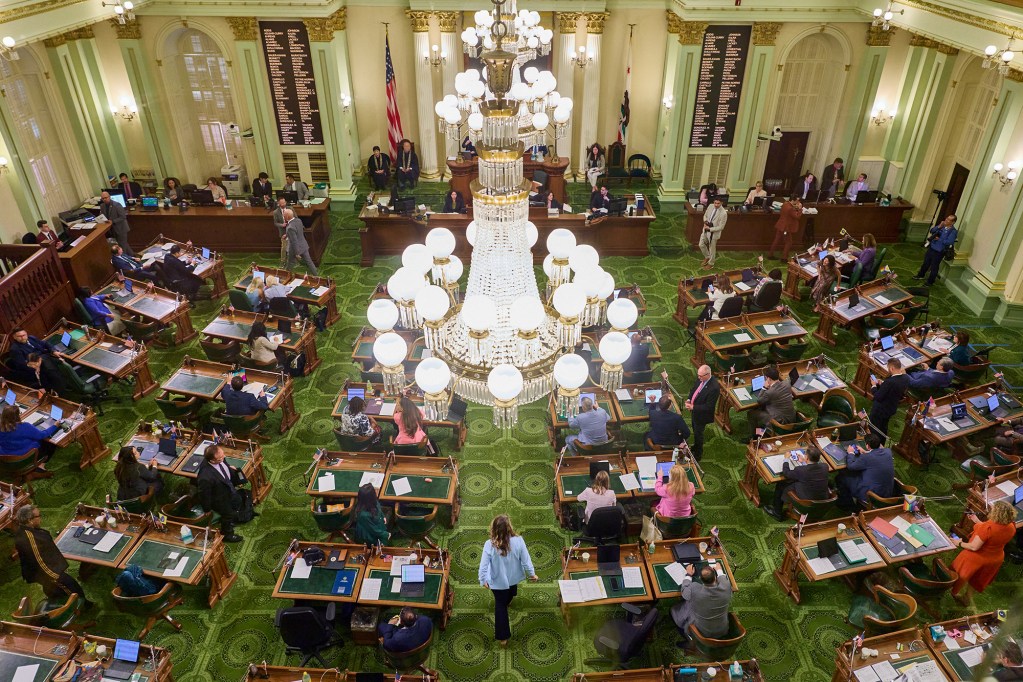
California lawmakers faced a difficult budget year, but they still managed to put hundreds of millions of dollars in earmarks in the state budget to benefit their districts — and help them get re-elected.
In summary
California lawmakers faced a difficult budget year, but they still managed to put hundreds of millions of dollars in earmarks in the state budget to benefit their districts — and help them get re-elected.
Despite facing a $12 billion deficit this year, California’s Legislature still managed to spend at least $415 million for local projects to help lawmakers win their next elections.
CalMatters found close to 100 earmarks inserted into just one of the state’s budget bills for local projects and programs that had little apparent benefit to anyone outside the lawmakers’ districts.
Some of the earmarks raise concerns about legislative priorities in a difficult budget year, such as lawmakers spending millions from the general fund on museums, trails, parks and other amenities in wealthy communities.
The spending includes $5 million in general fund money for a LGBTQ+ venue in high-cost San Francisco, $2.5 million for a private day school in Southern California and $250,000 for a private farm-animal rescue on the North Coast.
Around $250 million of the local-project earmarks were funds taken from the $10 billion Proposition 4 climate bond California voters approved last year.
Some of the Prop. 4 earmarks included:
- $26 million to programs paying farmers for private land conservation.
- $20 million to help the public access a Southern California beach gated off by a wealthy community.
- $15 million for “geologic heritage sites” including the La Brea Tar Pits — whose fossils have been used to study climate change in the last epoch.
The earmarks were approved at the same time Gov. Gavin Newsom and lawmakers left state worker positions unfilled, suspended some health care benefits, forewent raises for firefighters, filled budget holes with high-interest bond money and took billions of dollars from the state’s “rainy day” emergency fund.
Kristen Cox, executive director of the Long Beach Community Table foodbank, said the money lawmakers spent this year to enhance communities in their districts — often for projects that some would consider frills — isn’t going to the neediest Californians.
“It’s misprioritization,” she said. “My priorities are to help the people that need it the most. Their priorities seem to be ‘Let’s make this city look gentrified and pretty and beautiful.’”
A secret process that benefits lawmakers
Many of the earmarks — one-time allotments of cash for a specific purpose or project — are fairly benign and went to local infrastructure needs such as fire stations, parks, public schools and environmental projects.
They also represent just a small portion of the state’s $321 billion budget, which pays for programs and services that typically are intended to help all of California.
But inside the notoriously secretive budget negotiation process, lawmakers also have the ability to set aside sizable chunks of money to benefit their districts through an even more opaque earmark system.
It allows them to direct money to their pet projects without leaving a fingerprint — at least until they issue a press release touting a new community perk or show up for ribbon-cutting and check-passing ceremonies.
Such spending, disparagingly called “pork-barrel spending” or “pork” for short, is hardly new or unique to California, said Thad Kousser, a former legislative staffer and political science professor at UC San Diego. He has extensively studied equity in how politicians divide up budgets for local needs.
Learn more about legislators mentioned in this story.
Mike McGuire
Democrat, State Senate, District 2 (Santa Rosa)
Christopher Cabaldon
Democrat, State Senate, District 3
Jerry McNerney
Democrat, State Senate, District 5 (Stockton)
Scott Wiener
Democrat, State Senate, District 11 (San Francisco)
Monique Limón
Democrat, State Senate, District 19 (Santa Barbara)
Benjamin Allen
Democrat, State Senate, District 24 (El Segundo)
Henry Stern
Democrat, State Senate, District 27 (Calabasas)
Catherine Blakespear
Democrat, State Senate, District 38 (Encinitas)
Brian Jones
Republican, State Senate, District 40 (San Diego)
Cecilia Aguiar-Curry
Democrat, State Assembly, District 4 (Davis)
Ash Kalra
Democrat, State Assembly, District 25 (San Jose)
Gregg Hart
Democrat, State Assembly, District 37 (Santa Barbara)
Jesse Gabriel
Democrat, State Assembly, District 46 (Encino)
There’s a reason it’s pervasive: When politicians keep the cash flowing back home, it helps them get re-elected, he said.
“Politicians across generations — and in every country — try to use some portion of the budget on these clear signals that they’re directing the flow of government dollars to real people and real organizations right at home in their district,” he said. “Voters reward that.”
Eyeing higher office? Send pork home
The biggest recipient of the earmarks in Senate Bill 105 appears to be the North Coast Senate district of Democratic Senate President Pro Tem Mike McGuire. After losing his legislative leadership seat this year, he seems to be positioning himself for a congressional bid, according to The Santa Rosa Press Democrat. If he does run, he’ll be able to tout all the cash he brought to his Senate district this year.
His district was the recipient of more than two dozen earmarks totalling more than $100 million, accounting for a quarter of the earmark funds CalMatters identified. They went to fund a regional hospital, harbors, habitat projects, schools and fire stations. His district also received $250,000 for the farm-animal rescue.
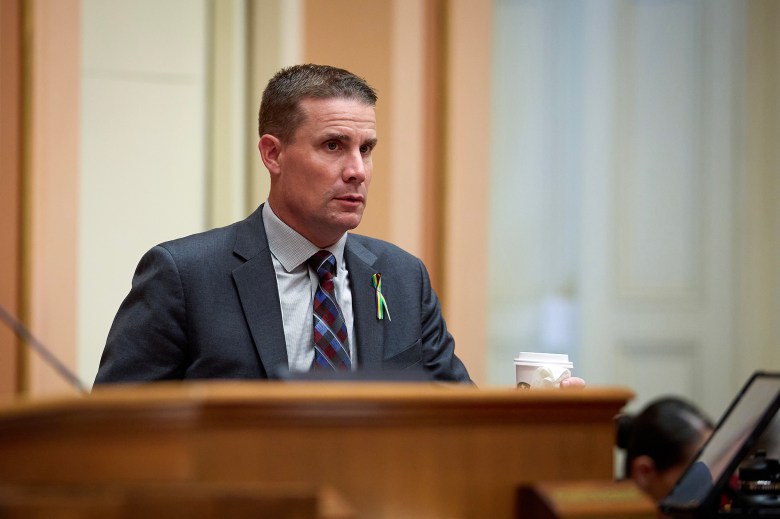
His largest earmarks included $50 million in Prop. 4 funds for a redwood trail that’s to run 320 miles across his district.
McGuire’s office didn’t make him available for an interview. McGuire instead sent an emailed statement defending the earmarks.
“Our state’s budget includes smart, one-time investments across California,” McGuire said. “Many in our state have been working on these projects for years to make California safer, stronger and more resilient.”
Sen. Scott Wiener, the powerful Senate Budget Committee chairperson from San Francisco, is definitely running for higher office. Wiener announced last month he’s running for Nancy Pelosi’s congressional seat.
The budget included at least $9 million in general fund earmarks benefiting the voters of San Francisco who will decide whether to send him to Washington, D.C. The money went for parks, restroom improvements and “to support the preservation and revitalization of a historic LGBTQ+ venue” in the city’s Castro neighborhood, according to the budget bill which doesn’t name the venue.
San Francisco is also slated to receive $1 million for a new oncology clinic and chemotherapy center for Chinese Hospital and $250,000 for “accessibility improvements” to Wah Mei child development center.
Wiener’s office didn’t respond to interview requests.
Lawmakers complained of earmarks
None of the earmarks have a lawmaker’s name on them, making it extremely difficult for members of the public — or even other lawmakers — to decipher whose they are and which districts benefited. The governor’s administration is responsible for some.
Legislative staff told CalMatters while reporting this story that earmark requests sent to budget committees aren’t public records.
CalMatters instead used the Digital Democracy database’s ‘Find your legislators’ tool to triangulate which pork projects are in which lawmakers’ districts from earmarks inserted into SB 105. That’s one of 40 budget-related bills Newsom signed this year.
There are almost certainly more earmarks buried in the other budget measures.
The secretive nature of earmarks — and the number and size of them this year — became a source of contention in September at the Senate Budget and Fiscal Review Committee.
Some Democratic lawmakers complained that so many last-minute earmarks had popped up in the spending bills. They questioned whether the earmarks were being fairly distributed to communities with the most need.
“For the climate bond money, the general fund money, the Medi-Cal money, the Department of Education money, across the transit money, in almost every one, there is at least one — sometimes 40 — specific allocations,” Sacramento Sen. Christopher Cabaldon told the committee.
“The broader concern about equity and balance in those earmarks is certainly a point really well taken,” said Sen. Ben Allen, a Democrat representing the El Segundo area.
Nonetheless, none of the 90 Democrats who control the Legislature voted against the budget this year, according to Digital Democracy.
Newsom also signed it into law. His office didn’t respond to an interview request.
Susan Shelley of the Howard Jarvis Taxpayers Association blasted the pork-project spending as hypocritical, especially as some liberal groups and lawmakers support raising taxes or turning to voters to pass new bonds to prop up the state’s shaky finances.
Politicians, she said, like to say, “‘We need money for everything in California.’ And what are they spending the money on now? Basically gifts to the districts that make the elected representatives look good and that are not essential or not as essential.”
Pork in Prop. 4
About $275 million in Prop. 4 funds also went to backfill the state’s general fund budget covering existing environmental, fire and energy programs and for expenses such as deferred maintenance at state parks.
Using bond funds to pay for existing expenses in the general fund means there’s less bond money available to pay for the new expenditures voters thought they were supporting. The separate bond earmarks from lawmakers reflect their priorities and may not necessarily be what voters wanted either.
Some of the lawmakers’ earmarks include:
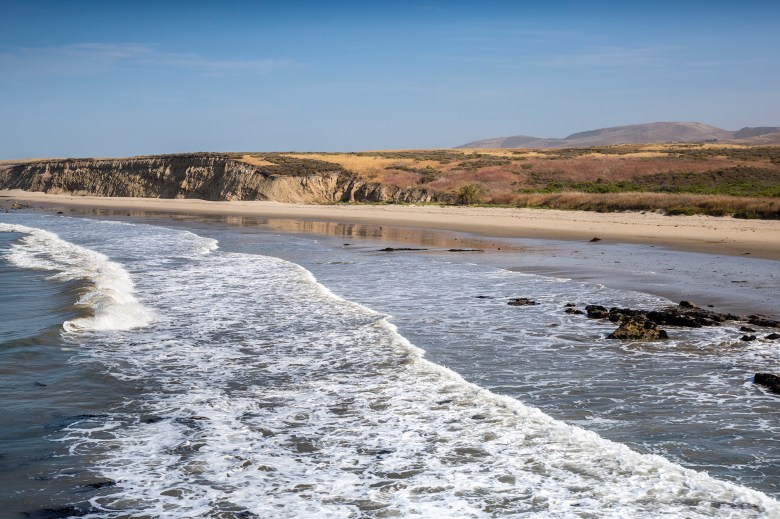
- $40 million to secure public access to a beach blocked off by the wealthy gated Hollister Ranch community in Santa Barbara County and for a separate dam-removal project. Both projects are in the district of Sen. Monique Limón, who is replacing McGuire as the Senate Democratic leader next year. She shares a district with a handful of assemblymembers who may have sought the earmarks.
- Limón’s district also received $1 million for a museum in Santa Barbara “for an interactive water exhibit.” Limón replied to an interview request with an email from her spokesperson, Christina Montoya. “While the senator was not involved in Prop. 4 allocations,” Montoya said, “she is glad to see projects funded that advance the goals of the state.”
- $1 million went to the UC Davis Integrative Center for Alternative Meat and Protein, primarily at the request of San Jose Assemblymember Ash Kalra. UC Davis isn’t in Kalra’s district, but he’s a vegan and the chair of the Assembly Select Committee On Alternative Protein Innovation.
- The $15 million earmark “for geologic heritage sites” including the La Brea Tar Pits in Los Angeles was from Democratic Assemblymember Isaac Bryan. His office didn’t make him available for an interview.
Taxpayers will pay at least $6 billion in interest and other expenses to finance Prop. 4 over the next four decades.
Using Prop. 4 to pay farmers
An example of how earmarks lock up Prop. 4 funds can be found in this year’s budget for the Wildlife Conservation Board. The $10 billion bond is supposed to provide $1 billion for the board to give out as grants in the coming years. The board uses a competitive process that prioritizes habitat project proposals to provide the most ecological benefits for California.
This year, the Legislature gave the board $339 million in Prop. 4 money to spend. But about a quarter of it — $88 million — is going to projects the board must now fund because of lawmakers’ earmarks.
Gregg Hart, a Santa Barbara Democratic assemblymember, got one of the biggest earmarks from the board’s funds — $16 million for a conservation easement on Rancho San Julian, a 13,000-acre private ranch in his district. Conservation easements are legal agreements that ensure private lands don’t get sold and turned into environmentally unfriendly developments.
In an interview, Hart said preserving the ranch’s habitat in perpetuity is in line with what voters intended when they voted for Prop. 4.
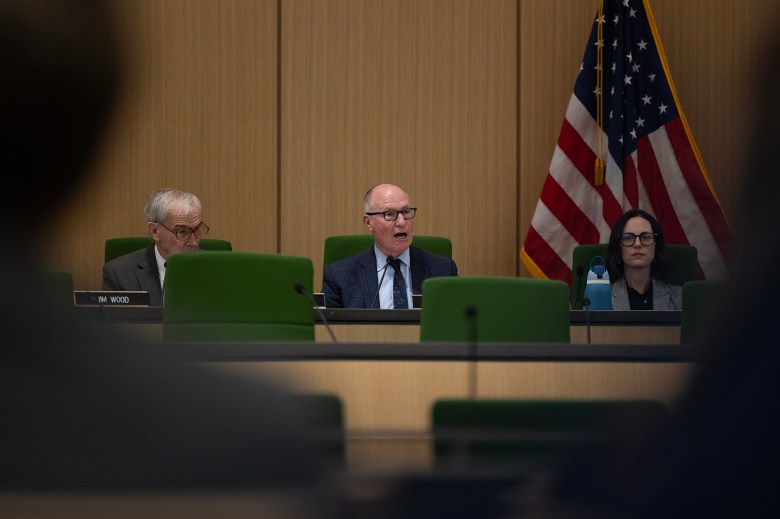
“In my district, this is a signature ranch that is an environmental gem,” Hart said. “And preserving that is a very high-value project.”
The conservation board also must allocate $10 million in Prop. 4 earmarks to programs that will pay farmers and private wetland landowners in the Central Valley to flood their fields to provide habitat for waterbirds.
Central Valley farmers already have received hundreds of millions of dollars in federal crop subsidies over the decades.
The flooded-field earmarks came from Democratic Sen. Jerry McNerney, who represents the Stockton area, and Assemblymember Cecilia Aguiar-Curry representing the Davis area.
In an emailed statement, McNerney called the $10 million expenditure a “win-win for farmers and for wetlands … ensuring that migratory birds have places to rest and refuel on their long journey on the Pacific Flyway.”
The total number of earmarks relying on Prop. 4 funds has Senate Republican Leader Brian Jones of San Diego saying, “I told you so.” He urged voters to reject the bond last year.
“It was going to be pork,” he said. “It was going to be earmarked projects that the legislators are going to be able to move …. into things that really didn’t have anything to do with the story that was being told to the voters when they voted.”
Jones’ district was the recipient of some pork, though he said he made no requests for Prop. 4 money. His earmarks were from the general fund. They include $1.4 million for San Diego County dam repairs and $615,000 to the San Diego Mountain Biking Association “for building and maintaining public trails for mountain biking.”
‘What did we get?’ from the general fund
Other notable earmarks from general fund dollars, separate from the climate bond, include large one-time allocations for projects to benefit the state’s Jewish community. The Legislature has an 18-member Jewish Caucus.
The funds include $15 million for the Museum of Tolerance and the Holocaust Memorial in Los Angeles as well as $5.4 million for the Jewish Community Center of the East Bay.
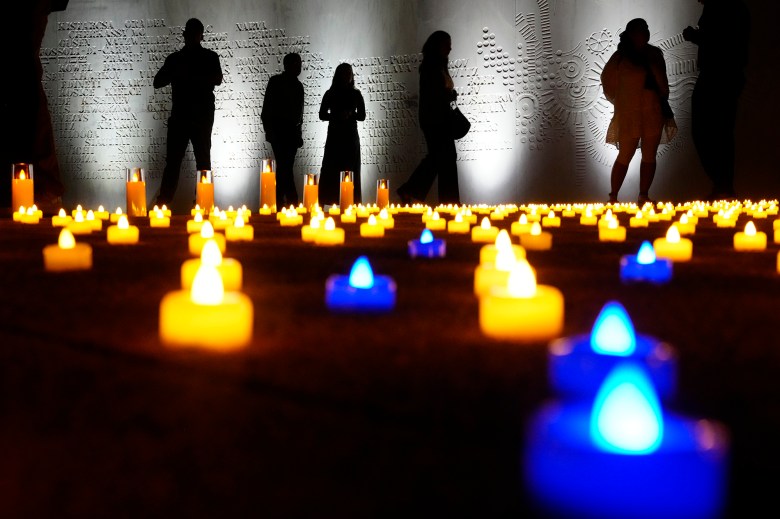
An earmark for $2.5 million also went “for security and other infrastructure” at Milken Community School East Campus, a private Los Angeles Jewish school with annual tuition of nearly $55,000.
The school is in Assemblymember Jesse Gabriel’s and Sen. Henry Stern’s districts. Stern’s office said the earmark for the private school wasn’t his. Gabriel co-chairs the Legislative Jewish Caucus with Wiener. Gabriel also oversees the Assembly Budget Committee. He didn’t return messages. Neither did the school.
Gabriel this week attended a check-passing ceremony at the Discovery Cube in Los Angeles. He and two other local lawmakers touted getting the children’s museum a $5 million earmark from Prop. 4 funds.
Other earmarks using general fund money included at least $1.7 million for trail improvements and an urban garden in Democratic Sen. Catherine Blakespear’s wealthy coastal district, as well as $3.6 million for the Oceanside Museum of Art.
Blakespear responded to an interview request with an emailed statement.
“I’m grateful that these impactful community projects were funded through the state’s general fund,” she said. “I know they will provide immense value to these communities and their residents and are deserving of funding.”
She announced this week she would be appearing at a check-passing ceremony for one of her earmarks: $1.2 million to the city of Mission Viejo for the Oso Creek Trail Improvement Project.
Former Stockton-area Democratic state Sen. Susan Talamantes Eggman said such earmarks are hardly surprising. She was proud to bring back to her district $10 million in her last term to reopen two dilapidated community swimming pools.
“I mean, that is fantastic for my district,” she said.
But she acknowledged it is a lot harder for lawmakers to justify those sorts of expenses when there are so many of them in a difficult budget year.
“I think you either hope that (people) won’t find out, or they see what stuff they’re getting, and they’re like, ‘Oh, all right, well, as long as we got ours,’ right?” she said. “What people are more concerned about is equity. ‘What did we get?’”