

Archaeologists Are Unraveling the Mysteries Behind Deep Pits Found Near Stonehenge
Archaeologists Are Unraveling the Mysteries Behind Deep Pits Found Near Stonehenge Based on a comprehensive study, researchers are now convinced the shafts were human-made, likely dug during the Late Neolithic period roughly 4,000 years ago Sarah Kuta - Daily Correspondent December 10, 2025 9:59 a.m. The pits are evenly spaced around a large circle. University of Bradford In 2020, archaeologists in the United Kingdom made a surprising discovery. At Durrington Walls, a large Neolithic henge not far from Stonehenge, they found more than a dozen large, deep pits buried under layers of loose clay. The pits are mysterious. Each one measures roughly 30 feet wide by 15 feet deep, and together they form a mile-wide circle around Durrington Walls and neighboring Woodhenge. They also appear to be linked with the much older Larkhill causewayed enclosure, built more than 1,000 years before Durrington Walls. For the last few years, archaeologists have been puzzling over their origins: Were they dug intentionally by human hands? Were they naturally occurring structures, like sinkholes? Or is there some other possible explanation for the existence of these colossal shafts? Quick fact: The purpose of Durrington Walls While Stonehenge is thought to have been a sacred place for ceremonies, Durrington Walls was a place where people actually lived. In a new paper published in the journal Internet Archaeology, archaeologists report that they have a much better understanding of the pits’ purpose, chronology and environmental setting. And, now, they are confident the shafts were made by humans. “They can’t be occurring naturally,” says lead author Vincent Gaffney, an archaeologist at the University of Bradford, to the Guardian’s Steven Morris. “It just can’t happen. We think we’ve nailed it.” Chris Gaffney, an archaeologist at the at the University of Bradford, surveys the ground near Durrington Walls. University of Bradford For the study, researchers returned to the site in southern England and used several different methods to further analyze the unusual structures. They used a technique known as electrical resistance tomography to calculate the pits’ depths, and radar and magnetometry to suss out their shapes. They also took core samples of the sediment, then ran the soil through a variety of tests. For instance, they used optically stimulated luminescence to determine the last time each layer of soil had been exposed to the sun. They also looked for traces of animal or plant DNA. Astonishing' Stonehenge discovery offers new insights into Neolithic ancestors. Together, the results of these analyses indicate humans must have been involved, which suggests the pits could be “one of the largest prehistoric structures in Britain, if not the largest,” Gaffney tells the BBC’s Sophie Parker. Researchers suspect the circle pits were created by people living at the site over a short period of time during the Late Neolithic period roughly 4,000 years ago. They were not “simply dug and abandoned” but, rather, appear to have been part of a “structured, monumental landscape that speaks to the complexity and sophistication of Neolithic society,” Gaffney says in a statement. For example, the pits are fairly evenly spaced around the circle, which suggests their Neolithic creators were measuring the distances between them somehow. “The skill and effort that must have been required to not only dig the pits, but also to place them so precisely within the landscape is a marvel,” says study co-author Richard Bates, a geophysicist at the University of St Andrews, in a statement. “When you consider that the pits are spread over such a large distance, the fact they are located in a near perfect circular pattern is quite remarkable.” Researchers used multiple methods to investigate the pits at Durrington Walls. University of Bradford But who dug the pits? And, perhaps more importantly, why? Archaeologists are still trying to definitively answer those questions, but they suspect the shafts were created to serve as some sort of sacred boundary around Durrington Walls. Their creators may also have been trying to connect with the underworld, per the Guardian. “They’re inscribing something about their cosmology, their belief systems, into the earth itself in a very dramatic way,” Gaddney tells the BBC. Get the latest stories in your inbox every weekday.
Based on a comprehensive study, researchers are now convinced the shafts were human-made, likely dug during the Late Neolithic period roughly 4,000 years ago
Archaeologists Are Unraveling the Mysteries Behind Deep Pits Found Near Stonehenge
Based on a comprehensive study, researchers are now convinced the shafts were human-made, likely dug during the Late Neolithic period roughly 4,000 years ago
Sarah Kuta - Daily Correspondent
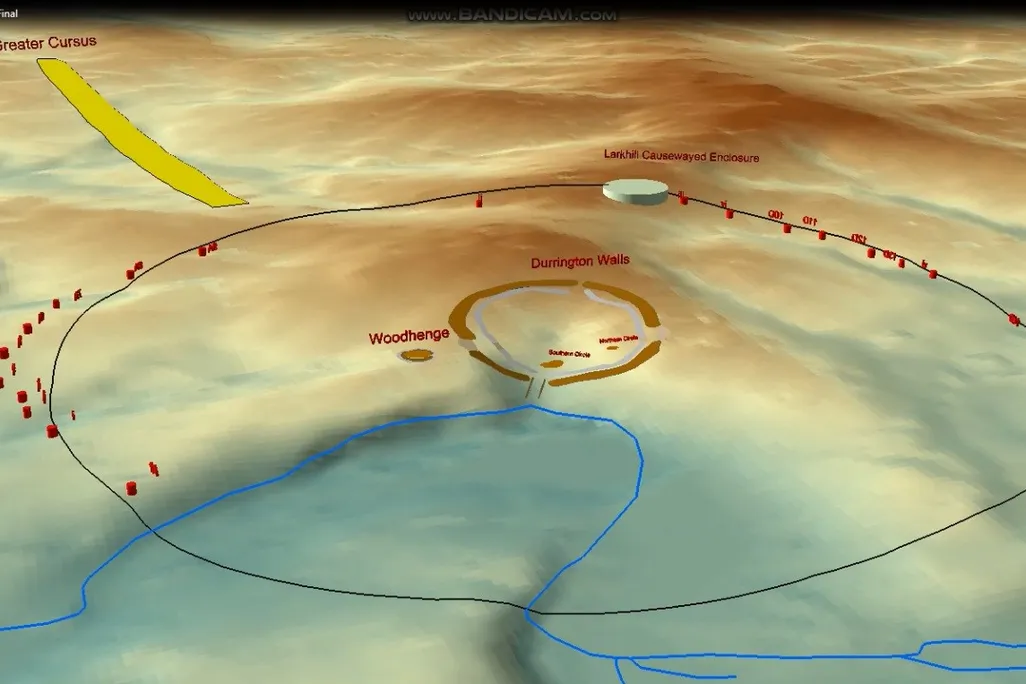
In 2020, archaeologists in the United Kingdom made a surprising discovery. At Durrington Walls, a large Neolithic henge not far from Stonehenge, they found more than a dozen large, deep pits buried under layers of loose clay.
The pits are mysterious. Each one measures roughly 30 feet wide by 15 feet deep, and together they form a mile-wide circle around Durrington Walls and neighboring Woodhenge. They also appear to be linked with the much older Larkhill causewayed enclosure, built more than 1,000 years before Durrington Walls.
For the last few years, archaeologists have been puzzling over their origins: Were they dug intentionally by human hands? Were they naturally occurring structures, like sinkholes? Or is there some other possible explanation for the existence of these colossal shafts?
Quick fact: The purpose of Durrington Walls
- While Stonehenge is thought to have been a sacred place for ceremonies, Durrington Walls was a place where people actually lived.
In a new paper published in the journal Internet Archaeology, archaeologists report that they have a much better understanding of the pits’ purpose, chronology and environmental setting. And, now, they are confident the shafts were made by humans.
“They can’t be occurring naturally,” says lead author Vincent Gaffney, an archaeologist at the University of Bradford, to the Guardian’s Steven Morris. “It just can’t happen. We think we’ve nailed it.”

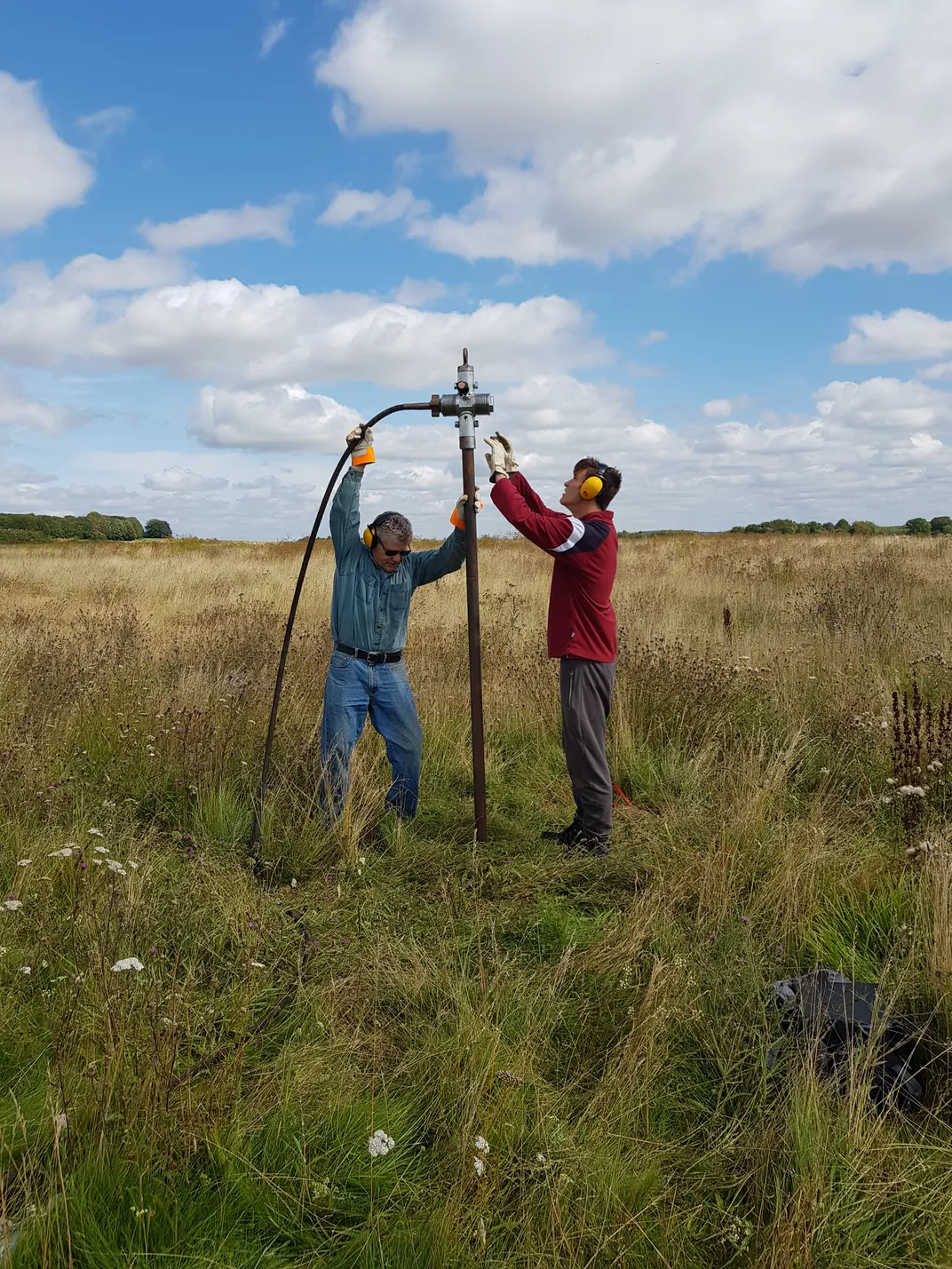
For the study, researchers returned to the site in southern England and used several different methods to further analyze the unusual structures. They used a technique known as electrical resistance tomography to calculate the pits’ depths, and radar and magnetometry to suss out their shapes.
They also took core samples of the sediment, then ran the soil through a variety of tests. For instance, they used optically stimulated luminescence to determine the last time each layer of soil had been exposed to the sun. They also looked for traces of animal or plant DNA.
Astonishing' Stonehenge discovery offers new insights into Neolithic ancestors.
Together, the results of these analyses indicate humans must have been involved, which suggests the pits could be “one of the largest prehistoric structures in Britain, if not the largest,” Gaffney tells the BBC’s Sophie Parker.
Researchers suspect the circle pits were created by people living at the site over a short period of time during the Late Neolithic period roughly 4,000 years ago. They were not “simply dug and abandoned” but, rather, appear to have been part of a “structured, monumental landscape that speaks to the complexity and sophistication of Neolithic society,” Gaffney says in a statement.
For example, the pits are fairly evenly spaced around the circle, which suggests their Neolithic creators were measuring the distances between them somehow.
“The skill and effort that must have been required to not only dig the pits, but also to place them so precisely within the landscape is a marvel,” says study co-author Richard Bates, a geophysicist at the University of St Andrews, in a statement. “When you consider that the pits are spread over such a large distance, the fact they are located in a near perfect circular pattern is quite remarkable.”
But who dug the pits? And, perhaps more importantly, why? Archaeologists are still trying to definitively answer those questions, but they suspect the shafts were created to serve as some sort of sacred boundary around Durrington Walls. Their creators may also have been trying to connect with the underworld, per the Guardian.
“They’re inscribing something about their cosmology, their belief systems, into the earth itself in a very dramatic way,” Gaddney tells the BBC.