Cookies help us run our site more efficiently.

By clicking “Accept”, you agree to the storing of cookies on your device to enhance site navigation, analyze site usage, and assist in our marketing efforts. View our Privacy Policy for more information or to customize your cookie preferences.

A Deadly Pathogen Decimated Sunflower Sea Stars. Look Inside the Lab Working to Bring Them Back by Freezing and Thawing Their Larvae

News Feed
Thursday, December 11, 2025

A Deadly Pathogen Decimated Sunflower Sea Stars. Look Inside the Lab Working to Bring Them Back by Freezing and Thawing Their Larvae For the first time, scientists have cryopreserved and revived the larvae of a sea star species. The breakthrough, made with the giant pink star, gives hope the technique could be repeated to save the imperiled predator Juvenile sunflower sea stars at the Sunflower Star Laboratory in Moss Landing, California. At this phase, each is less than an inch wide, but they can grow to be more than three feet across as adults. Avery Schuyler Nunn Key takeaways: Recovering sunflower sea stars by freezing them in time Ravaged by infectious bacteria, sunflower sea stars literally wasted away across the Pacific coast of North America—and their resulting population crash destabilized kelp forest ecosystems. Scientists pioneered a cryopreservation technique on the closely related giant pink star, raising hopes that a bank of frozen sunflower star larvae could one day be thawed in the same way and released into the wild. Along a working California harbor, where gulls wheel over weathered pilings and the old Western Flyer—the ship John Steinbeck once sailed to the Sea of Cortez—sits restored in its berth, researchers buzz about in a modest lab tucked between warehouses and boatyards. Inside, amid the hiss of pumps and the faint smell of brine from seawater tables, a scientist lifts a small vial from a plume of liquid nitrogen, its frosted casing holding the tiniest flicker of hope for a species on the brink. Each of the 18 vials contains between 500 and 700 larval giant pink sea stars. At this stage, they are tiny specks suspended in seawater, invisible to the naked eye. These particular larvae have been cryopreserved and stored at roughly minus 180 degrees Celsius since March. At the Sunflower Star Laboratory (SSL) in Moss Landing, California, scientists thawed the larval pink sea stars and coaxed them to successfully develop into juveniles this summer—a first for any sea star species. In October, the scientists thawed another batch of larvae from the same cohort to test larval growth and survival under different freezing conditions and thawing protocols. The breakthrough, however, isn’t really about the giant pink star, a species that’s common in the wild. Instead, these larvae serve as a crucial stand-in for the far more imperiled sunflower sea star (Pycnopodia helianthoides)—a vanishing species for which larvae are precious, limited and increasingly difficult to obtain. Perfecting cryopreservation methods on pink stars—ensuring they can survive freezing, resume feeding and grow into juveniles—lays the scientific groundwork for facilitating a return of Pycnopodia. The contents of a thawed vial are placed under a microscope to assess viability of the larvae. Avery Schuyler Nunn The discovery arrives at a precarious time, as sunflower stars have disappeared at a pace rarely seen in marine ecosystems. As a mysterious pathogen ravaged their population along the western shores of North America beginning in 2013, the creatures collapsed from an estimated six billion individuals to functional extinction in parts of their range—all within just a few years. Their loss left kelp forests with dramatically fewer predators, destabilizing ecosystems across the Pacific coast and allowing urchins to proliferate and graze formerly lush underwater canopies into barren rock. Now, scientists hope that “freezing” their larvae will offer a new avenue for bringing the species back. “Cryopreservation is particularly important on the population level when thinking about recovery for this endangered species, because it had major population losses,” says Marissa Baskett, an environmental scientist at the University of California, Davis, who was not involved in the project. The process lets scientists preserve the sea stars’ existing genetic diversity for future reintroduction to the wild, she adds. “Especially given the uncertainty about different disease outbreaks, having that stock to return to is incredibly valuable.” A mysterious and “complete collapse” Sunflower sea stars have long lived in abundance up and down the rugged Pacific coast—from Alaskan archipelagoes to Baja California. The 24-limbed echinoderms sprawled across the seafloor in shades of ochre, crimson and violet. Among the fastest-moving and largest of all sea stars—capable of stretching nearly three feet across—these radiant predators coursed through kelp forests, voraciously hunting purple sea urchins and preventing them from over-grazing on the holdfasts that root towering golden canopies of kelp. An adult sunflower sea star has 24 limbs and can be more than three feet wide. This one was photographed off Point Dume State Beach near Los Angeles. Brent Durand via Getty Images “In Northern California and Oregon, there historically would have been multiple keystone predators within the kelp forest ecosystem who are punching on purple urchins and keeping their population in check,” says Reuven Bank, board chair of SSL. “But the southern sea otter was extirpated across its historic range, so we were left with sunflower stars being the last major keystone predator of purple urchins across over 100 miles of coastline.” “And sunflower stars didn’t just eat urchins, they scared them,” Bank adds. “Urchins can smell a sunflower star approaching, and in healthy kelp forests they hide more and graze less. Even without consuming them, sunflower stars helped keep urchin behavior, and therefore kelp forests, in balance.” Then, in June 2013, tidepool monitors along Washington’s Olympic Peninsula documented an unprecedented sight. The once-sturdy sea stars had turned soft, pale and contorted, their arms curling and detaching from their bodies. By late summer, the same mysterious affliction had surfaced in British Columbia, and it began sweeping both north and south with startling speed. The emerging epidemic, which caused the invertebrates to literally disintegrate, would soon be known as sea star wasting disease. An infamous marine heatwave—nicknamed “The Blob”—had settled over the Pacific by 2014, thrusting the coast into a fever. Ocean temperatures spiked, likely speeding up the disease progression in already stressed sea stars and leading to higher mortality. In the warm, stagnant water, infected sunflower stars dissolved at an eerily rapid pace, leaving behind ghost-white films of bacterial mass where the vibrant predators had been just days before. “You’d have apparently healthy stars basically melt away into puddles of goo within 48 hours,” says Andrew Kim, lab manager at SSL. “It happened so quickly, and I don’t think folks were prepared for the ensuing ecosystem shift. You don’t often expect diseases to come through and totally reshape ecosystem dynamics within such a short period. But that’s what we saw.” Without sunflower sea stars to keep those spiny purple urchins in check, the balance began to falter, setting the stage for an unprecedented chain reaction. Urchin populations skyrocketed, grazing on kelp without limits, and once-thriving underwater forests collapsed into barren rock. A dense group of purple sea urchins, which exploded in population after the sunflower sea stars disappeared, photographed near Mendocino Headlands State Park, north of San Francisco. Brent Durand via Getty Images In California, with 99 percent loss, sunflower sea stars are now considered functionally extinct. “Even though there may be a few remnant individuals left, they can no longer fulfill their historic role in the ecosystem,” Bank says. As sunflower stars unraveled in the wild, another species—its thick-armed cousin, the giant pink star—offered an unexpected foothold for hope. The pink stars share a nearly identical geographic range and life history with sunflower stars, and crucially, their larvae can be raised in aquaria. If scientists could learn to freeze and revive the pink star in its early life stages, they wondered, could that knowledge become a lifeline for the sunflower star? That’s where the small team in Moss Landing stepped in. Freezing sea stars for the future What these scientists did was something no one had ever pulled off with a sea star. Working with giant pink stars, researchers spawned adults at the Aquarium of the Pacific in Long Beach, California, fertilized their gametes to produce thousands of larvae, and shipped those microscopic bodies to the Frozen Zoo—a cryopreserved archive of creatures operated by the San Diego Zoo Wildlife Alliance. There, reproductive scientists plunged the larvae into liquid nitrogen, cooling them to extremely low temperatures and pausing their cells’ biological activity. The larvae, essentially frozen in time, were shielded from ice crystal damage with special cryoprotectant mixtures. Sunflower Star Laboratory researchers remove a vial of pink star larvae from an insulated cooler at around minus 180 degrees Celsius in preparation for thawing. Avery Schuyler Nunn After months in this suspended state, the larvae were sent to the Sunflower Star Laboratory where Carly Young, a San Diego Zoo Wildlife Alliance scientist who advances cryopreservation and reproductive-rescue tools, led the team in thawing the vials. She had fine-tuned the ideal way to keep the larvae alive as they returned to real-world temperatures, carefully testing more than 100 “recipes” with various warming rates, cryoprotectant dilutions and rehydration steps. The pink star larvae not only survived thawing, but have thus far lived all the way through metamorphosis into juveniles. Scientists watched the little stars settle spontaneously along the bottom of their beakers just 19 days after revival. The success prompted the team to apply the same cryopreservation protocols to sunflower star larvae from the Alaska SeaLife Center. The larvae will be frozen in perpetuity, creating the first-ever cryopreserved archive of the species—like a seed bank, but for the baby sea stars. “A famous quote from the ’70s, when the Frozen Zoo in San Diego was established, was, ‘You must collect things for reasons you don’t yet understand,’” says Ashley Kidd, conservation project manager at SSL. “We don’t know when the other shoe is going to drop and what populations are going to look like as the planet changes. So, rather than chasing ghosts around the ocean floor, we really focused on what we can do with animals that are currently under human care somewhere.” While cryopreservation itself isn’t a ready-made restoration tool, it opens the door to conserving genetic diversity of a species and banking rare lineages for potential reintroduction to the wild. In the 1970s and 1990s, researchers began testing cryopreservation of marine invertebrates with sperm and larvae, establishing the basic protocols that this team could apply to sea stars. The breakthrough doesn’t restore kelp forests by itself, but the SSL scientists note that cryopreservation creates something the conservation community has desperately needed: time. Time to hold onto genetic diversity, time to refine captive rearing and time to prepare for future reintroduction at scales big enough to matter. The ultimate test, the researchers say, will be translating the thawing process to sunflower sea stars. Carly Young, at the Sunflower Star Laboratory, looks for movement in the young sea stars. Avery Schuyler Nunn Just this summer, scientists uncovered a piece of the puzzle that had eluded them for more than a decade: the pathogen behind sea star wasting disease. In a four-year international effort, researchers traced the outbreak to a strain of the marine bacterium Vibrio pectenicida. When cultured and injected into healthy sea stars, it reproduced the telltale symptoms—softening arms, rapid disintegration and death within days. The finding, published in Nature Ecology and Evolution in August, gives recovery teams a way to test for the pathogen in labs and hatcheries, tighten quarantine measures and understand disease risks before returning captive-bred sea stars to the Pacific. “It’s massively important to know what to look for, and the fact that we are now able to test for this disease is going to be critical in advancing our ability to move forward with reintroductions and continuing the research,” notes Kim. “We’ve already been able to take fluid samples from all of our stars and get them analyzed for the presence of Vibrio pectenicida, so we’ve mobilized very quickly on the heels of development.” Paired with this new diagnostic clarity, advances in cryopreservation offer a second front in the effort to save the species. Frozen larvae can be stored for decades and offer flexibility for selective breeding of disease-tolerant traits, notes the team. Cryopreservation adds another tool to the scientists’ toolbox as they fight to prevent the species—and, in turn, its ecosystem—from wasting away. “Bringing back sunflower stars,” Bank says, “is the single-most important step we can take toward restoring kelp forest balance.” Get the latest Science stories in your inbox.

For the first time, scientists have cryopreserved and revived the larvae of a sea star species. The breakthrough, made with the giant pink star, gives hope the technique could be repeated to save the imperiled predator
A Deadly Pathogen Decimated Sunflower Sea Stars. Look Inside the Lab Working to Bring Them Back by Freezing and Thawing Their Larvae

For the first time, scientists have cryopreserved and revived the larvae of a sea star species. The breakthrough, made with the giant pink star, gives hope the technique could be repeated to save the imperiled predator

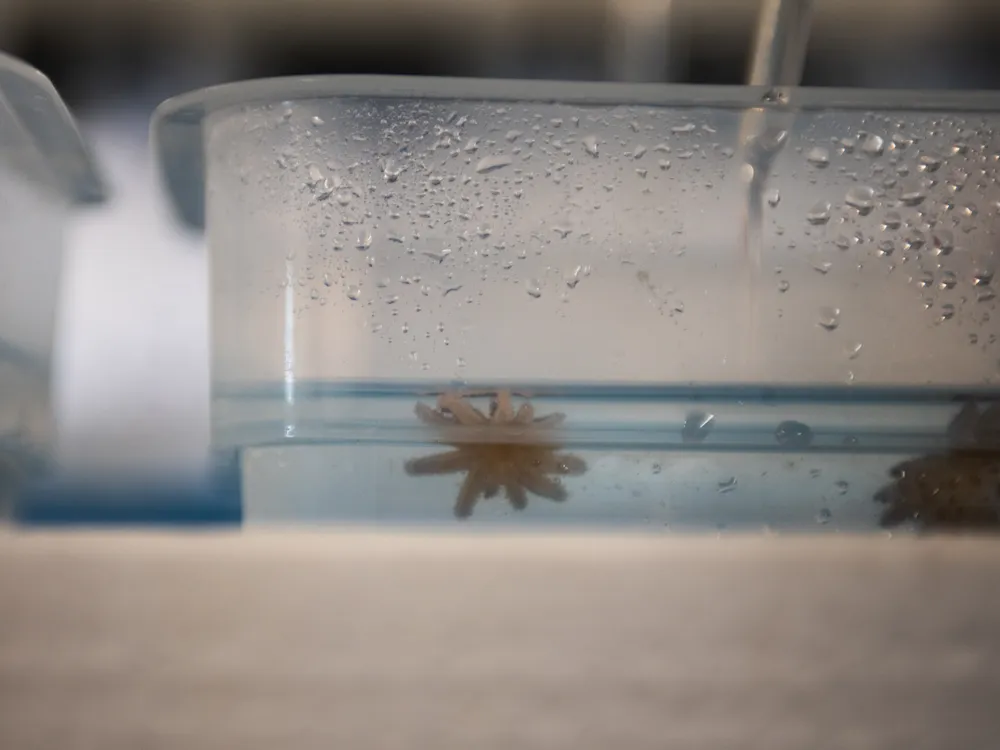
a small sea star in a tub in a lab
Juvenile sunflower sea stars at the Sunflower Star Laboratory in Moss Landing, California. At this phase, each is less than an inch wide, but they can grow to be more than three feet across as adults. Avery Schuyler Nunn

Key takeaways: Recovering sunflower sea stars by freezing them in time

  • Ravaged by infectious bacteria, sunflower sea stars literally wasted away across the Pacific coast of North America—and their resulting population crash destabilized kelp forest ecosystems.
  • Scientists pioneered a cryopreservation technique on the closely related giant pink star, raising hopes that a bank of frozen sunflower star larvae could one day be thawed in the same way and released into the wild.

Along a working California harbor, where gulls wheel over weathered pilings and the old Western Flyer—the ship John Steinbeck once sailed to the Sea of Cortez—sits restored in its berth, researchers buzz about in a modest lab tucked between warehouses and boatyards. Inside, amid the hiss of pumps and the faint smell of brine from seawater tables, a scientist lifts a small vial from a plume of liquid nitrogen, its frosted casing holding the tiniest flicker of hope for a species on the brink.

Each of the 18 vials contains between 500 and 700 larval giant pink sea stars. At this stage, they are tiny specks suspended in seawater, invisible to the naked eye. These particular larvae have been cryopreserved and stored at roughly minus 180 degrees Celsius since March.

At the Sunflower Star Laboratory (SSL) in Moss Landing, California, scientists thawed the larval pink sea stars and coaxed them to successfully develop into juveniles this summer—a first for any sea star species. In October, the scientists thawed another batch of larvae from the same cohort to test larval growth and survival under different freezing conditions and thawing protocols.

The breakthrough, however, isn’t really about the giant pink star, a species that’s common in the wild. Instead, these larvae serve as a crucial stand-in for the far more imperiled sunflower sea star (Pycnopodia helianthoides)—a vanishing species for which larvae are precious, limited and increasingly difficult to obtain. Perfecting cryopreservation methods on pink stars—ensuring they can survive freezing, resume feeding and grow into juveniles—lays the scientific groundwork for facilitating a return of Pycnopodia.

a droplet of water seen under a microscope
The contents of a thawed vial are placed under a microscope to assess viability of the larvae. Avery Schuyler Nunn

The discovery arrives at a precarious time, as sunflower stars have disappeared at a pace rarely seen in marine ecosystems. As a mysterious pathogen ravaged their population along the western shores of North America beginning in 2013, the creatures collapsed from an estimated six billion individuals to functional extinction in parts of their range—all within just a few years. Their loss left kelp forests with dramatically fewer predators, destabilizing ecosystems across the Pacific coast and allowing urchins to proliferate and graze formerly lush underwater canopies into barren rock. Now, scientists hope that “freezing” their larvae will offer a new avenue for bringing the species back.

“Cryopreservation is particularly important on the population level when thinking about recovery for this endangered species, because it had major population losses,” says Marissa Baskett, an environmental scientist at the University of California, Davis, who was not involved in the project. The process lets scientists preserve the sea stars’ existing genetic diversity for future reintroduction to the wild, she adds. “Especially given the uncertainty about different disease outbreaks, having that stock to return to is incredibly valuable.”

A mysterious and “complete collapse”

Sunflower sea stars have long lived in abundance up and down the rugged Pacific coast—from Alaskan archipelagoes to Baja California. The 24-limbed echinoderms sprawled across the seafloor in shades of ochre, crimson and violet. Among the fastest-moving and largest of all sea stars—capable of stretching nearly three feet across—these radiant predators coursed through kelp forests, voraciously hunting purple sea urchins and preventing them from over-grazing on the holdfasts that root towering golden canopies of kelp.
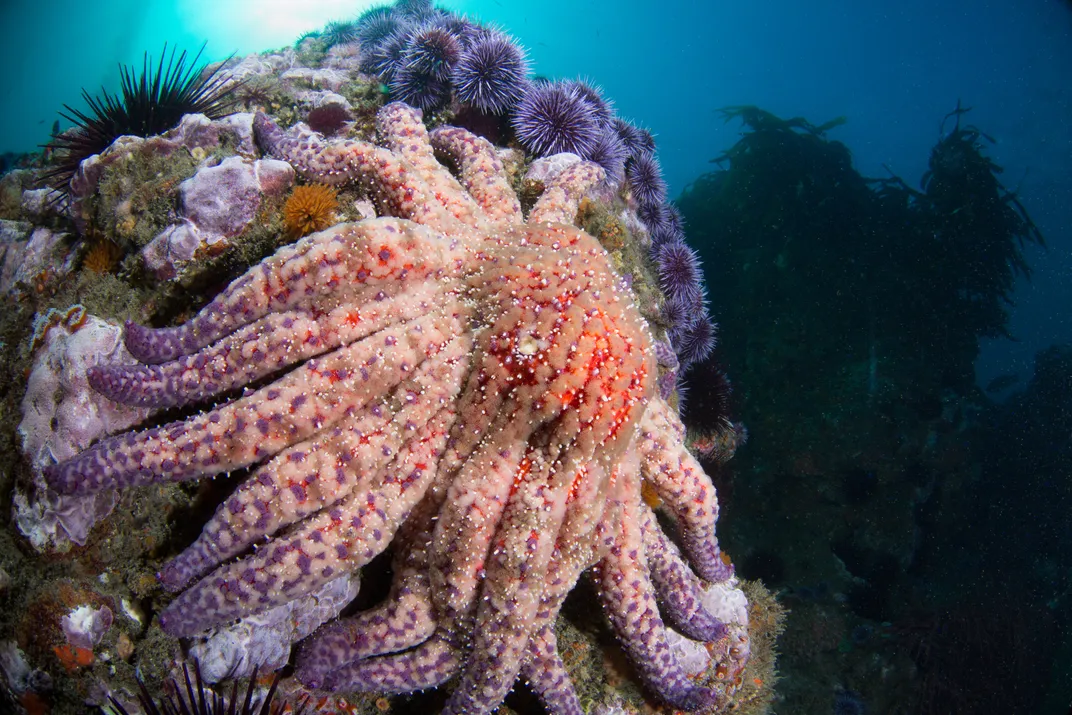
a large reddish sunflower sea star underwater with some purple sea urchins behind it
An adult sunflower sea star has 24 limbs and can be more than three feet wide. This one was photographed off Point Dume State Beach near Los Angeles. Brent Durand via Getty Images

“In Northern California and Oregon, there historically would have been multiple keystone predators within the kelp forest ecosystem who are punching on purple urchins and keeping their population in check,” says Reuven Bank, board chair of SSL. “But the southern sea otter was extirpated across its historic range, so we were left with sunflower stars being the last major keystone predator of purple urchins across over 100 miles of coastline.”

“And sunflower stars didn’t just eat urchins, they scared them,” Bank adds. “Urchins can smell a sunflower star approaching, and in healthy kelp forests they hide more and graze less. Even without consuming them, sunflower stars helped keep urchin behavior, and therefore kelp forests, in balance.”

Then, in June 2013, tidepool monitors along Washington’s Olympic Peninsula documented an unprecedented sight. The once-sturdy sea stars had turned soft, pale and contorted, their arms curling and detaching from their bodies. By late summer, the same mysterious affliction had surfaced in British Columbia, and it began sweeping both north and south with startling speed. The emerging epidemic, which caused the invertebrates to literally disintegrate, would soon be known as sea star wasting disease.

An infamous marine heatwave—nicknamed “The Blob”—had settled over the Pacific by 2014, thrusting the coast into a fever. Ocean temperatures spiked, likely speeding up the disease progression in already stressed sea stars and leading to higher mortality. In the warm, stagnant water, infected sunflower stars dissolved at an eerily rapid pace, leaving behind ghost-white films of bacterial mass where the vibrant predators had been just days before.

“You’d have apparently healthy stars basically melt away into puddles of goo within 48 hours,” says Andrew Kim, lab manager at SSL. “It happened so quickly, and I don’t think folks were prepared for the ensuing ecosystem shift. You don’t often expect diseases to come through and totally reshape ecosystem dynamics within such a short period. But that’s what we saw.”

Without sunflower sea stars to keep those spiny purple urchins in check, the balance began to falter, setting the stage for an unprecedented chain reaction. Urchin populations skyrocketed, grazing on kelp without limits, and once-thriving underwater forests collapsed into barren rock.
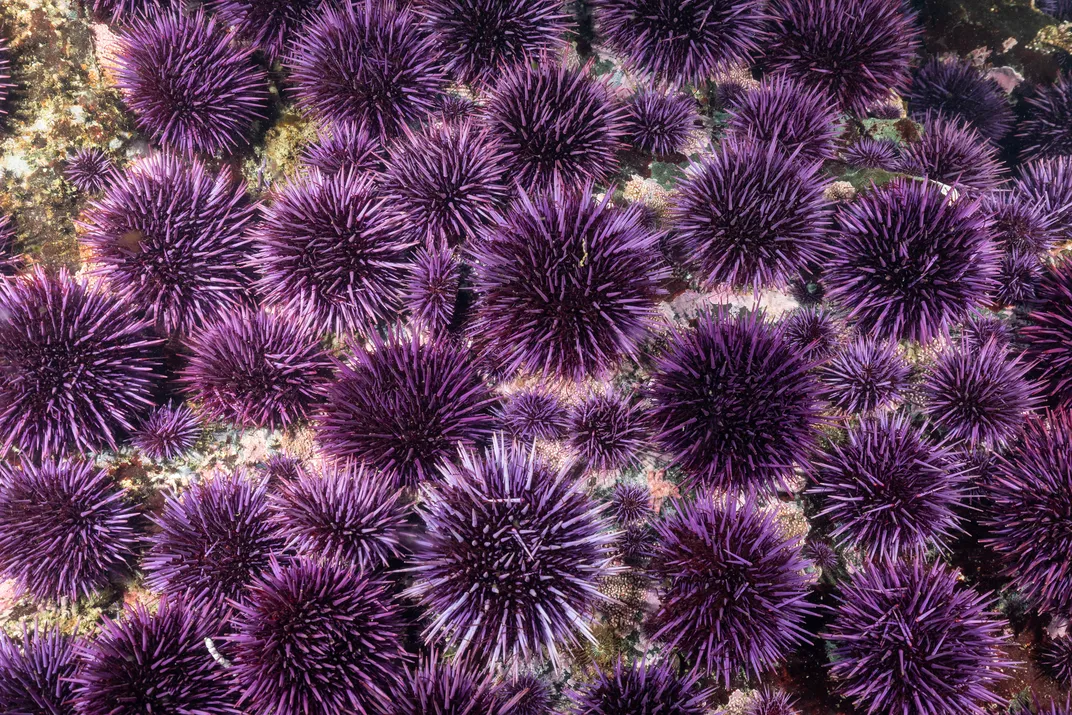
a cluster of purple sea urchins
A dense group of purple sea urchins, which exploded in population after the sunflower sea stars disappeared, photographed near Mendocino Headlands State Park, north of San Francisco. Brent Durand via Getty Images

In California, with 99 percent loss, sunflower sea stars are now considered functionally extinct. “Even though there may be a few remnant individuals left, they can no longer fulfill their historic role in the ecosystem,” Bank says.

As sunflower stars unraveled in the wild, another species—its thick-armed cousin, the giant pink star—offered an unexpected foothold for hope. The pink stars share a nearly identical geographic range and life history with sunflower stars, and crucially, their larvae can be raised in aquaria. If scientists could learn to freeze and revive the pink star in its early life stages, they wondered, could that knowledge become a lifeline for the sunflower star?

That’s where the small team in Moss Landing stepped in.

Freezing sea stars for the future

What these scientists did was something no one had ever pulled off with a sea star. Working with giant pink stars, researchers spawned adults at the Aquarium of the Pacific in Long Beach, California, fertilized their gametes to produce thousands of larvae, and shipped those microscopic bodies to the Frozen Zoo—a cryopreserved archive of creatures operated by the San Diego Zoo Wildlife Alliance. There, reproductive scientists plunged the larvae into liquid nitrogen, cooling them to extremely low temperatures and pausing their cells’ biological activity. The larvae, essentially frozen in time, were shielded from ice crystal damage with special cryoprotectant mixtures.
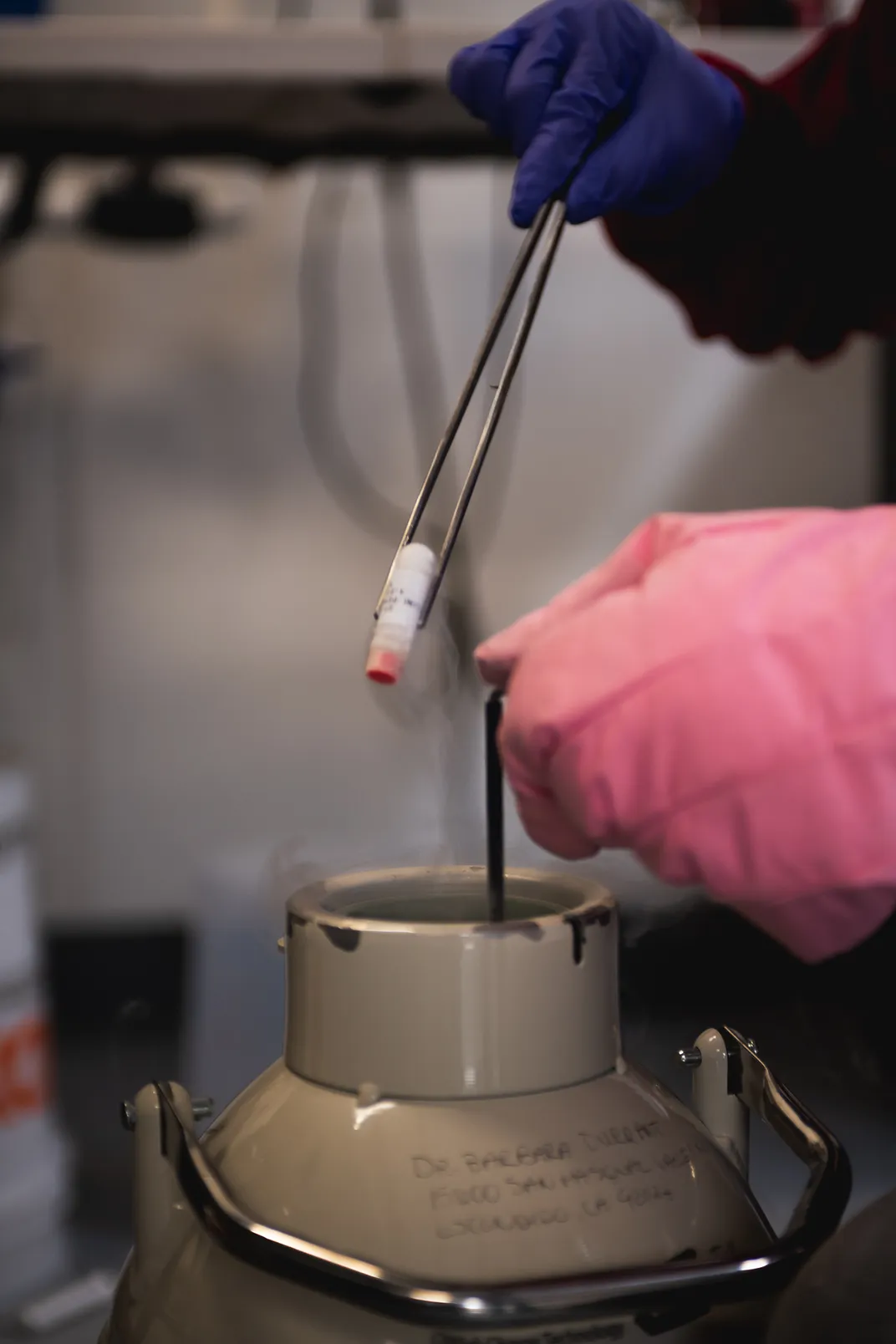
gloved hands using tongs hold a small vial extracted from liquid nitrogen
Sunflower Star Laboratory researchers remove a vial of pink star larvae from an insulated cooler at around minus 180 degrees Celsius in preparation for thawing. Avery Schuyler Nunn

After months in this suspended state, the larvae were sent to the Sunflower Star Laboratory where Carly Young, a San Diego Zoo Wildlife Alliance scientist who advances cryopreservation and reproductive-rescue tools, led the team in thawing the vials. She had fine-tuned the ideal way to keep the larvae alive as they returned to real-world temperatures, carefully testing more than 100 “recipes” with various warming rates, cryoprotectant dilutions and rehydration steps.

The pink star larvae not only survived thawing, but have thus far lived all the way through metamorphosis into juveniles. Scientists watched the little stars settle spontaneously along the bottom of their beakers just 19 days after revival.

The success prompted the team to apply the same cryopreservation protocols to sunflower star larvae from the Alaska SeaLife Center. The larvae will be frozen in perpetuity, creating the first-ever cryopreserved archive of the species—like a seed bank, but for the baby sea stars.

“A famous quote from the ’70s, when the Frozen Zoo in San Diego was established, was, ‘You must collect things for reasons you don’t yet understand,’” says Ashley Kidd, conservation project manager at SSL. “We don’t know when the other shoe is going to drop and what populations are going to look like as the planet changes. So, rather than chasing ghosts around the ocean floor, we really focused on what we can do with animals that are currently under human care somewhere.”

While cryopreservation itself isn’t a ready-made restoration tool, it opens the door to conserving genetic diversity of a species and banking rare lineages for potential reintroduction to the wild. In the 1970s and 1990s, researchers began testing cryopreservation of marine invertebrates with sperm and larvae, establishing the basic protocols that this team could apply to sea stars.

The breakthrough doesn’t restore kelp forests by itself, but the SSL scientists note that cryopreservation creates something the conservation community has desperately needed: time. Time to hold onto genetic diversity, time to refine captive rearing and time to prepare for future reintroduction at scales big enough to matter. The ultimate test, the researchers say, will be translating the thawing process to sunflower sea stars.
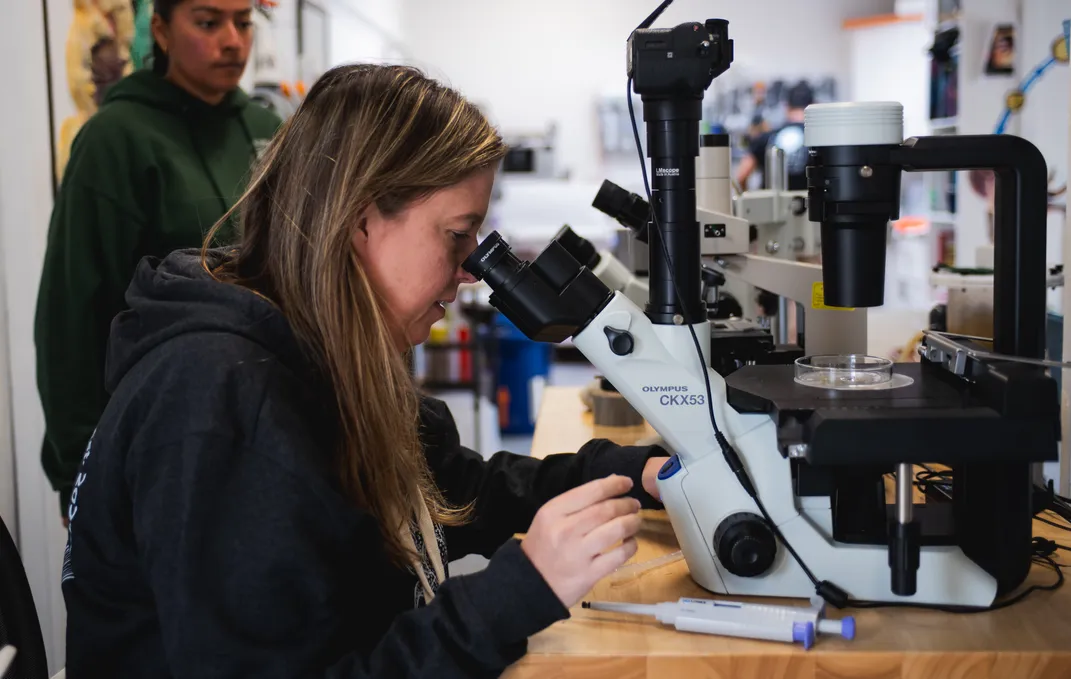
a woman sits at a table looking through a microscope
Carly Young, at the Sunflower Star Laboratory, looks for movement in the young sea stars. Avery Schuyler Nunn

Just this summer, scientists uncovered a piece of the puzzle that had eluded them for more than a decade: the pathogen behind sea star wasting disease. In a four-year international effort, researchers traced the outbreak to a strain of the marine bacterium Vibrio pectenicida. When cultured and injected into healthy sea stars, it reproduced the telltale symptoms—softening arms, rapid disintegration and death within days. The finding, published in Nature Ecology and Evolution in August, gives recovery teams a way to test for the pathogen in labs and hatcheries, tighten quarantine measures and understand disease risks before returning captive-bred sea stars to the Pacific.

“It’s massively important to know what to look for, and the fact that we are now able to test for this disease is going to be critical in advancing our ability to move forward with reintroductions and continuing the research,” notes Kim. “We’ve already been able to take fluid samples from all of our stars and get them analyzed for the presence of Vibrio pectenicida, so we’ve mobilized very quickly on the heels of development.”

Paired with this new diagnostic clarity, advances in cryopreservation offer a second front in the effort to save the species. Frozen larvae can be stored for decades and offer flexibility for selective breeding of disease-tolerant traits, notes the team. Cryopreservation adds another tool to the scientists’ toolbox as they fight to prevent the species—and, in turn, its ecosystem—from wasting away.

“Bringing back sunflower stars,” Bank says, “is the single-most important step we can take toward restoring kelp forest balance.”

Get the latest Science stories in your inbox.

Read the full story here.
Photos courtesy of

Contributor: 'Save the whales' worked for decades, but now gray whales are starving

The once-booming population that passed California twice a year has cratered because of retreating sea ice. A new kind of intervention is needed.

Recently, while sailing with friends on San Francisco Bay, I enjoyed the sight of harbor porpoises, cormorants, pelicans, seals and sea lions — and then the spouting plume and glistening back of a gray whale that gave me pause. Too many have been seen inside the bay recently.California’s gray whales have been considered an environmental success story since the passage of the 1972 Marine Mammal Protection Act and 1986’s global ban on commercial whaling. They’re also a major tourist attraction during their annual 12,000-mile round-trip migration between the Arctic and their breeding lagoons in Baja California. In late winter and early spring — when they head back north and are closest to the shoreline, with the moms protecting the calves — they can be viewed not only from whale-watching boats but also from promontories along the California coast including Point Loma in San Diego, Point Lobos in Monterey and Bodega Head and Shelter Cove in Northern California.In 1972, there were some 10,000 gray whales in the population on the eastern side of the Pacific. Generations of whaling all but eliminated the western population — leaving only about 150 alive today off of East Asia and Russia. Over the four decades following passage of the Marine Mammal Protection Act, the eastern whale numbers grew steadily to 27,000 by 2016, a hopeful story of protection leading to restoration. Then, unexpectedly over the last nine years, the eastern gray whale population has crashed, plummeting by more than half to 12,950, according to a recent report by the National Oceanic and Atmospheric Administration, the lowest numbers since the 1970s.Today’s changing ocean and Arctic ice conditions linked to fossil-fuel-fired climate change are putting this species again at risk of extinction.While there has been some historical variation in their population, gray whales — magnificent animals that can grow up to 50 feet long and weigh as much as 80,000 pounds — are now regularly starving to death as their main food sources disappear. This includes tiny shrimp-like amphipods in the whales’ summer feeding grounds in the Arctic. It’s there that the baleen filter feeders spend the summer gorging on tiny crustaceans from the muddy bottom of the Bering, Chuckchi and Beaufort seas, creating shallow pits or potholes in the process. But, with retreating sea ice, there is less under-ice algae to feed the amphipods that in turn feed the whales. Malnourished and starving whales are also producing fewer offspring.As a result of more whales washing up dead, NOAA declared an “unusual mortality event” in California in 2019. Between 2019 and 2025, at least 1,235 gray whales were stranded dead along the West Coast. That’s eight times greater than any previous 10-year average.While there seemed to be some recovery in 2024, 2025 brought back the high casualty rates. The hungry whales now come into crowded estuaries like San Francisco Bay to feed, making them vulnerable to ship traffic. Nine in the bay were killed by ship strikes last year while another 12 appear to have died of starvation.Michael Stocker, executive director of the acoustics group Ocean Conservation Research, has been leading whale-viewing trips to the gray whales’ breeding ground at San Ignacio Lagoon in Baja California since 2006. “When we started going, there would be 400 adult whales in the lagoon, including 100 moms and their babies,” he told me. “This year we saw about 100 adult whales, only five of which were in momma-baby pairs.” Where once the predators would not have dared to hunt, he said that more recently, “orcas came into the lagoon and ate a couple of the babies because there were not enough adult whales to fend them off.”Southern California’s Gray Whale Census & Behavior Project reported record-low calf counts last year.The loss of Arctic sea ice and refusal of the world’s nations recently gathered at the COP30 Climate Summit in Brazil to meet previous commitments to reduce greenhouse gas emissions suggest that the prospects for gray whales and other wildlife in our warming seas, including key food species for humans such as salmon, cod and herring, look grim.California shut down the nation’s last whaling station in 1971. And yet now whales that were once hunted for their oil are falling victim to the effects of the petroleum or “rock oil” that replaced their melted blubber as a source of light and lubrication. That’s because the burning of oil, coal and gas are now overheating our blue planet. While humans have gone from hunting to admiring whales as sentient beings in recent decades, our own intelligence comes into question when we fail to meet commitments to a clean carbon-free energy future. That could be the gray whales’ last best hope, if there is any.David Helvarg is the executive director of Blue Frontier, an ocean policy group, and co-host of “Rising Tide: The Ocean Podcast.” He is the author of the forthcoming “Forest of the Sea: The Remarkable Life and Imperiled Future of Kelp.”

Pills that communicate from the stomach could improve medication adherence

MIT engineers designed capsules with biodegradable radio frequency antennas that can reveal when the pill has been swallowed.

In an advance that could help ensure people are taking their medication on schedule, MIT engineers have designed a pill that can report when it has been swallowed.The new reporting system, which can be incorporated into existing pill capsules, contains a biodegradable radio frequency antenna. After it sends out the signal that the pill has been consumed, most components break down in the stomach while a tiny RF chip passes out of the body through the digestive tract.This type of system could be useful for monitoring transplant patients who need to take immunosuppressive drugs, or people with infections such as HIV or TB, who need treatment for an extended period of time, the researchers say.“The goal is to make sure that this helps people receive the therapy they need to help maximize their health,” says Giovanni Traverso, an associate professor of mechanical engineering at MIT, a gastroenterologist at Brigham and Women’s Hospital, and an associate member of the Broad Institute of MIT and Harvard.Traverso is the senior author of the new study, which appears today in Nature Communications. Mehmet Girayhan Say, an MIT research scientist, and Sean You, a former MIT postdoc, are the lead authors of the paper.A pill that communicatesPatients’ failure to take their medicine as prescribed is a major challenge that contributes to hundreds of thousands of preventable deaths and billions of dollars in health care costs annually.To make it easier for people to take their medication, Traverso’s lab has worked on delivery capsules that can remain in the digestive tract for days or weeks, releasing doses at predetermined times. However, this approach may not be compatible with all drugs.“We’ve developed systems that can stay in the body for a long time, and we know that those systems can improve adherence, but we also recognize that for certain medications, we can’t change the pill,” Traverso says. “The question becomes: What else can we do to help the person and help their health care providers ensure that they’re receiving the medication?”In their new study, the researchers focused on a strategy that would allow doctors to more closely monitor whether patients are taking their medication. Using radio frequency — a type of signal that can be easily detected from outside the body and is safe for humans — they designed a capsule that can communicate after the patient has swallowed it.There have been previous efforts to develop RF-based signaling devices for medication capsules, but those were all made from components that don’t break down easily in the body and would need to travel through the digestive system.To minimize the potential risk of any blockage of the GI tract, the MIT team decided to create an RF-based system that would be bioresorbable, meaning that it can be broken down and absorbed by the body. The antenna that sends out the RF signal is made from zinc, and it is embedded into a cellulose particle.“We chose these materials recognizing their very favorable safety profiles and also environmental compatibility,” Traverso says.The zinc-cellulose antenna is rolled up and placed inside a capsule along with the drug to be delivered. The outer layer of the capsule is made from gelatin coated with a layer of cellulose and either molybdenum or tungsten, which blocks any RF signal from being emitted.Once the capsule is swallowed, the coating breaks down, releasing the drug along with the RF antenna. The antenna can then pick up an RF signal sent from an external receiver and, working with a small RF chip, sends back a signal to confirm that the capsule was swallowed. This communication happens within 10 minutes of the pill being swallowed.The RF chip, which is about 400 by 400 micrometers, is an off-the-shelf chip that is not biodegradable and would need to be excreted through the digestive tract. All of the other components would break down in the stomach within a week.“The components are designed to break down over days using materials with well-established safety profiles, such as zinc and cellulose, which are already widely used in medicine,” Say says. “Our goal is to avoid long-term accumulation while enabling reliable confirmation that a pill was taken, and longer-term safety will continue to be evaluated as the technology moves toward clinical use.”Promoting adherenceTests in an animal model showed that the RF signal was successfully transmitted from inside the stomach and could be read by an external receiver at a distance up to 2 feet away. If developed for use in humans, the researchers envision designing a wearable device that could receive the signal and then transmit it to the patient’s health care team.The researchers now plan to do further preclinical studies and hope to soon test the system in humans. One patient population that could benefit greatly from this type of monitoring is people who have recently had organ transplants and need to take immunosuppressant drugs to make sure their body doesn’t reject the new organ.“We want to prioritize medications that, when non-adherence is present, could have a really detrimental effect for the individual,” Traverso says.Other populations that could benefit include people who have recently had a stent inserted and need to take medication to help prevent blockage of the stent, people with chronic infectious diseases such as tuberculosis, and people with neuropsychiatric disorders whose conditions may impair their ability to take their medication.The research was funded by Novo Nordisk, MIT’s Department of Mechanical Engineering, the Division of Gastroenterology at Brigham and Women’s Hospital, and the U.S. Advanced Research Projects Agency for Health (ARPA-H), which notes that the views and conclusions contained in this article are those of the authors and should not be interpreted as representing the official policies, either expressed or implied, of the United States Government.

Costa Rica Rescues Orphaned Manatee Calf in Tortuguero

A young female manatee washed up alone on a beach in Tortuguero National Park early on January 5, sparking a coordinated effort by local authorities to save the animal. The calf, identified as a Caribbean manatee, appeared separated from its mother, with no immediate signs of her in the area. Park rangers received the first […] The post Costa Rica Rescues Orphaned Manatee Calf in Tortuguero appeared first on The Tico Times | Costa Rica News | Travel | Real Estate.

A young female manatee washed up alone on a beach in Tortuguero National Park early on January 5, sparking a coordinated effort by local authorities to save the animal. The calf, identified as a Caribbean manatee, appeared separated from its mother, with no immediate signs of her in the area. Park rangers received the first alert around 8 a.m. from visitors who spotted the stranded calf. Staff from the National System of Conservation Areas (SINAC) quickly arrived on site. They secured the animal to prevent further harm and began searching nearby waters and canals for the mother. Despite hours of monitoring, officials found no evidence of her presence. “The calf showed no visible injuries but needed prompt attention due to its age and vulnerability,” said a SINAC official involved in the operation. Without a parent nearby, the young manatee faced risks from dehydration and predators in the open beach environment. As the day progressed, the Ministry of Environment and Energy (MINAE) joined the response. They decided to relocate the calf for specialized care. In a first for such rescues in the region, teams arranged an aerial transport to move the animal safely to a rehabilitation facility. This step aimed to give the manatee the best chance at survival while experts assess its health. Once at the center, the calf received immediate feeding and medical checks. During one session, it dozed off mid-meal, a sign that it felt secure in the hands of caretakers. Biologists now monitor the animal closely, hoping to release it back into the wild if conditions allow. Manatees, known locally as manatíes, inhabit the coastal waters and rivers of Costa Rica’s Caribbean side. They often face threats from boat strikes, habitat loss, and pollution. Tortuguero, with its network of canals and protected areas, serves as a key habitat for the species. Recent laws have strengthened protections, naming the manatee a national marine symbol to raise awareness. This incident highlights the ongoing challenges for wildlife in the area. Local communities and tourists play a key role in reporting sightings, which can lead to timely interventions. Authorities encourage anyone spotting distressed animals to contact SINAC without delay. The rescue team expressed gratitude to those who reported the stranding. Their quick action likely saved the calf’s life. As investigations continue, officials will determine if environmental factors contributed to the separation. For now, the young manatee rests under professional care, a small win for conservation efforts in Limón. The post Costa Rica Rescues Orphaned Manatee Calf in Tortuguero appeared first on The Tico Times | Costa Rica News | Travel | Real Estate.

New Records Reveal the Mess RFK Jr. Left When He Dumped a Dead Bear in Central Park

Robert F. Kennedy Jr. says he left a bear cub's corpse in Central Park in 2014 to "be fun." Records newly obtained by WIRED show what he left New York civil servants to clean up.

This story contains graphic imagery.On August 4, 2024, when now-US health secretary Robert F. Kennedy Jr. was still a presidential candidate, he posted a video on X in which he admitted to dumping a dead bear cub near an old bicycle in Central Park 10 years prior, in a mystifying attempt to make the young bear’s premature death look like a cyclist’s hit and run.WIRED's Guide to How the Universe WorksYour weekly roundup of the best stories on health care, the climate crisis, new scientific discoveries, and more. At the time, Kennedy said he was trying to get ahead of a story The New Yorker was about to publish that mentioned the incident. But in coming clean, Kennedy solved a decade-old New York City mystery: How and why had a young black bear—a wild animal native to the state, but not to modern-era Manhattan—been found dead under a bush near West 69th Street in Central Park?WIRED has obtained documents that shed new light on the incident from the New York City Department of Parks and Recreation via a public records request. The documents—which include previously unseen photos of the bear cub—resurface questions about the bizarre choices Kennedy says he made, which left city employees dealing with the aftermath and lamenting the cub’s short life and grim fate.A representative for Kennedy did not respond for comment. The New York Police Department (NYPD) and the Parks Department referred WIRED to the New York Department of Environmental Conservation (NYDEC). NYDEC spokesperson Jeff Wernick tells WIRED that its investigation into the death of the bear cub was closed in late 2014 “due to a lack of sufficient evidence” to determine if state law was violated. They added that New York’s environmental conservation law forbids “illegal possession of a bear without a tag or permit and illegal disposal of a bear,” and that “the statute of limitations for these offenses is one year.”The first of a number of emails between local officials coordinating the handling of the baby bear’s remains was sent at 10:16 a.m. on October 6, 2014. Bonnie McGuire, then-deputy director at Urban Park Rangers (UPR), told two colleagues that UPR sergeant Eric Handy had recently called her about a “dead black bear” found in Central Park.“NYPD told him they will treat it like a crime scene so he can’t get too close,” McGuire wrote. “I’ve asked him to take pictures and send them over and to keep us posted.”“Poor little guy!” McGuire wrote in a separate email later that morning.According to emails obtained by WIRED, Handy updated several colleagues throughout the day, noting that the NYDEC had arrived on scene, and that the agency was planning to coordinate with the NYPD to transfer the body to the Bronx Zoo, where it would be inspected by the NYPD’s animal cruelty unit and the ASPCA. (This didn’t end up happening, as the NYDEC took the bear to a state lab near Albany.)Imagery of the bear has been public before—local news footage from October 2014 appears to show it from a distance. However, the documents WIRED obtained show previously unpublished images that investigators took of the bear on the scene, which Handy sent as attachments in emails to McGuire. The bear is seen laying on its side in an unnatural position. Its head protrudes from under a bush and rests next to a small patch of grass. Bits of flesh are visible through the bear’s black fur, which was covered in a few brown leaves.Courtesy of NYC Parks

U.S. Military Ends Practice of Shooting Live Animals to Train Medics to Treat Battlefield Wounds

The 2026 National Defense Authorization Act bans the use of live animals in live fire training exercises and prohibits "painful" research on domestic cats and dogs

U.S. Military Ends Practice of Shooting Live Animals to Train Medics to Treat Battlefield Wounds The 2026 National Defense Authorization Act bans the use of live animals in live fire training exercises and prohibits “painful” research on domestic cats and dogs Sarah Kuta - Daily Correspondent January 5, 2026 12:00 p.m. The U.S. military will no longer shoot live goats and pigs to help combat medics learn to treat battlefield injuries. Pexels The United States military is no longer shooting live animals as part of its trauma training exercises for combat medics. The 2026 National Defense Authorization Act, which was enacted on December 18, bans the use of live animals—including dogs, cats, nonhuman primates and marine mammals—in any live fire trauma training conducted by the Department of Defense. It directs military leaders to instead use advanced simulators, mannequins, cadavers or actors. According to the Associated Press’ Ben Finley, the bill ends the military’s practice of shooting live goats and pigs to help combat medics learn to treat battlefield injuries. However, the military is allowed to continue other practices involving animals, including stabbing, burning and testing weapons on them. In those scenarios, the animals are supposed to be anesthetized, per the AP. “With today’s advanced simulation technology, we can prepare our medics for the battlefield while reducing harm to animals,” says Florida Representative Vern Buchanan, who advocated for the change, in a statement shared with the AP. He described the military’s practices as “outdated and inhumane” and called the move a “major step forward in reducing unnecessary suffering.” Quick fact: What is the National Defense Authorization Act? The National Defense Authorization Act, or NDAA, is a law passed each year that authorizes the Department of Defense’s appropriated funds, greenlights the Department of Energy’s nuclear weapons programs and sets defense policies and restrictions, among other activities, for the upcoming fiscal year. Organizations have opposed the military’s use of live animals in trauma training, too, including the Physicians Committee for Responsible Medicine and the People for the Ethical Treatment of Animals. PETA, a nonprofit animal advocacy group, described the legislation as a “major victory for animals” that will “save countless animals from heinous cruelty” in a statement. The legislation also prohibits “painful research” on domestic cats and dogs, though exceptions can be made under certain circumstances, such as interests of national security. “Painful” research includes any training, experiments or tests that fall into specific pain categories outlined by the U.S. Department of Agriculture. For example, military cats and dogs can no longer be exposed to extreme environmental conditions or noxious stimuli they cannot escape, nor can they be forced to exercise to the point of distress or exhaustion. The bill comes amid a broader push to end the use of live animals in federal tests, studies and training, reports Linda F. Hersey for Stars and Stripes. After temporarily suspending live tissue training with animals in 2017, the U.S. Coast Guard made the ban permanent in 2018. In 2024, U.S. lawmakers directed the Department of Veterans Affairs to end its experiments on cats, dogs and primates. And in May 2025, the U.S. Navy announced it would no longer conduct research testing on cats and dogs. As the Washington Post’s Ernesto Londoño reported in 2013, the U.S. military has used animals for medical training since at least the Vietnam War. However, the practice largely went unnoticed until 1983, when the U.S. Army planned to anesthetize dogs, hang them from nylon mesh slings and shoot them at an indoor firing range in Maryland. When activists and lawmakers learned of the proposal, they decried the practice and convinced then-Defense Secretary Caspar Weinberger to ban the shooting of dogs. However, in 1984, the AP reported the U.S. military would continue shooting live goats and pigs for wound treatment training, with a military medical study group arguing “there is no substitute for the live animals as a study object for hands-on training.” In the modern era, it’s not clear how often and to what extent the military uses animals, per the AP. And despite the Department of Defense’s past efforts to minimize the use of animals for trauma training, a 2022 report from the Government Accountability Office, the watchdog agency charged with providing fact-based, nonpartisan information to Congress, determined that the agency was “unable to fully demonstrate the extent to which it has made progress.” The Defense Health Agency, the U.S. government entity responsible for the military’s medical training, says in a statement shared with the AP that it “remains committed to replacement of animal models without compromising the quality of medical training,” including the use of “realistic training scenarios to ensure medical providers are well-prepared to care for the combat-wounded.” Animal activists say technology has come a long way in recent decades so, beyond the animal welfare concerns, the military simply no longer needs to use live animals for training. Instead, military medics can simulate treating battlefield injuries using “cut suits,” or realistic suits with skin, blood and organs that are worn by a live person to mimic traumatic injuries. However, not everyone agrees. Michael Bailey, an Army combat medic who served two tours in Iraq, told the Washington Post in 2013 that his training with a sedated goat was invaluable. “You don’t get that [sense of urgency] from a mannequin,” he told the publication. “You don’t get that feeling of this mannequin is going to die. When you’re talking about keeping someone alive when physics and the enemy have done their best to do the opposite, it’s the kind of training that you want to have in your back pocket.” Get the latest stories in your inbox every weekday.

Suggested Viewing

Join us to forge
a sustainable future

Our team is always growing.
Become a partner, volunteer, sponsor, or intern today.
Let us know how you would like to get involved!

CONTACT US

sign up for our mailing list to stay informed on the latest films and environmental headlines.

Subscribers receive a free day pass for streaming Cinema Verde.
Thank you! Your submission has been received!
Oops! Something went wrong while submitting the form.