Cookies help us run our site more efficiently.

By clicking “Accept”, you agree to the storing of cookies on your device to enhance site navigation, analyze site usage, and assist in our marketing efforts. View our Privacy Policy for more information or to customize your cookie preferences.

Silver Shadows: The Quiet Conquest of São Paulo’s Waters by an Amazon Invader

News Feed
Friday, May 17, 2024

A specimen of P. squamosissimus caught in the Chavantes reservoir (São Paulo state): originally from the North region, it may be competing with and contributing to a decline in the population of native species. However, it has become a key fishing resource in much of the country. Credit: Edmir Daniel Carvalho/CAUNESPIn São Paulo, Brazil, the Silver croaker, an invasive species, has become the predominant fish in the Jaguari reservoir and surrounding rivers, significantly diminishing the diversity of native fish species. Despite its economic importance, controlling its population poses significant ecological and legal challenges.The Silver croaker (Plagioscion squamosissimus), also known as corvina or pescada-branca in Portuguese, is native to the Amazon and is likely responsible for the significant decline in the diversity of native species in the Jaguari Reservoir, Jaguari River, and Rio do Peixe. These water bodies are integral components of the Cantareira Water Production System and the Paraíba do Sul Basin, located in São Paulo state, Brazil.As a top predator in the food network, the invader has negatively affected local biodiversity by bringing about detrimental changes to its taxonomic, functional and phylogenetic structure, according to a study published in Biological Invasions by researchers at São Paulo State University (UNESP). They analyzed fish monitoring data collected by power utility CESP (Companhia Energética de São Paulo), which has recorded the presence of the species in the reservoir since 2001. The data analyzed is for a period ending in 2016. In no more than ten years, P. squamosissimus has become the most abundant fish species in the reservoir.Research and Monitoring Efforts“Although this predator is widely distributed in hydroelectric dam reservoirs throughout Brazil, its potential effects on native species had never been studied before. Our analysis highlights considerable losses to fish species diversity in the region,” said Aymar Orlandi Neto, first author of the article. Conducted at the Ilha Solteira School of Engineering (FEIS-UNESP), the study was part of his PhD research at the Botucatu Institute of Biosciences (IBB-UNESP) with a scholarship from FAPESP. Some of the results were obtained while he was doing research at the University of Valencia in Spain with a scholarship from FAPESP.CESP does this monitoring of fauna to comply with environmental licensing rules for operation of the dam and power plant enforced by IBAMA, the main federal environmental agency. Every four months its technicians install nets at predetermined locations in the reservoir (between Jacareí and São José dos Campos) and on the Peixe and Jaguari, identify the species caught, and estimate their abundance.Effects on Native Predators“We analyzed 15 years of monitoring data and found the abundance of native predators, particularly the Thin dogfish (Oligosarcus hepsetus), to have declined significantly as P. squamosissimus preyed on smaller fish and became more abundant,” said Igor Paiva Ramos last author of the article and a professor at FEIS-UNESP.However, it is not possible to tell from the available data whether the decline of O. hepsetus was due to indirect competition, since both this species and the invader may prey on the same fish. Another possibility is that P. squamosissimus, which can reach 80 cm, preyed on O. hepsetus, which is much smaller (30 cm as an adult). The former typically inhabits standing water bodies, such as lakes, and has thrived in the reservoir, whereas O. hepsetus, the native predator, prefers running water.Economic ImpactInvader species are a global problem and occur in environments of all kinds, on land and in water. In Brazil, the annual damage caused by non-native animals, plants, and microorganisms has been estimated at BRL 15 billion (now about USD 2.9 billion).The figure is from the Thematic Report on Invasive Exotic Species, Biodiversity and Ecosystem Services, launched in March by the Brazilian Platform on Biodiversity and Ecosystem Services (BPBES), which is supported by FAPESP via its Research Program on Biodiversity Characterization, Conservation, Restoration and Sustainable Use (BIOTA-FAPESP).In the article on the UNESP study, the researchers stress that other introduced species appear in the records for the Jaguari reservoir, including the Peacock bass (Cichla spp.), also native to the Amazon, and Oreochromis niloticus and Coptodon rendalli, both of which are tilapias and originally from Africa, but their numbers are very small, reinforcing the conclusion that native diversity has dwindled due to P. squamosissimus.The diversity loss observed by the authors applies to all three dimensions considered when this type of impact is assessed – taxonomic, functional and phylogenetic. Species richness losses during the period analyzed were noted, alongside substitution of many rare specialist species by a few generalists, and significant differences were found in species composition and abundance in the local fish community, with entire evolutionary groups disappearing.Management ChallengesThere are no simple solutions to the problem. The species is seen as a key fishing resource for both subsistence and sport. Eradicating it could cause social problems. “The species has become very common throughout Brazil. It replaces native species and now plays a very important social role in local economies,” Ramos said.Nevertheless, he proposed measures similar to those taken in other countries to deal with invader species. One such measure would be to permit hunting of this species throughout the year without size limits or a ban during the reproductive period, with the aim of eradicating it or at least reducing its abundance.However, federal and state laws restrict fishing not just of native species, which is quite right, but also of invasive species to some extent. “This ends up perpetuating the species that are harmful to local fauna,” Orlandi Neto said.Ramos pointed out that eradication of invaders does not necessarily lead to a return of the natives. “We don’t know whether another invader will take the place of P. squamosissimus if it’s removed. The environment has been modified to such an extent that it may no longer be suitable for former inhabitants,” he said.Reference: “Long-term impact of an invasive predator on the diversity of fish assemblages in a neotropical reservoir” by Aymar Orlandi Neto, Danilo Caneppele, Hugo Marques, João Henrique Pinheiro Dias, Juan Antonio Balbuena, Claudio de Oliveira and Igor Paiva Ramos, 14 February 2024, Biological Invasions.DOI: 10.1007/s10530-023-03243-9

In São Paulo, Brazil, the Silver croaker, an invasive species, has become the predominant fish in the Jaguari reservoir and surrounding rivers, significantly diminishing the...
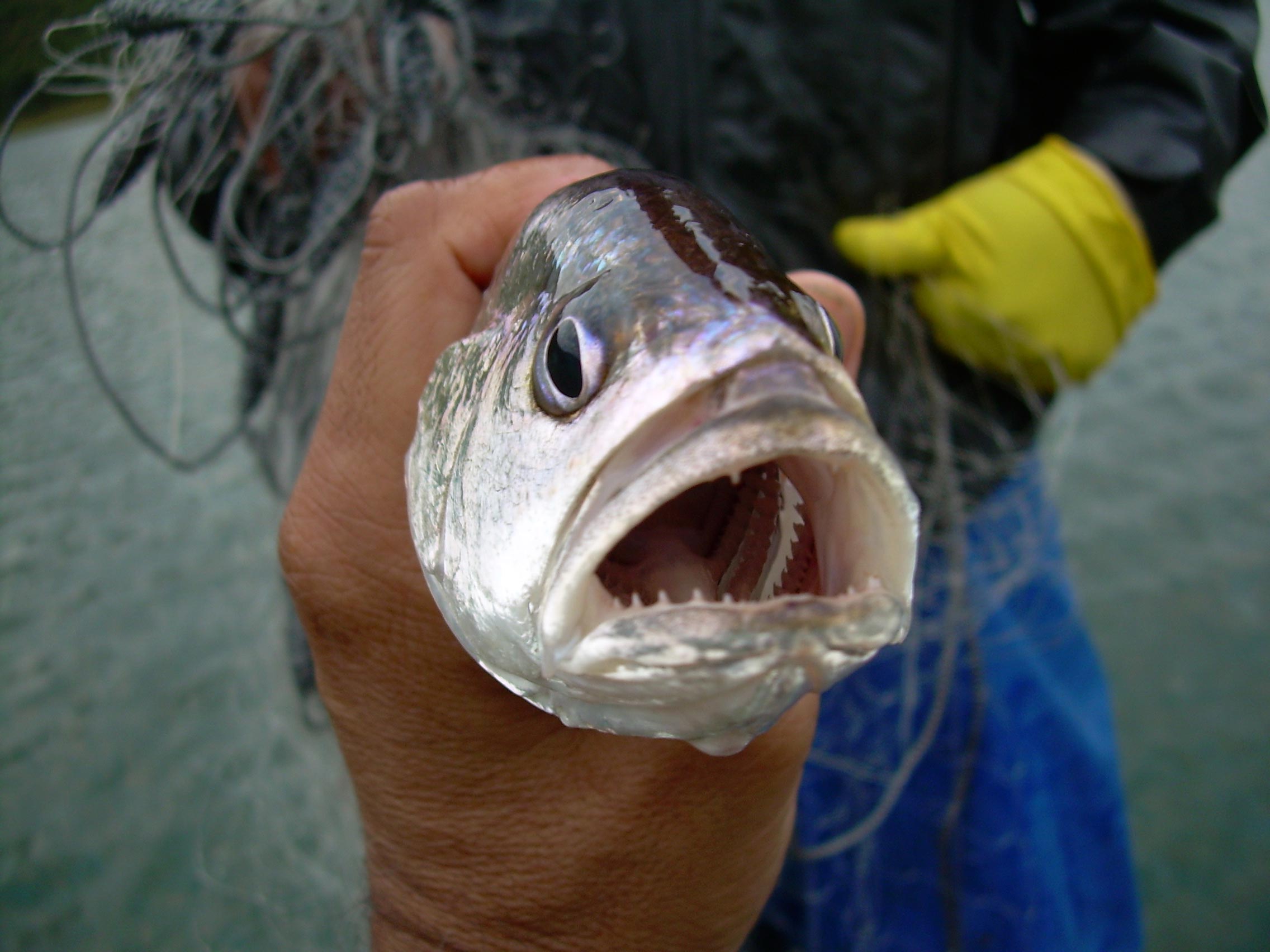
Plagioscion squamosissimus Specimen

A specimen of P. squamosissimus caught in the Chavantes reservoir (São Paulo state): originally from the North region, it may be competing with and contributing to a decline in the population of native species. However, it has become a key fishing resource in much of the country. Credit: Edmir Daniel Carvalho/CAUNESP

In São Paulo, Brazil, the Silver croaker, an invasive species, has become the predominant fish in the Jaguari reservoir and surrounding rivers, significantly diminishing the diversity of native fish species. Despite its economic importance, controlling its population poses significant ecological and legal challenges.

The Silver croaker (Plagioscion squamosissimus), also known as corvina or pescada-branca in Portuguese, is native to the Amazon and is likely responsible for the significant decline in the diversity of native species in the Jaguari Reservoir, Jaguari River, and Rio do Peixe. These water bodies are integral components of the Cantareira Water Production System and the Paraíba do Sul Basin, located in São Paulo state, Brazil.

As a top predator in the food network, the invader has negatively affected local biodiversity by bringing about detrimental changes to its taxonomic, functional and phylogenetic structure, according to a study published in Biological Invasions by researchers at São Paulo State University (UNESP).

They analyzed fish monitoring data collected by power utility CESP (Companhia Energética de São Paulo), which has recorded the presence of the species in the reservoir since 2001. The data analyzed is for a period ending in 2016. In no more than ten years, P. squamosissimus has become the most abundant fish species in the reservoir.

Research and Monitoring Efforts

“Although this predator is widely distributed in hydroelectric dam reservoirs throughout Brazil, its potential effects on native species had never been studied before. Our analysis highlights considerable losses to fish species diversity in the region,” said Aymar Orlandi Neto, first author of the article. Conducted at the Ilha Solteira School of Engineering (FEIS-UNESP), the study was part of his PhD research at the Botucatu Institute of Biosciences (IBB-UNESP) with a scholarship from FAPESP. Some of the results were obtained while he was doing research at the University of Valencia in Spain with a scholarship from FAPESP.

CESP does this monitoring of fauna to comply with environmental licensing rules for operation of the dam and power plant enforced by IBAMA, the main federal environmental agency. Every four months its technicians install nets at predetermined locations in the reservoir (between Jacareí and São José dos Campos) and on the Peixe and Jaguari, identify the species caught, and estimate their abundance.

Effects on Native Predators

“We analyzed 15 years of monitoring data and found the abundance of native predators, particularly the Thin dogfish (Oligosarcus hepsetus), to have declined significantly as P. squamosissimus preyed on smaller fish and became more abundant,” said Igor Paiva Ramos last author of the article and a professor at FEIS-UNESP.

However, it is not possible to tell from the available data whether the decline of O. hepsetus was due to indirect competition, since both this species and the invader may prey on the same fish. Another possibility is that P. squamosissimus, which can reach 80 cm, preyed on O. hepsetus, which is much smaller (30 cm as an adult). The former typically inhabits standing water bodies, such as lakes, and has thrived in the reservoir, whereas O. hepsetus, the native predator, prefers running water.

Economic Impact

Invader species are a global problem and occur in environments of all kinds, on land and in water. In Brazil, the annual damage caused by non-native animals, plants, and microorganisms has been estimated at BRL 15 billion (now about USD 2.9 billion).

The figure is from the Thematic Report on Invasive Exotic Species, Biodiversity and Ecosystem Services, launched in March by the Brazilian Platform on Biodiversity and Ecosystem Services (BPBES), which is supported by FAPESP via its Research Program on Biodiversity Characterization, Conservation, Restoration and Sustainable Use (BIOTA-FAPESP).

In the article on the UNESP study, the researchers stress that other introduced species appear in the records for the Jaguari reservoir, including the Peacock bass (Cichla spp.), also native to the Amazon, and Oreochromis niloticus and Coptodon rendalli, both of which are tilapias and originally from Africa, but their numbers are very small, reinforcing the conclusion that native diversity has dwindled due to P. squamosissimus.

The diversity loss observed by the authors applies to all three dimensions considered when this type of impact is assessed – taxonomic, functional and phylogenetic. Species richness losses during the period analyzed were noted, alongside substitution of many rare specialist species by a few generalists, and significant differences were found in species composition and abundance in the local fish community, with entire evolutionary groups disappearing.

Management Challenges

There are no simple solutions to the problem. The species is seen as a key fishing resource for both subsistence and sport. Eradicating it could cause social problems. “The species has become very common throughout Brazil. It replaces native species and now plays a very important social role in local economies,” Ramos said.

Nevertheless, he proposed measures similar to those taken in other countries to deal with invader species. One such measure would be to permit hunting of this species throughout the year without size limits or a ban during the reproductive period, with the aim of eradicating it or at least reducing its abundance.

However, federal and state laws restrict fishing not just of native species, which is quite right, but also of invasive species to some extent. “This ends up perpetuating the species that are harmful to local fauna,” Orlandi Neto said.

Ramos pointed out that eradication of invaders does not necessarily lead to a return of the natives. “We don’t know whether another invader will take the place of P. squamosissimus if it’s removed. The environment has been modified to such an extent that it may no longer be suitable for former inhabitants,” he said.

Reference: “Long-term impact of an invasive predator on the diversity of fish assemblages in a neotropical reservoir” by Aymar Orlandi Neto, Danilo Caneppele, Hugo Marques, João Henrique Pinheiro Dias, Juan Antonio Balbuena, Claudio de Oliveira and Igor Paiva Ramos, 14 February 2024, Biological Invasions.
DOI: 10.1007/s10530-023-03243-9

Read the full story here.
Photos courtesy of

New Navy Report Gauges Training Disruption of Hawaii's Marine Mammals

Over the next seven years, the U.S. Navy estimates its ships will injure or kill just two whales in collisions as it tests and trains in Hawaiian waters

Over the next seven years, the U.S. Navy estimates its ships will injure or kill just two whales in collisions as it tests and trains in Hawaiian waters, and it concluded those exercises won’t significantly harm local marine mammal populations, many of which are endangered.However, the Navy also estimates the readiness exercises, which include sonar testing and underwater explosions, will cause more than 3 million instances of disrupted behavior, hearing loss or injury to whale and dolphin species plus monk seals in Hawaii alone.That has local conservation groups worried that the Navy’s California-Training-and-Testing-EIS-OEIS/Final-EIS-OEIS/">detailed report on its latest multi-year training plan is downplaying the true impacts on vulnerable marine mammals that already face growing extinction threats in Pacific training areas off of Hawaii and California.“If whales are getting hammered by sonar and it’s during an important breeding or feeding season, it could ultimately affect their ability to have enough energy to feed their young or find food,” said Kylie Wager Cruz, a senior attorney with the environmental legal advocacy nonprofit Earthjustice. “There’s a major lack of consideration,” she added,” of how those types of behavioral impacts could ultimately have a greater impact beyond just vessel strikes.”The Navy, Cruz said, didn’t consider how its training exercises add to the harm caused by other factors, most notably collisions with major shipping vessels that kill dozens of endangered whales in the eastern Pacific each year. Environmental law requires the Navy to do that, she said, but “they’re only looking at their own take,” or harm.The Navy, in a statement earlier this month, said it “committed to the maximum level of mitigation measures” that it practically could to curb environmental damage while maintaining its military readiness in the years ahead. The plan also covers some Coast Guard operations.Federal fishery officials recently approved the plan, granting the Navy the necessary exemptions under the Marine Mammal Protection Act to proceed despite the harms. It’s at least the third time that the Navy has had to complete an environmental impact report and seek those exemptions to test and train off Hawaii and California.In a statement Monday, a U.S. Pacific Fleet spokesperson said the Navy and fishery officials did consider “reasonably foreseeable cumulative effects” — the Navy’s exercises plus unrelated harmful impacts — to the extent it was required to do so under federal environmental law.Fishery officials didn’t weigh those unrelated impacts, the statement said, in determining that the Navy’s activities would have a negligible impact on marine mammals and other animals.The report covers the impacts to some 39 marine mammal species, including eight that are endangered, plus a host of other birds, turtles and other species that inhabit those waters.The Navy says it will limit use of some of its most intense sonar equipment in designated “mitigation areas” around Hawaii island and Maui Nui to better protect humpback whales and other species from exposure. Specifically, it says it won’t use its more intense ship-mounted sonar in those areas during the whales’ Nov. 15 to April 15 breeding season, and it won’t use those systems there for more than 300 hours a year.However, outside of those mitigation zones the Navy report lists 11 additional areas that are biologically important to other marine mammals species, including spinner and bottle-nosed dolphins, false killer whales, short-finned pilot whales and dwarf sperm whales.Those biologically important areas encompass all the waters around the main Hawaiian islands, and based on the Navy’s report they won’t benefit from the same sonar limits. For the Hawaii bottle-nosed dolphins, the Navy estimates its acoustic and explosives exercises will disrupt that species’ feeding, breeding and other behaviors more than 310,000 times, plus muffle their hearing nearly 39,000 times and cause as many as three deaths. The report says the other species will see similar disruptions.In its statement Monday, U.S. Pacific Fleet said the Navy considered the extent to which marine mammals would be affected while still allowing crews to train effectively in setting those mitigation zones.Exactly how the Navy’s numbers compare to previous cycles are difficult to say, Wager Cruz and others said, because the ocean area and total years covered by each report have changed.Nonetheless, the instances in which its Pacific training might harm or kill a marine mammal appear to be climbing.In 2018, for instance, a press release from the nonprofit Center For Biological Diversity stated that the Navy’s Pacific training in Hawaii and Southern California would harm marine mammals an estimated 12.5 million times over a five-year period.This month, the center put out a similar release stating that the Navy’s training would harm marine mammals across Hawaii plus Northern and Southern California an estimated 35 million times over a seven-year period.“There’s large swaths of area that don’t get any mitigation,” Wager Cruz said. “I don’t think we’re asking for, like, everywhere is a prohibited area by any means, but I think that the military should take a harder look and see if they can do more.”The Navy should also consider slowing its vessels to 10 knots during training exercises to help avoid the collisions that often kill endangered whales off the California Coast, Cruz said. In its response, U.S. Pacific Fleet said the Navy “seriously considered” whether it could slow its ships down but concluded those suggestions were impracticable, largely due to the impacts on its mission.Hawaii-based Matson two years ago joined the other major companies who’ve pledged to slow their vessels to those speeds during whale season in the shipping lanes where dozens of endangered blue, fin and humpback whales are estimated to be killed each year.Those numbers have to be significantly reduced, researchers say, if the species are to make a comeback.“There are ways to minimize harm,” Center for Biological Diversity Hawaii and Pacific Islands Director Maxx Phillips added in a statement, “and protect our natural heritage and national security at the same time.”This story was originally published by Honolulu Civil Beat and distributed through a partnership with The Associated Press.Copyright 2025 The Associated Press. All rights reserved. This material may not be published, broadcast, rewritten or redistributed.Photos You Should See – December 2025

Hungary's 'Water Guardian' Farmers Fight Back Against Desertification

Southern Hungary landowner Oszkár Nagyapáti has been battling severe drought on his land

KISKUNMAJSA, Hungary (AP) — Oszkár Nagyapáti climbed to the bottom of a sandy pit on his land on the Great Hungarian Plain and dug into the soil with his hand, looking for a sign of groundwater that in recent years has been in accelerating retreat. “It’s much worse, and it’s getting worse year after year,” he said as cloudy liquid slowly seeped into the hole. ”Where did so much water go? It’s unbelievable.”Nagyapáti has watched with distress as the region in southern Hungary, once an important site for agriculture, has become increasingly parched and dry. Where a variety of crops and grasses once filled the fields, today there are wide cracks in the soil and growing sand dunes more reminiscent of the Sahara Desert than Central Europe. The region, known as the Homokhátság, has been described by some studies as semiarid — a distinction more common in parts of Africa, the American Southwest or Australian Outback — and is characterized by very little rain, dried-out wells and a water table plunging ever deeper underground. In a 2017 paper in European Countryside, a scientific journal, researchers cited “the combined effect of climatic changes, improper land use and inappropriate environmental management” as causes for the Homokhátság's aridification, a phenomenon the paper called unique in this part of the continent.Fields that in previous centuries would be regularly flooded by the Danube and Tisza Rivers have, through a combination of climate change-related droughts and poor water retention practices, become nearly unsuitable for crops and wildlife. Now a group of farmers and other volunteers, led by Nagyapáti, are trying to save the region and their lands from total desiccation using a resource for which Hungary is famous: thermal water. “I was thinking about what could be done, how could we bring the water back or somehow create water in the landscape," Nagyapáti told The Associated Press. "There was a point when I felt that enough is enough. We really have to put an end to this. And that's where we started our project to flood some areas to keep the water in the plain.”Along with the group of volunteer “water guardians,” Nagyapáti began negotiating with authorities and a local thermal spa last year, hoping to redirect the spa's overflow water — which would usually pour unused into a canal — onto their lands. The thermal water is drawn from very deep underground. Mimicking natural flooding According to the water guardians' plan, the water, cooled and purified, would be used to flood a 2½-hectare (6-acre) low-lying field — a way of mimicking the natural cycle of flooding that channelizing the rivers had ended.“When the flooding is complete and the water recedes, there will be 2½ hectares of water surface in this area," Nagyapáti said. "This will be quite a shocking sight in our dry region.”A 2024 study by Hungary’s Eötvös Loránd University showed that unusually dry layers of surface-level air in the region had prevented any arriving storm fronts from producing precipitation. Instead, the fronts would pass through without rain, and result in high winds that dried out the topsoil even further. Creation of a microclimate The water guardians hoped that by artificially flooding certain areas, they wouldn't only raise the groundwater level but also create a microclimate through surface evaporation that could increase humidity, reduce temperatures and dust and have a positive impact on nearby vegetation. Tamás Tóth, a meteorologist in Hungary, said that because of the potential impact such wetlands can have on the surrounding climate, water retention “is simply the key issue in the coming years and for generations to come, because climate change does not seem to stop.”"The atmosphere continues to warm up, and with it the distribution of precipitation, both seasonal and annual, has become very hectic, and is expected to become even more hectic in the future,” he said. Following another hot, dry summer this year, the water guardians blocked a series of sluices along a canal, and the repurposed water from the spa began slowly gathering in the low-lying field. After a couple of months, the field had nearly been filled. Standing beside the area in early December, Nagyapáti said that the shallow marsh that had formed "may seem very small to look at it, but it brings us immense happiness here in the desert.”He said the added water will have a “huge impact” within a roughly 4-kilometer (2½-mile) radius, "not only on the vegetation, but also on the water balance of the soil. We hope that the groundwater level will also rise.”Persistent droughts in the Great Hungarian Plain have threatened desertification, a process where vegetation recedes because of high heat and low rainfall. Weather-damaged crops have dealt significant blows to the country’s overall gross domestic product, prompting Prime Minister Viktor Orbán to announce this year the creation of a “drought task force” to deal with the problem.After the water guardians' first attempt to mitigate the growing problem in their area, they said they experienced noticeable improvements in the groundwater level, as well as an increase of flora and fauna near the flood site. The group, which has grown to more than 30 volunteers, would like to expand the project to include another flooded field, and hopes their efforts could inspire similar action by others to conserve the most precious resource. “This initiative can serve as an example for everyone, we need more and more efforts like this," Nagyapáti said. "We retained water from the spa, but retaining any kind of water, whether in a village or a town, is a tremendous opportunity for water replenishment.”The Associated Press’ climate and environmental coverage receives financial support from multiple private foundations. AP is solely responsible for all content. Find AP’s standards for working with philanthropies, a list of supporters and funded coverage areas at AP.org.Copyright 2025 The Associated Press. All rights reserved. This material may not be published, broadcast, rewritten or redistributed.Photos You Should See – December 2025

The Water Came From Nowhere': Settlements, Hotels and Farms Flooded in Kenya’s Rift Valley

Dickson Ngome's farm at Lake Naivasha in Kenya's Rift Valley has been submerged due to rising water levels

NAIVASHA, Kenya (AP) — When Dickson Ngome first leased his farm at Lake Naivasha in Kenya’s Rift Valley in 2008, it was over 2 kilometers (1.2 miles) from shore. The farm was on 1.5 acres (0.6 hectares) of fertile land where he grew vegetables to sell at local markets.At the time, the lake was receding and people were worried that it might dry up altogether. But since 2011, the shore has crept ever closer. The rains started early this year, in September, and didn't let up for months.One morning in late October, Ngome and his family woke up to find their home and farm inside the lake. The lake levels had risen overnight and about a foot of water covered everything.“It seemed as if the lake was far from our homes,” Ngome’s wife, Rose Wafula, told The Associated Press. “And then one night we were shocked to find our houses flooded. The water came from nowhere.” Climate change caused increased rains, scientists say The couple and their four children have had to leave home and are camping out on the first floor of an abandoned school nearby.Some 5,000 people were displaced by the rise in Lake Naivasha’s levels this year. Some scientists attribute the higher levels to increased rains caused by climate change, although there may be other factors causing the lake’s steady rise over the past decade.The lake is a tourism hot spot and surrounded by farms, mostly growing flowers, which have gradually been disappearing into the water as the lake levels rise.Rising levels have not been isolated to Naivasha: Kenya’s Lake Baringo, Lake Nakuru and Lake Turkana — all in the Rift Valley — have been steadily rising for 15 years. “The lakes have risen almost beyond the highest level they have ever reached,” said Simon Onywere, who teaches environmental planning at Kenyatta University in Kenya’s capital Nairobi. Rising lake levels displaced tens of thousands A study in the Journal of Hydrology last year found that lake areas in East Africa increased by 71,822 square kilometers (27,730 square miles) between 2011 and 2023. That affects a lot of people: By 2021, more than 75,000 households had been displaced across the Rift Valley, according to a study commissioned that year by the Kenyan Environment Ministry and the United Nations Development Program.In Baringo, the submerged buildings that made headlines in 2020 and 2021 are still underwater.“In Lake Baringo, the water rose almost 14 meters,” Onywere said. “Everything went under, completely under. Buildings will never be seen again, like the Block Hotels of Lake Baringo.” Flower farms taking a beating Lake Naivasha has risen steadily too, “engulfing three quarters of some flower farms,” Onywere said.Horticulture is a major economic sector in Kenya, generating just over a billion U.S. dollars in revenue in 2024 and providing 40% of the volume of roses sold in the European Union, according to Kenya’s Ministry of Foreign Affairs.Significant research has gone into the reasons behind the rising lakes phenomenon: A 2021 study on the rise of Kenya’s Rift Valley lakes was coauthored by Kenyan meteorologist Richard Muita, who is now acting assistant director of the Kenya Meteorological Department.“There are researchers who come up with drivers that are geological, others with reasons like planetary factors,” Muita said. “The Kenya Meteorological Department found that the water level rises are associated with rainfall patterns and temperature changes. When the rains are plentiful, it aligns with the increase in the levels of the Rift Valley lake waters.”Sedimentation is also a factor. “From the research I have read, there’s a lot of sediment, especially from agricultural related activities, that flows into these lakes,” says Muita. ‘A mess’ made by the government years ago Naivasha’s official high water mark was demarcated at 1,892.8 meters (6,210 feet) above sea level by the Riparian Association in 1906, and is still used by surveyors today. That means this year’s flooding was still almost a meter (3 feet) below the high mark.It also means that the community of Kihoto on Lake Naivasha where the Ngomes lived lies on riparian land — land that falls below the high water mark, and can only be owned by the government.“It’s a mess established by the government … towards the late 1960s,” said Silas Wanjala, general manager of the Lake Naivasha Riparian Association, which was founded some 120 years ago and has been keeping meticulous records of the lake’s water levels since.Back then, a farmer was given a “temporary agricultural lease” on Kihoto, said Wanjala. When it later flooded and the farmer packed up and left, the farmworkers stayed on the land and later applied for subdivisions, which were approved. In the 60-odd years since, a whole settlement has grown on land that is officially not for lease or sale. This also isn’t the first time it’s been flooded, said Wanjala. It's just very rare that the water comes up this high. That’s little consolation for the people who have been displaced by this year’s floods and now cannot go home without risking confrontations with hippopotamuses.To support those people, the county is focusing its efforts on where the need is greatest.“We are tackling this as an emergency," says Joyce Ncece, chief officer for disaster management in Nakuru County, which oversees Lake Naivasha. “The county government has provided trucks to help families relocate. We have been helping to pay rent for those who lack the finances.”Scientists like Onywere and Muita are hoping for longer-term solutions. “Could we have predicted this so that we could have done better infrastructure in less risk-prone areas?” Onywere said.Muita wants to see a more concerted global effort to combat climate change, as well as local, nature-based solutions centered on Indigenous knowledge, such as “conservation agriculture, where there is very limited disturbance of the land,” to reduce sedimentation of the lakes.But all of this is of little help to Ngome and Wafula, who are still living at the school with their children. As the rest of the world looks forward to the holidays and new year, their future is uncertain. Lake Naivasha’s continuous rise over the past 15 years does not bode well: They have no idea when, or if, their farm will ever be back on dry land. The Associated Press receives financial support for global health and development coverage in Africa from the Gates Foundation. The AP is solely responsible for all content. Find AP’s standards for working with philanthropies, a list of supporters and funded coverage areas at AP.org.Copyright 2025 The Associated Press. All rights reserved. This material may not be published, broadcast, rewritten or redistributed.Photos You Should See – December 2025

A damaged King County levee awaited fixes for years. Then it failed

As an atmospheric river slammed into the Pacific Northwest, water burst through a damaged levee in Washington.

As rainfall inundated the Pacific Northwest this month, swelling the region’s rivers to record levels, the Desimone levee seemed destined to fail.Severe flooding in 2020 had damaged the 2.2-mile earthen barrier near Tukwila. Muddy waters from the Green River bubbled up on the opposite side and seeped into nearby properties. A King County report months later described the levee’s weakened state as the “most important issue” on the river’s lower reach.The years that followed were filled with red tape and bureaucratic infighting among the agencies most responsible for the region’s levee system: King County, its flood control district and the U.S. Army Corps of Engineers. All the while, cities in the flood plain clamored for help, and the Desimone awaited repair.Construction was set to begin this summer, but the Corps pulled out of the work in January, revoking promised federal funding and setting the project back years, according to interviews and public records obtained by The Seattle Times.Reagan Dunn, chair of the district’s advisory committee and a Metropolitan King County Council member, described a pattern of “tension” between the flood control district and the Corps.This month’s back-to-back atmospheric rivers pushed the levee system like never before. The Desimone was the first of two to fail.Earlier in the series of storms, water had once again begun to seep through Desimone’s earthen barrier, which shields a mostly commercial and industrial hub in Tukwila. On Monday, the river tore its way through, sparking a widespread evacuation. Officials feared the ensuing flash flood might be deadly. Workers plugged the hole quickly. Knowing the levee’s risk, they had already been watching the site for days. No injuries were reported in the breach.The patchwork nature of repairs at Desimone, and levees like it, illuminates the growing challenge of protecting Western Washington communities from flooding worsened by climate change.For generations, Washington has relied on levees as a simple solution to a complex problem, said Alan Hamlet, a former Seattle resident and scientist who now works as an associate professor of civil and environmental engineering at the University of Notre Dame. Explosive growth behind them has combined with an overarching desire to spend the minimum required for flood protection, he said. That often means deferring costlier long-term maintenance, mitigation and upgrades of these emergency barriers in favor of more pressing needs. This has resulted in higher risks for the very communities the levees were designed to protect.The state, and much of the country, stands at the nexus of that growth behind the walls of inadequate infrastructure to keep natural disasters at bay, Hamlet said.“Put all those things together and you have a hidden crisis that is going to begin to express itself more and more frequently,” Hamlet said.The 18-year-old King County Flood Control District shuffles its priority levees based on disrepair that changes with the weather. The district has started to plan for the long term, but in its earliest years, it focused on inexpensive and easy fixes in high-risk areas, Dunn said.“In other words, low-hanging fruit,” he said.Flooding in Washington state 2025Bureaucratic tangleThe Desimone levee has been damaged and repaired multiple times over the past six decades. Most recently, years of disagreements among agencies dragged out Desimone’s renovation.The flood control district asked the Corps to step in not long after the 2020 flood. High waters in the Green River then had not only left water seeping through the levee in at least three places, but also bubbling up from underneath.Federal officials agreed to spearhead a plan to repair the levee and cover 80% of the cost. It proposed estimates up to $16.6 million for a project focused solely on restoring the levee to its preflood condition, records show.Such is frequently the case for levee systems nationwide, Hamlet said. Restoring them to their original condition is typically less expensive and complicated. Expanding them or exploring other options takes more time, money and political will.But the flood district wanted more for Desimone: a design that would fix the damage and relieve water pressure further by setting the levee back, restoring some of the river’s natural bank. It was projected to cost the district about $30 million.The district’s plan would take longer and cost more but reduce long-term risks, said Michelle Clark, the district’s director. “We want to do a bigger project so that we’re not coming back to do more repairs.”The flood control district handles planning, but the project hinged on King County finding land along the river for the new work, records show. But it fell short.These types of repairs are more complicated than they might seem, Hamlet said. Strengthen a levee in one place, and you’ll send floodwaters careening into another. Set a levee back from the river, or remove one to restore a flood plain, and first you have to clear out any homes or businesses already there. These structures aren’t the only way to hold back floodwaters, but in many places, they’re the system that’s already there.A failed dealThe Corps worked in fits and starts, at one point in 2022 halting its involvement due to staffing challenges. Even when the county made headway securing land, the Corps said it had used the wrong language in the agreements. At the same time, the county accused the Corps of clerical errors that dragged out the planning process, according to county records.The county — officials for which said they were unable to immediately comment, citing the ongoing flood emergency — was confident it could secure the land, just not on schedule, according to a county brief from April. It proposed breaking ground in 2026 instead.Citing the county’s “inability” to provide the needed land along the highly developed and industrial area, the Corps backed out of the agreement in a January letter.“We have been pushing them since 2020,” Clark said. “And it’s frustrating.”The Corps “worked diligently with King County” but couldn’t move forward without land for construction, the agency wrote in an email to The Times. Levee rehabilitation can be “complex,” it added. “The federal process, sponsor timelines and real estate actions do not always align well, but we are committed to finding a solution when possible,” the agency wrote.Abandoned by the Corps, the county and its partner cities faced their biggest setback, Clark said.Everybody blamed each other as the flood season approached.Concerns heightened after the Corps pulled its support. In July, city leaders from Tukwila, Kent and Renton asked the flood district to more immediately prioritize the levee repair project.Tukwila officials declined to comment, and Kent and Renton officials did not respond to a request for comment by publication time.As the fall rains approached — and without significant improvements on the levee — officials from Tukwila, Kent, King County and the Corps of Engineers spoke in late October to review the contingency plan in case the structure failed, according to Tukwila city records. They walked the levee bank to flag logistical challenges and clarified roles and responsibilities in case of an emergency.The Corps passed along its nearly complete project design for the Desimone levee, according to its January letter to the district. But without the federal government to offset the cost, the county’s grand plan was too pricey. The district has years of research and $25 million set aside for the levee repairs, but it might not be enough, Clark said; it needs to prepare options before it can move forward with a plan.The King County Flood Control District is now, in many ways, exactly where it was in 2020: waiting for the water to recede, preparing to assess the damage and on the verge of once again planning how to fix the Desimone.--Conrad Swanson and Lulu Ramadan© 2025 The Seattle Times. Visit www.seattletimes.com. Distributed by Tribune Content Agency, LLC.

Suggested Viewing

Join us to forge
a sustainable future

Our team is always growing.
Become a partner, volunteer, sponsor, or intern today.
Let us know how you would like to get involved!

CONTACT US

sign up for our mailing list to stay informed on the latest films and environmental headlines.

Subscribers receive a free day pass for streaming Cinema Verde.
Thank you! Your submission has been received!
Oops! Something went wrong while submitting the form.