

How changes in California culture have influenced the evolution of wild animals in Los Angeles
For decades, biologists have studied how cities affect wildlife by altering food supplies, fragmenting habitats and polluting the environment. But a new global study argues that these physical factors are only part of the story. Societal factors, the researchers claim, especially those tied to religion, politics and war, also leave lasting marks on the evolutionary paths of the animals and plants that share our cities.Published in Nature Cities, the comprehensive review synthesizes evidence from cities worldwide, revealing how human conflict and cultural practices affect wildlife genetics, behavior and survival in urban environments.The paper challenges the tendency to treat the social world as separate from ecological processes. Instead, the study argues, we should consider the ways the aftershocks of religious traditions, political systems and armed conflicts can influence the genetic structure of urban wildlife populations. (Gabriella Angotti-Jones / Los Angeles Times) “Social sciences have been very far removed from life sciences for a very long time, and they haven’t been integrated,” said Elizabeth Carlen, a biologist at Washington University in St. Louis and co-lead author of the study. “We started just kind of playing around with what social and cultural processes haven’t been talked about,” eventually focusing on religion, politics and war because of their persistent yet underexamined impacts on evolutionary biology, particularly in cities, where cultural values and built environments are densely concentrated.Carlen’s own work in St. Louis examines how racial segregation and urban design, often influenced by policing strategies, affect ecological conditions and wild animals’ access to green spaces.“Crime prevention through environmental design,” she said, is one example of how these factors influence urban wildlife. “Law enforcement can request that there not be bushes … or short trees, because then they don’t have a sight line across the park.” Although that design choice may serve surveillance goals, it also limits the ability of small animals to navigate those spaces.These patterns, she emphasized, aren’t unique to St. Louis. “I’m positive that it’s happening in Los Angeles. Parks in Beverly Hills are going to look very different than parks in Compton. And part of that is based on what policing looks like in those different places.” This may very well be the case, as there is a significantly lower level of urban tree species richness in areas like Compton than in areas like Beverly Hills, according to UCLA’s Biodiversity Atlas. A coyote wanders onto the fairway, with the sprinklers turned on, as a golfer makes his way back to his cart after hitting a shot on the 16th hole of the Harding golf course at Griffith Park. (Mel Melcon / Los Angeles Times) The study also examines war and its disruptions, which can have unpredictable effects on animal populations. Human evacuation from war zones can open urban habitats to wildlife, while the destruction of green spaces or contamination of soil and water can fragment ecosystems and reduce genetic diversity.In Kharkiv, Ukraine, for example, human displacement during the Russian invasion led to the return of wild boars and deer to urban parks, according to the study. In contrast, sparrows, which depend on human food waste, nearly vanished from high-rise areas.All of this, the researchers argue, underscores the need to rethink how cities are designed and managed by recognizing how religion, politics and war shape not just human communities but also the evolutionary trajectories of urban wildlife. By integrating ecological and social considerations into urban development, planners and scientists can help create cities that are more livable for people while also supporting the long-term genetic diversity and adaptability of the other species that inhabit them.This intersection of culture and biology may be playing out in cities across the globe, including Los Angeles.A study released earlier this year tracking coyotes across L.A. County found that the animals were more likely to avoid wealthier neighborhoods, not because of a lack of access or food scarcity, but possibly due to more aggressive human behavior toward them and higher rates of “removal” — including trapping and releasing elsewhere, and in some rare cases, killing them. In lower-income areas, where trapping is less common, coyotes tended to roam more freely, even though these neighborhoods often had more pollution and fewer resources that would typically support wild canines. Researchers say these patterns reflect how broader urban inequities are written directly into the movements of and risks faced by wildlife in the city.Black bears, parrots and even peacocks tell a similar story in Los Angeles. Wilson Sherman, a PhD student at UCLA who is studying human-black bear interactions, highlights how local politics and fragmented municipal governance shape not only how animals are managed but also where they appear. (Carolyn Cole / Los Angeles Times) “Sierra Madre has an ordinance requiring everyone to have bear-resistant trash cans,” Sherman noted. “Neighboring Arcadia doesn’t.” This kind of patchwork governance, Sherman said, can influence where wild animals ultimately spend their time, creating a mosaic of risk and opportunity for species whose ranges extend across multiple jurisdictions.Cultural values also play a role. Thriving populations of non-native birds, such as Amazon parrots and peacocks, illustrate how aesthetic preferences and everyday choices can significantly influence the city’s ecological makeup in lasting ways.Sherman also pointed to subtler, often overlooked influences, such as policing and surveillance infrastructure. Ideally, the California Department of Fish and Wildlife would be the first agency to respond in a “wildlife situation,” as Sherman put it. But, he said, what often ends up happening is that people default to calling the police, especially when the circumstances involve animals that some urban-dwelling humans may find threatening, like bears.Police departments typically do not possess the same expertise and ability as CDFW to manage and then relocate bears. If a bear poses a threat to human life, police policy is to kill the bear. However, protocols for responding to wildlife conflicts that are not life-threatening can vary from one community to another. And how police use non-lethal methods of deterrence — such as rubber bullets and loud noises — can shape bear behavior.Meanwhile, the growing prevalence of security cameras and motion-triggered alerts has provided residents with new forms of visibility into urban biodiversity. “That might mean that people are suddenly aware that a coyote is using their yard,” Sherman said. In turn, that could trigger a homeowner to purposefully rework the landscape of their property so as to discourage coyotes from using it. Surveillance systems, he said, are quietly reshaping both public perception and policy around who belongs in the city, and who doesn’t. A mountain lion sits in a tree after being tranquilized along San Vicente Boulevard in Brentwood on Oct. 27, 2022. (Wally Skalij / Los Angeles Times) Korinna Domingo, founder and director of the Cougar Conservancy, emphasized how cougar behavior in Los Angeles is similarly shaped by decades of urban development, fragmented landscapes and the social and political choices that structure them. “Policies like freeway construction, zoning and even how communities have been historically policed or funded can affect where and how cougars move throughout L.A.,” she said. For example, these forces have prompted cougars to adapt by becoming more nocturnal, using culverts or taking riskier crossings across fragmented landscapes.Urban planning and evolutionary consequences are deeply intertwined, Domingo says. For example, mountain lion populations in the Santa Monica and Santa Ana mountains have shown signs of reduced genetic diversity due to inbreeding, an issue created not by natural processes, but by political and planning decisions — such as freeway construction and zoning decisions— that restricted their movement decades ago.Today, the Wallis Annenberg Wildlife Crossing, is an attempt to rectify that. The massive infrastructure project is happening only, Domingo said, “because of community, scientific and political will all being aligned.”However, infrastructure alone isn’t enough. “You can have habitat connectivity all you want,” she said, but you also have to think about social tolerance. Urban planning that allows for animal movement also increases the likelihood of contact with people, pets and livestock — which means humans need to learn how to interact with wild animals in a healthier way.In L.A., coexistence strategies can look very different depending on the resources, ordinances and attitudes of each community. Although wealthier residents may have the means to build predator-proof enclosures, others lack the financial or institutional support to do the same. And some with the means simply choose not to, instead demanding lethal removal., “Wildlife management is not just about biology,” Domingo said. “It’s about values, power, and really, who’s at the table.”Wildlife management in the United States has long been informed by dominant cultural and religious worldviews, particularly those grounded in notions of human exceptionalism and control over nature. Carlen, Sherman and Domingo all brought up how these values shaped early policies that framed predators as threats to be removed rather than species to be understood or respected. In California, this worldview contributed not only to the widespread killing of wolves, bears and cougars but also to the displacement of American Indian communities whose land-based practices and beliefs conflicted with these approaches. A male peacock makes its way past Ian Choi, 21 months old, standing in front of his home on Altura Road in Arcadia. (Mel Melcon / Los Angeles Times) Wildlife management in California, specifically, has long been shaped by these same forces of violence, originating in bounty campaigns not just against predators like cougars and wolves but also against American Indian peoples. These intertwined legacies of removal, extermination and land seizure continue to influence how certain animals and communities are perceived and treated today.For Alan Salazar, a tribal elder with the Fernandeño Tataviam Band of Mission Indians, those legacies run deep. “What happened to native peoples happened to our large predators in California,” he said. “Happened to our plant relatives.” Reflecting on the genocide of Indigenous Californians and the coordinated extermination of grizzly bears, wolves and mountain lions, Salazar sees a clear parallel.“There were three parts to our world — the humans, the animals and the plants,” he explained. “We were all connected. We respected all of them.” Salazar explains that his people’s relationship with the land, animals and plants is itself a form of religion, one grounded in ceremony, reciprocity and deep respect. Salazar said his ancestors lived in harmony with mountain lions for over 10,000 years, not by eliminating them but by learning from them. Other predators — cougars, bears, coyotes and wolves — were also considered teachers, honored through ceremony and studied for their power and intelligence. “Maybe we had a better plan on how to live with mountain lions, wolves and bears,” he said. “Maybe you should look at tribal knowledge.”He views the Wallis Annenberg Wildlife Crossing — for which he is a Native American consultant — as a cultural opportunity. “It’s not just for mountain lions,” he said. “It’s for all animals. And that’s why I wanted to be involved.” He believes the project has already helped raise awareness and shift perceptions about coexistence and planning, and hopes that it will help native plants, animals and peoples.As L.A. continues to grapple with the future of wildlife in its neighborhoods, canyons and corridors, Salazar and others argue that it is an opportunity to rethink the cultural frameworks, governance systems and historical injustices that have long shaped human-animal relations in the city. Whether through policy reform, neighborhood education or sacred ceremony, residents need reminders that evolutionary futures are being shaped not only in forests and preserves but right here, across freeways, backyards and local council meetings. The Wallis Annenberg Wildlife Crossing under construction over the 101 Freeway near Liberty Canyon Road in Agoura Hills on July 12, 2024. (Myung J. Chun / Los Angeles Times) The research makes clear that wildlife is not simply adapting to urban environments in isolation; it is adapting to a range of factors, including policing, architecture and neighborhood design. Carlen believes this opens a crucial frontier for interdisciplinary research, especially in cities like Los Angeles, where uneven geographies, biodiversity and political decisions intersect daily. “I think there’s a lot of injustice in cities that are happening to both humans and wildlife,” she said. “And I think the potential is out there for justice to be brought to both of those things.”
A new study argues that religion, politics and war affect how animals and plants in cities evolve, and the confluence of these forces seem to be actively affecting urban wildlife in L.A.
For decades, biologists have studied how cities affect wildlife by altering food supplies, fragmenting habitats and polluting the environment. But a new global study argues that these physical factors are only part of the story. Societal factors, the researchers claim, especially those tied to religion, politics and war, also leave lasting marks on the evolutionary paths of the animals and plants that share our cities.
Published in Nature Cities, the comprehensive review synthesizes evidence from cities worldwide, revealing how human conflict and cultural practices affect wildlife genetics, behavior and survival in urban environments.
The paper challenges the tendency to treat the social world as separate from ecological processes. Instead, the study argues, we should consider the ways the aftershocks of religious traditions, political systems and armed conflicts can influence the genetic structure of urban wildlife populations.
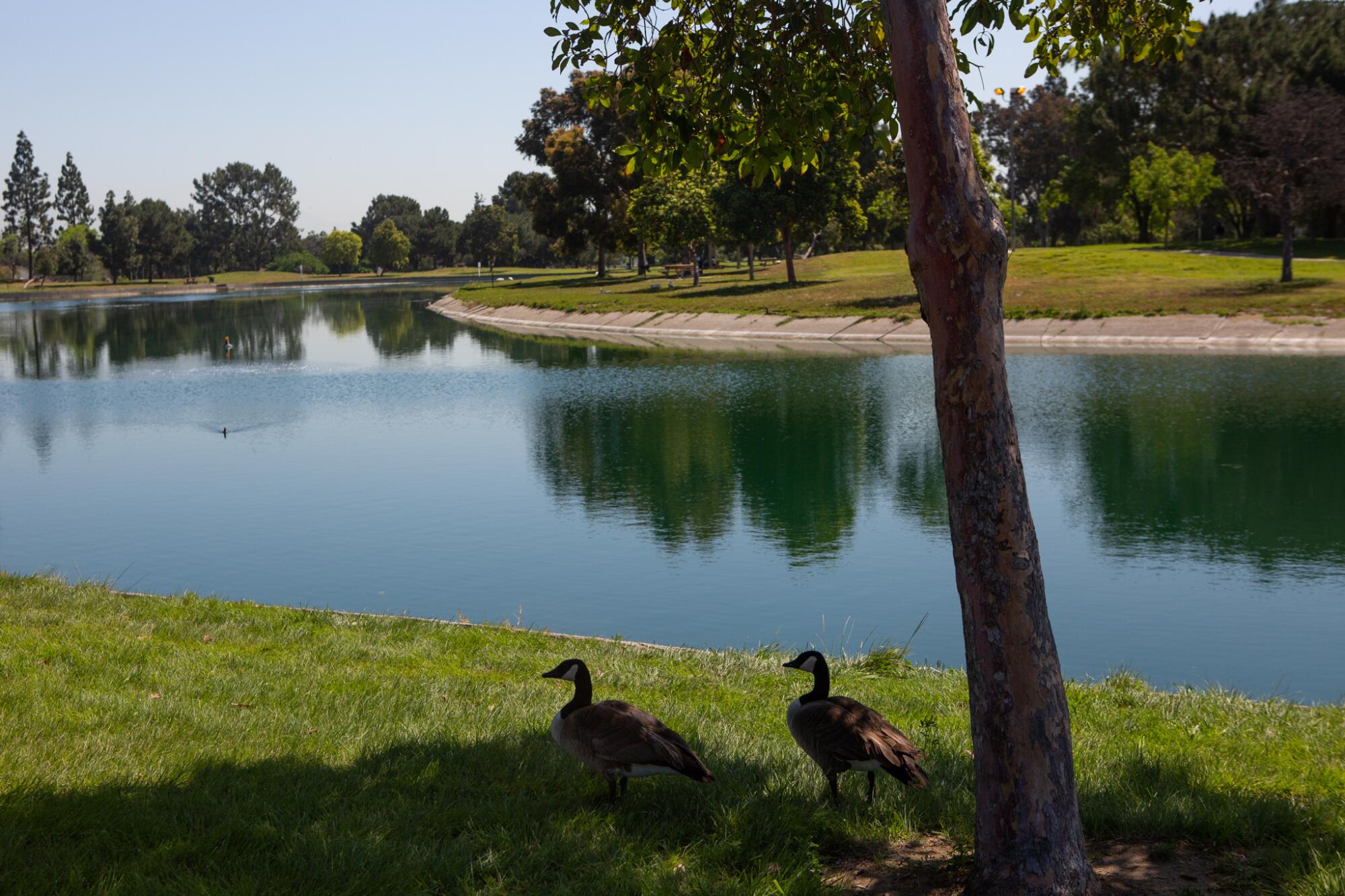
(Gabriella Angotti-Jones / Los Angeles Times)
“Social sciences have been very far removed from life sciences for a very long time, and they haven’t been integrated,” said Elizabeth Carlen, a biologist at Washington University in St. Louis and co-lead author of the study. “We started just kind of playing around with what social and cultural processes haven’t been talked about,” eventually focusing on religion, politics and war because of their persistent yet underexamined impacts on evolutionary biology, particularly in cities, where cultural values and built environments are densely concentrated.
Carlen’s own work in St. Louis examines how racial segregation and urban design, often influenced by policing strategies, affect ecological conditions and wild animals’ access to green spaces.
“Crime prevention through environmental design,” she said, is one example of how these factors influence urban wildlife. “Law enforcement can request that there not be bushes … or short trees, because then they don’t have a sight line across the park.” Although that design choice may serve surveillance goals, it also limits the ability of small animals to navigate those spaces.
These patterns, she emphasized, aren’t unique to St. Louis. “I’m positive that it’s happening in Los Angeles. Parks in Beverly Hills are going to look very different than parks in Compton. And part of that is based on what policing looks like in those different places.” This may very well be the case, as there is a significantly lower level of urban tree species richness in areas like Compton than in areas like Beverly Hills, according to UCLA’s Biodiversity Atlas.
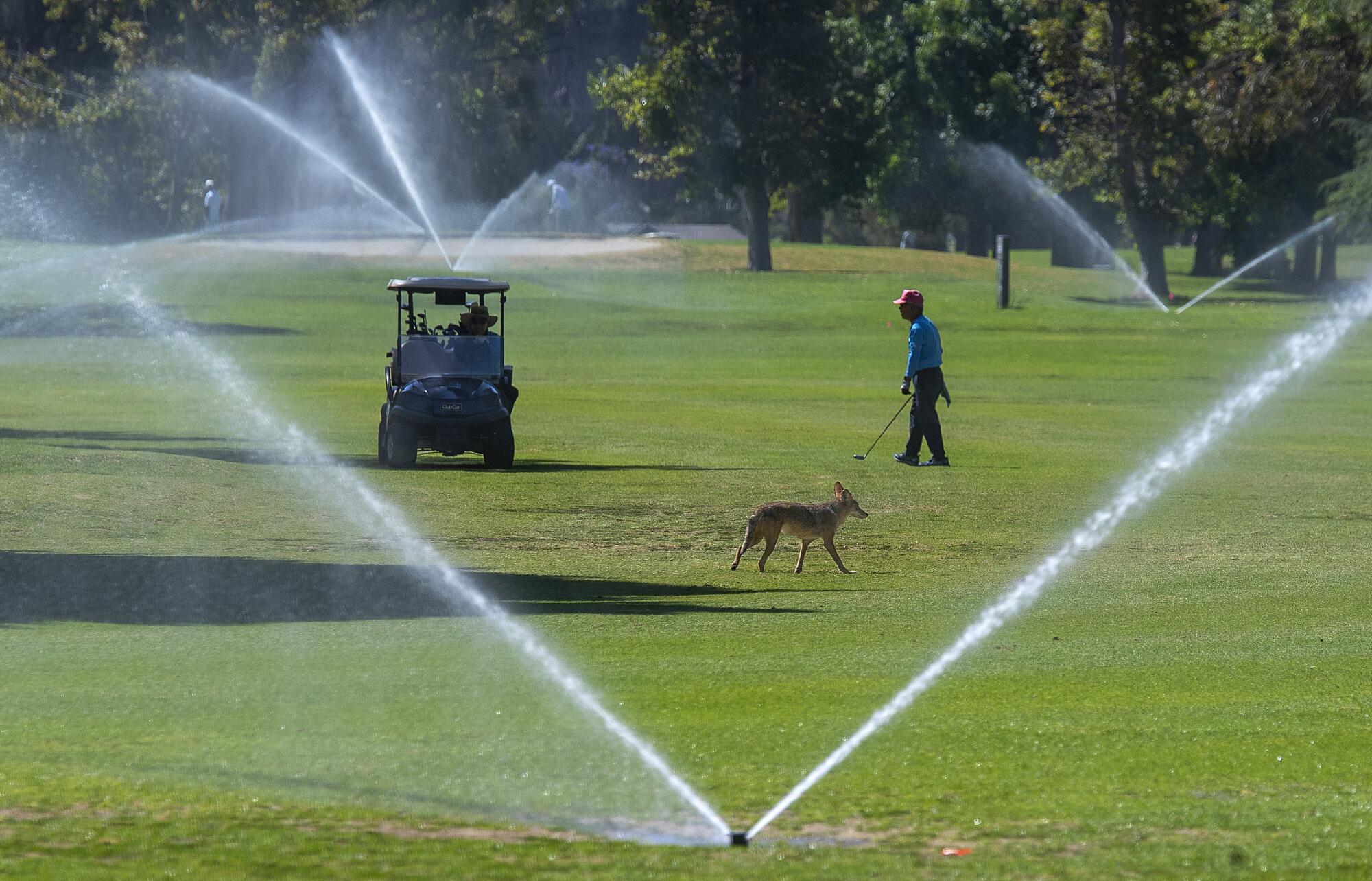
A coyote wanders onto the fairway, with the sprinklers turned on, as a golfer makes his way back to his cart after hitting a shot on the 16th hole of the Harding golf course at Griffith Park.
(Mel Melcon / Los Angeles Times)
The study also examines war and its disruptions, which can have unpredictable effects on animal populations. Human evacuation from war zones can open urban habitats to wildlife, while the destruction of green spaces or contamination of soil and water can fragment ecosystems and reduce genetic diversity.
In Kharkiv, Ukraine, for example, human displacement during the Russian invasion led to the return of wild boars and deer to urban parks, according to the study. In contrast, sparrows, which depend on human food waste, nearly vanished from high-rise areas.
All of this, the researchers argue, underscores the need to rethink how cities are designed and managed by recognizing how religion, politics and war shape not just human communities but also the evolutionary trajectories of urban wildlife. By integrating ecological and social considerations into urban development, planners and scientists can help create cities that are more livable for people while also supporting the long-term genetic diversity and adaptability of the other species that inhabit them.
This intersection of culture and biology may be playing out in cities across the globe, including Los Angeles.
A study released earlier this year tracking coyotes across L.A. County found that the animals were more likely to avoid wealthier neighborhoods, not because of a lack of access or food scarcity, but possibly due to more aggressive human behavior toward them and higher rates of “removal” — including trapping and releasing elsewhere, and in some rare cases, killing them.
In lower-income areas, where trapping is less common, coyotes tended to roam more freely, even though these neighborhoods often had more pollution and fewer resources that would typically support wild canines. Researchers say these patterns reflect how broader urban inequities are written directly into the movements of and risks faced by wildlife in the city.
Black bears, parrots and even peacocks tell a similar story in Los Angeles. Wilson Sherman, a PhD student at UCLA who is studying human-black bear interactions, highlights how local politics and fragmented municipal governance shape not only how animals are managed but also where they appear.
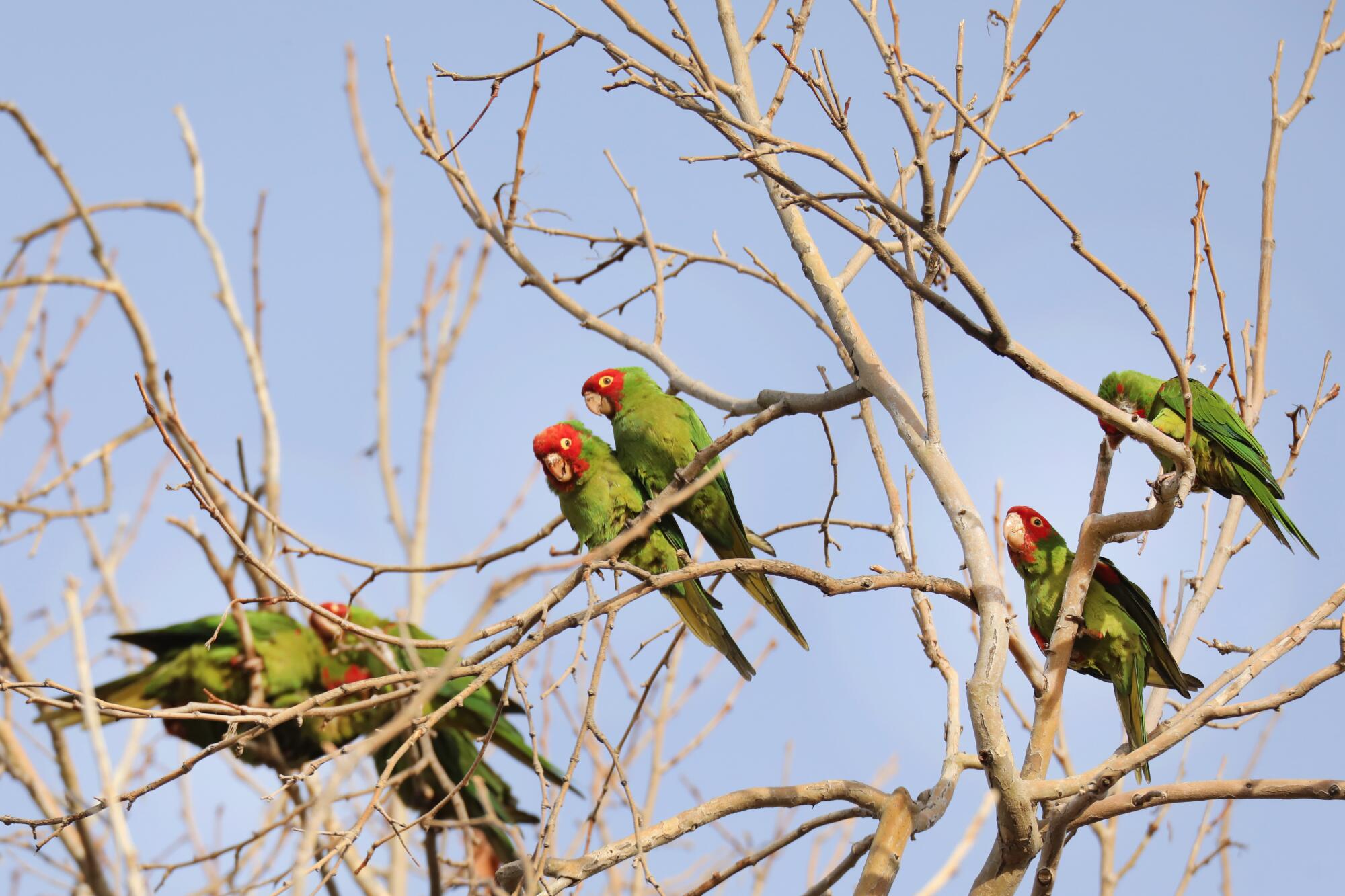
(Carolyn Cole / Los Angeles Times)
“Sierra Madre has an ordinance requiring everyone to have bear-resistant trash cans,” Sherman noted. “Neighboring Arcadia doesn’t.” This kind of patchwork governance, Sherman said, can influence where wild animals ultimately spend their time, creating a mosaic of risk and opportunity for species whose ranges extend across multiple jurisdictions.
Cultural values also play a role. Thriving populations of non-native birds, such as Amazon parrots and peacocks, illustrate how aesthetic preferences and everyday choices can significantly influence the city’s ecological makeup in lasting ways.
Sherman also pointed to subtler, often overlooked influences, such as policing and surveillance infrastructure. Ideally, the California Department of Fish and Wildlife would be the first agency to respond in a “wildlife situation,” as Sherman put it. But, he said, what often ends up happening is that people default to calling the police, especially when the circumstances involve animals that some urban-dwelling humans may find threatening, like bears.
Police departments typically do not possess the same expertise and ability as CDFW to manage and then relocate bears. If a bear poses a threat to human life, police policy is to kill the bear. However, protocols for responding to wildlife conflicts that are not life-threatening can vary from one community to another. And how police use non-lethal methods of deterrence — such as rubber bullets and loud noises — can shape bear behavior.
Meanwhile, the growing prevalence of security cameras and motion-triggered alerts has provided residents with new forms of visibility into urban biodiversity. “That might mean that people are suddenly aware that a coyote is using their yard,” Sherman said. In turn, that could trigger a homeowner to purposefully rework the landscape of their property so as to discourage coyotes from using it. Surveillance systems, he said, are quietly reshaping both public perception and policy around who belongs in the city, and who doesn’t.
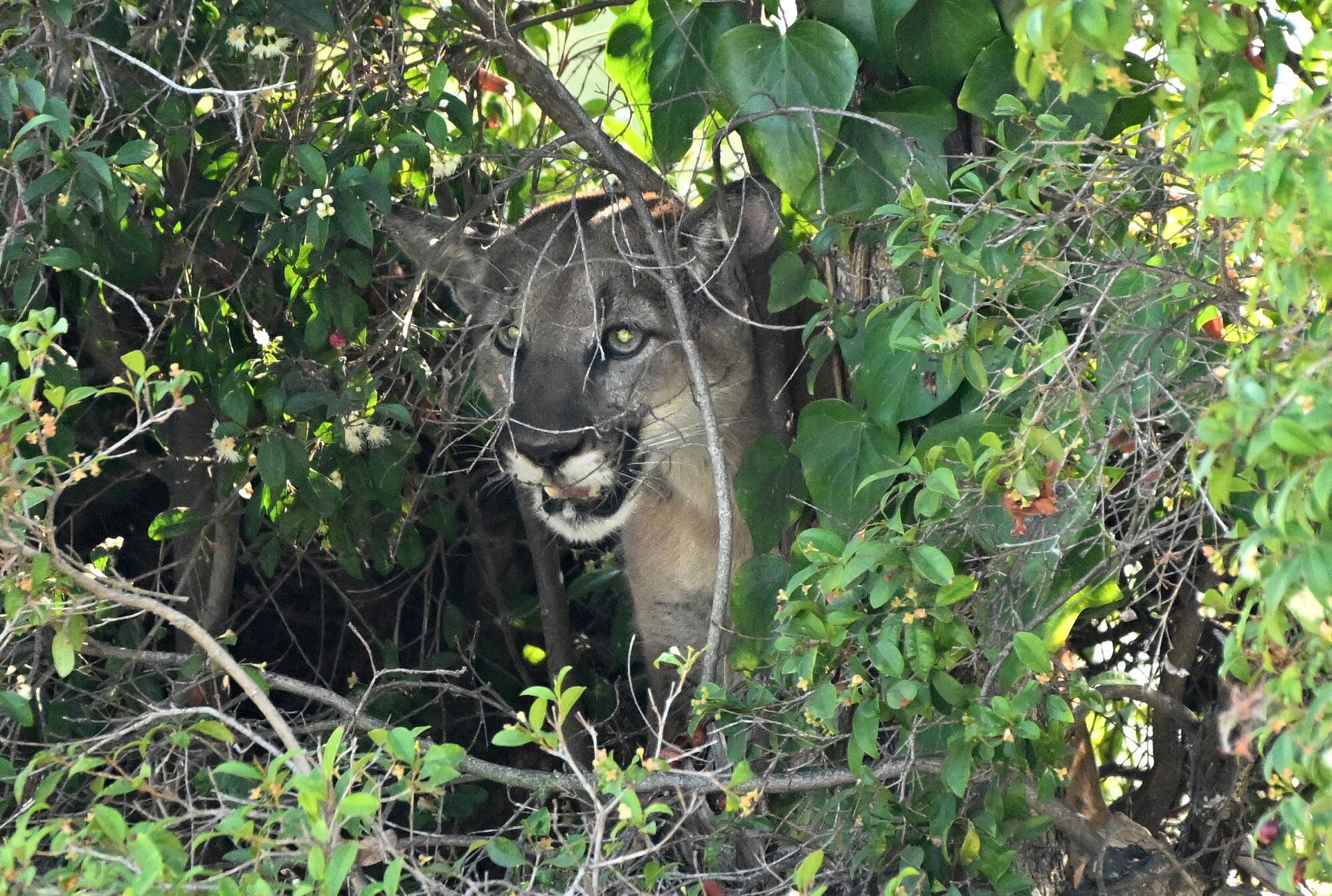
A mountain lion sits in a tree after being tranquilized along San Vicente Boulevard in Brentwood on Oct. 27, 2022.
(Wally Skalij / Los Angeles Times)
Korinna Domingo, founder and director of the Cougar Conservancy, emphasized how cougar behavior in Los Angeles is similarly shaped by decades of urban development, fragmented landscapes and the social and political choices that structure them. “Policies like freeway construction, zoning and even how communities have been historically policed or funded can affect where and how cougars move throughout L.A.,” she said. For example, these forces have prompted cougars to adapt by becoming more nocturnal, using culverts or taking riskier crossings across fragmented landscapes.
Urban planning and evolutionary consequences are deeply intertwined, Domingo says. For example, mountain lion populations in the Santa Monica and Santa Ana mountains have shown signs of reduced genetic diversity due to inbreeding, an issue created not by natural processes, but by political and planning decisions — such as freeway construction and zoning decisions— that restricted their movement decades ago.
Today, the Wallis Annenberg Wildlife Crossing, is an attempt to rectify that. The massive infrastructure project is happening only, Domingo said, “because of community, scientific and political will all being aligned.”
However, infrastructure alone isn’t enough. “You can have habitat connectivity all you want,” she said, but you also have to think about social tolerance. Urban planning that allows for animal movement also increases the likelihood of contact with people, pets and livestock — which means humans need to learn how to interact with wild animals in a healthier way.
In L.A., coexistence strategies can look very different depending on the resources, ordinances and attitudes of each community. Although wealthier residents may have the means to build predator-proof enclosures, others lack the financial or institutional support to do the same. And some with the means simply choose not to, instead demanding lethal removal., “Wildlife management is not just about biology,” Domingo said. “It’s about values, power, and really, who’s at the table.”
Wildlife management in the United States has long been informed by dominant cultural and religious worldviews, particularly those grounded in notions of human exceptionalism and control over nature. Carlen, Sherman and Domingo all brought up how these values shaped early policies that framed predators as threats to be removed rather than species to be understood or respected. In California, this worldview contributed not only to the widespread killing of wolves, bears and cougars but also to the displacement of American Indian communities whose land-based practices and beliefs conflicted with these approaches.
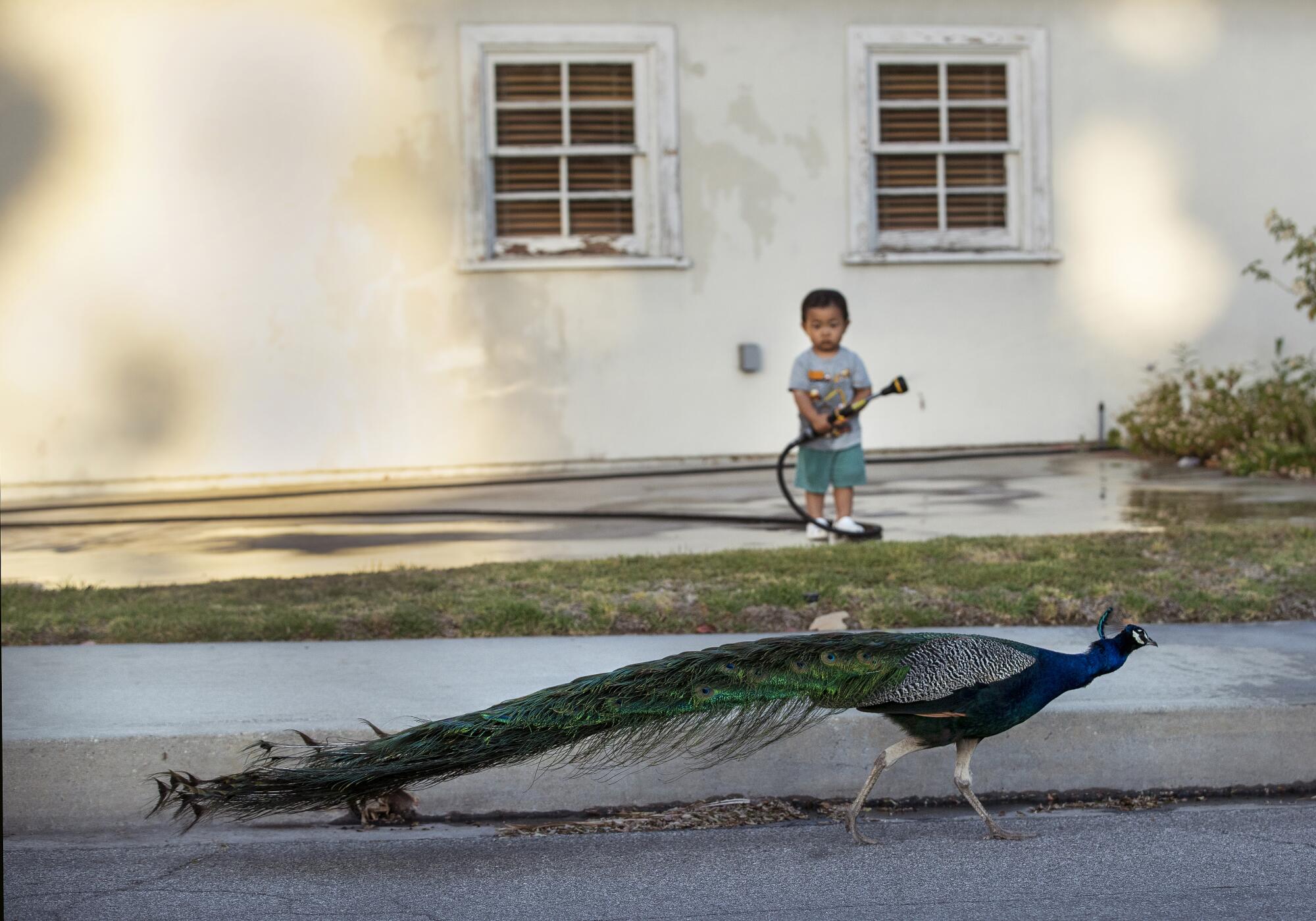
A male peacock makes its way past Ian Choi, 21 months old, standing in front of his home on Altura Road in Arcadia.
(Mel Melcon / Los Angeles Times)
Wildlife management in California, specifically, has long been shaped by these same forces of violence, originating in bounty campaigns not just against predators like cougars and wolves but also against American Indian peoples. These intertwined legacies of removal, extermination and land seizure continue to influence how certain animals and communities are perceived and treated today.
For Alan Salazar, a tribal elder with the Fernandeño Tataviam Band of Mission Indians, those legacies run deep. “What happened to native peoples happened to our large predators in California,” he said. “Happened to our plant relatives.” Reflecting on the genocide of Indigenous Californians and the coordinated extermination of grizzly bears, wolves and mountain lions, Salazar sees a clear parallel.
“There were three parts to our world — the humans, the animals and the plants,” he explained. “We were all connected. We respected all of them.” Salazar explains that his people’s relationship with the land, animals and plants is itself a form of religion, one grounded in ceremony, reciprocity and deep respect. Salazar said his ancestors lived in harmony with mountain lions for over 10,000 years, not by eliminating them but by learning from them. Other predators — cougars, bears, coyotes and wolves — were also considered teachers, honored through ceremony and studied for their power and intelligence. “Maybe we had a better plan on how to live with mountain lions, wolves and bears,” he said. “Maybe you should look at tribal knowledge.”
He views the Wallis Annenberg Wildlife Crossing — for which he is a Native American consultant — as a cultural opportunity. “It’s not just for mountain lions,” he said. “It’s for all animals. And that’s why I wanted to be involved.” He believes the project has already helped raise awareness and shift perceptions about coexistence and planning, and hopes that it will help native plants, animals and peoples.
As L.A. continues to grapple with the future of wildlife in its neighborhoods, canyons and corridors, Salazar and others argue that it is an opportunity to rethink the cultural frameworks, governance systems and historical injustices that have long shaped human-animal relations in the city. Whether through policy reform, neighborhood education or sacred ceremony, residents need reminders that evolutionary futures are being shaped not only in forests and preserves but right here, across freeways, backyards and local council meetings.
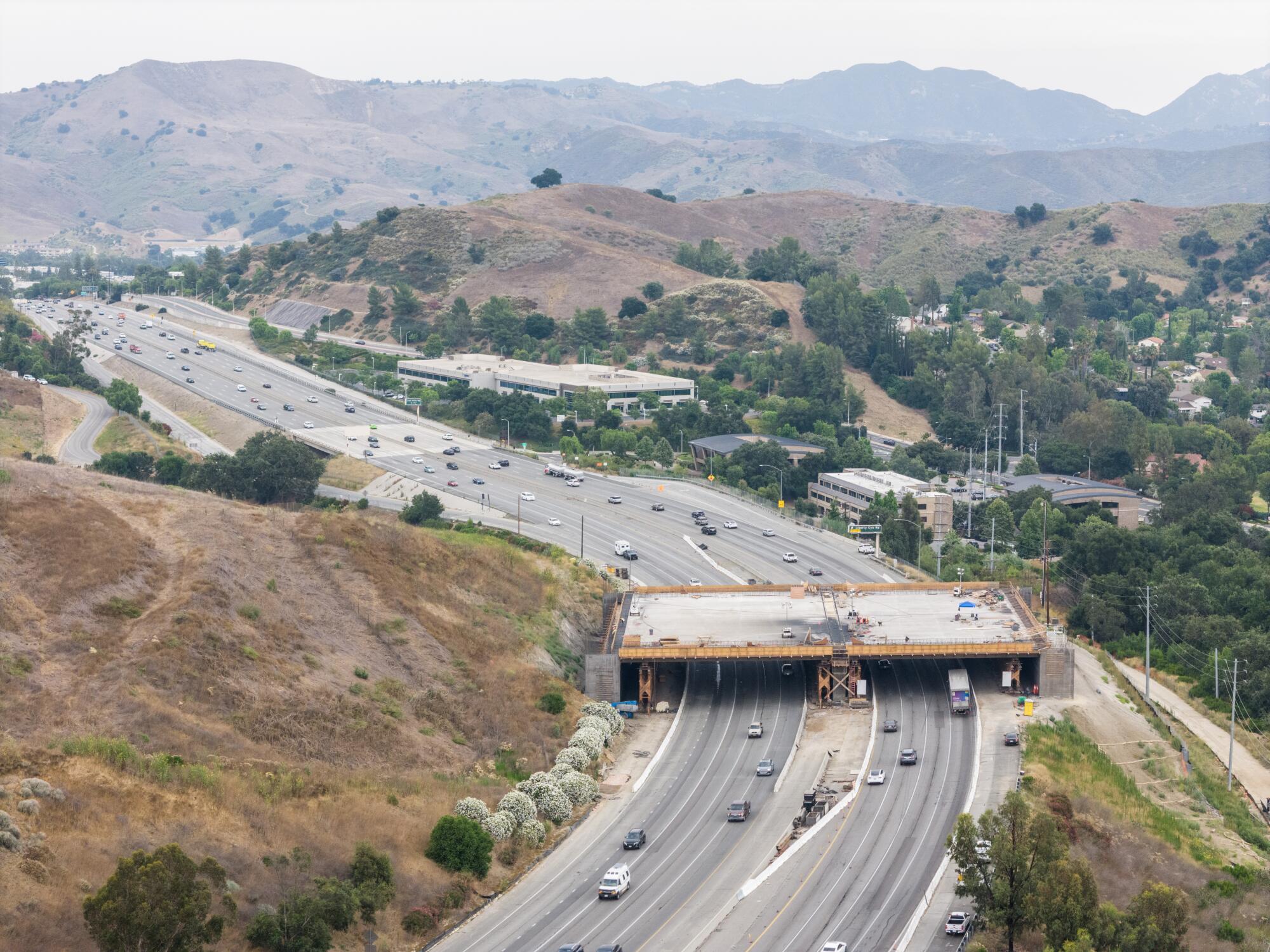
The Wallis Annenberg Wildlife Crossing under construction over the 101 Freeway near Liberty Canyon Road in Agoura Hills on July 12, 2024.
(Myung J. Chun / Los Angeles Times)
The research makes clear that wildlife is not simply adapting to urban environments in isolation; it is adapting to a range of factors, including policing, architecture and neighborhood design. Carlen believes this opens a crucial frontier for interdisciplinary research, especially in cities like Los Angeles, where uneven geographies, biodiversity and political decisions intersect daily. “I think there’s a lot of injustice in cities that are happening to both humans and wildlife,” she said. “And I think the potential is out there for justice to be brought to both of those things.”