

How Birds Began Migrating to the Arctic to Breed
Golden autumn sunlight glints through the sedges and shrubs of the tundra in northern Alaska. Winter is approaching, and soon the region will be buried under snow and ice. For the past three months the chatter of the Arctic Tern colony has served as the soundtrack of the summer breeding season. But now, with daylight waning, the terns need to head south. In an instant, the usually noisy birds will fall silent, a behavior known as “dread.” Moments later the entire colony will take to the skies to begin its 25,000-mile journey to Antarctica—the longest known migration of any animal on Earth.The Arctic Tern is not the only bird that spends its breeding season in the Arctic. Billions of birds belonging to nearly 200 species—from small sparrows such as the Smith’s Longspur to large waterfowl such as the Greater White-fronted Goose—make their way to the far north every spring to reproduce and then make the return flight south for the winter. It’s no easy feat. Migration is costly. Even under ideal conditions, such an epic journey requires huge amounts of energy and exposes the travelers to dangerous weather. The mortality risk is high.But undertaking these trips allows the birds to take advantage of the seasonal conditions in these environments. The endless summer sun supports lush plant growth, flourishing insect swarms, and plentiful fish populations nourished by zooplankton blooms. With 24 hours of light a day, the birds can more easily catch food such as slippery fish and tiny insects. The round-the-clock daylight also means many of the animals that prey on birds are less likely to sneak up on a nest unnoticed.On supporting science journalismIf you're enjoying this article, consider supporting our award-winning journalism by subscribing. By purchasing a subscription you are helping to ensure the future of impactful stories about the discoveries and ideas shaping our world today.Scientists have long wondered when birds began making these extraordinary journeys. New fossils that we and our colleagues have discovered and analyzed are finally providing some clues. A decade of expeditions to the Arctic Circle in Alaska has yielded a trove of bird fossils—including several hatchlings. The remains, which date to approximately 73 million years ago during the Late Cretaceous period, constitute the earliest known record of birds reproducing at polar latitude. The fossils hint that early birds may have already been traveling to the top of the world to raise the next generation of winged wonders.The polar migration of birds is one of nature’s great spectacles. To make the marathon journey to the Arctic, birds need physical stamina. They typically have various anatomical and behavioral adaptations to long-distance travel. The Arctic Tern, for example, is a marvel of efficiency. Its skeleton is lightweight and partially filled with air, allowing it to glide for long distances without expending any energy to flap its wings. It can eat on the move, plucking fish from the surface of the ocean as it flies. And, like many migratory birds, it can sleep while gliding.Migrants also need to be skilled navigators to reach their breeding ground. The precise methods by which birds find their way remain mysterious, but biologists generally agree that they use some combination of visual landmarks; the position of the sun, moon and stars; Earth’s magnetic field; and scent-based clues. A degree of learning also seems to be involved—in many species, first-time migrants appear to simply fly in the correct general direction, whereas experienced birds may use landmarks to take a more efficient route.Scientists have rediscovered dozens of three-dimensionally preserved teeth and bones from hatchling birds, including this tip of a beak, from the Arctic Circle in Alaska, showing that birds were reproducing at polar latitude by 73 million years ago.As impressive as the trip itself is, the Arctic migration is part of a much grander scheme: the birds are literally changing their ecosystems at their destinations. Although most Arctic birds are only physically in the Arctic for the breeding season, they spur the success of plants by pollinating flowers and dispersing seeds. They also help to manage insect and rodent populations and, by extension, help to control the spread of disease. In fact, birds are so critical to the success of their habitats that they are hypothesized to have played a key role in structuring remote ecosystems over deep time. Birds carry small organisms, such as plants and insects, over long distances to colonize remote polar regions. Were it not for the evolution of migratory birds, today’s tundra would be much more barren.Despite the importance of migration for the birds themselves and for the wider landscape they inhabit, we actually know very little about the origins of this phenomenon. To answer such a fundamental question, we have to look backward in time to the fossil record. Unfortunately, the polar fossil record is sparse, and most of the fossil-bearing sediments there are covered in ice or water. In spots where these sediments are exposed, fieldwork is often challenging, dangerous and expensive. Furthermore, bird bones are some of the rarest fossils in the world because they are small and fragile, making them less likely to survive long enough to fossilize, let alone to be discovered by paleontologists.In the rare cases when we do manage to find a fossil bird in the Arctic, it can be difficult to determine whether that bird was a visiting migrant or a permanent resident. Let’s say we find exactly the same species, in rocks from exactly the same time period, at both temperate and polar latitudes. Even then, we can’t say the extinct species migrated. There’s always the possibility that it merely inhabited a broad area year-round. The range of the modern-day Common Raven, for instance, encompasses practically the entire Northern Hemisphere.There is a clever way to home in on whether a fossil deposit contains migratory birds, however. The vast majority of living birds that inhabit polar regions migrate to lower latitudes after the breeding season ends. So, if we find fossil evidence of birds not just present but breeding at polar latitudes, we are headed in the right direction. This is where our work on fossils from a Late Cretaceous body of rock in northern Alaska called the Prince Creek Formation comes in.At the beginning of the 1993 movie Jurassic Park, a team of paleontologists gently brushes away sand to reveal an intact dinosaur skeleton in the badlands of Montana. Although fossil fieldwork is never as simple as removing loose sediment with a paintbrush (sorry, Steven Spielberg), Arctic fieldwork is in a league of its own. Winter brings temperatures as low as –50 degrees Fahrenheit, tons of snow and limited hours of daylight. The summer isn’t a walk in the park, either: giant mosquitoes are out in force, it’s almost always rainy and cold, and there is So. Much. Mud. Moreover, large mammals are out and about, making potentially dangerous wildlife encounters a concern.In August of 2022 one of us (Wilson) was on her second trip to the Arctic. It was about five in the morning when she awoke in her tent along the Colville River near the Prince Creek Formation. The sun had already been up for hours. With a couple more hours before she needed to be up, she was frustrated that she had to climb out of her warm sleeping bag to pee. She begrudgingly put on a hat and coat and unzipped her tent, still half asleep. Then her heart stopped. About 20 yards away, right near one of her crewmates’ tents, was a giant, fuzzy brown blob. She tried frantically to remember her bear training: Should she call out and try to wake everyone else up? Grab her bear spray? Try to scare it out of the camp? Only after putting herself through this roller coaster of emotions did she finally realize that the “bear” had a large set of horns on its head. Thankfully, the camp visitor was just a musk ox.Brittany Cheung (feature icons) and Rebecca Gelernter (bird illustrations)One may wonder why we bother with such extreme fieldwork. Wilson has often found herself wondering the same thing while working in –30-degree-F weather. But for the same reason the fieldwork is challenging, the fossil discoveries in the Arctic are some of the most exciting in the world. The Prince Creek Formation is located at a modern-day latitude of 70 degrees north and preserves fossils of animals that lived an estimated 72.8 million years ago. Plate tectonic activity has shifted Alaska south since that time. During the Late Cretaceous, these species would have been living at an even higher paleolatitude of 80 to 85 degrees north, practically at the North Pole. Summers would have brought plentiful light and warmth, but year-round occupants of the ecosystem had to endure winters with freezing temperatures, snowfall and about four months of continuous darkness.Paleontologists have known about dinosaurs from the Prince Creek Formation since 1983, but it’s only in the past couple of decades that work led by Patrick Druckenmiller of the University of Alaska Museum of the North and Gregory Erickson of Florida State University has begun to change our perception of Arctic life in the Cretaceous. Their team’s discovery of baby dinosaur fossils helped to demonstrate that dinosaurs were year-round inhabitants of the ecosystem because the baby dinosaurs would have been too young to migrate before the onset of winter. More recently, smaller bones found alongside the dinosaur fossils have led to another exciting discovery: the oldest evidence of polar bird reproduction.To date, we have identified more than 50 three-dimensionally preserved bird bones, along with dozens of teeth, from the site. The fossils are so tiny that they could all fit together in a single jam jar. Nevertheless, they represent one of the best collections of Late Cretaceous North American bird fossils and document the presence of at least three types of birds that lived alongside nonbird dinosaurs in Arctic Alaska. Not only that, but many of the fossils belong to baby birds and represent the earliest known growth stages of these groups of birds. Together these fossils demonstrate that birds have been nesting in the Arctic for at least 73 million years, nearly half the time they have existed on Earth.Close study of these delicate fossils has allowed us to reconstruct the birds of the Prince Creek Formation and their role in the ecosystem. Picture the Arctic in early summer 73 million years ago. The coastal floodplain that was desolate throughout the long winter is now lush with plant life and buzzing with insects. It’s the perfect setting for a newly hatched chick to grow up in. A head pops up from a bowl-shaped nest. It belongs to a baby ornithurine, a close relative of modern birds. He is still covered in downy feathers and scrambles about on skinny legs, not yet ready to take flight. While learning his way around the world, he takes special care to stick close to his parents. Unlike many other Late Cretaceous birds, he and his relatives have a toothless beak that serves as a precise tool for picking off creeping insects under their watchful eyes. This chick hatched a month ago and is already off to a strong start thanks to a new evolutionary innovation: the larger egg laid by advanced ornithurine birds.The coastal floodplain offers premium real estate for nesting. Dinosaurs of all kinds are preparing for the arrival of their young, and last year’s young are still recovering from their first Arctic winter. The ornithurine chick and his family aren’t the only types of birds here to call this landscape home. Kick-diving hesperornithines are hunting in the river waters, and ternlike ichthyornithines are wheeling overhead. And they’re all here for the same reason birds still nest in the Arctic today: lots and lots of sunshine.The Prince Creek birds provide definitive evidence that birds bred in the Arctic during the Cretaceous. Whether they migrated there from elsewhere to reproduce is tougher to establish. We can get at this question from a few angles, however. Let’s start by considering whether these birds had the ability to make such a journey in the first place. We know that any birds from the preceding Jurassic period are unlikely to have flown very far. Such early birds had not yet evolved many of the features that help modern birds fly skillfully and efficiently. For example, the iconic Archaeopteryx was capable of flight, but it appears to have had relatively low endurance and couldn’t perform complex maneuvers. The keeled sternum, or breastbone, that anchors the pectoral muscles in modern birds was either absent or at most a flat cartilaginous plate in Archaeopteryx. Clawed fingers interrupted the leading edge of its wing, and compared with birds of today, its feathers appear to have been less flexible and thus less adept at forming a coherent airfoil. Even its tail seems like an archaic reminder of Archaeopteryx’s grounded ancestry. Whereas modern birds have a short tail with a special plough-shaped bone called the pygostyle that lets them spread their tail feathers into a fan, Archaeopteryx retained a long and aerodynamically unwieldy tail similar to that of its theropod dinosaur ancestors.Researchers excavate a fossil site along the Colville River in northern Alaska.Over time birds evolved a panoply of skeletal and soft-tissue features that improved their flight capabilities. The bony tail became shorter, and the fingertips diminished from large claws to tiny bones hidden under the feathers. Advanced Cretaceous birds in the group Ornithothoraces, which includes the Prince Creek specimens, are in many ways the first birds with an unquestionably proficient flight apparatus. In these birds, the sternum bears a keel that provides additional attachment for the muscles that power the flight stroke. The shoulder joint is oriented higher on the back, allowing for better positioning of the wings. The first finger also anchors an alula, a cluster of small feathers that acts as a mini airfoil, helping in fine maneuvers. Thanks to these anatomical innovations, the Prince Creek birds (apart from the flightless hesperornithines) would have been capable of flying great distances to the Arctic to breed.A closer look at where these birds fit in the avian family tree provides more clues to how they came to reproduce in the far north. Ornithothoraces is divided into two groups: the enantiornithines and the ornithurines. Enantiornithines were the dominant birds for most of the Cretaceous period. These toothed birds ranged from sparrow- to turkey-size and showed a great diversity of forms, from Longirostravis, with its slender bill, to the blunt-toothed Bohaiornis, to the toucan-beaked Falcatakely. They lived almost everywhere.Ornithurines, which include modern birds and their close relatives, were rarer in Cretaceous ecosystems. Like enantiornithines, most Cretaceous ornithurines still had teeth. But advanced members of the group differed from enantiornithines in having fewer teeth; no gastralia, or belly ribs; and separated pubis bones, which allowed them to lay larger eggs. In contrast to the enantiornithines, which seem to have thrived in forested environments, ornithurines appear to have stuck largely to aquatic habitats during the Cretaceous.Intriguingly, the Prince Creek bird fossils all come from ornithurine birds. We have identified bones and teeth of three types so far: ternlike ichthyornithines; hesperornithines, which used their feet to propel themselves through water; and some nearly modern close relatives of living birds. Notably absent from our assemblage are any enantiornithines. If all Ornithothoraces were capable of long-distance flight, why are the otherwise ubiquitous enantiornithines missing from Alaska?To recover small bones and teeth, the team washes fossil-bearing sediments through screens and takes the resulting concentrate back to the laboratory for examination under a microscope.We suspect one answer lies in the egg. Anyone who regularly cooks eggs has probably noticed a little white blob, which for many people spoils the otherwise appetizing appearance of the yolk. This blob is the chalazae, a pair of protein-rich “tethers” that attach the yolk to the shell. Chalazae protect the embryo when birds rotate their eggs in the nest to ensure that the embryos get thoroughly bathed in nutrients during incubation. Reptiles, which lack chalazae, do not practice egg rotation. In fact, rotating a crocodile egg can disrupt development of and kill the embryo.So far paleontologists haven’t found any fossil chalazae that might allow them to trace the origin of this structure. But we have a hunch that it evolved in ornithurines because crocodilians, nonavian dinosaurs and enantiornithines all buried their eggs at least partially in the ground. Fossil clutches of enantiornithines demonstrate that they placed their eggs vertically in sediment or soil, leaving only the tops exposed. This arrangement would have stabilized the eggs, keeping the embryo safely attached to the yolk, but it was much less efficient for incubation. At best, brooding enantiornithines would have been able to make only partial contact with their eggs, resulting in poorer heat transfer and slower development of the embryo. In fact, some paleontologists speculate that they could not incubate via body contact at all, because the eggs were too small to support that parent’s weight.Perhaps the lack of this tiny embryo “seat belt” explains the absence of enantiornithines in the Arctic. Most modern birds that breed in northern Alaska nest from late May through June. For birds that can nest in vegetation, this is a lovely time of year. Yet even at the start of June, snow may still persist in patches, and the soil may remain chilly or even frozen. Temperatures were warmer in the Cretaceous, but the Arctic winter was still dark and cold, and spring would have taken longer to arrive than at more southern latitudes. For ground-nesting enantiornithines, cold soil would have been highly unwelcoming for nests.Why not just wait until later in the summer to nest? There may simply not have been enough time. Because enantiornithines could not provide full-contact incubation, their eggs probably took substantially longer to hatch than those of birds that can sit on their eggs in nests built in vegetation. The inexorable march of the seasons would have left almost no time for fledging for birds that hatched in late summer.The Arctic Tern migrates tens of thousands of miles every year between its breeding grounds in the Arctic and its wintering grounds in Antarctica.Mark Boulton/Science SourceStill, although enantiornithines took several years to grow to full size, they appear to have been highly precocial as hatchlings. In fact, there is some evidence they could fly within a day of hatching. That might seem to make up for the longer incubation time in the race against winter. But another aspect of enantiornithine biology might have thrown up a roadblock to Arctic breeding.Recently discovered fossils preserved in amber reveal that enantiornithines molted their body feathers all at once. This style of molting allowed them to trade their juvenile plumage for adult plumage rapidly when the time came. Yet it would have been a big liability in colder climates. If an early cold snap occurred during a molting interval, being caught half naked could have been deadly to small-bodied birds that had to generate their own body heat, as opposed to obtaining it from external sources such as the sun. By eliminating the possibility of nesting in the summer and overwintering, this molting pattern might have served as a barrier to those birds inhabiting Arctic environments year-round.Needing a longer runway to make it from the egg to migration-ready seems to have left enantiornithines unable to establish themselves in the Arctic. Ornithurines, in contrast, were able to exploit the Arctic at least seasonally thanks to evolutionary innovations in reproduction and development that occurred in their lineage.Our work on the Prince Creek birds is not over yet. We currently have only circumstantial evidence that they were migrating to the Arctic to breed rather than living there year-round. But we may be able to build our case with a technique called stable isotope analysis, which lets us use comparisons of the ratios of different forms, or isotopes, of the same element in an animal’s teeth or bones to infer its diet, reconstruct its environmental conditions, and even trace its movements over its lifetime.We know that dinosaurs were overwintering in the Arctic because their young would not have been ready to migrate anywhere the first winter after hatching. Perhaps comparisons of the isotopic compositions of bird and dinosaur teeth could inform us about the habits of the Prince Creek birds. Many biological factors, such as diet and metabolism, influence isotopic compositions, though. We still have a lot of groundwork to do to understand these factors before we apply stable isotope techniques to our fossil birds.Meanwhile let’s check in on our hatchling. The Late Cretaceous world is harsh for an ornithurine chick still learning the ropes. At just a month old, he is still very vulnerable and depends on his parents for comfort and safety. If he strays too far, he risks becoming dinner for one of the many dromaeosaurs who are also trying to provide for their young. Because of these predators, many of his siblings won’t survive to the end of the summer, and some just might end up as fossils in the long run. If he can make it a few months, perhaps he will fly south with his kin to somewhere sunny for the winter. He’d be one of the lucky ones. This scenario is the harsh reality of life at the top of the world. But in the remarkable adaptations and behaviors of birds lies hope for survival.
Tiny fossils hint at when birds began making their mind-blowing journey to the Arctic to breed
Golden autumn sunlight glints through the sedges and shrubs of the tundra in northern Alaska. Winter is approaching, and soon the region will be buried under snow and ice. For the past three months the chatter of the Arctic Tern colony has served as the soundtrack of the summer breeding season. But now, with daylight waning, the terns need to head south. In an instant, the usually noisy birds will fall silent, a behavior known as “dread.” Moments later the entire colony will take to the skies to begin its 25,000-mile journey to Antarctica—the longest known migration of any animal on Earth.
The Arctic Tern is not the only bird that spends its breeding season in the Arctic. Billions of birds belonging to nearly 200 species—from small sparrows such as the Smith’s Longspur to large waterfowl such as the Greater White-fronted Goose—make their way to the far north every spring to reproduce and then make the return flight south for the winter. It’s no easy feat. Migration is costly. Even under ideal conditions, such an epic journey requires huge amounts of energy and exposes the travelers to dangerous weather. The mortality risk is high.
But undertaking these trips allows the birds to take advantage of the seasonal conditions in these environments. The endless summer sun supports lush plant growth, flourishing insect swarms, and plentiful fish populations nourished by zooplankton blooms. With 24 hours of light a day, the birds can more easily catch food such as slippery fish and tiny insects. The round-the-clock daylight also means many of the animals that prey on birds are less likely to sneak up on a nest unnoticed.
On supporting science journalism
If you're enjoying this article, consider supporting our award-winning journalism by subscribing. By purchasing a subscription you are helping to ensure the future of impactful stories about the discoveries and ideas shaping our world today.
Scientists have long wondered when birds began making these extraordinary journeys. New fossils that we and our colleagues have discovered and analyzed are finally providing some clues. A decade of expeditions to the Arctic Circle in Alaska has yielded a trove of bird fossils—including several hatchlings. The remains, which date to approximately 73 million years ago during the Late Cretaceous period, constitute the earliest known record of birds reproducing at polar latitude. The fossils hint that early birds may have already been traveling to the top of the world to raise the next generation of winged wonders.
The polar migration of birds is one of nature’s great spectacles. To make the marathon journey to the Arctic, birds need physical stamina. They typically have various anatomical and behavioral adaptations to long-distance travel. The Arctic Tern, for example, is a marvel of efficiency. Its skeleton is lightweight and partially filled with air, allowing it to glide for long distances without expending any energy to flap its wings. It can eat on the move, plucking fish from the surface of the ocean as it flies. And, like many migratory birds, it can sleep while gliding.
Migrants also need to be skilled navigators to reach their breeding ground. The precise methods by which birds find their way remain mysterious, but biologists generally agree that they use some combination of visual landmarks; the position of the sun, moon and stars; Earth’s magnetic field; and scent-based clues. A degree of learning also seems to be involved—in many species, first-time migrants appear to simply fly in the correct general direction, whereas experienced birds may use landmarks to take a more efficient route.
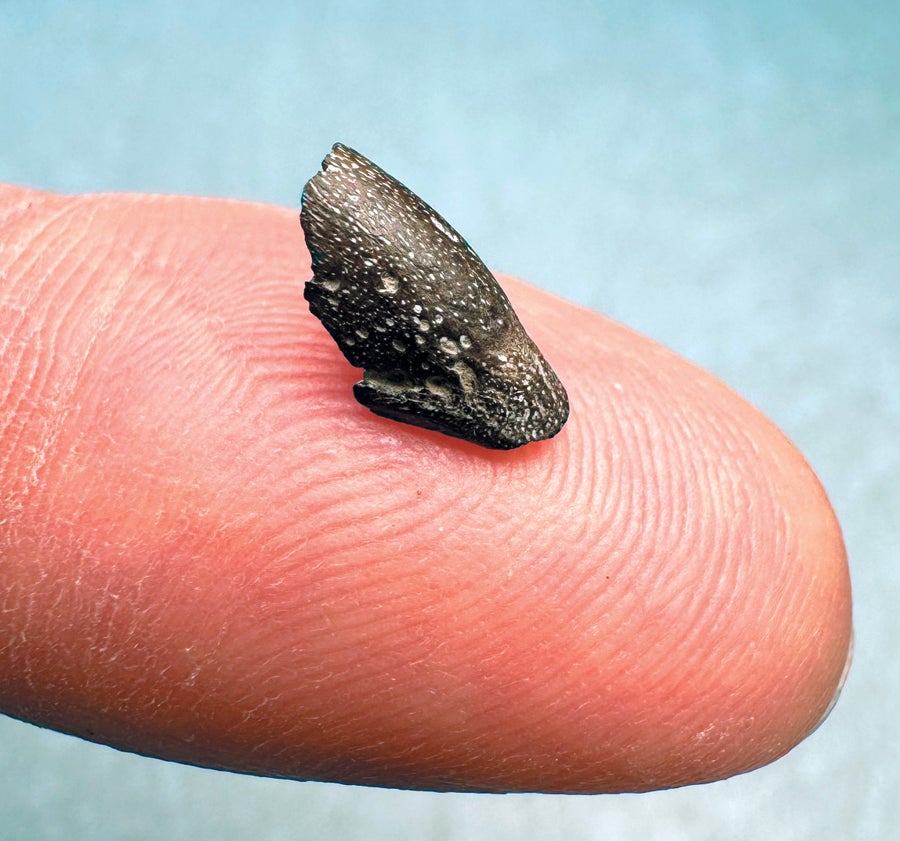
Scientists have rediscovered dozens of three-dimensionally preserved teeth and bones from hatchling birds, including this tip of a beak, from the Arctic Circle in Alaska, showing that birds were reproducing at polar latitude by 73 million years ago.
As impressive as the trip itself is, the Arctic migration is part of a much grander scheme: the birds are literally changing their ecosystems at their destinations. Although most Arctic birds are only physically in the Arctic for the breeding season, they spur the success of plants by pollinating flowers and dispersing seeds. They also help to manage insect and rodent populations and, by extension, help to control the spread of disease. In fact, birds are so critical to the success of their habitats that they are hypothesized to have played a key role in structuring remote ecosystems over deep time. Birds carry small organisms, such as plants and insects, over long distances to colonize remote polar regions. Were it not for the evolution of migratory birds, today’s tundra would be much more barren.
Despite the importance of migration for the birds themselves and for the wider landscape they inhabit, we actually know very little about the origins of this phenomenon. To answer such a fundamental question, we have to look backward in time to the fossil record. Unfortunately, the polar fossil record is sparse, and most of the fossil-bearing sediments there are covered in ice or water. In spots where these sediments are exposed, fieldwork is often challenging, dangerous and expensive. Furthermore, bird bones are some of the rarest fossils in the world because they are small and fragile, making them less likely to survive long enough to fossilize, let alone to be discovered by paleontologists.
In the rare cases when we do manage to find a fossil bird in the Arctic, it can be difficult to determine whether that bird was a visiting migrant or a permanent resident. Let’s say we find exactly the same species, in rocks from exactly the same time period, at both temperate and polar latitudes. Even then, we can’t say the extinct species migrated. There’s always the possibility that it merely inhabited a broad area year-round. The range of the modern-day Common Raven, for instance, encompasses practically the entire Northern Hemisphere.
There is a clever way to home in on whether a fossil deposit contains migratory birds, however. The vast majority of living birds that inhabit polar regions migrate to lower latitudes after the breeding season ends. So, if we find fossil evidence of birds not just present but breeding at polar latitudes, we are headed in the right direction. This is where our work on fossils from a Late Cretaceous body of rock in northern Alaska called the Prince Creek Formation comes in.
At the beginning of the 1993 movie Jurassic Park, a team of paleontologists gently brushes away sand to reveal an intact dinosaur skeleton in the badlands of Montana. Although fossil fieldwork is never as simple as removing loose sediment with a paintbrush (sorry, Steven Spielberg), Arctic fieldwork is in a league of its own. Winter brings temperatures as low as –50 degrees Fahrenheit, tons of snow and limited hours of daylight. The summer isn’t a walk in the park, either: giant mosquitoes are out in force, it’s almost always rainy and cold, and there is So. Much. Mud. Moreover, large mammals are out and about, making potentially dangerous wildlife encounters a concern.
In August of 2022 one of us (Wilson) was on her second trip to the Arctic. It was about five in the morning when she awoke in her tent along the Colville River near the Prince Creek Formation. The sun had already been up for hours. With a couple more hours before she needed to be up, she was frustrated that she had to climb out of her warm sleeping bag to pee. She begrudgingly put on a hat and coat and unzipped her tent, still half asleep. Then her heart stopped. About 20 yards away, right near one of her crewmates’ tents, was a giant, fuzzy brown blob. She tried frantically to remember her bear training: Should she call out and try to wake everyone else up? Grab her bear spray? Try to scare it out of the camp? Only after putting herself through this roller coaster of emotions did she finally realize that the “bear” had a large set of horns on its head. Thankfully, the camp visitor was just a musk ox.

Brittany Cheung (feature icons) and Rebecca Gelernter (bird illustrations)
One may wonder why we bother with such extreme fieldwork. Wilson has often found herself wondering the same thing while working in –30-degree-F weather. But for the same reason the fieldwork is challenging, the fossil discoveries in the Arctic are some of the most exciting in the world. The Prince Creek Formation is located at a modern-day latitude of 70 degrees north and preserves fossils of animals that lived an estimated 72.8 million years ago. Plate tectonic activity has shifted Alaska south since that time. During the Late Cretaceous, these species would have been living at an even higher paleolatitude of 80 to 85 degrees north, practically at the North Pole. Summers would have brought plentiful light and warmth, but year-round occupants of the ecosystem had to endure winters with freezing temperatures, snowfall and about four months of continuous darkness.
Paleontologists have known about dinosaurs from the Prince Creek Formation since 1983, but it’s only in the past couple of decades that work led by Patrick Druckenmiller of the University of Alaska Museum of the North and Gregory Erickson of Florida State University has begun to change our perception of Arctic life in the Cretaceous. Their team’s discovery of baby dinosaur fossils helped to demonstrate that dinosaurs were year-round inhabitants of the ecosystem because the baby dinosaurs would have been too young to migrate before the onset of winter. More recently, smaller bones found alongside the dinosaur fossils have led to another exciting discovery: the oldest evidence of polar bird reproduction.
To date, we have identified more than 50 three-dimensionally preserved bird bones, along with dozens of teeth, from the site. The fossils are so tiny that they could all fit together in a single jam jar. Nevertheless, they represent one of the best collections of Late Cretaceous North American bird fossils and document the presence of at least three types of birds that lived alongside nonbird dinosaurs in Arctic Alaska. Not only that, but many of the fossils belong to baby birds and represent the earliest known growth stages of these groups of birds. Together these fossils demonstrate that birds have been nesting in the Arctic for at least 73 million years, nearly half the time they have existed on Earth.
Close study of these delicate fossils has allowed us to reconstruct the birds of the Prince Creek Formation and their role in the ecosystem. Picture the Arctic in early summer 73 million years ago. The coastal floodplain that was desolate throughout the long winter is now lush with plant life and buzzing with insects. It’s the perfect setting for a newly hatched chick to grow up in. A head pops up from a bowl-shaped nest. It belongs to a baby ornithurine, a close relative of modern birds. He is still covered in downy feathers and scrambles about on skinny legs, not yet ready to take flight. While learning his way around the world, he takes special care to stick close to his parents. Unlike many other Late Cretaceous birds, he and his relatives have a toothless beak that serves as a precise tool for picking off creeping insects under their watchful eyes. This chick hatched a month ago and is already off to a strong start thanks to a new evolutionary innovation: the larger egg laid by advanced ornithurine birds.
The coastal floodplain offers premium real estate for nesting. Dinosaurs of all kinds are preparing for the arrival of their young, and last year’s young are still recovering from their first Arctic winter. The ornithurine chick and his family aren’t the only types of birds here to call this landscape home. Kick-diving hesperornithines are hunting in the river waters, and ternlike ichthyornithines are wheeling overhead. And they’re all here for the same reason birds still nest in the Arctic today: lots and lots of sunshine.
The Prince Creek birds provide definitive evidence that birds bred in the Arctic during the Cretaceous. Whether they migrated there from elsewhere to reproduce is tougher to establish. We can get at this question from a few angles, however. Let’s start by considering whether these birds had the ability to make such a journey in the first place. We know that any birds from the preceding Jurassic period are unlikely to have flown very far. Such early birds had not yet evolved many of the features that help modern birds fly skillfully and efficiently. For example, the iconic Archaeopteryx was capable of flight, but it appears to have had relatively low endurance and couldn’t perform complex maneuvers. The keeled sternum, or breastbone, that anchors the pectoral muscles in modern birds was either absent or at most a flat cartilaginous plate in Archaeopteryx. Clawed fingers interrupted the leading edge of its wing, and compared with birds of today, its feathers appear to have been less flexible and thus less adept at forming a coherent airfoil. Even its tail seems like an archaic reminder of Archaeopteryx’s grounded ancestry. Whereas modern birds have a short tail with a special plough-shaped bone called the pygostyle that lets them spread their tail feathers into a fan, Archaeopteryx retained a long and aerodynamically unwieldy tail similar to that of its theropod dinosaur ancestors.
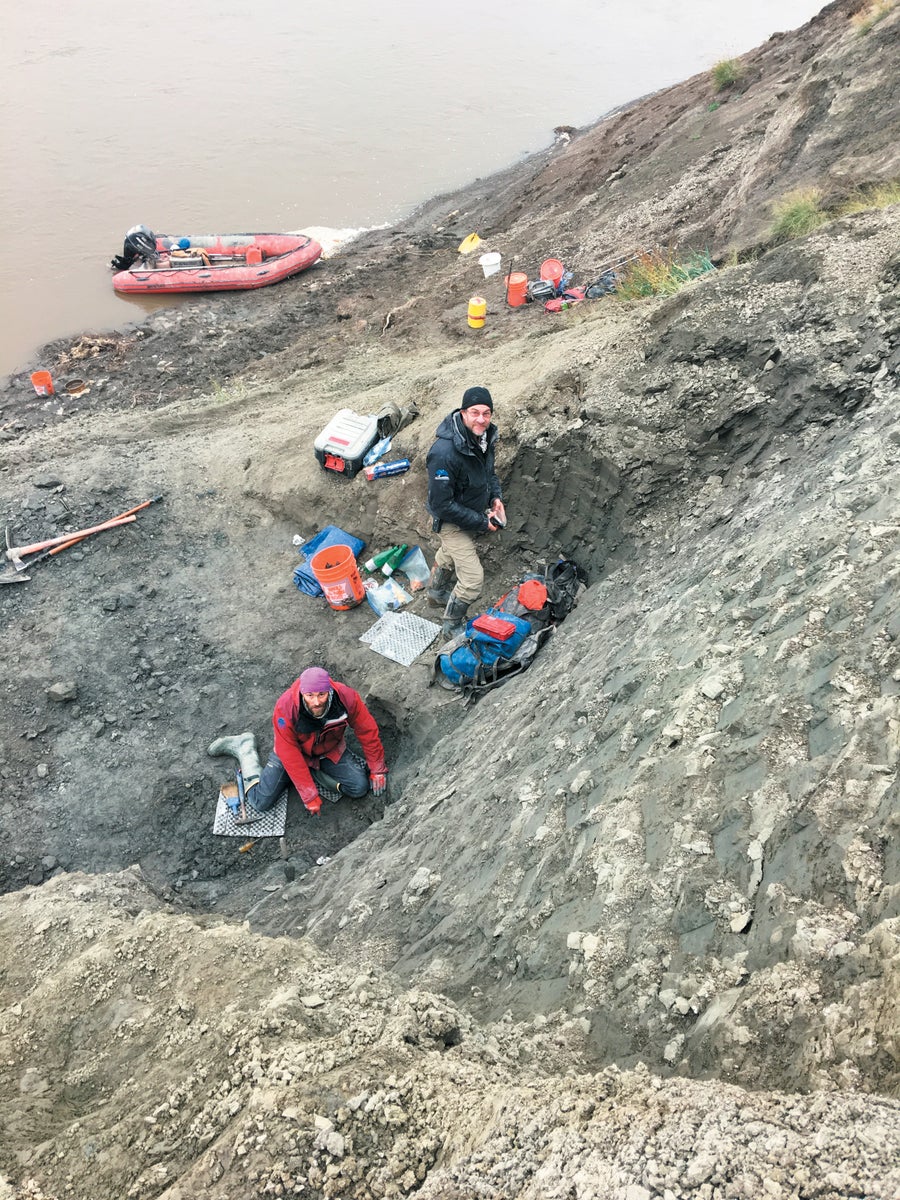
Researchers excavate a fossil site along the Colville River in northern Alaska.
Over time birds evolved a panoply of skeletal and soft-tissue features that improved their flight capabilities. The bony tail became shorter, and the fingertips diminished from large claws to tiny bones hidden under the feathers. Advanced Cretaceous birds in the group Ornithothoraces, which includes the Prince Creek specimens, are in many ways the first birds with an unquestionably proficient flight apparatus. In these birds, the sternum bears a keel that provides additional attachment for the muscles that power the flight stroke. The shoulder joint is oriented higher on the back, allowing for better positioning of the wings. The first finger also anchors an alula, a cluster of small feathers that acts as a mini airfoil, helping in fine maneuvers. Thanks to these anatomical innovations, the Prince Creek birds (apart from the flightless hesperornithines) would have been capable of flying great distances to the Arctic to breed.
A closer look at where these birds fit in the avian family tree provides more clues to how they came to reproduce in the far north. Ornithothoraces is divided into two groups: the enantiornithines and the ornithurines. Enantiornithines were the dominant birds for most of the Cretaceous period. These toothed birds ranged from sparrow- to turkey-size and showed a great diversity of forms, from Longirostravis, with its slender bill, to the blunt-toothed Bohaiornis, to the toucan-beaked Falcatakely. They lived almost everywhere.
Ornithurines, which include modern birds and their close relatives, were rarer in Cretaceous ecosystems. Like enantiornithines, most Cretaceous ornithurines still had teeth. But advanced members of the group differed from enantiornithines in having fewer teeth; no gastralia, or belly ribs; and separated pubis bones, which allowed them to lay larger eggs. In contrast to the enantiornithines, which seem to have thrived in forested environments, ornithurines appear to have stuck largely to aquatic habitats during the Cretaceous.
Intriguingly, the Prince Creek bird fossils all come from ornithurine birds. We have identified bones and teeth of three types so far: ternlike ichthyornithines; hesperornithines, which used their feet to propel themselves through water; and some nearly modern close relatives of living birds. Notably absent from our assemblage are any enantiornithines. If all Ornithothoraces were capable of long-distance flight, why are the otherwise ubiquitous enantiornithines missing from Alaska?
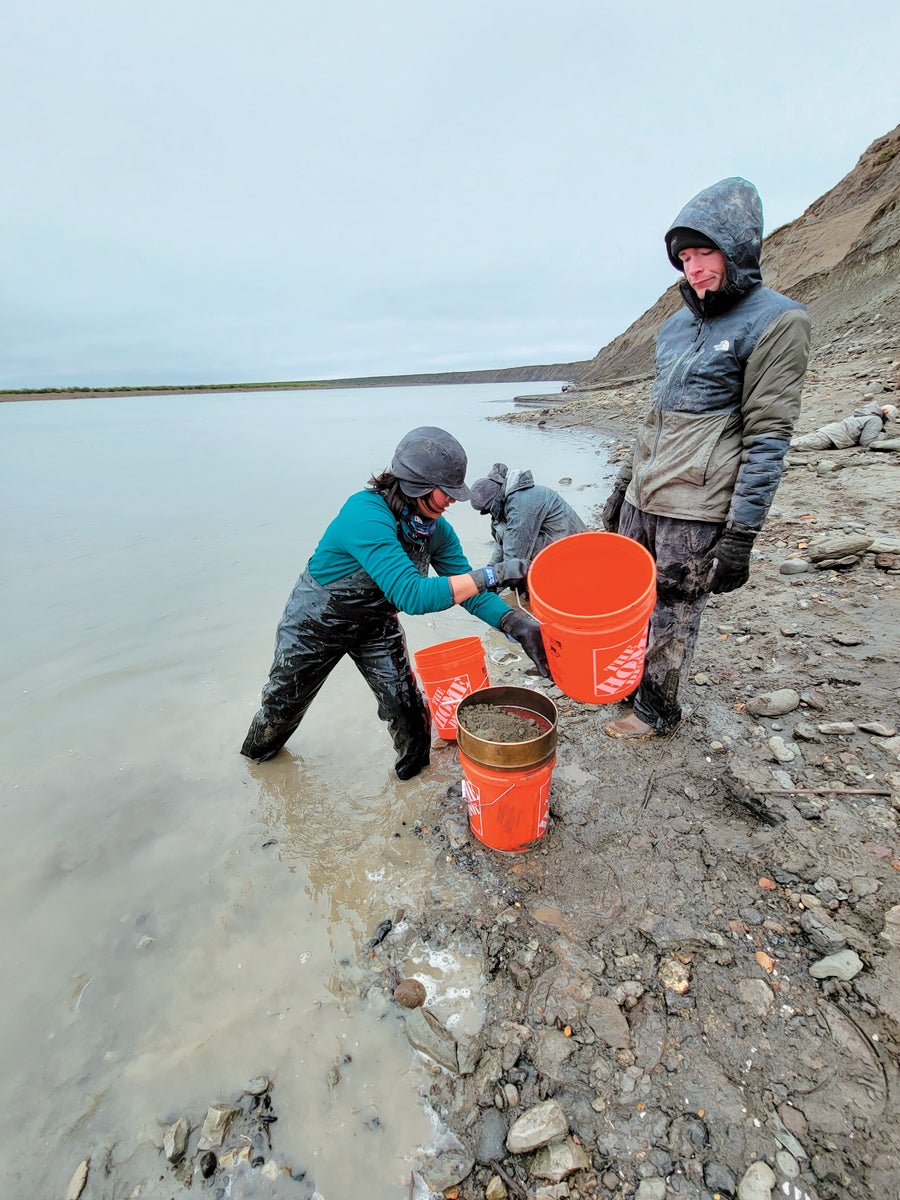
To recover small bones and teeth, the team washes fossil-bearing sediments through screens and takes the resulting concentrate back to the laboratory for examination under a microscope.
We suspect one answer lies in the egg. Anyone who regularly cooks eggs has probably noticed a little white blob, which for many people spoils the otherwise appetizing appearance of the yolk. This blob is the chalazae, a pair of protein-rich “tethers” that attach the yolk to the shell. Chalazae protect the embryo when birds rotate their eggs in the nest to ensure that the embryos get thoroughly bathed in nutrients during incubation. Reptiles, which lack chalazae, do not practice egg rotation. In fact, rotating a crocodile egg can disrupt development of and kill the embryo.
So far paleontologists haven’t found any fossil chalazae that might allow them to trace the origin of this structure. But we have a hunch that it evolved in ornithurines because crocodilians, nonavian dinosaurs and enantiornithines all buried their eggs at least partially in the ground. Fossil clutches of enantiornithines demonstrate that they placed their eggs vertically in sediment or soil, leaving only the tops exposed. This arrangement would have stabilized the eggs, keeping the embryo safely attached to the yolk, but it was much less efficient for incubation. At best, brooding enantiornithines would have been able to make only partial contact with their eggs, resulting in poorer heat transfer and slower development of the embryo. In fact, some paleontologists speculate that they could not incubate via body contact at all, because the eggs were too small to support that parent’s weight.
Perhaps the lack of this tiny embryo “seat belt” explains the absence of enantiornithines in the Arctic. Most modern birds that breed in northern Alaska nest from late May through June. For birds that can nest in vegetation, this is a lovely time of year. Yet even at the start of June, snow may still persist in patches, and the soil may remain chilly or even frozen. Temperatures were warmer in the Cretaceous, but the Arctic winter was still dark and cold, and spring would have taken longer to arrive than at more southern latitudes. For ground-nesting enantiornithines, cold soil would have been highly unwelcoming for nests.
Why not just wait until later in the summer to nest? There may simply not have been enough time. Because enantiornithines could not provide full-contact incubation, their eggs probably took substantially longer to hatch than those of birds that can sit on their eggs in nests built in vegetation. The inexorable march of the seasons would have left almost no time for fledging for birds that hatched in late summer.
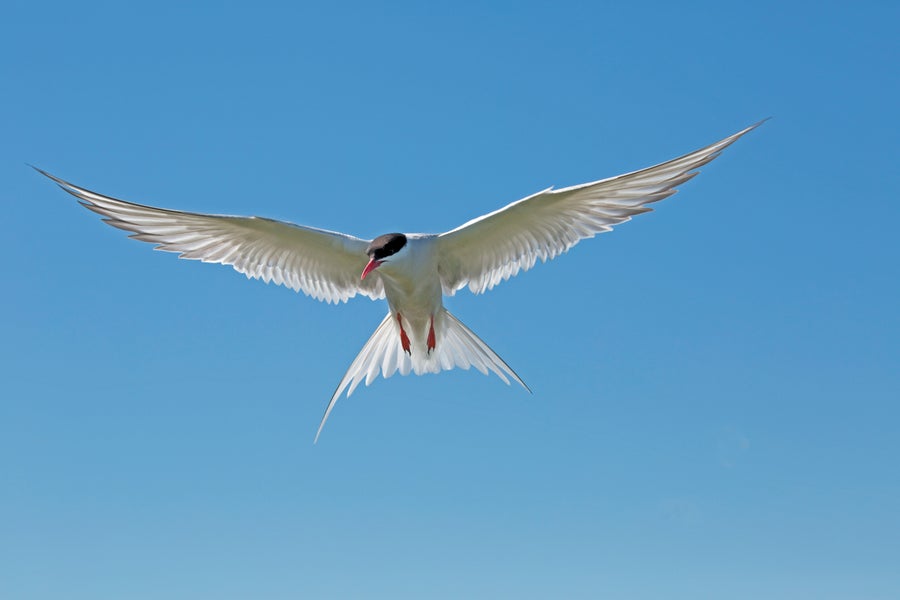
The Arctic Tern migrates tens of thousands of miles every year between its breeding grounds in the Arctic and its wintering grounds in Antarctica.
Mark Boulton/Science Source
Still, although enantiornithines took several years to grow to full size, they appear to have been highly precocial as hatchlings. In fact, there is some evidence they could fly within a day of hatching. That might seem to make up for the longer incubation time in the race against winter. But another aspect of enantiornithine biology might have thrown up a roadblock to Arctic breeding.
Recently discovered fossils preserved in amber reveal that enantiornithines molted their body feathers all at once. This style of molting allowed them to trade their juvenile plumage for adult plumage rapidly when the time came. Yet it would have been a big liability in colder climates. If an early cold snap occurred during a molting interval, being caught half naked could have been deadly to small-bodied birds that had to generate their own body heat, as opposed to obtaining it from external sources such as the sun. By eliminating the possibility of nesting in the summer and overwintering, this molting pattern might have served as a barrier to those birds inhabiting Arctic environments year-round.
Needing a longer runway to make it from the egg to migration-ready seems to have left enantiornithines unable to establish themselves in the Arctic. Ornithurines, in contrast, were able to exploit the Arctic at least seasonally thanks to evolutionary innovations in reproduction and development that occurred in their lineage.
Our work on the Prince Creek birds is not over yet. We currently have only circumstantial evidence that they were migrating to the Arctic to breed rather than living there year-round. But we may be able to build our case with a technique called stable isotope analysis, which lets us use comparisons of the ratios of different forms, or isotopes, of the same element in an animal’s teeth or bones to infer its diet, reconstruct its environmental conditions, and even trace its movements over its lifetime.
We know that dinosaurs were overwintering in the Arctic because their young would not have been ready to migrate anywhere the first winter after hatching. Perhaps comparisons of the isotopic compositions of bird and dinosaur teeth could inform us about the habits of the Prince Creek birds. Many biological factors, such as diet and metabolism, influence isotopic compositions, though. We still have a lot of groundwork to do to understand these factors before we apply stable isotope techniques to our fossil birds.
Meanwhile let’s check in on our hatchling. The Late Cretaceous world is harsh for an ornithurine chick still learning the ropes. At just a month old, he is still very vulnerable and depends on his parents for comfort and safety. If he strays too far, he risks becoming dinner for one of the many dromaeosaurs who are also trying to provide for their young. Because of these predators, many of his siblings won’t survive to the end of the summer, and some just might end up as fossils in the long run. If he can make it a few months, perhaps he will fly south with his kin to somewhere sunny for the winter. He’d be one of the lucky ones. This scenario is the harsh reality of life at the top of the world. But in the remarkable adaptations and behaviors of birds lies hope for survival.