

Elderberry Is a Sacred Indigenous Plant. Should It Be Monetized?
Article Summary• Indigenous communities have tended and used elderberries as a sacred plant and medicine for centuries. Elderberries are traditionally shared within tribal communities, not commercialized. • Elderberries grow throughout the U.S., but most are imported from Germany and Austria. Demand for elderberry products, including syrups, teas, and juices, has skyrocketed. • Entrepreneurs, farmers, and nonprofits in the West are trying to create a market for the local blue elderberry, while small Midwestern farmers have cultivated the American black elderberry for nearly 30 years. • Elderberry Wisdom Farm, an Indigenous-run nonprofit in Oregon, has begun producing and selling elderberry syrup as part of a social and economic enterprise that will benefit the tribal community. Rose High Bear considers herself a granddaughter of the elderberry plant. She’s the founder of Elderberry Wisdom Farm, an Oregon-based nonprofit that uses traditional knowledge to tend native plants and train Indigenous people for careers in agriculture. “As Native people, we have a spiritual and emotional relationship with the elderberry and an obligation to care for it,” she said. Indigenous people have worked with the plant for centuries, utilizing the flowers and berries for food and medicine, and crafting musical instruments and ceremonial objects from the wood. High Bear, an Alaska Native of Deg Hitʼan and Inupiat descent, has been tending to elderberry plants and providing elderberry syrup to family and friends for over 15 years. She says that as a sacred plant and medicine, the berries are traditionally shared among the community and given away freely. Rose High Bear, founder of Elderberry Wisdom Farm. (Photo courtesy of Elderberry Wisdom Farm) That practice contrasts with a surging global market for elderberries. Consumption of elderberry products, including teas, juices, and syrups, has increased sevenfold over the last decade, with demand supercharged during the coronavirus pandemic. Elderberries grow wild across North America, but an estimated 95 percent of elderberries are imported from outside the U.S, mainly from Germany and Austria. Interest is building in turning that wild crop into a commercial product. High Bear has reflected on that development and its implications for her community for several years now. “Native Americans live with an enormous amount of poverty and other issues,” she said. “In today’s world, we need to financially support our families and achieve prosperity for our descendants.” Still, she feels conflicted about selling elderberries for profit. “How can we take something that we regard as so sacred and put a price tag on it?” From Native Plant to Product Transforming a culturally significant native plant into a commercial crop presents unique complexities, including how to ensure that the process benefits Indigenous communities. Non-Native groups have been working on commercialization as well and face other challenges, such as simultaneously growing supply and demand for a domestic elderberry crop. In the West, entrepreneurs, farmers, and nonprofits have been trying to create a market for the local blue elderberry, whose berries appear blue due to a layer of waxy bloom. The American black elderberry, which produces small, glossy, deep-purple berries, has been in small-scale cultivation in the Midwest for nearly three decades. Blue elderberries on the bush at White Buffalo Land Trust’s Jalama Canyon Ranch. (Photo courtesy of White Buffalo Land Trust) The flavor of both native species is described as earthy and astringent, with blue elderberries having a brighter and grassier taste and black elderberries being smoother, with notes of caramel. (Raw elderberries are mildly toxic to humans and should be cooked before consuming. A third native species, the red elderberry, is the most toxic.) Many tribes throughout North America see the plant as sacred, from the Tlingit in Alaska to the Cherokee in the Southeast and the Pomo in California, and historically have made use of all three species. Most recognize elderberries as a medicine with many uses. The dried flowers can be steeped to produce a tea used to reduce a fever. An infusion of the bark can also be used as an emetic to induce vomiting or as a laxative, and the berries can be used to treat rheumatism, urinary tract infections, and myriad other health issues. Elderberries have Western science on their side, too: Studies suggest that the berries’ antioxidant-rich and anti-inflammatory anthocyanins can relieve symptoms of flu, colds, and other upper respiratory infections, and research is underway on how they affect brain health. The ecosystem benefits are also a draw. As perennial plants that spring up in riverbanks and ditches, elderberries are a wildlife magnet. They attract pollinators with profuse white flowers that bloom from late spring to early summer, and tempt birds with their ripe berries in late summer. Elderberries are sometimes grown in hedgerows along the margins of cultivated fields, where they create natural windbreaks, support beneficial insects, prevent soil erosion, and store carbon in the ground. Katie Reneker, owner of Carmel Berry, in central California, begins a batch of elderberry syrup. (Photo credit: Richard Green Photography) Katie Reneker first encountered elderberries as a natural remedy to support her children’s immune systems. “I was using elderberry syrup that I was buying at the health food store, and I felt like it worked,” she said. Reneker was surprised to learn that elderberries grew near her home on California’s central coast. She began to forage for Western blue elderberries and make syrup at home. The difference between her product and the store-bought ones was stark, inspiring her to launch Carmel Berry as a cottage food operator, which permitted her to produce elderberry products at home and sell them locally. But she ran into a roadblock. “You can’t just pick off the side of the road once you’re an actual business,” she said. “And there weren’t any farms that could meet the demand.” To encourage farmers and grow a supply chain for Western blue elderberries, she began to convene groups of interested growers for workshops, attracting hundreds of people from across the country. Blue elderberries are adapted to the hotter and drier western climate, making them attractive for farmers looking to diversify with drought-tolerant crops. But the lack of research into growing blue elderberries worries farmers nervous about trying a new crop. Blue elderberry is functionally still a wild plant, without the consistency that comes from research and development. As a result, Reneker can source some elderflowers from local blue elderberry plants, but still largely relies on Midwest growers for her berry supply. Federal Budget Cuts Stall Elderberry Project One initiative that could have bridged the knowledge gap and built supply and demand for blue elderberries is The Elderberry Project, spearheaded by the Santa Barbara nonprofit White Buffalo Land Trust. “Elderberries have been cultivated for over 10,000 years by Indigenous communities just here in our region,” said Jesse Smith, the land trust’s director of land stewardship. “Combine that with the market growth over the last five years in particular, and we felt like it was such an important thing for us to explore,” he added, saying that the project’s goal was to also include Native people in its efforts. “Elderberries have been cultivated for over 10,000 years by Indigenous communities just here in our region. Combine that with the market growth over the last five years in particular, and we felt like it was such an important thing for us to explore.” It partnered with the Santa Ynez Chumash Environmental Office, which planned to supply elderberries grown in its native plant nursery and incorporate workforce development for the tribal community. The project aimed to help small producers learn to cultivate the crop, install a processing facility, and grow market appetite from businesses. Another partner, the U.C. Sustainable Agriculture Research and Education Program, conducted initial research into the agricultural potential of blue elderberries. In April, a sudden cut to the project’s five-year, $4.6 million grant from the U.S. Department of Agriculture’s (USDA) Partnerships in Climate Smart Commodities Program slowed its momentum. “We’ve laid all the groundwork,” said Lauren Tucker, who is leading market development for the project. “We were literally just about to make the equipment order, which kickstarts the whole marketplace.” The USDA is reviewing existing projects based on new criteria and continuing funding for qualifying projects under a new name, the Advancing Markets for Producers initiative. For now, Tucker is trying to think creatively about how to fill the funding gap while resubmitting updated project plans for USDA review. “It doesn’t kill the project, but it really changes things,” she said. A Midwest Berry Boomlet While efforts to build a market around Western blue elderberries are just beginning, the Midwest is better established. Missouri is at the forefront of domestic production of the American elderberry, albeit with only 400 acres estimated in cultivation. The state got a head start three decades ago, mostly due to the interest of a small group at the University of Missouri, including horticultural researcher Andrew Thomas. “There’s a group in Kansas that was making, and still makes, really good elderberry wine,” he said, referring to Wyldewood Cellars, a winery outside of Wichita. Since they were collecting elderberries from ditches and along fencelines on the family’s 1,000-acre ranch, there was no quality control or consistency, Thomas said. But the product was good, and “some light bulbs went on.” Thomas began collecting and planting wild American elderberries to investigate improved cultivars. Farmers immediately took notice. “It just kind of grew and grew, and very quickly went way beyond wine,” he said, as producers began experimenting with juices, syrups, and health supplements. Producer interest propelled Thomas’s project forward. In 2021, his research on developing elderberry production and processing received a $5.3 million USDA Specialty Crop Research Initiative grant. The ongoing project includes developing cultivars, researching growing regions, exploring mechanical harvesting, and researching processing and market potential. Many farmers who grow elderberries to diversify their farms aren’t so sure about ramping up beyond a niche crop. A small system of processors has sprung up in the area, each drawing from a network of local farms. Thomas said there is also discussion about going big with regional hubs and centralized processing facilities. The market for natural food coloring may be poised to grow further as Secretary of Health and Human Services Robert F. Kennedy Jr. wants to eliminate artificial dyes from the nation’s food supply, which could lead to even more demand for elderberries. Still, many farmers who grow elderberries to diversify their farms aren’t so sure about ramping up beyond a niche crop. “When you start talking about things like natural food coloring, the companies need massive production to be able to do that,” said Thomas. “A lot of the farmers would rather keep it more local.” A New Approach When High Bear sees giant elderberry bushes on the edge of farms in rural Marion County, she sees grandparents. However, she doesn’t begrudge farmers trying to grow and commercialize elderberries. “I have an enormous amount of compassion for today’s farmers,” she said, noting recent efforts to incorporate blue elderberries into hedgerows for ecological and economic reasons. “They can sell their berries to people that are making syrup, and that gives them just a little bit more financial support for their farms.” She acknowledges that non-Native farmers have a more limited view of the elderberry. “Not everybody understands that these plants have a spirit in them,” she said. “As Native people, we work with that spirit. We offer a prayer and ask permission to harvest. That’s the difference with non-Native people who look at it as a crop. But we don’t blame non-Native people for doing it. We need to do everything we can to help non-Native people work with the elderberry, just like we do.” Blue elderberry skin cream and syrup from Elderberry Wisdom Farm. (Photo courtesy of Elderberry Wisdom Farm) After years of reflection, High Bear reached a significant decision. In mid-December, the farm will debut its Wisdom of the Elderberry syrup for sale at the Salem Holiday Market, the result of a new hybrid social and economic enterprise that will divide its elderberry products, with half being shared within the community and the rest to be sold. “We finally realized that with so many elderberry syrups being made for commercial sale, our Native people should not be prohibited from also producing and marketing these products that are near and dear to their hearts,” she said. Although she risks potential backlash for straying from tradition, she said it’s important to recognize that the community requires money to live, especially as people face the loss of food assistance and other benefits. She hopes the new model will serve as an example of how Native people can develop microenterprises to support themselves while still integrating the spirit of generosity and tending to their spiritual and emotional relationships with the blue elderberry. “We have been living with serious issues for millennia, and problems have not defeated us,” High Bear said. “They only serve to strengthen our resilience because of our spirituality and close relationship with our ancestors and the Great Spirit.” The post Elderberry Is a Sacred Indigenous Plant. Should It Be Monetized? appeared first on Civil Eats.
“As Native people, we have a spiritual and emotional relationship with the elderberry and an obligation to care for it,” she said. Indigenous people have worked with the plant for centuries, utilizing the flowers and berries for food and medicine, and crafting musical instruments and ceremonial objects from the wood. High Bear, an Alaska Native […] The post Elderberry Is a Sacred Indigenous Plant. Should It Be Monetized? appeared first on Civil Eats.
• Indigenous communities have tended and used elderberries as a sacred plant and medicine for centuries. Elderberries are traditionally shared within tribal communities, not commercialized.
• Elderberries grow throughout the U.S., but most are imported from Germany and Austria. Demand for elderberry products, including syrups, teas, and juices, has skyrocketed.
• Entrepreneurs, farmers, and nonprofits in the West are trying to create a market for the local blue elderberry, while small Midwestern farmers have cultivated the American black elderberry for nearly 30 years.
• Elderberry Wisdom Farm, an Indigenous-run nonprofit in Oregon, has begun producing and selling elderberry syrup as part of a social and economic enterprise that will benefit the tribal community.
Rose High Bear considers herself a granddaughter of the elderberry plant. She’s the founder of Elderberry Wisdom Farm, an Oregon-based nonprofit that uses traditional knowledge to tend native plants and train Indigenous people for careers in agriculture.
“As Native people, we have a spiritual and emotional relationship with the elderberry and an obligation to care for it,” she said.
Indigenous people have worked with the plant for centuries, utilizing the flowers and berries for food and medicine, and crafting musical instruments and ceremonial objects from the wood.
High Bear, an Alaska Native of Deg Hitʼan and Inupiat descent, has been tending to elderberry plants and providing elderberry syrup to family and friends for over 15 years. She says that as a sacred plant and medicine, the berries are traditionally shared among the community and given away freely.
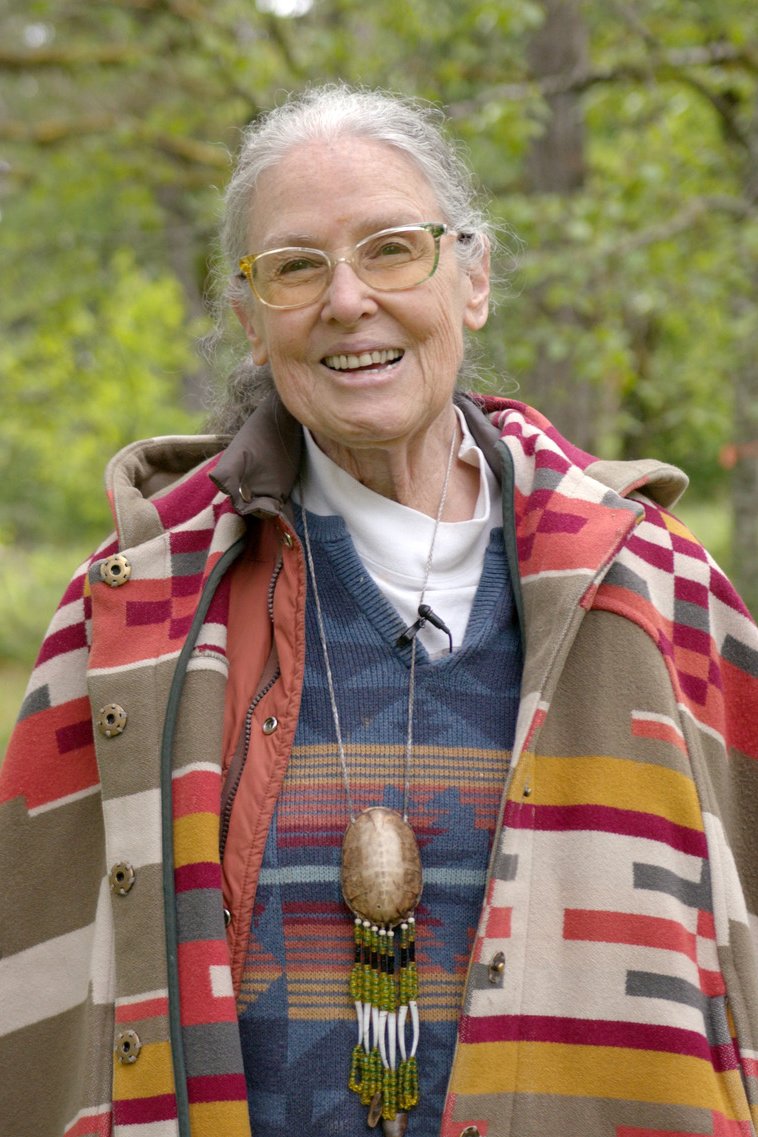
Rose High Bear, founder of Elderberry Wisdom Farm. (Photo courtesy of Elderberry Wisdom Farm)
That practice contrasts with a surging global market for elderberries. Consumption of elderberry products, including teas, juices, and syrups, has increased sevenfold over the last decade, with demand supercharged during the coronavirus pandemic. Elderberries grow wild across North America, but an estimated 95 percent of elderberries are imported from outside the U.S, mainly from Germany and Austria. Interest is building in turning that wild crop into a commercial product.
High Bear has reflected on that development and its implications for her community for several years now.
“Native Americans live with an enormous amount of poverty and other issues,” she said. “In today’s world, we need to financially support our families and achieve prosperity for our descendants.”
Still, she feels conflicted about selling elderberries for profit. “How can we take something that we regard as so sacred and put a price tag on it?”
From Native Plant to Product
Transforming a culturally significant native plant into a commercial crop presents unique complexities, including how to ensure that the process benefits Indigenous communities.
Non-Native groups have been working on commercialization as well and face other challenges, such as simultaneously growing supply and demand for a domestic elderberry crop.
In the West, entrepreneurs, farmers, and nonprofits have been trying to create a market for the local blue elderberry, whose berries appear blue due to a layer of waxy bloom. The American black elderberry, which produces small, glossy, deep-purple berries, has been in small-scale cultivation in the Midwest for nearly three decades.
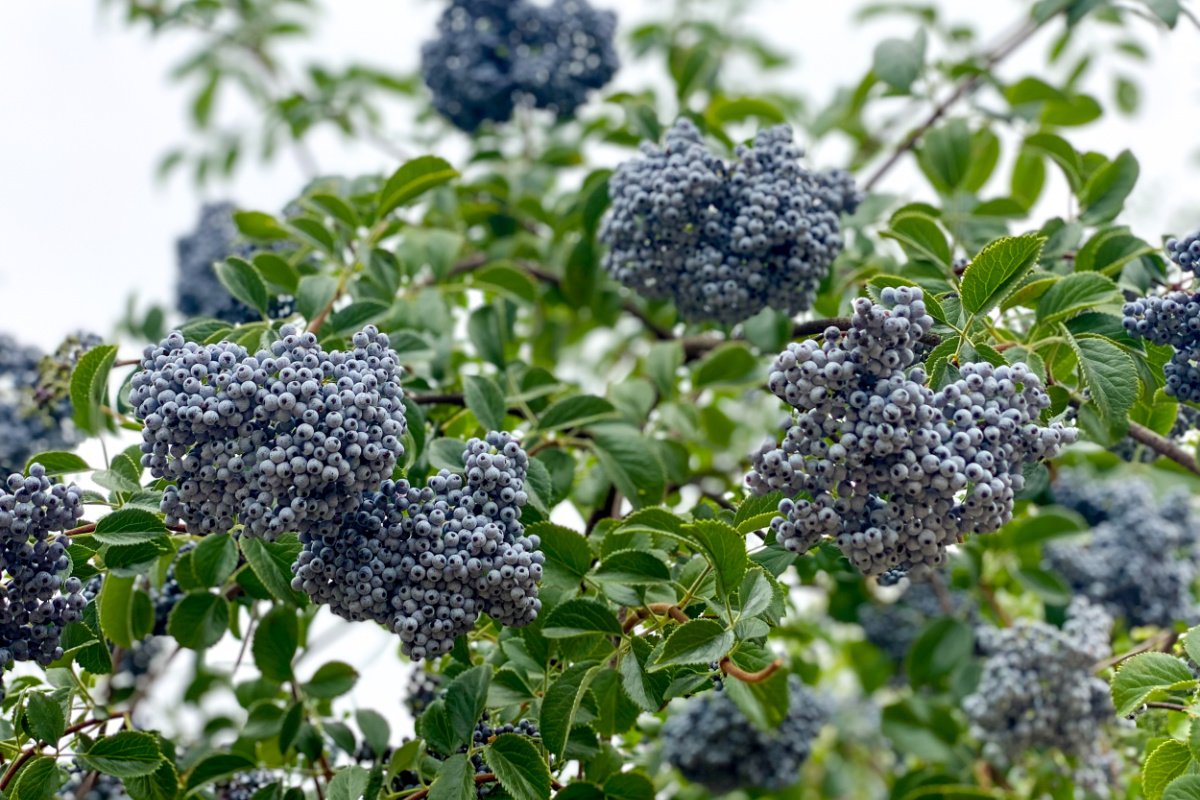
Blue elderberries on the bush at White Buffalo Land Trust’s Jalama Canyon Ranch. (Photo courtesy of White Buffalo Land Trust)
The flavor of both native species is described as earthy and astringent, with blue elderberries having a brighter and grassier taste and black elderberries being smoother, with notes of caramel. (Raw elderberries are mildly toxic to humans and should be cooked before consuming. A third native species, the red elderberry, is the most toxic.)
Many tribes throughout North America see the plant as sacred, from the Tlingit in Alaska to the Cherokee in the Southeast and the Pomo in California, and historically have made use of all three species. Most recognize elderberries as a medicine with many uses. The dried flowers can be steeped to produce a tea used to reduce a fever. An infusion of the bark can also be used as an emetic to induce vomiting or as a laxative, and the berries can be used to treat rheumatism, urinary tract infections, and myriad other health issues.
Elderberries have Western science on their side, too: Studies suggest that the berries’ antioxidant-rich and anti-inflammatory anthocyanins can relieve symptoms of flu, colds, and other upper respiratory infections, and research is underway on how they affect brain health.
The ecosystem benefits are also a draw. As perennial plants that spring up in riverbanks and ditches, elderberries are a wildlife magnet. They attract pollinators with profuse white flowers that bloom from late spring to early summer, and tempt birds with their ripe berries in late summer. Elderberries are sometimes grown in hedgerows along the margins of cultivated fields, where they create natural windbreaks, support beneficial insects, prevent soil erosion, and store carbon in the ground.
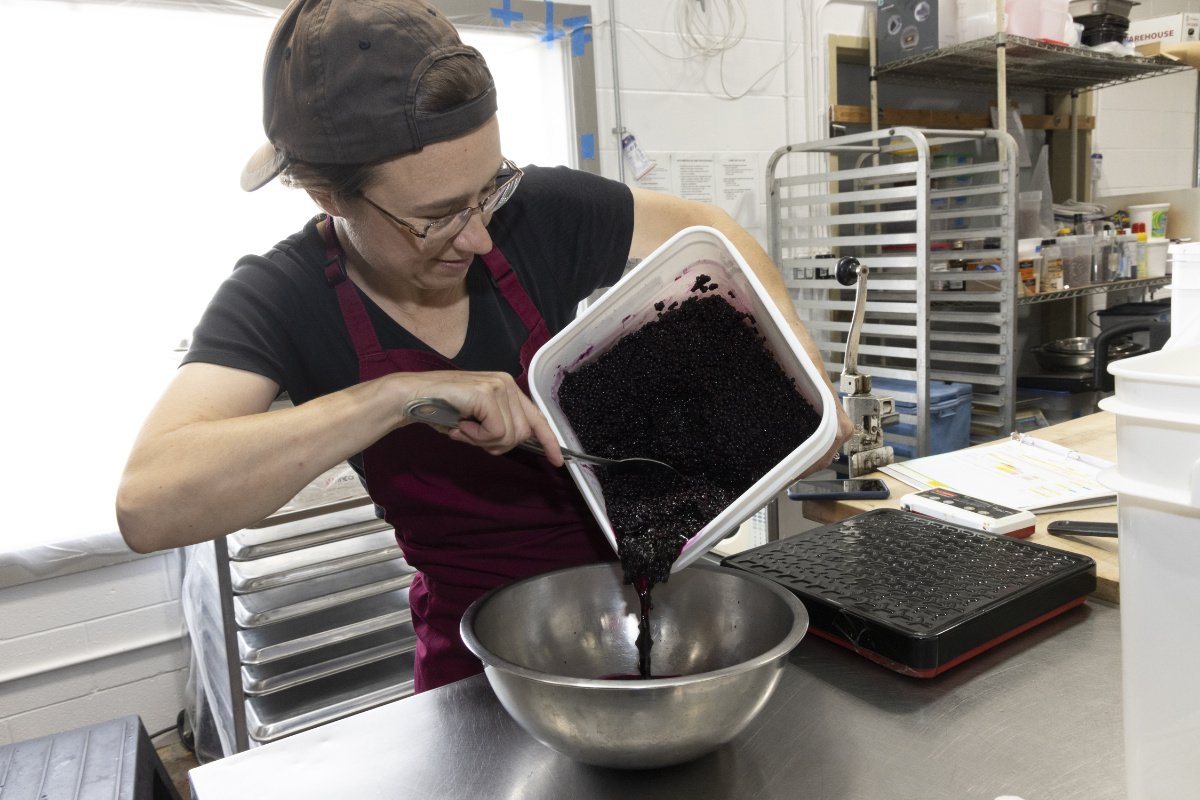
Katie Reneker, owner of Carmel Berry, in central California, begins a batch of elderberry syrup. (Photo credit: Richard Green Photography)
Katie Reneker first encountered elderberries as a natural remedy to support her children’s immune systems. “I was using elderberry syrup that I was buying at the health food store, and I felt like it worked,” she said.
Reneker was surprised to learn that elderberries grew near her home on California’s central coast. She began to forage for Western blue elderberries and make syrup at home. The difference between her product and the store-bought ones was stark, inspiring her to launch Carmel Berry as a cottage food operator, which permitted her to produce elderberry products at home and sell them locally. But she ran into a roadblock.
“You can’t just pick off the side of the road once you’re an actual business,” she said. “And there weren’t any farms that could meet the demand.”
To encourage farmers and grow a supply chain for Western blue elderberries, she began to convene groups of interested growers for workshops, attracting hundreds of people from across the country. Blue elderberries are adapted to the hotter and drier western climate, making them attractive for farmers looking to diversify with drought-tolerant crops.
But the lack of research into growing blue elderberries worries farmers nervous about trying a new crop. Blue elderberry is functionally still a wild plant, without the consistency that comes from research and development. As a result, Reneker can source some elderflowers from local blue elderberry plants, but still largely relies on Midwest growers for her berry supply.
Federal Budget Cuts Stall Elderberry Project
One initiative that could have bridged the knowledge gap and built supply and demand for blue elderberries is The Elderberry Project, spearheaded by the Santa Barbara nonprofit White Buffalo Land Trust.
“Elderberries have been cultivated for over 10,000 years by Indigenous communities just here in our region,” said Jesse Smith, the land trust’s director of land stewardship. “Combine that with the market growth over the last five years in particular, and we felt like it was such an important thing for us to explore,” he added, saying that the project’s goal was to also include Native people in its efforts.
“Elderberries have been cultivated for over 10,000 years by Indigenous communities just here in our region. Combine that with the market growth over the last five years in particular, and we felt like it was such an important thing for us to explore.”
It partnered with the Santa Ynez Chumash Environmental Office, which planned to supply elderberries grown in its native plant nursery and incorporate workforce development for the tribal community. The project aimed to help small producers learn to cultivate the crop, install a processing facility, and grow market appetite from businesses. Another partner, the U.C. Sustainable Agriculture Research and Education Program, conducted initial research into the agricultural potential of blue elderberries.
In April, a sudden cut to the project’s five-year, $4.6 million grant from the U.S. Department of Agriculture’s (USDA) Partnerships in Climate Smart Commodities Program slowed its momentum.
“We’ve laid all the groundwork,” said Lauren Tucker, who is leading market development for the project. “We were literally just about to make the equipment order, which kickstarts the whole marketplace.”
The USDA is reviewing existing projects based on new criteria and continuing funding for qualifying projects under a new name, the Advancing Markets for Producers initiative. For now, Tucker is trying to think creatively about how to fill the funding gap while resubmitting updated project plans for USDA review.
“It doesn’t kill the project, but it really changes things,” she said.
A Midwest Berry Boomlet
While efforts to build a market around Western blue elderberries are just beginning, the Midwest is better established. Missouri is at the forefront of domestic production of the American elderberry, albeit with only 400 acres estimated in cultivation. The state got a head start three decades ago, mostly due to the interest of a small group at the University of Missouri, including horticultural researcher Andrew Thomas.
“There’s a group in Kansas that was making, and still makes, really good elderberry wine,” he said, referring to Wyldewood Cellars, a winery outside of Wichita. Since they were collecting elderberries from ditches and along fencelines on the family’s 1,000-acre ranch, there was no quality control or consistency, Thomas said. But the product was good, and “some light bulbs went on.”
Thomas began collecting and planting wild American elderberries to investigate improved cultivars. Farmers immediately took notice. “It just kind of grew and grew, and very quickly went way beyond wine,” he said, as producers began experimenting with juices, syrups, and health supplements.
Producer interest propelled Thomas’s project forward. In 2021, his research on developing elderberry production and processing received a $5.3 million USDA Specialty Crop Research Initiative grant. The ongoing project includes developing cultivars, researching growing regions, exploring mechanical harvesting, and researching processing and market potential.
Many farmers who grow elderberries to diversify their farms aren’t so sure about ramping up beyond a niche crop.
A small system of processors has sprung up in the area, each drawing from a network of local farms. Thomas said there is also discussion about going big with regional hubs and centralized processing facilities. The market for natural food coloring may be poised to grow further as Secretary of Health and Human Services Robert F. Kennedy Jr. wants to eliminate artificial dyes from the nation’s food supply, which could lead to even more demand for elderberries.
Still, many farmers who grow elderberries to diversify their farms aren’t so sure about ramping up beyond a niche crop.
“When you start talking about things like natural food coloring, the companies need massive production to be able to do that,” said Thomas. “A lot of the farmers would rather keep it more local.”
A New Approach
When High Bear sees giant elderberry bushes on the edge of farms in rural Marion County, she sees grandparents. However, she doesn’t begrudge farmers trying to grow and commercialize elderberries.
“I have an enormous amount of compassion for today’s farmers,” she said, noting recent efforts to incorporate blue elderberries into hedgerows for ecological and economic reasons. “They can sell their berries to people that are making syrup, and that gives them just a little bit more financial support for their farms.”
She acknowledges that non-Native farmers have a more limited view of the elderberry.
“Not everybody understands that these plants have a spirit in them,” she said. “As Native people, we work with that spirit. We offer a prayer and ask permission to harvest. That’s the difference with non-Native people who look at it as a crop. But we don’t blame non-Native people for doing it. We need to do everything we can to help non-Native people work with the elderberry, just like we do.”

Blue elderberry skin cream and syrup from Elderberry Wisdom Farm. (Photo courtesy of Elderberry Wisdom Farm)
After years of reflection, High Bear reached a significant decision. In mid-December, the farm will debut its Wisdom of the Elderberry syrup for sale at the Salem Holiday Market, the result of a new hybrid social and economic enterprise that will divide its elderberry products, with half being shared within the community and the rest to be sold.
“We finally realized that with so many elderberry syrups being made for commercial sale, our Native people should not be prohibited from also producing and marketing these products that are near and dear to their hearts,” she said.
Although she risks potential backlash for straying from tradition, she said it’s important to recognize that the community requires money to live, especially as people face the loss of food assistance and other benefits.
She hopes the new model will serve as an example of how Native people can develop microenterprises to support themselves while still integrating the spirit of generosity and tending to their spiritual and emotional relationships with the blue elderberry.
“We have been living with serious issues for millennia, and problems have not defeated us,” High Bear said. “They only serve to strengthen our resilience because of our spirituality and close relationship with our ancestors and the Great Spirit.”
The post Elderberry Is a Sacred Indigenous Plant. Should It Be Monetized? appeared first on Civil Eats.