Cookies help us run our site more efficiently.

By clicking “Accept”, you agree to the storing of cookies on your device to enhance site navigation, analyze site usage, and assist in our marketing efforts. View our Privacy Policy for more information or to customize your cookie preferences.

Are you a hellraiser mite or a knobbled weevil? Take the quiz and vote for NZ’s Bug of the Year

News Feed
Wednesday, December 31, 2025

The black tunnelweb spider. Samuel Purdie, CC BY-NCThe New Zealand velvet worm’s reign as Bug of the Year is coming to an end, with voting now open for the 2026 competition. This year, 21 nominees are vying for the crown in the competition’s fourth year. Nearly 100 bugs have so far featured, representing an incredible range of rich invertebrate diversity – from insects and arachnids to crustaceans, worms and molluscs. The term “bug” was chosen deliberately. While not scientifically precise, it acts as an easily understood umbrella definition of Aotearoa New Zealand’s sometimes overlooked littlest animals. As relatively large organisms ourselves, we humans tend to notice and celebrate larger and more charismatic fauna and flora, such as birds and trees. But they comprise only about 5% of New Zealand’s estimated 70,000 native land species. The rest are small and often unseen, but absolutely vital. Aotearoa is home to over 20,000 insect species – and those are just the ones we’ve identified. Around 6,000 beetle species alone crawl, burrow and fly across our landscape. Bugs are the tiny critters that run the world. Forming the base of many food webs and ecological interactions, they underpin much of our freshwater and terrestrial biodiversity. They pollinate food crops, decompose waste and recycle nutrients. Owing to their fast response to environmental changes, they also serve as key indicators of environmental health. Master of camouflage: the double-spined stick insect. Dougal Townsend, CC BY-NC And the nominees are … This year’s nominees are the most diverse in the competition’s history. There are repeat candidates, such as the endangered Canterbury knobbled weevil (Hadramphus tuberculatus), as well as new contenders such as the tadpole shrimp (Lepidurus apus viridis) which reproduces without males, or the double-spined stick insect (Micrarchus hystriculeus), which is an incredible master of camouflage. Some nominees, such as the sapphire spider fly (Apsona muscaria) – a fly that eats spiders – are relatively unknown. And there are more familiar species such as the impressively large black tunnelweb spider (Porrhothele antipodiana). Others are known for their outstanding features or behaviour, including the hellraiser mite (Neotrichozetes spinulosa), which looks like a walking pin-cushion, and a critically threatened avatar moth (Arctesthes avatar), named for the movie series with its themes of environmental destruction. We even have the ancient and gigantic glow-in-the-dark North Auckland worm, and the Otago alpine cockroach (Celatoblatta quinquemaculata) that can survive being frozen solid. There is also one of the world’s only marine insects, the intertidal caddisfly (Philanisus plebeius), whose nymph lives on the rocky shore. Like a walking pin-cushion: the hellraiser mite. Shou Saito, CC BY-NC Many are endemic and found only here. But like bugs and insect populations around the planet, they face mounting threats – described in one study as “death by a thousand cuts” – from climate change, agrichemical use and habitat loss or modification. Aotearoa is not exempt from these threats, but many of our bugs are data-deficient, understudied, underappreciated and often out-competed for attention by other wildlife. This summer, keep an eye out for the tiny things around you: the bugs that soar in our skies, scamper in our forests, settle in our rivers and lakes or even hide underground. As humans continue to expand urban landscapes into natural ones, the Entomological Society of New Zealand hopes its Bug of the Year contest will help build public support and appreciation for more research into these unsung heroes of the natural world. How to vote Not sure what to vote for? Take the personality quiz to see which bug you most align with. Voting closes on February 16 2026, with results announced on February 18. Nominees are suggested by the public, so if your top pick isn’t featured this year, you can make recommendations by July 1 for the 2027 contest and beyond. Connal McLean is affiliated with The Entomological Society of New Zealand and The Moths and Butterflies of New Zealand Trust. Jacqueline Theis receives funding from the Ministry of Business, Innovation and Employment (grant number UOWX2101). She is affiliated with the Entomological Society of New Zealand.

Take the personality quiz to match with one of NZ’s larger-than-life little creatures, then cast your vote.
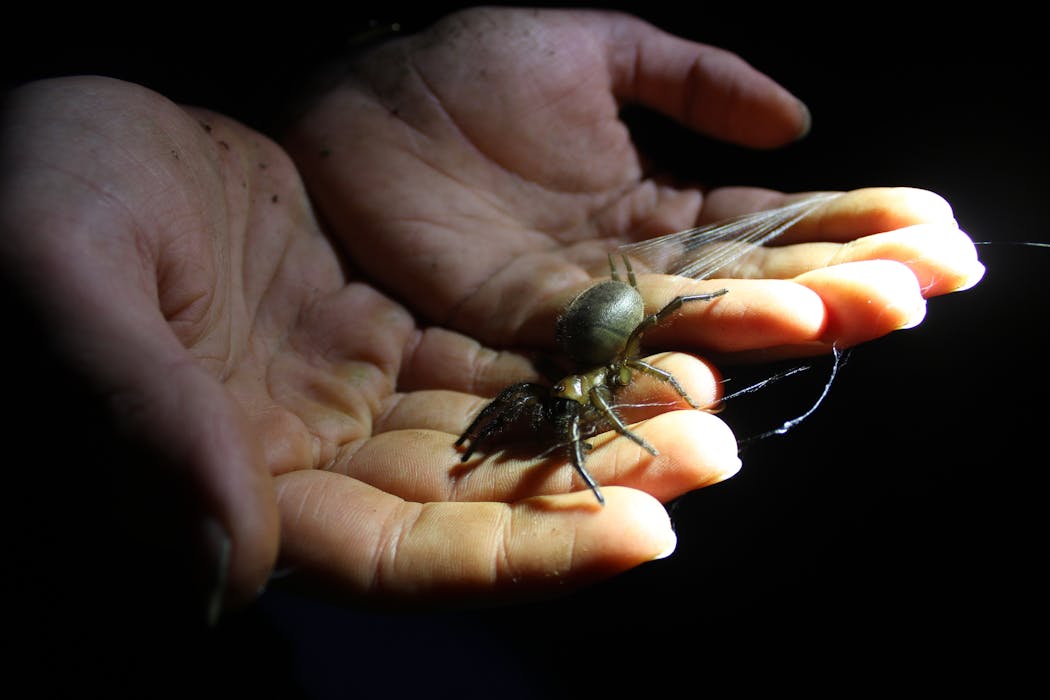
The black tunnelweb spider. Samuel Purdie, CC BY-NC

The New Zealand velvet worm’s reign as Bug of the Year is coming to an end, with voting now open for the 2026 competition.

This year, 21 nominees are vying for the crown in the competition’s fourth year. Nearly 100 bugs have so far featured, representing an incredible range of rich invertebrate diversity – from insects and arachnids to crustaceans, worms and molluscs.

The term “bug” was chosen deliberately. While not scientifically precise, it acts as an easily understood umbrella definition of Aotearoa New Zealand’s sometimes overlooked littlest animals.

As relatively large organisms ourselves, we humans tend to notice and celebrate larger and more charismatic fauna and flora, such as birds and trees. But they comprise only about 5% of New Zealand’s estimated 70,000 native land species.

The rest are small and often unseen, but absolutely vital. Aotearoa is home to over 20,000 insect species – and those are just the ones we’ve identified. Around 6,000 beetle species alone crawl, burrow and fly across our landscape.

Bugs are the tiny critters that run the world. Forming the base of many food webs and ecological interactions, they underpin much of our freshwater and terrestrial biodiversity.

They pollinate food crops, decompose waste and recycle nutrients. Owing to their fast response to environmental changes, they also serve as key indicators of environmental health.

Master of camouflage: the double-spined stick insect. Dougal Townsend, CC BY-NC

And the nominees are …

This year’s nominees are the most diverse in the competition’s history.

There are repeat candidates, such as the endangered Canterbury knobbled weevil (Hadramphus tuberculatus), as well as new contenders such as the tadpole shrimp (Lepidurus apus viridis) which reproduces without males, or the double-spined stick insect (Micrarchus hystriculeus), which is an incredible master of camouflage.

Some nominees, such as the sapphire spider fly (Apsona muscaria) – a fly that eats spiders – are relatively unknown. And there are more familiar species such as the impressively large black tunnelweb spider (Porrhothele antipodiana).

Others are known for their outstanding features or behaviour, including the hellraiser mite (Neotrichozetes spinulosa), which looks like a walking pin-cushion, and a critically threatened avatar moth (Arctesthes avatar), named for the movie series with its themes of environmental destruction.

We even have the ancient and gigantic glow-in-the-dark North Auckland worm, and the Otago alpine cockroach (Celatoblatta quinquemaculata) that can survive being frozen solid.

There is also one of the world’s only marine insects, the intertidal caddisfly (Philanisus plebeius), whose nymph lives on the rocky shore.

Like a walking pin-cushion: the hellraiser mite. Shou Saito, CC BY-NC

Many are endemic and found only here. But like bugs and insect populations around the planet, they face mounting threats – described in one study as “death by a thousand cuts” – from climate change, agrichemical use and habitat loss or modification.

Aotearoa is not exempt from these threats, but many of our bugs are data-deficient, understudied, underappreciated and often out-competed for attention by other wildlife.

This summer, keep an eye out for the tiny things around you: the bugs that soar in our skies, scamper in our forests, settle in our rivers and lakes or even hide underground.

As humans continue to expand urban landscapes into natural ones, the Entomological Society of New Zealand hopes its Bug of the Year contest will help build public support and appreciation for more research into these unsung heroes of the natural world.

How to vote

Not sure what to vote for? Take the personality quiz to see which bug you most align with.

Voting closes on February 16 2026, with results announced on February 18.

Nominees are suggested by the public, so if your top pick isn’t featured this year, you can make recommendations by July 1 for the 2027 contest and beyond.

The Conversation

Connal McLean is affiliated with The Entomological Society of New Zealand and The Moths and Butterflies of New Zealand Trust.

Jacqueline Theis receives funding from the Ministry of Business, Innovation and Employment (grant number UOWX2101). She is affiliated with the Entomological Society of New Zealand.

Read the full story here.
Photos courtesy of

The Top Human Evolution Discoveries of 2025, From the Intriguing Neanderthal Diet to the Oldest Western European Face Fossil

Smithsonian paleoanthropologists examine the year’s most fascinating revelations

The Top Human Evolution Discoveries of 2025, From the Intriguing Neanderthal Diet to the Oldest Western European Face Fossil Smithsonian paleoanthropologists examine the year’s most fascinating revelations Paranthropus boisei composite hand Courtesy of Carrie Mongle This has been quite the wild year in human evolution stories. Our relatives, living and extinct, got a lot of attention—from new developments in ape cognition to an expanded perspective of a big-toothed hominin cousin. A new view on a famous foot also revealed more about a lesser-known hominin species, Australopithecus deyiremeda. New tool and technology finds, coupled with dietary studies, showed us more than ever about the behavior of our ancestors and ourselves. New fossils gave us a glimpse at the earliest Europeans, predating both our own species and the Neanderthals. Finally, we dove deeper into the blockbuster story of the year, looking at some of the biggest Denisovan studies which give us a clearer than ever picture of these enigmatic human relatives.Human traits of chimps and bonobos Portrait of a bonobo Fiona Rogers / Getty Images A February study investigated theory of mind, or the uniquely human trait of recognizing the cognitive sapience of others, which allows modern humans to communicate and coordinate to an extent not seen in other animals. Study co-author Luke Townrow and colleagues set up an experiment where bonobos would receive a food reward hidden under cups, but only if they cooperated with their human partner and showed them where the food was first. Sometimes the bonobo could tell the human knew where the food was, and sometimes the animal could tell the human didn’t know where the food was. Bonobos pointed to the location of the hidden food more frequently and quicker when they knew the human was ignorant of the food’s location, indicating that they could interpret the human’s mental state and act accordingly, a hallmark of theory of mind. In addition to cooperating, an April study shows that apes also share, especially when it comes to fermented fruit. Anna Bowland and colleagues documented the first recorded instance of fermented food sharing in chimpanzees, observed in Cantanhez National Park, Guinea-Bissau. At least 17 chimps of all ages shared fermented breadfruits, ranging between 0.01 percent and 0.61 percent alcohol by volume. While this may not be enough ethanol to result in the sort of intoxication levels desired by many humans, this demonstrates that food sharing, and fermented food consumption, have deep evolutionary roots, supported by the evolution of ethanol metabolism among all African apes. On top of all that monkey business, an October study shows that chimps even have complex decision-making processes. Hanna Schleihauf and colleagues presented to chimps two boxes, one that contained food and one that was either empty or contained a non-food item. The chimps were allowed to choose a box twice, after receiving either weak or strong evidence about which box contains the food. The team found that chimps were able to revise their beliefs about the food’s location in response to more convincing evidence: When they picked the wrong box after the weak hint, they switched to the correct box after the following strong hint. Also, when they picked the correct box after a strong hint, they kept their selection after a weak hint. The study highlights the chimpanzees’ ability to make rational decisions, and even change decisions, in response to learning new information. Fun fact: Chimps may use medicinal herbs In a study last year, researchers collected extracts of plants that they saw chimpanzees eating outside of their normal diets in Uganda’s Budongo Central Forest Reserve. The researchers discovered that “88 percent of the plant extracts inhibited bacterial growth, while 33 percent had anti-inflammatory properties.” A holistic picture of Paranthropus The reconstructed left hand of the Paranthropus boisei Mongle, Carrie et al., Nature, 2025 Besides learning more about our ape relatives, we also learned a lot more about some of our hominin cousins this year. Paranthropus is a genus of hominins consisting of three species, mostly known for their large teeth and massive chewing muscles that they likely used to break down tough plant fibers. However, not much was known about them outside of their mouths and skulls. A Paranthropus study from April helps to close this gap, describing an articulated lower limb from the Swartkrans site in South Africa. Travis Pickering and colleagues described a partial pelvis, femur and tibia of an adult Paranthropus robustus dating back 2.3 million to 1.7 million years ago. The anatomy of the hip, femur and knee indicate that this individual was fully bipedal. This hominin would probably have been only about three feet tall, one of the tiniest hominins on record. Due to a lack of other fossil material for comparison and the pelvis fossil being very incomplete, estimating the sex of this individual is more difficult. However, another study from May pioneered the use of different methods to estimate the sex of Paranthropus fossils. Analyzing proteins preserved in fossil tooth enamel, Palesa Madupe and colleagues were able to determine sex and begin to investigate genetic variability in Paranthropus fossils from South Africa. Using these proteins, the team was able to identify two male and two female individuals, allowing for more accurate hypotheses about sexual dimorphism (sex-based body size and shape differences). The team also found that one of the individuals appeared to be more distantly related, hinting at microevolution within this species. Lastly, a study published in October described a Paranthropus boisei hand from the Koobi Fora site in Kenya, which allowed scientists to learn if Paranthropus could have made stone tools. Carrie Mongle and colleagues looked at the nearly complete Paranthropus hand, which reveals a mostly hominin-looking morphology. Yet with strong musculature and wide bones, the grasping capabilities of Paranthropus seem to converge with that of gorillas, although they likely used this powerful grip to strip vegetation and process food rather than for climbing. Additionally, with a long thumb and precision grasping capabilities, the authors hypothesize that nothing in their hand morphology would have prevented Paranthropus boisei from making and using stone tools. This builds on other recent finds suggesting that the ability to make and use complex tools was not limited to the genus Homo.The family of a famous footThe Burtele foot, a fossil from Ethiopia that was described in 2012 and originally not given a species designation, dates to about 3.4 million years ago. Despite being contemporaneous with Australopithecus afarensis, Lucy’s species, the fossil looked almost nothing like it. The locomotor adaptations were completely different, and the foot still had an opposable big toe, like modern apes and the earlier genus Ardipithecus. In November, Yohannes Haile-Selassie and colleagues published research on other fossils from the same site where the Burtele foot was found. A new mandible with teeth links the hominin fossils at Burtele to a less well-known species, Australopithecus deyiremeda. This species had primitive teeth and grasping feet, with isotopic evidence pointing to a plant-based diet more similar to that of earlier species like Ardipithecus ramidus and Australopithecus anamensis. These new finds show that primitive traits persisted more recently into the timeline of human evolution and that our family tree is even bushier than previously thought.Ancient tool technologies An ancient ochre fragment that shows signs of re-use  d’Errico, Francesco et al., Science Advances, 2025 Archaeological sites, by definition, are evidence of past human behavior. But it’s not often a find is unearthed that turns out to be evidence of just one past human’s behavior. A study in August by Dominik Chlachula and colleagues reports on a small cluster of 29 stone artifacts from the Milovice IV site in the Czech Republic that were probably bundled together in a container or pouch made of perishable material: basically, a Stone Age hunter-gatherer’s personal toolkit. The 30,000-year-old blade and bladelet tools were made from different kinds of stone (flint, radiolarite, chert and opal). Use-wear analysis showed they were used for cutting, scraping and drilling, and the kit also included projectiles used for hunting. Now we move farther back in time, to when some of the earliest members of our lineage were making tools. In November, David Braun and colleagues reported on stone toolmaking in the Turkana Basin of Kenya that started about 2.75 million years ago at the new site of Namorotukunan, which contains one of the oldest and longest intervals of the making of Oldowan tools. This simple core-and-flake technology was, as revealed by this new evidence, nevertheless undertaken with enough skill—and the tools useful enough for various activities—to be made consistently for almost 300,000 years, through dramatic environmental changes, highlighting our ancestors’ resilience. However, not all ancient tools were made for practical purposes. In October, Francesco d’Errico and colleagues described three pieces of ochre, an iron-rich mineral pigment, from archaeological sites in Crimea, Ukraine. These artifacts were deliberately collected, shaped, engraved, polished, resharpened and deposited there by Neanderthals up to 70,000 years ago. Although it’s impossible to know what the Neanderthals did with these yellow and red pigments, the fact that they seemed to be kept sharpened suggests that their tips were used to produce linear marks. This suggests that they had a symbolic or artistic function, rather than a utilitarian one, perhaps playing a role in identity expression, communication and transmitting knowledge across generations.Neanderthal eating habitsWhen they weren’t busy coloring with paleo-crayons, our Neanderthal cousins are known for being skilled hunters of large animals, and two studies in July shed new light on their diets. First, Lutz Kindler and colleagues documented that 125,000 years ago, at the site of Neumark-Nord in Germany, Neanderthals processed at least 172 animals at the edge of a lake, most likely to extract bone grease. This “fat factory,” as the researchers called it, is much older than previously documented grease extraction sites, and this extreme bone-bashing behavior had not been seen before at Neanderthal sites. The team documented how Neanderthals transported the bones of these animals, mostly antelope, deer and horses, but even some forest elephants, to the site to crush, chop up and boil to get at the nutritious, calorie-rich fat inside. (Speaking of Neanderthals cooking things, a December study by Rob Davis, Nick Ashton and colleagues documented the earliest evidence of deliberate fire-making from the 400,000-year-old site of Barnham in England, where they found heated sediments, fire-cracked flint handaxes and fragments of iron pyrite—a mineral used to strike sparks with flint—likely brought to the site from far away.) Later in July, Melanie Beasley and colleagues made an intriguing suggestion about the Neanderthal diet. Humans and our earlier relatives can only eat a certain proportion of protein in our diets without getting protein poisoning, but chemical signatures (specifically, nitrogen isotope values) in Neanderthal bones indicate that they ate as much protein as other ancient hyper-carnivores. So, what was causing this? Maybe it was maggots, fat-rich fly larvae. When an animal dies, maggots feed on the decaying flesh, which has higher nitrogen values as it decomposes. Many Indigenous forager groups regard putrid meat as a tasty treat. If Neanderthals were eating nitrogen-enriched maggots feeding on rotting muscle tissue in dried, frozen or cached (deliberately stored) dead animals, that might at least partly explain their unusually high nitrogen values. While our later evolutionary cousins may have munched on maggots, a study in January by Tina Lüdecke and colleagues looked at carbon and nitrogen isotopes in the teeth of Australopithecus and other animal species dating back more than three million years ago from South Africa’s Sterkfontein site. The isotope ratios of the seven Australopithecus teeth were variable but consistently low, and more similar to the contemporaneous herbivores than the carnivores, suggesting they were not consuming much meat. This follows with other recent studies suggesting, contrary to common belief, that carnivory was not a major factor shaping our evolution.The earliest EuropeansTwo studies this year focused on early evidence for hominins in Europe. In January, Sabrina Curran and colleagues reported cut marks on several animal bones from the Graunceanu site in Romania, dating to at least 1.95 million years ago—now among the earliest evidence that hominins had spread to Eurasia by that time. To verify that these were cut marks made by stone tools, they compared 3D shape data from impressions of the marks to a reference set of almost 900 modern marks made by stone tool butchery, carnivore feeding and sedimentary abrasion. They concluded that the marks on eight Graunceanu fossils, mainly hoofed animals like deer, were stone tool cut marks. In March, Rosa Huguet and colleagues reported on the earliest hominin face fossil from Western Europe, dated to 1.4 million-1.1 million years ago, found in Spain. The shape of the left half of the face fossil is more similar to Homo erectus (which had not been documented in Europe), rather than resembling later and more modern looking Homo antecessor fossils found almost 1,000 feet away and dated to between 900,000-800,000 years ago. The scientific name of the new fossil is ATE7-1, but its nickname is “Pink.” This is a nod to Pink Floyd’s album The Dark Side of the Moon, which in Spanish is La cara oculta de la luna (cara oculta means hidden face). Also, Huguet’s first name, Rosa, is Spanish for pink.New Denisovan discoveries A reconstruction of the Harbin cranium by paleoartist John Gurche Courtesy of John Gurche Denisovan fossils have been found in Siberia and throughout East Asia, although they are few and far between. Denisovans may be our most enigmatic cousins, because we’ve learned more about them through DNA, including DNA we got from interbreeding with them, than from their fossils. Until this year, that is. A study from April described a new Denisovan mandible. Takumi Tsutaya and colleagues analyzed the Penghu 1 mandible, dredged up from the coast of Taiwan, and discovered that the morphology and protein sequences both matched it with Denisovans. Proteomics also allowed the team to determine this was a male individual, and this find expands the known range of Denisovans into warmer, wetter regions of Asia. Next, two stories from this summer took a second look at the Harbin cranium, termed “Dragon Man” and given the species name Homo longi in 2021. The first study, in June, looked at the proteome of the Harbin cranium, while the second study, in July, looked at the mitochondrial DNA; both studies were led by Qiaomei Fu. While no DNA was able to be retrieved from the fossil itself, proteomics and the DNA from dental calculus both suggested that this fossil was part of the Denisovan group. Together, these studies give the first look at the face of a Denisovan, lining up morphology with molecules. While more work needs to be done to build the body of evidence and give scientists a more complete view of Denisovan anatomy, habitat and behavior, being able to link complete fossils with the molecular evidence is a huge step forward. While it is unclear what this means for the name “Denisovan” itself, we hypothesize that it will persist as a popular or common name, much like how we call Homo neanderthalensis “Neanderthals” today. Lastly, in September, Xiaobo Feng and colleagues reconstructed and described the Yunxian 2 cranium from China, dating to one million years ago. The skull was meticulously reconstructed from crushed and warped fragments and appears to have a mix of primitive and derived traits, and it is also closely aligned with the Homo longi group. The phylogenetic analysis conducted by the team changes the perspective of late hominin divergence, with Homo longi and Homo sapiens being sister taxa to the exclusion of Neanderthals, and all three groups having evolutionary origins two to three times older than previously thought: at least 1.2 million years ago. While more finds will support or refute these phylogenetic claims, new fossil evidence continues to help refine our understanding of our lineage—and never stops surprising us.This story originally appeared in PLOS SciComm, a blog from PLOS, a nonprofit that publishes open-access scientific studies. Get the latest on what's happening At the Smithsonian in your inbox.

Montana Judge Allows 2025-26 Wolf Hunting and Trapping Regulations to Stand While Lawsuit Proceeds

A Montana judge is allowing the wolf hunting and trapping regulations the Montana Fish and Wildlife Commission adopted earlier this year to stand, saying it's doubtful hunters and trappers will meet the record-high quota of 458 wolves this season

A Helena judge has allowed the wolf hunting and trapping regulations the Montana Fish and Wildlife Commission adopted earlier this year to stand, despite flagging “serious concerns” about the state’s ability to accurately estimate Montana’s wolf population.In a 43-page opinion, District Court Judge Christopher Abbott wrote that leaving the 2025-2026 hunting and trapping regulations in place while he considers an underlying lawsuit will not “push wolf populations to an unsustainable level.”In its lawsuit, first filed in 2022, WildEarth Guardians, Project Coyote, Footloose Montana and Gallatin Wildlife Association challenged four laws adopted by the 2021 Montana Legislature aimed at driving wolf numbers down. Earlier this year, the environmental groups added new claims to their lawsuit and asked the court to stop the 2025-2026 regulations from taking effect. The groups argued that a record-high wolf hunting and trapping quota of 458 wolves, paired with the potential for another 100 wolves to be killed for preying on livestock or otherwise getting into conflict with humans, would push the state’s wolf population “toward long-term decline and irreparable harm.” According to the state’s population estimates — figures that the environmental groups dispute — there are approximately 1,100 wolves across the state.In a Dec. 19 press release about the decision, Connie Poten with Footloose Montana described the ruling as a “severe setback,” but argued that the “resulting slaughter will only strengthen our ongoing case for the protection of this vital species.”“The fight for wolves is deep and broad, based in science, connection, humaneness and necessity. Wolves will not die in vain,” Poten said.Montana Fish, Wildlife and Parks declined to comment on the order, citing the ongoing litigation. Montana Sportsmen for Fish and Wildlife and the Outdoor Heritage Coalition, nonprofit groups that backed the state’s position in the litigation, could not be reached for comment on the order by publication time Monday afternoon.The order comes more than a month after a two-hour hearing on the request for an injunction, and about three weeks after the trapping season opened across the majority of the state. The trapping season is set to close no later than March 15, 2026.During the Nov. 14 hearing at the Lewis and Clark County courthouse, Alexander Scolavino argued on behalf of Montana Fish, Wildlife and Parks and the Montana Fish and Wildlife Commission that hunters, trappers and wildlife managers won’t come close to killing 558 wolves this season. Scolavino added that the highest number shot or trapped in a single season was 350 wolves in 2020 — well shy of the 458-wolf quota the commission, the governor-appointed board that sets hunting seasons for game species and furbearers, adopted in August.Abbott agreed with Scolavino’s argument, writing in his order that it’s unlikely that hunters and trappers will “achieve anything near the quota established by the commission.” To reinforce his claim, he noted that hunters and trappers have not killed 334 wolves — the quota commissioners adopted for the 2024-2025 season — in any of the past five seasons. “In short, nothing suggests that the 2025/2026 season is likely to push wolf populations to an unsustainable level or cause them irreparable injury,” he concluded.Abbott seemed to suggest that livestock-oriented conflicts are waning and that it’s unlikely that the state will authorize the killing of 100 “conflict” wolves. He noted that livestock depredations dropped from “a high of 233 in 2009 to 100 per year or less today.” On other issues — namely the Constitutional environmental rights asserted by the plaintiffs and the reliability of the state’s wolf population-estimation model — Abbott appeared to side with the plaintiffs. Those issues remain unresolved in the ongoing litigation before the court.Abbott wrote that the plaintiffs “are likely to show that a sustainable wolf population in Montana forms part of the ‘environmental life support system’ of the state.” The environmental groups had argued in their filings that the existing wolf-management framework “will deplete and degrade Montana’s wolf population,” running afoul of the state’s duty to “preserve the right to a clean and healthful environment.”In his order, Abbott incorporated material from the plaintiffs’ filings regarding the economic and ecological benefits of wolves, including “the suppression of overabundant elk, deer and coyote populations,” “restoring vegetation that aids water quality, songbirds and insect pollinators,” and “generating income and jobs” by contributing to the wildlife-watching economy anchored by Yellowstone National Park.Abbott also expressed “serious concerns” about the way the state estimates wolf numbers — a model that relies, among other things, on wolf sightings reported by elk hunters — but ultimately concluded that the court is currently “unequipped” to referee “the palace intrigues of academia” in the wildlife population-modeling arena. In the press release about the decision, the environmental groups described these pieces of Abbott’s order as “serious and valid questions” that the court must still address.Another lawsuit relating to the 2025-2026 wolf regulations is ongoing. On Sept. 30, Rep. Paul Fielder, R-Thompson Falls, and Sen. Shannon Maness, R-Dillon, joined an outfitter from Gallatin County and the Outdoor Heritage Coalition (which intervened in the environmental groups’ litigation) to push the state to loosen regulations by, for example, lengthening the trapping season and expanding the tools hunters or trappers can use to pursue and kill wolves. The plaintiffs in that lawsuit argue that liberalizing the hunting and trapping season would reaffirm the “opportunity to harvest wild fish and wild game animals enshrined in the Montana Constitution,” and bring the state into alignment with a 2021 law directing the commission to adopt regulations with an “intent to reduce the wolf population.”According to the state’s wolf management dashboard, 83 wolves have been shot or trapped as of Dec. 22. The department closed the two wolf management units closest to Yellowstone National Park to further hunting and trapping earlier this year after three wolves were killed in each of those units. This story was originally published by Montana Free Press and distributed through a partnership with The Associated Press.Copyright 2025 The Associated Press. All rights reserved. This material may not be published, broadcast, rewritten or redistributed.Photos You Should See – December 2025

Pink platypus spotted in Gippsland is cute – but don’t get too excited

Biologist says monotreme a Victorian fisher has nicknamed Pinky is ‘unusual but not exceptional’Follow our Australia news live blog for latest updatesGet our breaking news email, free app or daily news podcastCody Stylianou thought he saw a huge trout. But, skimming just below the surface, it was moving differently than a fish would.The creature surfaced and, amazed, the Victorian fisher reached for his phone. Swimming in front of him was a pink platypus. Continue reading...

Cody Stylianou thought he saw a huge trout. But, skimming just below the surface, it was moving differently than a fish would.The creature surfaced and, amazed, the Victorian fisher reached for his phone. Swimming in front of him was a pink platypus.Stylianou regularly fishes in the Gippsland spot, which he is keeping secret to protect the rare animal. He thinks it could be the same one he saw years ago, just older and bigger.“The bill and feet are super obviously pink,” he says. “When he did go a bit further into sunlit areas, he was easy to follow underwater, which is how I got so many videos of him surfacing.”Stylianou had been on his first trout fishing trip of the season in September when he saw the platypus, which he has nicknamed “Pinky”. He watched it feed at the top of the tannin-stained river for about 15 minutes.Sign up: AU Breaking News email“I’ve seen other platypus in the same river system, just regular coloured ones,” he says. “Probably about five to eight of them over the years, from memory. Normally, they just pop up at the top of the water and then disappear once they see me.”After Stylinaou shared footage of the monotreme, commenters online speculated that it could have been a rare albino platypus. But the biologist Jeff Williams says it is just lighter in colour than what most would expect.“Platypus do vary a lot in colour,” the director of the Australian Platypus Conservancy says. “And this one’s at the extreme end of the light ones. It’s not one that we consider should be added to the list of albino and leucistic ones.”Just as humans have different coloured hair or skin pigment, platypus also come in different variations, Williams says. He said the platypus captured on video was “unusual but not exceptional”.“What I’ve seen and what every other leading platypus person has looked at, it says, is that it’s well within the sort of variation in colour that one would expect,” he says.“Let’s put it this way, it’s cute, but it’s not a breakthrough … We think this is just one of the extreme ends. Every so often, you will get a genetic anomaly that just throws up things, just as it does with some humans, who have more freckles and so on.“It’s somewhat unusual, but it’s nothing to get particularly excited about, we’re afraid.”Sniffer dogs are being trained to track down threatened platypus populations – videoThe platypus is listed as near-threatened on the International Union for Conservation of Nature. There has also been a decline in Victorian populations, making them more vulnerable, Williams says.“Platypus were in significant decline up until about the 1990s when all the impact of European settlement on our waterways was becoming apparent,” he says.“We messed up pretty much the flow of every river we’ve got. We cleared native vegetation along most of our waterways, and, not surprisingly, that put a lot of pressure on the platypus population.”Replanting programs along the waterways, and consideration of environmental impacts near rivers, have started to help the population come back.“We’ve still got a way to go, and we can’t be complacent,” Williams says.“But the good news at the moment is most of the survey work that’s being done around the place is suggesting numbers that are coming back, certainly the number of sightings in some places where there was concern.”

A “scientific sandbox” lets researchers explore the evolution of vision systems

The AI-powered tool could inform the design of better sensors and cameras for robots or autonomous vehicles.

Why did humans evolve the eyes we have today?While scientists can’t go back in time to study the environmental pressures that shaped the evolution of the diverse vision systems that exist in nature, a new computational framework developed by MIT researchers allows them to explore this evolution in artificial intelligence agents.The framework they developed, in which embodied AI agents evolve eyes and learn to see over many generations, is like a “scientific sandbox” that allows researchers to recreate different evolutionary trees. The user does this by changing the structure of the world and the tasks AI agents complete, such as finding food or telling objects apart.This allows them to study why one animal may have evolved simple, light-sensitive patches as eyes, while another has complex, camera-type eyes.The researchers’ experiments with this framework showcase how tasks drove eye evolution in the agents. For instance, they found that navigation tasks often led to the evolution of compound eyes with many individual units, like the eyes of insects and crustaceans.On the other hand, if agents focused on object discrimination, they were more likely to evolve camera-type eyes with irises and retinas.This framework could enable scientists to probe “what-if” questions about vision systems that are difficult to study experimentally. It could also guide the design of novel sensors and cameras for robots, drones, and wearable devices that balance performance with real-world constraints like energy efficiency and manufacturability.“While we can never go back and figure out every detail of how evolution took place, in this work we’ve created an environment where we can, in a sense, recreate evolution and probe the environment in all these different ways. This method of doing science opens to the door to a lot of possibilities,” says Kushagra Tiwary, a graduate student at the MIT Media Lab and co-lead author of a paper on this research.He is joined on the paper by co-lead author and fellow graduate student Aaron Young; graduate student Tzofi Klinghoffer; former postdoc Akshat Dave, who is now an assistant professor at Stony Brook University; Tomaso Poggio, the Eugene McDermott Professor in the Department of Brain and Cognitive Sciences, an investigator in the McGovern Institute, and co-director of the Center for Brains, Minds, and Machines; co-senior authors Brian Cheung, a postdoc in the  Center for Brains, Minds, and Machines and an incoming assistant professor at the University of California San Francisco; and Ramesh Raskar, associate professor of media arts and sciences and leader of the Camera Culture Group at MIT; as well as others at Rice University and Lund University. The research appears today in Science Advances.Building a scientific sandboxThe paper began as a conversation among the researchers about discovering new vision systems that could be useful in different fields, like robotics. To test their “what-if” questions, the researchers decided to use AI to explore the many evolutionary possibilities.“What-if questions inspired me when I was growing up to study science. With AI, we have a unique opportunity to create these embodied agents that allow us to ask the kinds of questions that would usually be impossible to answer,” Tiwary says.To build this evolutionary sandbox, the researchers took all the elements of a camera, like the sensors, lenses, apertures, and processors, and converted them into parameters that an embodied AI agent could learn.They used those building blocks as the starting point for an algorithmic learning mechanism an agent would use as it evolved eyes over time.“We couldn’t simulate the entire universe atom-by-atom. It was challenging to determine which ingredients we needed, which ingredients we didn’t need, and how to allocate resources over those different elements,” Cheung says.In their framework, this evolutionary algorithm can choose which elements to evolve based on the constraints of the environment and the task of the agent.Each environment has a single task, such as navigation, food identification, or prey tracking, designed to mimic real visual tasks animals must overcome to survive. The agents start with a single photoreceptor that looks out at the world and an associated neural network model that processes visual information.Then, over each agent’s lifetime, it is trained using reinforcement learning, a trial-and-error technique where the agent is rewarded for accomplishing the goal of its task. The environment also incorporates constraints, like a certain number of pixels for an agent’s visual sensors.“These constraints drive the design process, the same way we have physical constraints in our world, like the physics of light, that have driven the design of our own eyes,” Tiwary says.Over many generations, agents evolve different elements of vision systems that maximize rewards.Their framework uses a genetic encoding mechanism to computationally mimic evolution, where individual genes mutate to control an agent’s development.For instance, morphological genes capture how the agent views the environment and control eye placement; optical genes determine how the eye interacts with light and dictate the number of photoreceptors; and neural genes control the learning capacity of the agents.Testing hypothesesWhen the researchers set up experiments in this framework, they found that tasks had a major influence on the vision systems the agents evolved.For instance, agents that were focused on navigation tasks developed eyes designed to maximize spatial awareness through low-resolution sensing, while agents tasked with detecting objects developed eyes focused more on frontal acuity, rather than peripheral vision.Another experiment indicated that a bigger brain isn’t always better when it comes to processing visual information. Only so much visual information can go into the system at a time, based on physical constraints like the number of photoreceptors in the eyes.“At some point a bigger brain doesn’t help the agents at all, and in nature that would be a waste of resources,” Cheung says.In the future, the researchers want to use this simulator to explore the best vision systems for specific applications, which could help scientists develop task-specific sensors and cameras. They also want to integrate LLMs into their framework to make it easier for users to ask “what-if” questions and study additional possibilities.“There’s a real benefit that comes from asking questions in a more imaginative way. I hope this inspires others to create larger frameworks, where instead of focusing on narrow questions that cover a specific area, they are looking to answer questions with a much wider scope,” Cheung says.This work was supported, in part, by the Center for Brains, Minds, and Machines and the Defense Advanced Research Projects Agency (DARPA) Mathematics for the Discovery of Algorithms and Architectures (DIAL) program.

Suggested Viewing

Join us to forge
a sustainable future

Our team is always growing.
Become a partner, volunteer, sponsor, or intern today.
Let us know how you would like to get involved!

CONTACT US

sign up for our mailing list to stay informed on the latest films and environmental headlines.

Subscribers receive a free day pass for streaming Cinema Verde.
Thank you! Your submission has been received!
Oops! Something went wrong while submitting the form.